Iran’s healthcare crunch forces patients to cut treatment

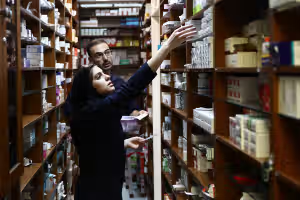
Iranians are struggling to afford medicines and medical care, with some foregoing treatment as prices rise, drug shortages spread and insurance coverage falls short, according to accounts from patients.
Messages sent to Iran International on described medical bills consuming much or all of a typical monthly income, even for people covered by Iran’s Social Security Organization, the country’s main state-run social insurer.
One person undergoing tests for an abdominal and pelvic mass said CT and MRI scans, with and without contrast, cost 210 million rials ($113) despite having Social Security insurance.
“How are we supposed to pay these costs with such meager incomes?” the citizen said.
Read the full article here.




Messages sent to Iran International on described medical bills consuming much or all of a typical monthly income, even for people covered by Iran’s Social Security Organization, the country’s main state-run social insurer.
One person undergoing tests for an abdominal and pelvic mass said CT and MRI scans, with and without contrast, cost 210 million rials ($113) despite having Social Security insurance.
“How are we supposed to pay these costs with such meager incomes?” the citizen said.
Many Iranian workers earn around 200 million to 250 million rials ($108-$134) a month, meaning the scans alone can cost roughly a month’s income. The rial trades at around 1.86 million to the dollar on the free market.
Another said an echocardiogram, electrocardiogram and clinic appointment cost 120 million rials ($65), with the medical provider requiring payment upfront rather than accepting Social Security insurance.
The patient was given documents to seek reimbursement from the insurer but said the process involved extensive bureaucracy and could result in only around half the money being returned.
A 33-year-old said the cost of dental treatment had left him without half his teeth.
“I feel like I’m 60,” he said. “The bitter part is that this humiliating way of life has become normal for me.”
Another worker earning 10 million rials ($5.40) a day said an appointment with an ear, nose and throat doctor cost 5 million rials ($2.70), followed by 8.6 million rials ($4.60) for medicine.
“We really cannot afford to live anymore,” the worker said.
Lawmaker says shortages could worsen
The accounts echo comments from Salman Es’haghi, spokesman for parliament’s Health and Treatment Committee, who said shortages and rising prices were already causing some patients to stop treatment.
Around 43 medicines are in “critical shortage” and nearly 1,000 pharmaceutical products face some degree of shortage, Es’haghi told the Tabnak news website in an interview published Saturday.
Prices for chemotherapy drugs and medicines used by patients with cancer, hemophilia and thalassemia have risen enough to reduce consumption, with some patients stopping treatment because they cannot afford it, he said.
Es’haghi said patients now pay more than 70% of their healthcare expenses themselves, despite policies intended to leave individuals covering around 30% and the government and insurers paying the remainder.
Some hospitals and pharmacies are also refusing to provide certain services or medicines because insurers have delayed reimbursements or failed to pay them in full, he added.
The difficulties described by Iran International’s audience reflected those problems. One viewer said a packet of Sertraline tablets that previously cost 500,000 rials had risen to 8 million rials, a sixteen-fold increase.
Another said the cost of healthcare had left the family worried about something as routine as a child catching a cold during the winter.
“We’re stressed about where we would get the money for treatment if, God forbid, we or our children even catch a cold,” the audience said.
Drug subsidy faces uncertain future
The pressure could intensify if the government removes preferential foreign currency for medicines and medical equipment from the budget for the Iranian year beginning in March 2027, Es’haghi warned.
Iran has used preferential exchange rates to lower the rial cost of importing medicines, pharmaceutical ingredients and medical supplies. Removing that support can expose producers and importers to much higher exchange rates and ultimately increase prices for patients.
Discussions about eliminating the preferential rate have been under way since late 2025, with the government viewing the change as a possible way to address corruption and preferential access to subsidized foreign currency, Es’haghi said.
“If the currency allocated to medicines and medical equipment is removed from next year’s budget, it could become a ‘year of patient slaughter,’” Es’haghi said.
Iran International reported in April that prices for some domestically produced insulin had risen by as much as 212% compared with before the Persian New Year in March, while some imported varieties had increased by as much as 271%.
Pharmaceutical industry figures have attributed rising production costs to a combination of exchange-rate changes, the rial’s depreciation, more expensive raw materials and packaging, higher wages and financing costs, and disruption to supply chains from war.
Es’haghi said more than 70% of medicines had increased in price and argued that authorities should tackle corruption through closer oversight of the pharmaceutical supply chain rather than eliminating subsidized currency.
For patients confronting medical bills comparable to their monthly earnings, however, the pressure is already being measured in delayed care, abandoned treatment and anxiety over whether they can afford the next illness.
Pezeshkian described the protests as a "riot" and accused people abroad of falsely inflating the death toll.
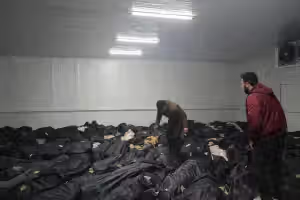
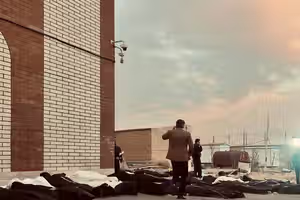
"Those sitting abroad who present themselves as intellectuals and scholars, yet say 30,000 or 40,000 people were killed, are dishonorable and traitors," he said in the video interview.
His remarks prompted a wave of criticism from citizens who sent messages to Iran International, with many accusing the president himself of bearing responsibility for the killings.
"Mr. Pezeshkian, this is disgraceful. Stop lying and have some shame," one said. "Your hands are stained with the blood of tens of thousands of Iranian protesters. Curse all of you killers and the remaining figures of the Islamic Republic."
Others argued that even the official death toll acknowledged by his administration warranted accountability.
"Sitting there and saying 3,000 people were killed – first of all, this is not about the number," one citizen from Arak said. "Even if it were those 3,000 people you admit were killed, you should answer for every single one of them."
Another viewer wrote that if Iran had "a normal government," Pezeshkian should face punishment simply for acknowledging that thousands had been killed.
"So if, by your own account, 3,000 people were killed, that's acceptable?" another message read.
Government figures disputed
In mid-February, Pezeshkian's office published a list containing the names of 2,986 people it said were killed during the January protests, saying it had been compiled using data from the Legal Medicine Organization and cross-checked with the National Organization for Civil Registration.
The figure is far below Iran International's editorial board estimate of at least 36,500 people killed during the crackdown. Several international media outlets have also cited similar estimates.
Pezeshkian has repeatedly accused protesters of carrying out armed attacks and sabotage.
In his latest interview, he again described protesters as having been armed by US President Donald Trump, referred to the crackdown as an "incident" and said demonstrations had turned into a "riot" in which "difficult events" occurred.
One person responded by invoking a Quranic verse.
"If your memory serves you, the Quran you probably believe in says killing one innocent person is like killing all humanity," the message read. "Yet you speak about 3,000 deaths as though nothing important happened."
Another accused the president of contradicting earlier official accounts.
"It is interesting that you say terrorists killed the victims, yet you become angry at those who say the real figure is 40,000 and call them traitors," he wrote. "That amounts to admitting that the terrorists you blamed were actually yourselves."
Activists challenge official narrative
Human rights activist and former political prisoner Mehdi Mahmoudian also criticized Pezeshkian's remarks.
"Please explain who killed the several thousand people whose deaths you yourself do not deny, and what those responsible for this crime should be called," Mahmoudian wrote.
Separately, critics resurfaced comments by Mojtaba Lotfi, a cleric and former aide to the late Grand Ayatollah Hossein Ali Montazeri, who argued that the government's casualty list had been censored.
Referring to his hometown of Najafabad, Lotfi wrote that local records indicated at least 30 victims from the city had been omitted from the official list, suggesting the government's figures were incomplete.
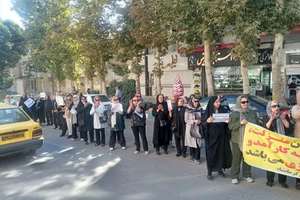
“The pension is only enough to cover the equivalent of 13 days of basic work,” one woman receiving her late husband's pension told Iran International, describing monthly payments as far below the cost of supporting her family.
Other retirees also told Iran International that decades of contributions to the social security system have left them with pensions insufficient to meet basic expenses.
Several said that after 35 years of paying into the system, they now receive around 220 million rials ($117) a month, an amount they say does not even cover rent in many parts of the country.
The average monthly income in Iran is approximately $150 to $200, depending on fluctuations in the open market currency rate. This level of income falls far short of the cost of living, which requires around $385 to $400 per month to afford basic necessities like food and housing.
“Last year my husband's pension was 90 million rials ($48). This year it has increased by about 22% to 110 million rials ($58),” another woman supporting her two children told Iran International.
Many said they have turned to driving for ride-hailing services or other informal work after retirement to supplement their income.
Official data show year-on-year inflation for food and beverages has remained above 130% in recent months, placing further pressure on households already struggling with rising living costs.
Pension system under growing strain
The financial hardship described by pensioners reflects broader strains on Iran's retirement system, which has faced mounting funding shortages and growing concern over the sustainability of pension funds.
Mostafa Salari, head of the Social Security Organization, said on July 13 that the organization faces an 820 trillion rials ($436 million) funding gap to pay pension arrears for the first two months of the Iranian year and is also struggling to finance July payments.
The government has also moved to raise the retirement age as it seeks to ease pressure on the pension system, a step that has drawn criticism from labor advocates.
Economists have for years warned that demographic pressures, underfunding and broader economic problems have left Iran's pension funds increasingly vulnerable.
In 2022, Sajjad Padam, then director-general for social insurance at the Ministry of Labour and Social Welfare, warned that even selling three million barrels of oil a day without sanctions would not be enough to resolve Iran's pension crisis, underscoring the depth of the structural challenges facing the country's retirement system.
The complaints came as the energy ministry called for consumers to reduce electricity use by at least 10%, warning that high temperatures are expected to push demand above 75,500 megawatts in the coming days.
"Electricity has been out since 2 a.m. and it's now 5 a.m. We still don't have power," one resident in Islamshahr, near Tehran wrote.
Average temperatures, the ministry said, are forecast to reach around 41 degrees Celsius between July 14 and July 18 and remain unusually high through the following week. It urged households to set air conditioners to 25 degrees Celsius, switch off unnecessary electrical appliances and move heavy electricity use outside peak hours to preserve grid stability.
The outages come against the backdrop of a widening structural energy deficit. The latest Statistical Review of World Energy by the Energy Institute found Iran's electricity generation increased by only 1% last year and natural gas production by 1.3%, a sharp slowdown from the previous decade and well below the pace needed to meet rising demand.
Years of underinvestment, delayed infrastructure projects and international sanctions have left the country increasingly unable to meet its own energy needs despite holding some of the world's largest oil and gas reserves.
Residents report outages across Iran
Accounts shared pointed to repeated outages in Tehran province, Alborz, Khuzestan and Fars, with many residents saying electricity was cut for two to three hours at a time.
"Power in Fardis of Karaj went out twice on Thursday – first from 7 a.m. to 7:50 a.m. and then again from 10 until 12:10 p.m.," one resident wrote.
Another in Shiraz said electricity was cut shortly after 1 a.m. on Thursday, while residents in Karaj, in the vicinity of Tehran, also reported another evening blackout.
Several messages came from the southern Khuzestan province, where temperatures regularly climb well above 40 degrees Celsius during the summer.
"They've started the two-hour power cuts again in this unbearable heat," one citizen wrote. "Then they ask what we're supposed to do if power plants are hit."
Another resident questioned why shortages persist despite the province's energy resources.
"With this intense heat in Khuzestan, why should a country this rich suffer shortages of water and electricity?" the resident wrote. "They've started cutting both for at least three hours a day again. Inflation has already broken people's backs."
One person in Masjed Soleyman, Khuzestan province, described losing both electricity and water for three hours, ending the message with a call for public protests.
Food, water and daily life affected
Several said the outages were disrupting everyday life beyond the inconvenience of losing air conditioning.
"I went through so much hardship and debt to buy meat and fish," one resident wrote. "By the time I got home, the electricity went out and we've been without power for three hours. The meat I struggled to buy is spoiling."
Another wrote: "Every day it's either the water or the electricity, or they dig up the streets and take forever to fix them. We live in a city with abundant oil, yet there's poverty and unemployment."
The energy ministry said climate studies show the southern provinces of Hormozgan, Bushehr, Khuzestan, Sistan and Baluchestan and Ilam experience the country's longest periods of extreme heat, placing the greatest strain on the electricity network during the summer.
Officials said reducing air-conditioner settings by one degree and improving energy efficiency could significantly lower demand, urging consumers to conserve electricity to help maintain supplies during the prolonged heatwave.
Messages from Shiraz and Mashhad also described overnight or daytime power cuts, while another resident complained that either electricity or water was being interrupted almost daily.
Officials say prolonged high temperatures have sharply increased electricity demand, particularly in southern provinces, where cooling accounts for a large share of consumption.
Energy experts cited by state media say raising air-conditioner settings by one degree Celsius could reduce cooling demand by roughly 2.5%, while improving the efficiency of cooling equipment and buildings could further lower electricity consumption.