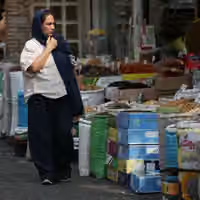
File photo shows a shopkeeper using a gas-powered lantern inside a darkened store during a power outage in Iran.
Power and water outages have returned to several parts of Iran, residents across the country told Iran International on Friday, describing hours-long blackouts during intense summer heat despite official assurances the electricity network remains stable.
The complaints came as the energy ministry called for consumers to reduce electricity use by at least 10%, warning that high temperatures are expected to push demand above 75,500 megawatts in the coming days.
"Electricity has been out since 2 a.m. and it's now 5 a.m. We still don't have power," one resident in Islamshahr, near Tehran wrote.
Average temperatures, the ministry said, are forecast to reach around 41 degrees Celsius between July 14 and July 18 and remain unusually high through the following week. It urged households to set air conditioners to 25 degrees Celsius, switch off unnecessary electrical appliances and move heavy electricity use outside peak hours to preserve grid stability.
The outages come against the backdrop of a widening structural energy deficit. The latest Statistical Review of World Energy by the Energy Institute found Iran's electricity generation increased by only 1% last year and natural gas production by 1.3%, a sharp slowdown from the previous decade and well below the pace needed to meet rising demand.
Years of underinvestment, delayed infrastructure projects and international sanctions have left the country increasingly unable to meet its own energy needs despite holding some of the world's largest oil and gas reserves.
Residents report outages across Iran
Accounts shared pointed to repeated outages in Tehran province, Alborz, Khuzestan and Fars, with many residents saying electricity was cut for two to three hours at a time.
"Power in Fardis of Karaj went out twice on Thursday – first from 7 a.m. to 7:50 a.m. and then again from 10 until 12:10 p.m.," one resident wrote.
Another in Shiraz said electricity was cut shortly after 1 a.m. on Thursday, while residents in Karaj, in the vicinity of Tehran, also reported another evening blackout.
Several messages came from the southern Khuzestan province, where temperatures regularly climb well above 40 degrees Celsius during the summer.
"They've started the two-hour power cuts again in this unbearable heat," one citizen wrote. "Then they ask what we're supposed to do if power plants are hit."
Another resident questioned why shortages persist despite the province's energy resources.
"With this intense heat in Khuzestan, why should a country this rich suffer shortages of water and electricity?" the resident wrote. "They've started cutting both for at least three hours a day again. Inflation has already broken people's backs."
One person in Masjed Soleyman, Khuzestan province, described losing both electricity and water for three hours, ending the message with a call for public protests.
Food, water and daily life affected
Several said the outages were disrupting everyday life beyond the inconvenience of losing air conditioning.
File photo shows a patient lying on a hospital stretcher during a power outage at a medical facility in Iran.
"I went through so much hardship and debt to buy meat and fish," one resident wrote. "By the time I got home, the electricity went out and we've been without power for three hours. The meat I struggled to buy is spoiling."
Another wrote: "Every day it's either the water or the electricity, or they dig up the streets and take forever to fix them. We live in a city with abundant oil, yet there's poverty and unemployment."
The energy ministry said climate studies show the southern provinces of Hormozgan, Bushehr, Khuzestan, Sistan and Baluchestan and Ilam experience the country's longest periods of extreme heat, placing the greatest strain on the electricity network during the summer.
Officials said reducing air-conditioner settings by one degree and improving energy efficiency could significantly lower demand, urging consumers to conserve electricity to help maintain supplies during the prolonged heatwave.
Messages from Shiraz and Mashhad also described overnight or daytime power cuts, while another resident complained that either electricity or water was being interrupted almost daily.
Officials say prolonged high temperatures have sharply increased electricity demand, particularly in southern provinces, where cooling accounts for a large share of consumption.
Energy experts cited by state media say raising air-conditioner settings by one degree Celsius could reduce cooling demand by roughly 2.5%, while improving the efficiency of cooling equipment and buildings could further lower electricity consumption.
US President Donald Trump leaves following a press conference at the end of his participation in the NATO leaders summit in Ankara, Turkey, July 8, 2026.
President Donald Trump’s tougher rhetoric toward Iran and renewed US strikes have stirred mixed reactions among Iranians, from hopes for political change to fears of another long and unresolved conflict after months of living between war and peace.
The responses shared with Iran International and posted on X and Instagram pointed less to enthusiasm for military escalation than to exhaustion after nearly four months of conflict. Many described life in a state of “neither war nor peace,” where even short-term decisions have been put on hold.
They spoke of worsening economic pressure, constant anxiety and tighter security conditions, as the United States and Iran traded a fresh round of attacks on Wednesday and Thursday, throwing their fragile agreement to end the war into deeper doubt.
The US military said it struck about 90 targets across Iran after Trump said the interim deal with Tehran is over for him, citing Iranian attacks on shipping in the Strait of Hormuz.
Iran responded with strikes on US-linked targets in Qatar, Bahrain and Kuwait, as both sides accused each other of violating the interim agreement.
The Pentagon said it targeted Iranian military sites involved in attacks on commercial shipping.
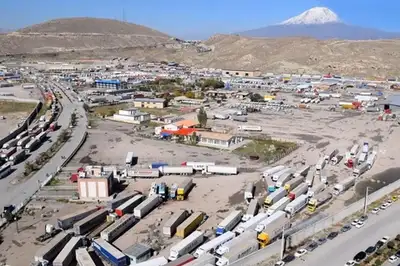
Iran’s foreign ministry said the US strikes hit civilian infrastructure, including two railway bridges on the route to Mashhad, where authorities planned to bury former Supreme Leader Ali Khamenei on Thursday. Fars said one was the Aq Taqeh Khan railway bridge in Golestan province, part of a northern route to China and Russia that became more important after the US blockade of Iran’s Persian Gulf ports.
Many messages sent to Iran International linked the timing of the strikes to Khamenei’s funeral, saying they disrupted what the Islamic Republic had tried to stage as a show of unity and political continuity.
“I hope this time the war makes a difference and this cancer is removed from the root. We’re all suffering,” one citizen wrote.
Others saw Trump’s tougher language as a sign that diplomacy with Tehran had reached a dead end.
“Should we tell Trump, ‘We told you so,’ or is it still too early?” one message read.
Another wrote: “Mr. Trump seems to have only just realized what kind of creature he is dealing with.”
Several urged Trump not to return to negotiations.
“Mr. Trump, Mr. Netanyahu and NATO leaders, have you realized yet that negotiating with the Islamic Republic is a waste of time?” one message said.
Another person in Tehran wrote: “Mr. Trump, you say bad days are coming for Iran. Come here for one day. If you find even one good day under the Islamic Republic, you’ll see the hell they have created for the people.”
Hope tempered by fear
Despite welcoming Trump's apparent shift away from diplomacy, several said they feared another drawn-out conflict that would deepen economic hardship without bringing meaningful political change.
"Mr. Trump, please stop. We don't know whether to worry about war, inflation, the dollar or our future," one citizen wrote.
Another said: "I'm only worried that war starts again but nothing changes. If war is inevitable, I hope it benefits the people of Iran."
Some openly encouraged stronger military action.
"President Trump, please finish the job quickly. People, don't lose hope. Our day of freedom is near," one message read.
Another added: "I'm a Trump supporter. I like him. He's a superpower that nobody can challenge. But sometimes he goes off script. Please, President Trump, finish the job this time. It's hard living in your own country with a group of criminals."
Others remained skeptical, saying Trump's previous preference for negotiations made them doubt whether the latest strikes would ultimately produce lasting change.
'Mohammad Something' becomes an instant meme
Trump's remarks on Wednesday also generated a wave of satire after he seemingly referred to chief negotiator Mohammad-Bagher Ghalibaf as "Mohammad something" while describing US surveillance of Iran's nuclear facilities.
The phrase quickly became one of the most widely shared jokes among Persian-language users on X, spawning countless memes aimed at senior Iranian officials.
X user Amin Parvin wrote: "We are living in a state of no war, no peace, no ceasefire and Mohammad Something."
Another user wrote: "Mohammad Something, Mojtaba (Khamenei) Nothing. You've become the laughing stock of the world."
Many directed the joke at Ghalibaf’s page after Trump appeared unable to recall his name.
"Mohammad Something, write your will. Trump didn't even bother learning your surname," one post said.
Another wrote: "Mohammad Something, it looks like this time it's your turn."
Reading Trump's strategy
Beyond the humor, users also debated whether Trump's harsher rhetoric signaled the abandonment of diplomacy or a negotiating tactic designed to force Iranian concessions.
"Trump is playing cat and mouse with them. He doesn't want a full-scale war yet. He's waiting for their response before deciding what to do next," one X user wrote.
Another posted: "I'm genuinely happy Trump is finally seeing their true nature."
Others argued Trump still preferred a negotiated settlement but believed military pressure had become his principal leverage.
"Trump loves being able to say he defeated them without war, so he's trying to disarm them through negotiations," one user wrote. "But their file is closed. Trump himself has said they'll lose their uranium either through negotiations or through war."
Visitors at a book fair in Tehran pass an installation showing the faces of children killed in the Minab school attack in the early hours of US-Israeli strikes on Iran
The strangest feeling in Tehran today is not fear or even despair. It is the sense that the fate of our country is being decided everywhere except by the people who live in it.
We watch as others decide whether there will be war or peace, confrontation or diplomacy, isolation or some grand bargain. We analyse statements, follow rumours and wait for signals from politicians and commanders.
But somewhere along the way, ordinary Iranians seem to have disappeared from the conversation.
Earlier this week, the familiar cycle began again: attacks near the Strait of Hormuz, US retaliation and then President Trump declaring that the agreement meant to end the crisis was dead. The same Iranian leaders he had called reasonable enough to negotiate with were suddenly “crazy” and “dishonourable.”
Watching from Tehran, it is difficult to know what we are supposed to make of it all. We can only wait to find out what happens next.
The city itself has returned to something resembling normal life. It is not the Tehran of the war, when streets emptied and every sound carried a threat. Cafes and restaurants are open again. People go to work, sit in traffic, pick up and put back fruit they can no longer afford—and, of course, curse those they blame for making life so miserable.
But beneath that return of noise is a strange numbness.
Before the war, some politicians at least spoke about listening to society. Few people believed them, but the language existed: reconciliation, reform, understanding people’s anger. Now even the performance has disappeared.
The same state that can negotiate with those it describes as enemies seems unable or unwilling to begin any meaningful conversation with its own society.
The contrast was visible after Khamenei’s death. The state showed how quickly and effectively it could mobilise when it wanted to: streets filled, ceremonies organised, a national moment of mourning created.
But many families whose children were killed during the January protests were denied something far simpler: the ability to grieve freely, to hold funerals without pressure, to mourn without fear.
It all might have been easier if the outside world offered a different answer. But it rarely does.
President Trump says his goal is denuclearisation. That’s it. Governments obviously pursue interests, not justice. But for those of us living with the consequences, it is another reminder that Iran is often discussed as a problem to solve rather than a society of millions trying to breathe.
So it can feel as if there is no one to trust and no one truly listening. The collective anger has turned into something closer to disbelief and despair. Maybe that is why Tehran looks the way it does now. Not defeated, not dead, not even quiet. Just tired.
People continue because they have no choice. They already protested in 2022. They protested again in January. They risked prison, bullets and death. There is no obvious next step that has not already been tried.
So life goes on, but with very few plans. Nobody knows what tomorrow looks like.
We have not given up on our country. We’re just coping with the realisation that everyone else seems to have a say in its future before we do.
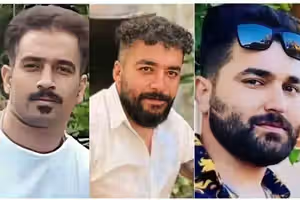
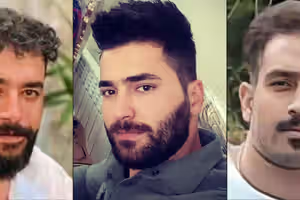
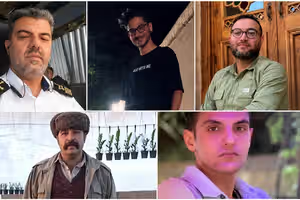
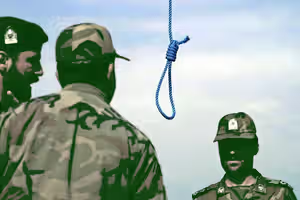
Twelve protesters in Isfahan face imminent execution after Iran’s Supreme Court upheld death sentences in a case built around the alleged killing of four Basij members, a lawyer familiar with the case told Iran International.
The case stems from protests on January 8 at Alikhani Square in Isfahan, where authorities said four Basij members were killed.
According to the lawyer, 59 people were initially arrested after the incident.
The lawyer said 23 of those detained were sentenced to between five and 10 years in prison, even though they were not accused of directly taking part in the deaths and appeared to have been added to the case to strengthen the prosecution’s broader narrative.
Twelve others were sentenced to death.
The lawyer said the Supreme Court upheld the death sentences on July 5 and the case has now been sent to the sentence enforcement branch of the Isfahan Revolutionary Court, raising fears that the executions could be carried out soon.
The prosecutor in the case is Mohammad Nakhjavan, according to the information received. The judges are Mohammad Barati-Dorcheh and Mohammad Tavakoli, also known as Vakili.
Tavakoli previously served as a judge in the “Khaneh Isfahan” (Isfahan House) case, another protest-linked case in Isfahan that ended with the execution of Saleh Mirhashemi, Majid Kazemi and Saeed Yaghoubi in May 2023.
The lawyer said the defendants in the Alikhani Square case were denied access to independent lawyers during the trial stage and were represented by court-appointed attorneys.
The lawyer also said the court blocked defense lawyers from accessing the full case files.
The 12 protesters sentenced to death are mostly very young men. Three were born in 2007 and were around 17 or 18 at the time of the January 2026 protests. Several others were born between 2004 and 2006, and one is an Afghan national. Two brothers are among those facing execution.
The judiciary has not publicly responded to the allegations about denial of access to independent counsel and case files.
The case fits a pattern seen in several protest-linked capital cases in Iran, where the reported deaths of security personnel or pro-government forces have been followed by broad arrests, charges carrying the death penalty and claims by families, lawyers and rights groups that defendants were denied fair trial guarantees.
Rights groups have warned that Iran’s use of death sentences in protest cases has become a tool of intimidation, particularly after periods of unrest, with executions used to send a message far beyond the individual defendants.
Amnesty International said in February that at least 30 people were facing the death penalty over alleged offences linked to the January 2026 protests, including eight people sentenced to death after expedited and “grossly unfair” trials.
The Center for Human Rights in Iran said in April that at least 22 political prisoners had been executed in six weeks, including 10 people detained during the January protests, in cases it said were marked by secretive proceedings, torture, forced confessions and lack of due process.
Human Rights Watch said the January unrest was met with mass killings, arbitrary arrests and severe communications restrictions, with thousands of protesters and bystanders believed to have been killed after protests escalated on January 8.
The new Isfahan case raises the number of protest-linked prisoners facing imminent execution and adds to fears that Iran’s judiciary is accelerating capital punishment in cases tied to the January uprising.
A screen grab from Hassan Nemazee’s interview with Iran International
Hassan Nemazee inherited one of Iran’s best-known charitable legacies, lost his family’s fortune to the 1979 revolution and later found a new cause inside a US prison: justice reform.
A businessman, philanthropist and Democratic fundraiser, Nemazee told Iran International that the revolution, the confiscation of his family’s assets and his years in prison reshaped how he thinks about Iran, freedom and justice.
In Shiraz, the name Nemazee Hospital remains more than the name of a medical center. It is a reminder of a philanthropic legacy built decades before the Islamic Republic, when Nemazee’s father used his fortune to create institutions that served the public.
“My father made his fortune outside of Iran and he repatriated that fortune to Iran,” Nemazee said. “He built the first modern hospital, the first modern nursing school, the first modern orphanage, and the first modern medical school.”
He said his father also built the country’s first piped water system, both to provide clean water for the hospital and to help finance free medical care for local residents.
“What he did was unique,” Nemazee said. “Most Iranians of that time and afterwards made their money in Iran and took it out. Philanthropy was an unknown process at that time.”
A legacy in Shiraz
Born in Washington, DC, and educated in the United States, Nemazee returned to Iran at 22 after his father’s death. He said he saw no other choice.
“There was no choice for me to do anything other than return to Iran when my father passed away,” he said.
Continuing his father’s work in Shiraz, he added, gave him “the greatest satisfaction” of his life.
Nemazee became chairman of the board of Nemazee Hospital, the nursing school and the Shiraz Waterworks, and also oversaw the family’s broader charitable institutions through Bonyad Iran.
At the same time, he entered business during what he described as Iran’s “golden years” of rapid economic growth before the revolution. He invested in insurance, banking and real estate, including joint ventures with major American institutions.
That life ended abruptly when he left Iran in December 1978 for what he expected to be a short business trip to the United States.
“I left Iran on what I thought would be a two-week business trip,” Nemazee said. “The Shah left in January of 1979. Khomeini returned in February of 1979. And in March, the Iranian government nationalized 51 families. We were one of the 51 families.”
He said the confiscation covered nearly everything he owned in Iran.
“Everything that I owned in Iran, my house, my possessions, horses, dogs, bank accounts, land, factories, everything was confiscated,” he said.
Nemazee said many people initially believed the revolution would target only the Shah and those closest to him, but its reach quickly widened.
“The revolutionaries had an agenda, and the agenda was to completely eradicate a certain level of people within the Iranian society,” he said.
The entrance of Nemazee Hospital in Shiraz
Politics after exile
After returning to the United States, Nemazee rebuilt his life in business, philanthropy and politics.
He became a prominent Democratic fundraiser and developed close ties with Bill and Hillary Clinton, as well as other senior Democrats including John Kerry, Al Gore, Joe Biden and Barack Obama.
He said his entry into American politics was partly shaped by the lesson he drew from Iran.
“I decided that I didn’t want to make the same mistake that I believe I had made in Iran, and that was abdicating any political responsibility for the country in which I lived,” he said.
President Bill Clinton later nominated Nemazee to serve as US ambassador to Argentina, but the nomination was blocked in the Senate. Nemazee summed up the reason in one word: “Politics.”
Years later, his life took another dramatic turn.
Nemazee pleaded guilty in the United States to inflating assets in loan documents, but said the banks did not lose money and that his punishment was excessive.
“The truth of the matter is that those assets were inflated,” he said. “The truth of the matter is as well that the banks never lost any money.”
He was sentenced to 12 years in prison and entered prison on August 27, 2010. He served nine years before being released in 2019 under the First Step Act, a criminal justice reform law signed by President Donald Trump.
A longtime Democrat, Nemazee said he remains grateful to Trump for signing the law that allowed his early release.
“You have to give credit where credit is due,” he said. “It is ironic but true that Donald Trump was responsible for my coming home early.”
A prison sentence becomes a cause
Nemazee said prison changed the course of his life. While incarcerated, he read 2,651 books, wrote two books, taught GED classes and mentored hundreds of fellow inmates.
He said a friend had advised him before prison not to see the sentence only as lost time, but as “a gift of time” to write, teach, exercise, read and mentor others.
After his release, Nemazee turned much of his attention to criminal justice reform and helping former prisoners rebuild their lives.
He now serves on the board of the Fortune Society, a New York-based organization that supports former inmates with housing, education, employment and reintegration.
Nemazee said the United States has failed by imprisoning too many people for too long.
“The United States has 5% of the world’s population, yet it has 25% of the world’s prisoners,” he said. “That’s a statistic that is not only morally wrong, it’s economically unfeasible.”
He said many former prisoners face basic barriers after release, including difficulty opening bank accounts, finding housing and securing jobs.
“How can you begin to put your life back together if you don’t have the fundamental rights that every other human being has?” he said.
Despite the upheavals in his own life, Nemazee said he still hopes to return one day to Shiraz.
“I would love to be able to return to Shiraz. I would like to return to Iran,” he said. “It’s been 46 long years. It’s time for Iran to be able to turn the page and for all Iranians to have the freedoms that they so richly deserve.”
Asked what he would have done if the revolution had not happened, Nemazee said he would probably have continued the life he was building in December 1978: running businesses while expanding the hospital, nursing school, vocational schools and orphanages linked to his family’s legacy.
“Iran is a country of magnificent talent and opportunities,” he said. “It’s unfortunate that it’s taken this moment in history during our lifetimes to not allow the people of Iran to progress in the ways that they deserve to progress.”
His is a story of loss and reinvention, but also of Iran itself: what was built, what was lost, and what future the country may still choose.
The Islamic Republic's state funeral for Ali Khamenei has drawn criticism over its attendance, the extensive public resources devoted to the event and what many Iranians described as an unsuccessful attempt to project political strength, following the burial ceremony.
Images and videos from Tehran's prayer ground complex prompted widespread discussion among Iranians, with many saying attendance fell short despite an extensive state mobilization effort.
Messages sent to Iran International argued authorities relied on government employees, security forces, organized transportation, free meals and public holidays to maximize turnout, yet still failed to fill the designated venue.
For many, the relatively sparse gathering represented more than a logistical disappointment.