Tehran ignored warnings of unrest, chose force over reform
The protests that erupted across Iran in January 2026 may have appeared sudden to outside observers but inside the country, they were anything but.

The protests that erupted across Iran in January 2026 may have appeared sudden to outside observers but inside the country, they were anything but.

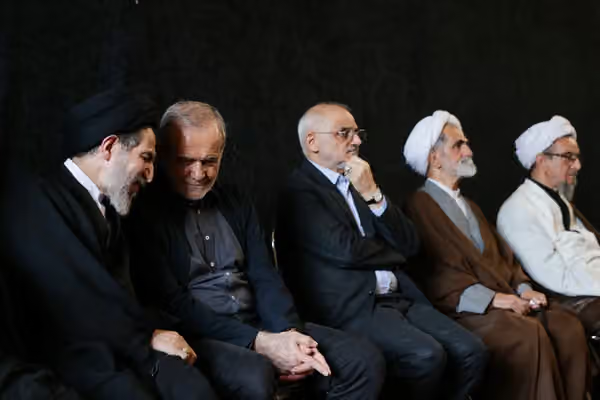
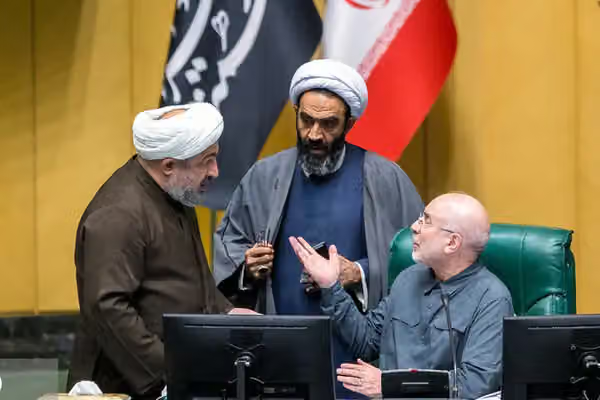
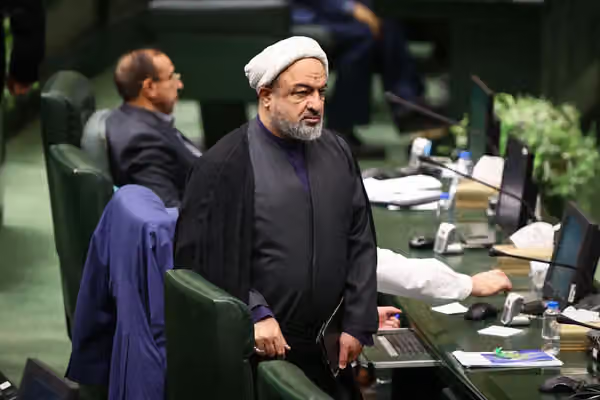
Iran’s parliament has halted impeachment proceedings against several cabinet ministers, a member of the parliament’s presiding board said on Monday, citing guidance from the Supreme Leader to support the administration.
Iranian lawmakers on Monday likened US President Donald Trump to the biblical Pharaoh and praised Supreme Leader Ali Khamenei as Moses, in rhetoric aired during a parliamentary session amid heightened tensions with Washington.
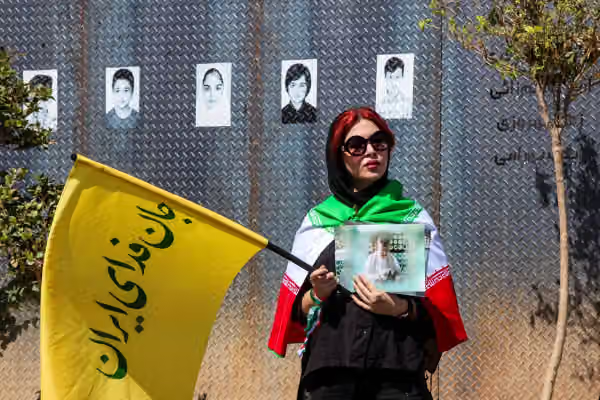
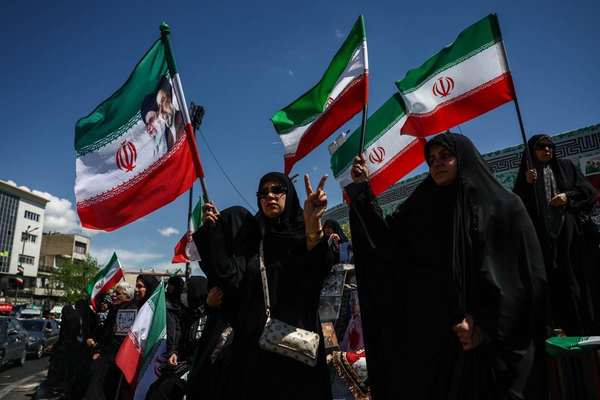
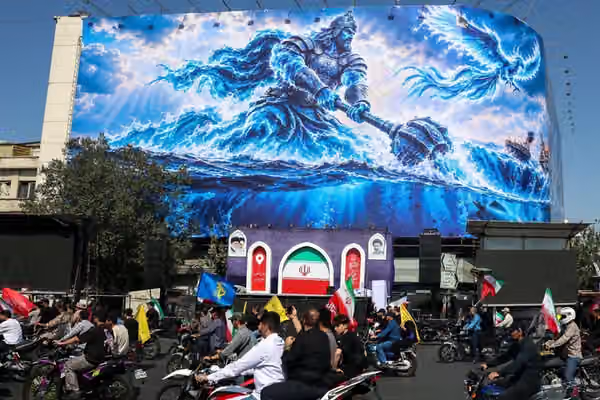
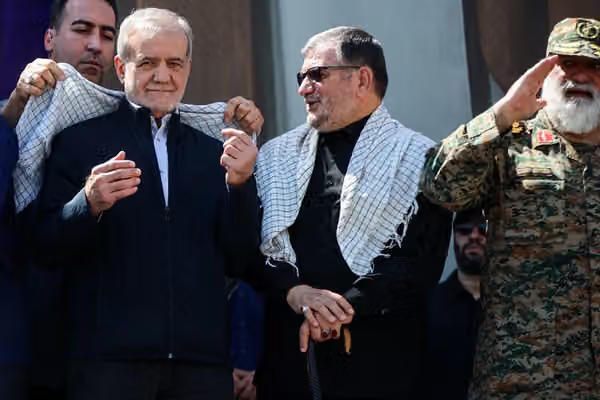
Tehran on Monday conducted large pro-government rallies in several cities intended to counter the nationwide protests challenging its rule, in a strategy it has deployed against previous bouts of mass unrest ultimately crushed by deadly force.

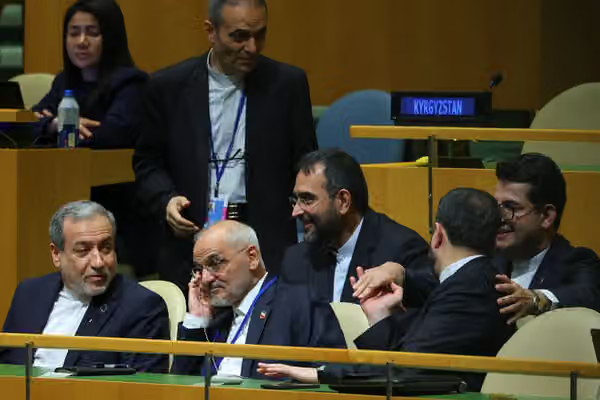
Iranian officials have begun publicly blaming one another and foreign foes for ongoing unrest across the country, exposing sharp divisions in Tehran on one of the greatest challenges yet to the Islamic Republic.

Iran’s protest slogans have shifted from reformist appeals in the 2009 Green Movement demonstrations to more prominent calls to reinstate the monarchy ousted in 1979, transcending Tehran's central political divide between moderates and hardliners.

The seizing of Venezuela’s Nicolas Maduro by US forces over the weekend has sharpened debates in Tehran about President Donald Trump’s endgame in Iran, as anti-government protests across the country enter a second week.

No one can say with certainty whether the current protests will spiral into a revolution. But analysts tell Eye for Iran it is becoming harder to ignore signs that Iran’s theocracy may be entering a period of repeated crises that challenge its ability to function as a state.

As protests once again ripple across Iran, the country’s political establishment is moving quickly to revive an economic reform agenda that many Iranians say no longer speaks to the core of their anger.

Tehran’s response to the protests this week has looked markedly different, whether out of calculation or necessity, with Iranian media reporting on the unrest, the government striking a conciliatory tone and the internet remaining largely accessible.

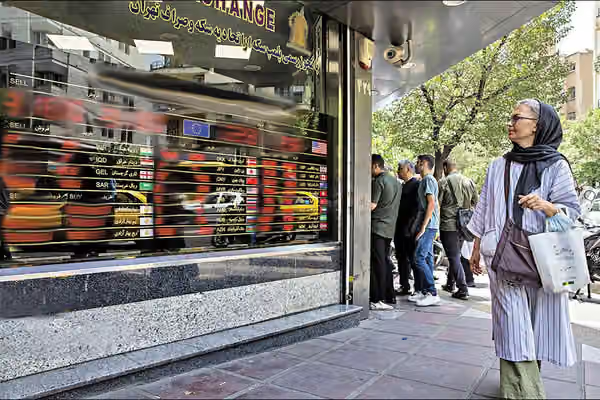
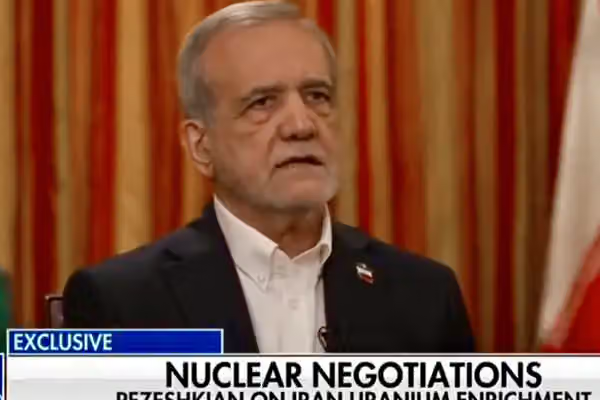
Iranian President Masoud Pezeshkian said on Thursday that his government would stop distributing a heavily subsidized exchange rate, blaming the system for encouraging rent-seeking and failing to protect households despite billions of dollars in state support.

Iran’s Supreme Leader has appointed Ahmad Vahidi as deputy commander-in-chief of the Islamic Revolutionary Guard Corps (IRGC), replacing Ali Fadavi, who was moved to head an advisory group under the IRGC commander.

Iran risks sliding deeper into economic and security crises without a fundamental change in its governing approach, a former Revolutionary Guards commander said, adding that he sees no sign the leadership is prepared to make such a shift.

Demonstrations across Iran, initially sparked by economic hardship and the sharp fall of the national currency, continued for a third day on Tuesday, drawing in university students as authorities deployed force and made multiple arrests.

Iran’s president has offered to rewrite his proposed 1405 budget after parliament rejected the draft, opening talks with lawmakers on pay rises, taxes and subsidies, the parliament speaker said.

Iran’s President Masoud Pezeshkian on Monday issued his first official response to the latest protests over worsening economic conditions, saying he has instructed his interior minister to hold talks with demonstrators.

Iran’s president has appointed former economy minister Abdolnaser Hemmati as the new head of the central bank, state-linked media reported on Monday, confirming a leadership change amid turmoil in currency markets.

Iran’s judiciary warned on Monday that it would pursue and punish individuals accused of disrupting the country’s economic system, as authorities face mounting pressure from a collapsing currency, high inflation and widening public unrest.

Iran’s judiciary on Monday denied reports that the country’s top political leaders had approved the retention of the central bank governor, pushing back against swirling speculation over his fate as the rial slides to record lows and economic pressure mounts.

Iran’s audit watchdog pushed back on President Masoud Pezeshkian’s comments about fuel costs, warning officials against providing inaccurate data and saying gasoline imports this year were far lower than figures cited publicly.

Iran is losing soil faster than any other country, and restoring fertility in its vast Zagros mountain range would require diverting roughly half of annual oil revenues each year, a senior forestry expert said.

Iran’s President Masoud Pezeshkian told parliament the government could not afford to raise wages in line with inflation as lawmakers opened debate on the budget for the Iranian year starting in March, with a sliding currency and rising living costs adding pressure to the plan.