Visiting lecturer, Paris School of International Affairs (PSIA)
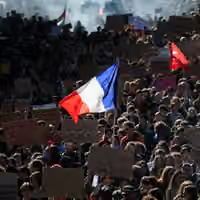
The French flag is hoisted during protests in Nantes, October 8, 2026.
Tehran has seized on protests by French high school students to accuse Paris of repression, seeking to obscure its own treatment of young Iranians by turning the language of human rights against one of its Western critics.
On October 6, Iran summoned French ambassador Pierre Cochard over the crackdown on high school demonstrations in France. The following day, Paris summoned Iran’s ambassador, accusing Iranian authorities of spreading disinformation through official Foreign Ministry accounts.
The diplomatic exchange reveals how the Islamic Republic appropriates the language of rights while denying those rights at home. It is also a struggle over the meaning of protest and who can claim to defend it.
Tehran seeks to reposition itself as an accuser, turning scrutiny away from its own security apparatus and toward a government that has condemned Iranian repression.
Internationally, Tehran seeks to weaken the authority of European criticism. Domestically, the diplomatic spat offers supporters reassurance that Western governments also face rejection. Neither objective requires solidarity with the students themselves; both require their images and grievances to be repurposed in defense of the regime.
This tactic has precedent. During the Yellow Vest movement, Ali Khamenei condemned French police violence, while a small group of regime supporters gathered outside the French embassy in Tehran.
Some wore yellow vests and placed candles and photographs of injured French protesters outside the embassy. Their placards denounced police violence but also carried an explicitly ideological message: “If only the French people had an Imam Khomeini!”
A statement read at the gathering invoked France’s reception of Khomeini at Neauphle-le-Château forty years earlier and portrayed Emmanuel Macron’s government as cruel and despotic.
At the same time, Iranian authorities were cracking down on protests by pensioners, workers, teachers and students. Then, as now, the tactic allowed Tehran to answer criticism of its own repression by accusing its critics of hypocrisy. Human rights become an arena for diplomatic one-upmanship rather than obligations owed to citizens.
France’s conduct must, of course, be scrutinized on its own merits. Injuries to demonstrators, particularly minors, demand independent investigation and accountability. But the evidence concerning Iran is substantial.
In March 2024, the UN Independent International Fact-Finding Mission concluded that violations committed during the repression of “Woman, Life, Freedom” included crimes against humanity.
Its findings encompassed murder, imprisonment, torture, rape and other sexual violence, persecution and enforced disappearance. The mission documented the involvement of state institutions and security forces, undermining attempts to portray the violence as a series of isolated excesses.
On September 17, 2026, the same mission reported that Iranian authorities had also committed crimes against humanity during the crackdown on protests that began in late December 2025 and continued into January.
Generation Z played a crucial role in “Woman, Life, Freedom” following Mahsa Amini’s death in September 2022. Schoolgirls removing their headscarves, teenagers challenging clerical authority and young women demanding control over their bodies exposed the limits of decades of ideological education.
The state had sought to reproduce loyalty. Instead, many young people asserted their right to determine how they would live.
Young Iranians mobilized again in the protests that began in late 2025, bringing another generation raised entirely under the Islamic Republic into confrontation with the state. Their rejection of its prescribed norms challenges the assumption that political control necessarily produces ideological consent.
The authorities’ response combines repression with continued recruitment into structures of loyalty. The Basij, under Revolutionary Guards command, provides a network for ideological discipline and security mobilization.
Human Rights Watch and Amnesty International have reported that an IRGC recruitment campaign accepts children as young as twelve, with Amnesty documenting children carrying weapons and serving at checkpoints and on patrols.
This goes beyond patriotic rhetoric: it places children directly in harm’s way. The state invokes the protection of young people abroad while drawing children into its military apparatus at home.
Yet Iranian youth cannot be divided neatly between those who serve the regime and those who confront it. Many seek simply to build lives apart from official Iran. Their resistance is not limited to protest: it also finds expression in everyday acts—choosing what to wear, loving, dancing, listening to music, nurturing friendships and keeping parts of their lives beyond the authorities’ control.
This has produced a form of what might be called “secular separatism”: an attempt to shield personal life from the regime’s ideological grip.
Within social, cultural and emotional circles, and spaces of celebration, another, fragile society is taking shape, though access to it inevitably varies with resources and social background.
Joy itself can become a way of asserting autonomy. Under a regime that glorifies martyrdom and encourages citizens to denounce one another, the simple acts of enjoying life and pursuing happiness acquire political meaning.
Tehran claims to speak for French high school students. It should begin by listening to young Iranians who aspire to build their own lives.
A 17-year-old boy died in custody in Iran’s Isfahan province after the IRGC’s paramilitary Basij forces beat him during his arrest and a judge refused his father’s plea for hospital treatment, a source familiar with the case told Iran International.
Omid Ghanouni, from Arjanak village in Khansar county, died during judicial questioning at the Khansar courthouse on Tuesday, October 6, less than 24 hours after his arrest, according to the source.
He was detained on Monday evening, following a verbal dispute with a Basij member. Basij forces severely beat him with rifle butts before handing him over to police, the source said.
Ghanouni spent the night at Vist police station and was taken to the courthouse the following morning.
Father’s plea for hospital treatment rejected
During questioning, Ghanouni was suffering from severe abdominal pain and was visibly unwell, according to the source.
His father, who was at the courthouse, asked judicial officials to allow his son to be taken to hospital. He even offered to remain in custody in his son’s place so the teenager could receive treatment.
The judge rejected the request and questioning continued, the source said. Ghanouni then collapsed from his chair and died at the courthouse. His body was subsequently taken to Khansar’s Fatemiyeh Hospital.
Medical staff at the hospital identified internal bleeding as the cause of death, according to the source, who also described extensive bruising and injuries on the teenager’s body and face.
The source said there had been obstruction in the process of referring his body for forensic examination.
A funeral notice for 17-year-old Omid Ghanouni, who died in custody in Iran’s Isfahan province on October 6, 2026.
Iran International has not yet obtained an official forensic report or independent medical records confirming the cause of death.
Ghanouni was buried in his home village on Thursday, October 8. His family has come under pressure to remain silent about the circumstances of his death, the source said.
Family demands answers
On Friday, Ghanouni’s family gathered outside Vist police station to demand answers from officials.
“Officers arrested him outside the house on Monday, October 5, and on Tuesday, October 6, the Khansar courthouse handed me my son’s body,” his mother told officers. “Tell me what happened to my son.”
No official explanation from judicial or police authorities about the cause of his death was available at the time of publication.
The case follows other deaths in or after custody reported by Iran International in recent months.
Those include the deaths of Ali Hashemi and Akbar Mohammadi in Isfahan’s Dastgerd prison, Taghi Salimi in Amol prison and Arash Tolou Sheikhzadeh following arrest and interrogation in Mashhad. Reporting on those cases has included allegations of torture, denial of medical care and uncertainty over the causes of death.
In a separate case, Pejman Sourani, a 33-year-old man from Najafabad in Isfahan province, was killed on October 3 following a confrontation with government supporters at the Aminabad petrol station and a beating by security forces, according to information previously reported by Iran International.
Forensic officials identified blows to the head as the cause of Sourani’s death, according to the reporting on his case.
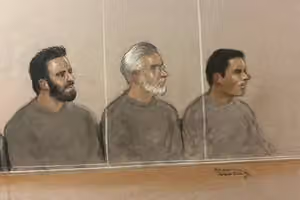
Court sketch from Woolwich Crown Court. Credit: SWNS/Julia Quenzler
Men accused of spying for Iran exchanged information about Iran International’s offices and presenter Kambiz Hosseini, while one defendant discussed money transfers and his legal troubles with contacts in Iran, a London court heard.
Jurors at Woolwich Crown Court were taken through photographs, messages and phone records documenting communications among the three defendants and between Mostafa Sepahvand and two men in Iran.
Sepahvand, 41, Farhad Javadi Manesh, 46, and Shapoor Qalehali Khani Noori, 57, have all pleaded not guilty to charges under Britain’s National Security Act 2023.
Prosecutors say they gathered information for Iranian intelligence to prepare for serious violence against at least one target, with Sepahvand expected to carry out an attack and the others helping to plan it.
Locations and social media
In an exchange on December 19, 2024, Sepahvand received a postcode from a UK mobile number and forwarded it to Javadi Manesh, the court heard.
The prosecutor told jurors the postcode identified the location of Volant Media, Iran International’s parent company. Sepahvand also forwarded the telephone number from which he had received it.
Messages from December 24 showed Sepahvand sending Javadi Manesh a photograph of Hosseini, a link to his Instagram account and information about Iran International’s website.
In one message, Sepahvand wrote: “go to insta and you will see both the dog and the car”.
The prosecution also reminded jurors of a video Noori had sent to Sepahvand showing a park where Hosseini walked his dog, Niko. Other messages referred to the dog’s name and a blue Volkswagen.
Jurors were shown photographs recovered from Noori’s phone depicting Malthouse Court in Brentford from several angles, taken from inside a car.
Prosecutors had previously told the court that Iran International journalist Mojtaba Pourmohsen lived there between 2019 and 2023, but the defendants appeared unaware he had moved.
The prosecution examined records of Sepahvand’s communications with Mostafa Ghorbani and another contact saved as “Amin Mostafa’s Friend”, both in Iran.
The exchanges included discussions about transferring money to Sepahvand and references to an account in his name at the Workers Welfare Bank.
Jurors also heard messages concerning Sepahvand’s court case in Iran. In one, Ghorbani wrote: “haji says your case will be fine”.
Sepahvand sent Ghorbani two Iranian court documents concerning vehicles linked to him. The documents included instructions to impound the vehicles and arrest Sepahvand if he was found driving them.
Shortly after sending the documents, Sepahvand called Ghorbani and the two spoke for nearly a minute and a half, according to the records presented to the jury.
In later exchanges, Sepahvand complained that nothing had happened with his case. The logs showed repeated attempts to reach Ghorbani, including unanswered calls in early January.
Prosecutors previously said Sepahvand wanted help resolving an Iranian criminal conviction, which they consider relevant to his motivation. Jurors were told not to treat the conviction itself as evidence against him.
A police witness was questioned about the dates, times and durations of calls and messages recorded in the logs, rather than asked to draw conclusions about their significance.
Defendants dispute prosecution’s account
According to the prosecution’s account of his defense, Sepahvand accepts conducting surveillance for Iran but says he feared the consequences of refusing and deliberately did a poor job. Prosecutors reject that account.
Javadi Manesh and Noori accept visiting locations and taking photographs and videos but say they did not know they were assisting Iranian intelligence, according to the prosecution.
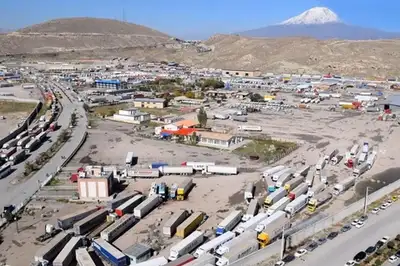
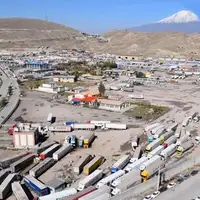
Iran has reached a preliminary understanding to allocate land at Chabahar to Taliban-run Afghanistan to build infrastructure for moving its goods to the sea, an Iranian lawmaker said.
Mohsen Zangeneh told Sahar TV during a visit to Afghanistan that the arrangement envisaged about 10 hectares along the waterfront inside Chabahar port and more than 100 hectares in the special zone in an initial phase. The Afghan government would invest in developing the facilities, he said.
“He proposed that we set aside an area in Chabahar for Afghanistan—in other words, that Afghanistan could have land of its own in the free zone at Chabahar port,” Zangeneh said, referring to Afghanistan’s industry minister.
Zangeneh did not specify whether the land would be leased or transferred into Afghan ownership. He said the Afghan side had requested more space within the port itself, but limited coastal land made that difficult.
“We reached this preliminary understanding during this visit and, God willing, we will follow up on it,” he said.
The discussions also covered wider industrial cooperation, a joint industrial park and a goal of increasing bilateral trade to $10 billion, according to Iranian media reports. Zangeneh described the land proposal as a way for Afghanistan to develop the infrastructure needed to transport its goods through Chabahar.
Baloch activists questioned how local residents would benefit, pointing to longstanding problems with housing, employment, infrastructure and access to basic services. They said arrangements for Afghan economic activity in Chabahar dated back to 2012, but questions about the share of development going to Baloch communities remained unanswered.
The Balochistan Human Rights Documentation Network said more than half of Chabahar’s population had at one point lived in informal settlements, with their expansion becoming a major problem for the area.
Against that backdrop, the group said, allocating land for foreign economic activity without disclosing its precise location, ownership arrangements, contract terms or duration of use had heightened concerns. It also questioned the lack of detail about local participation and employment.
Activists called on authorities to identify who would receive the land, disclose investment commitments and explain what obligations would apply to hiring local workers. They also sought clarity on how local communities would share in the revenue and business opportunities generated by the project.
“Write your will.”
Those were the words Iranian protester Erfan Nabian says he heard in solitary confinement before he was handed a sheet of paper and asked what he wanted for his final meal before his execution.
Nabian, whose legal name is Erfan Hajbonian Dehaghani, is a 26-year-old protester from Isfahan who was sentenced to death after being detained following Iran’s nationwide protests in January.
Speaking to Iran International from an undisclosed location, Nabian described torture, a coerced confession, a mock execution and imprisonment alongside protesters who were later executed.
Minutes after being told to write his will, blindfolded, he was led into another room and ordered to stand on a stool.
Then a noose was placed around his neck.
“All the memories of my life were coming before my eyes,” Nabian recalled. “I thought I would never see my family again.”
Even with the rope around his neck, Nabian said interrogators continued questioning him about the protests, his phone password and allegations linked to the Alikhani Square case, a mass prosecution stemming from deadly clashes during the January 8 protests in Isfahan, which he denied.
The noose remained around his neck for between five and 10 minutes, he said.
A confession under duress
Nabian said he was then placed in front of a camera and ordered to say he had not been beaten or physically harmed.
If he looked away or failed to give the answers his interrogators wanted, he said, they stopped the recording, beat him and started again.
After the filming, Nabian said a man told him: “You’re going to be executed. The sentence has been issued.”
Nabian asked to call his family. Permission was refused.
Minutes later, shackled to a bench, he asked again.
“Please, can you tell them to let me speak to my family? I want to hear my family’s voices for the last time.”
Only then, he said, was he told he would not be executed at that moment and would instead be transferred to prison.
From Alikhani Square to detention
Nabian said he had also joined Iran’s 2019 and 2022 protests.
On January 8, 2026, he joined demonstrations in Isfahan. At Alikhani Square, he said security forces were firing live ammunition at protesters. Four or five pellets struck his right leg.
Fearing arrest if he sought treatment at a hospital, Nabian made his way home. With no knowledge of how to remove the pellets, he cleaned and bandaged the wound himself as his leg began bleeding heavily.
Erfan Nabian removes pellets from his body after being shot during protests in Isfahan on January 8, 2026.
He said he later went back outside to look for a young girl who had become separated from her mother and found the child dead.
Despite what he had seen, Nabian returned to the streets the following day.
“We couldn’t turn a blind eye,” he said, referring to the violence he had seen on January 8 as protesters were shot at.
The events at Alikhani Square later became the basis for one of the most consequential capital cases to emerge from the January protests. Fifty-nine people were initially arrested and 12 were sentenced to death, according to a lawyer who spoke to Iran International.
UN experts led by Mai Sato, the UN Special Rapporteur on human rights in Iran, said the defendants were tried in a single closed hearing that violated fair-trial standards and raised concerns over the use of televised confessions.
Amnesty International separately described the proceedings as a “grossly unfair mass trial” and documented torture, forced confessions and denial of access to lawyers among defendants.
‘The Alef-Ta slaughterhouse’
Nabian said he was arrested on March 6 and taken to Ghaemieh police station.
There, he said, officers demanded the password to his phone and gave him an unidentified substance intravenously.
He was then transferred to a detention facility he identified as Alef-Ta in Isfahan.
Nabian described it as a roughly 10-story building used for solitary confinement and torture.
“I call it the Alef-Ta slaughterhouse,” he said.
He described being stripped, soaked with water and beaten with hoses and batons. At one point, he said, his arms were secured above him while he was beaten for around an hour.
Star of David tattoos and accusations of spying for Israel
Nabian said his tattoos became a particular focus for his interrogators.
They included Hebrew writing, a Star of David on the right side of his neck and ancient Iranian symbols, including the Derafsh Kaviani, on his arm.
He said interrogators repeatedly struck areas bearing the tattoos, including the Hebrew writing on his back.
Erfan Nabian is pictured with a Star of David tattoo on his neck in a photo posted on social media in November 2022.
“One of them kept saying, ‘I’ll beat you so much you’ll start speaking Hebrew,’” Nabian recalled.
He said interrogators accused him of being an Israeli spy, receiving money from Israel and undergoing training.
Nabian denied the allegations.
Dastgerd and the sentence
On March 20, Nabian was transferred to Dastgerd prison in Isfahan.
He said intake staff initially refused to admit him because of his injuries, including a broken finger and damaged knees.
His death sentence was later commuted to 11 years in prison, according to a court verdict reviewed by Iran International.
Nabian said the sentence included one year for propaganda and 10 years over alleged psilocybin possession. He denied the drug allegation and said authorities gave differing accounts of the amount.
Iranian authorities have previously faced allegations of bringing fabricated drug charges against political detainees.
Norway-based rights group Iran Human Rights has described the case of Iranian-Dutch protester Zahra Bahrami, arrested after the 2009 demonstrations and executed in 2011, as a fabricated drug case in which she was tortured into confessing.
The US-based Center for Human Rights in Iran, then known as the International Campaign for Human Rights in Iran, said at the time that Iranian security agencies had in several cases planted drugs and added drug-related charges to the cases of political prisoners.
The cellmates later executed in connection with the Alikhani case
Inside Dastgerd, Nabian lived alongside other defendants tied to the Alikhani case.
Among them were Sasan Azadvar and Erfan Esfandiari, both later executed.
Nabian also spent around two days with Abolfazl Sepahi, another Alikhani defendant.
He said Sepahi told him he had been shot from behind with live ammunition in the pelvis during the January 8 protests and described torture he endured in detention, including having a butane torch held near his eye.
Sepahi was later publicly executed alongside Amirhossein Safari in Ali-Khani Square.
He also remembered Shervin Bagherian, another Ali-Khani defendant whom he befriended in Dastgerd, as intelligent and good-natured. Bagherian often came to his room, where he played chess and spent time with fellow prisoners.
It was only after his release that Nabian saw Bagherian’s forced confession, broadcast on state television. “My heart broke,” he said. “I kept thinking about what this kid must have gone through.”
Amnesty International said Bagherian had been forcibly disappeared for 21 days, subjected to torture and denied access to a lawyer before his forced confession was broadcast on state television on January 25.
For Nabian, the names appearing in reports of executions were not strangers. They were men he had lived beside, spoken with and come to know in prison — before watching, from outside, as one after another was taken to the gallows.
Air strike and crackdown inside Dastgerd
Nabian was still inside Dastgerd when an air strike on March 31 hit military facilities immediately behind the prison.
Iran International later reported that a military base and ammunition depot behind Dastgerd were hit by three missiles and parts of the prison were damaged. A judicial document said some prisoners were killed and others died in the ensuing fire.
Nabian said the blasts cut electricity, water and telephone access and were strong enough to throw prisoners from upper bunks.
“Everyone was shouting, ‘Come save us. Open the doors so we can get out.’”
He said some staff left while inmates remained behind locked ward doors. Some doors were later damaged or opened as prisoners tried to reach safety.
Nabian said security forces and IRGC personnel subsequently entered the prison and opened fire.
His ward remained locked. He said other prisoners later told him they had seen bodies and black body bags in corridors.
The following day, Nabian said, he could hear prisoners being beaten and tortured. He also described a “tunnel of terror,” in which prisoners accused of involvement in the unrest were forced between lines of guards who struck them with gun stocks, batons and hoses.
A judicial document later obtained by Iran International listed 75 prisoners as defendants over the unrest and fire. At least 26 were ordered to stand trial, while 18 faced charges that could carry the death penalty.
Nabian was released on bail on April 7. He said he left Iran because he feared rearrest, further torture, a lengthy prison term or another death sentence.
“I really love my country,” he said. “I always believed Iran would be free.”
IRGC Commander-in-Chief Ahmad Vahidi attends a ceremony to pay his respects to late Supreme Leader Ali Khamenei, July 5, 2026. In 2022, Vahidi was Iran's Interior Minister and led the State Security Council
Iran’s repression of the Woman, Life, Freedom uprising was coordinated from the top through a functioning chain of command linking senior authorities to security forces on the streets, Amnesty International says.
Amnesty cites leaked orders, official statements, appointment records and documents showing internal reporting and coordination.
Among the evidence is an order issued by Iran’s General Staff of the Armed Forces on September 21, 2022, which moved through the police’s national command system to county-level forces and was entered into local police records.
It examines how security councils developed policy, ministers transmitted binding instructions, commanders deployed forces and government bodies funded prolonged operations.
Security councils set policy
At the national level, the Supreme National Security Council sets Iran’s defence and security strategies, including its response to protests. The president chairs the council, whose membership includes senior political, military and intelligence officials.
The State Security Council, headed by the interior minister, coordinates domestic security policy. Provincial and county security councils, chaired by governors, monitor local conditions, report upward and coordinate the responsibilities of security bodies.
During the 2022 uprising, these structures connected national decisions to operations in individual provinces and counties, Amnesty found.
The interior minister at the time, Ahmad Vahidi, held overlapping positions that gave him authority across the system. Alongside leading the ministry and State Security Council, he served as the supreme leader’s deputy commander-in-chief for police affairs, placing him above the police’s general commander in its command structure.
State Security Council resolutions became binding orders when communicated for implementation by the interior minister.
Amnesty examined leaked resolutions dated September 18 and 26, 2022, accompanied by cover letters signed by then deputy interior minister Majid Mir Ahmadi. Those letters transmitted instructions to senior officials and required implementation and reporting.
Police and IRGC units carried out operations
The police, known by the Persian acronym FARAJA, and the Islamic Revolutionary Guard Corps were the principal security bodies involved in lethal protest dispersals.
Within FARAJA, the Prevention Police oversaw police stations and provided the initial response to protests. Its Assistance Cohorts supplied additional personnel when stations needed support.
The Special Cohorts, commanded nationally in 2022 by Hassan Karami, were deployed when protests exceeded the capacity of those forces to disperse them.
The IRGC operated through provincial corps overseen by regional headquarters. Their subordinate forces included operational divisions, Security Cohorts and county-level Basij structures.
Amnesty found that Basij’s recruitment, training, mobilization and remuneration were governed through the IRGC, placing them within its institutional structure.
Specific order
Amnesty obtained and verified a September 21 instruction from the General Staff that called for a “firm and severe” response. Two days later, the police commander in Mazandaran province instructed forces to “respond mercilessly and go as far as causing death.”
Other orders went into operational detail, specifying the forces to deploy, their locations and the weapons and ammunition to use.
A leaked letter from Vahidi to then president Ebrahim Raisi, dated January 8, 2023, recorded a State Security Council decision the previous October to allocate nine trillion rials to the Interior Ministry for security costs.
Amnesty put that sum at approximately $22 million at the market exchange rate at the time. The letter also described costs associated with transporting, feeding and accommodating thousands of deployed personnel.
Responsibility beyond those who fired
Amnesty assessed commanders under the principle of superior responsibility, examining their control over subordinates, knowledge of crimes and failure to prevent or punish them.
For Interior Ministry officials, it focused on aiding and abetting, reflecting their alleged role in coordinating and facilitating operations.
The organization said commanders continued to praise security forces and order further repression despite mounting evidence of crimes.
It listed 10 national officials and 77 regional, provincial and county officials associated with its detailed investigations in western Iran, pointing out that the list was not exhaustive and that individual criminal responsibility must be established through independent investigations and fair prosecutions.
The organization said no responses had been received to letters seeking comments from Iran’s leadership and senior officials before publication.