President Donald Trump on Wednesday announced what he called the “most crushing economic operation ever taken against any country,” threatening unprecedented economic isolation and consequences for countries whose financial institutions, businesses or government entities continue providing Tehran with an economic lifeline.
“Oil smuggling, swap lines, cash transfers, exchange houses, ship registries, front companies — it all needs to stop NOW,” Trump wrote on Truth Social, calling on US allies to join the campaign.
Iranian Foreign Minister Abbas Araghchi dismissed the announcement on Thursday as “doubling down on failed policies,” while Iran’s Foreign Ministry called the campaign “economic terrorism” and a “crime against humanity,” saying Tehran would continue resisting US military, economic and political pressure.
The Trump administration, however, is signaling that the campaign could go considerably further than existing sanctions.
Treasury Secretary Scott Bessent told CNBC on Thursday that Washington would impose the “toughest sanctions in history” on Iran and said the administration would outline its measures on Monday.
“It is going to work in Iran and we are going to collapse this regime,” Bessent said.
He said countries continuing to do business with Tehran would face US enforcement actions. Asked whether that could include China, which buys the overwhelming majority of Iran’s shipped oil, Bessent said some conversations were better held privately.
Bessent also suggested that “maximum economic pressure” could reduce the likelihood of another major military phase, describing the economic campaign and the US naval blockade as a “one-two punch.”
Already under strain
Even before the new US economic campaign was announced, Iranian economic reporting was documenting the price the confrontation was already imposing at home: higher shipping costs, pressure on medicine supplies and further strain on household budgets.
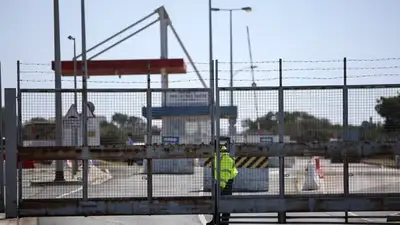
Emergency Central Bank allocations have enabled round-the-clock clearance of wheat and pharmaceutical imports at Shahid Rajaee Port in Bandar Abbas, yet reports by ILNA and Donya-ye Eghtesad said container freight rates remained 35 to 40 percent above baseline because of persistent war-risk surcharges.
The pressure is also reaching medicine supplies. On Monday, a major pharmaceutical company in Tehran said the government could no longer provide the foreign currency it required at subsidized rates, warning that some medicines could disappear from shelves or be sold at two to three times current prices.
Donya-ye Eghtesad has linked elevated shipping costs to domestic production bottlenecks, arguing that more expensive freight raises the cost of imported intermediate goods and adds to broader inflationary pressure.
The paper said temporary customs measures were treating symptoms rather than causes, with high insurance premiums and port congestion continuing to increase raw-material costs.
“So long as transit protocols remain uncodified,” the daily wrote, “industrial input costs will remain elevated, eroding domestic purchasing power daily.”
Those pressures are hitting an economy already struggling with steep inflation. Iran’s 12-month inflation rate reached 66 percent in July, while food prices were 128 percent higher than a year earlier. War, sanctions and disruptions to trade and imports have further squeezed household purchasing power.
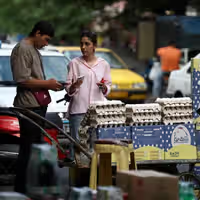
Cooking oil, meat and dairy products have moved beyond the reach of many working- and middle-class families. Iranian reports describe households cutting back on staples and non-essential spending, while a kilogram of lamb can consume up to 10 percent of a minimum-wage worker’s monthly income.
Housing costs have also intensified the squeeze. Rents have risen sharply in major cities including Tehran, Mashhad and Isfahan despite nominal government caps, increasing housing insecurity and pushing some families toward cheaper districts or shared accommodation.
Iranian reports increasingly describe teachers, civil servants and office workers struggling to maintain their living standards despite holding multiple jobs. Peripheral provinces including Ilam, Sistan-Baluchestan and Kurdistan face even greater economic pressure.
Less leverage at Hormuz
Compounding that vulnerability, Iran may also be losing some of the strategic leverage it hoped to gain from disrupting traffic through the Strait of Hormuz.
CNN reported Wednesday that more than 80 percent of recent liquid cargo transits through Hormuz had either used the Omani route or traveled with transponders switched off and likely followed it.
Axios separately reported that the US military was operating a shipping corridor along the Omani side of the Strait, helping 15 to 20 tankers enter or leave the Persian Gulf each night.
The reports suggest Iran could be left absorbing many of the economic consequences of disruption at Hormuz while gaining less bargaining power from it.
That also changes the context of Iran’s negotiations with Oman over navigation through the Strait. Foreign Ministry spokesman Esmaeil Baghaei said Iranian and Omani technical teams had agreed on geographic coordinates and navigation lanes for a proposed shipping scheme.
Iranian economic commentary had portrayed formalization of such an arrangement as important to lowering insurance and shipping costs. But if Washington can increasingly move vessels through an Oman-side corridor without an agreement that gives Tehran a central role, Iran may have less ability to use the Strait to extract political or economic concessions.
Iran has endured decades of US sanctions and built extensive networks to circumvent them, giving Tehran reason to doubt whether another pressure campaign can force a change in course.
But the starting point this time is different: an economy already weakened by inflation, disrupted trade and the costs of war, while one of Tehran’s most important sources of leverage appears to be eroding.
Trump has yet to spell out the full measures behind his “Economic D-Day.” Bessent says those details will come Monday. The question is whether Washington can close enough of Iran’s remaining economic lifelines to impose pressure Tehran cannot absorb — or whether the Islamic Republic can once again adapt while passing much of the cost on to ordinary Iranians.