• العربية
  • فارسی
Brand
  • Iran Insight
  • Politics
  • Economy
  • Analysis
  • Special Report
  • Opinion
  • Podcast
  • Live TV
  • Iran Insight
  • Politics
  • Economy
  • Analysis
  • Special Report
  • Opinion
  • Podcast
  • Live TV
  • Theme
  • Language
    • العربية
    • فارسی
  • Iran Insight
  • Politics
  • Economy
  • Analysis
  • Special Report
  • Opinion
  • Podcast
  • Live TV
All rights reserved for Volant Media UK Limited
volant media logo

Iran weighs attacks on military targets in Europe – FT

Aug 19, 2026, 07:56 GMT+1
A police officer closes the entrance of RAF Akrotiri, a British sovereign base in Cyprus, which was hit by a drone overnight on March 2, 2026.

Iran has considered attacking military targets in Europe if US President Donald Trump escalates the war, the Financial Times reported on Wednesday, citing two insiders.

Iranian forces had assessed possible strikes against US assets in southeastern Europe, including Bulgaria, which approved the use of Bezmer Air Base by US refueling aircraft last month, the sources said.

Cyprus, where a British air base was hit by a drone in March, was also identified as a potential target for retaliation against a renewed US offensive, according to one of the sources.

Iran’s forces had separately examined attacks on subsea fiber-optic cables in the Strait of Hormuz if the conflict intensified, according to the report.

One source said Tehran was preparing to expand the war if Trump acted on threats to attack Iranian infrastructure. The other said Iran would place “no limits” on its response to US military action.

The sources described last month’s strike on a US base in Jordan, which killed three American service members, as Tehran’s most accurate long-range attack to date and evidence of its ability to hit targets farther afield.

“This was also a message to Europe: it can receive missiles, so it should know where it should stand in this war,” the first insider said. “A very big mistake, such as hitting our infrastructure, could make the war go beyond the region and reach Europe.”

Iran has not publicly confirmed the reported plans.

Military analysts told the FT that Iran could target US assets in southern and southeastern Europe with medium-range ballistic missiles, but questioned their accuracy and Tehran’s stockpile of longer-range weapons.

Iran’s recent elevation of hardliners to senior security and military posts has also deepened expectations within Tehran of renewed conflict, according to the report.

Referring to Mohammad Bagher Ghalibaf, Tehran’s chief negotiator, and Mohsen Rezaei, Iran’s top security chief, the second insider said Iran “is sending a clear message that if you don’t reach an agreement with Ghalibaf, you have to deal with Rezaei.”

“The message is: ‘Don’t be mad, because I’m madder than you are.’”

Meanwhile, negotiations over reopening the Strait of Hormuz remained stalled and Trump said there were no talks scheduled with Tehran.

Most Viewed

US rules out Iran truce extension as Tehran official sets new deadline
1

US rules out Iran truce extension as Tehran official sets new deadline

2

Canada deports former Iranian official linked to 2019 protest crackdown

3

State TV host sparks backlash over ‘southern Iran for southern Lebanon’ remark

4
INSIGHT

Forced to serve in the IRGC, now fighting to stay in Canada

5
OPINION

For Iranian journalists, exile can last a lifetime

Banner
Banner
Banner

Spotlight

  • For Iranian journalists, exile can last a lifetime
    OPINION

    For Iranian journalists, exile can last a lifetime

  • Seven months on, January protests still shape Iranians’ lives
    VOICES FROM IRAN

    Seven months on, January protests still shape Iranians’ lives

  • Forced to serve in the IRGC, now fighting to stay in Canada
    INSIGHT

    Forced to serve in the IRGC, now fighting to stay in Canada

  • Iran’s ‘infiltration’ bill sparks backlash over sweeping reach

    Iran’s ‘infiltration’ bill sparks backlash over sweeping reach

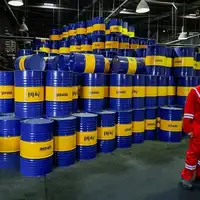
  • To survive maximum pressure, Iran kept pumping and broke its oil company
    ANALYSIS

    To survive maximum pressure, Iran kept pumping and broke its oil company

  • They carry the evidence of Iran’s crackdown on their bodies

    They carry the evidence of Iran’s crackdown on their bodies

  • Rezaei named Iran’s top security chief and Khamenei representative

    Rezaei named Iran’s top security chief and Khamenei representative

  • All Mojtaba's men: Old guard shapes Iran’s new order

    All Mojtaba's men: Old guard shapes Iran’s new order

•
•
•

More Stories

The 60-day deadline is over. Now what does Trump do with Iran?

Aug 19, 2026, 02:56 GMT+1
•
Negar Mojtahedi
100%
US President Donald Trump seated next to Pete Hegseth

With the 60-day period set by the June US-Iran memorandum now over and no final agreement in place, Washington faces a choice between intensifying pressure, renewing major strikes or settling into a prolonged and unstable holding pattern.

President Donald Trump said Tuesday that there were “no talks or conversations going on, or scheduled” with Iran and that the US naval blockade remained in force.

A White House official told Semafor that Trump’s Truth Social post amounted to calling off talks with Iran for the foreseeable future.

The message appeared to contradict Jared Kushner, who just a day earlier described contacts with different parts of the Iranian government as unusually “robust” and spoke of “very positive and active conversations.”

The IRGC, meanwhile, has denied Trump’s claim that US officials were holding back-channel talks with Revolutionary Guard officials.

The conflicting accounts underscore one of the central uncertainties after the 60-day deadline passed: how much of the confrontation visible in public reflects what may be happening behind the scenes.

Interviews with three analysts and former officials suggest the end of the 60-day period does not necessarily leave Washington with a binary choice between launching another major offensive and walking away.

A third possibility is emerging: an extended and highly unstable holding pattern in which Washington intensifies economic pressure, maintains the blockade and avoids a return to the intensive military campaign seen earlier in the conflict, while retaining the option of renewed strikes.

Neither war nor peace

Former US Ambassador John Craig said he believes Trump has been persuaded by his military and foreign-policy advisers that further major military action would not necessarily resolve the conflict, particularly the nuclear issue.

“I think this is going to go on for quite a while, simply because there doesn't seem to be any other alternative,” Craig told Iran International.

Craig described that status quo as one in which the United States continues trying to keep ships, oil and goods moving through the Strait of Hormuz while Iran carries out lower-level attacks and probes against regional targets, all without a meaningful diplomatic process capable of producing an agreement.

“So no peace,” Craig said. “Not very high level of attacks and kinetic actions, but still no agreement and no process — even more important, no process to find an agreement.”

But Craig stressed that what is visible may tell only part of the story.

He said it is impossible to know what preparations could be taking place during the apparent lull, including whether new targeting packages are being assembled, intelligence operations are underway or assistance is being provided to people inside Iran.

“We don't know everything that is going on,” Craig said.

Ilan Berman, senior vice president of the American Foreign Policy Council, similarly said the current situation could persist well beyond the end of the 60-day period.

“I have the growing feeling that this status quo could persist for some time,” Berman told Iran International.

One reason, he said, is domestic US politics. With midterm elections approaching, the opportunity for attempting a quick and decisive conclusion to the conflict may already have passed.

Instead, Washington may increasingly conclude that time is on its side.

Berman said countries around the Persian Gulf, Central Asia and elsewhere are also using this period to build infrastructure and alternative transport corridors aimed at reducing vulnerabilities exposed by the conflict, particularly the dependence of global trade on the Strait of Hormuz.

“This isn't a great situation,” Berman said, “but time ends up working for Washington and not for Tehran.”

Can economic pressure break the stalemate?

Iran's economy is already under extraordinary pressure.

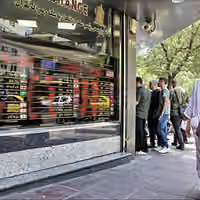
Iran's annual inflation reached 66% in July, while food prices rose 128% year-on-year, according to the Statistical Center of Iran, severely eroding household purchasing power.

Those pressures are being compounded by sanctions, the naval blockade, disruption to Iran's energy trade and the prospect of another round of US economic measures.

For Washington, that raises the possibility that time itself, combined with escalating economic pressure, could accomplish what another major military offensive may not.

Berman described Iran's economic crisis as potentially “the transformative variant,” arguing that the danger for the government grows as the rial loses value, purchasing power collapses and basic foods become increasingly unaffordable.

“This is not a sustainable condition,” he said.

But he cautioned that economic deterioration does not automatically produce political upheaval. Tehran can attempt to soften the impact through currency measures, trade arrangements and other economic interventions.

What has changed, Berman argued, is the nature of the leadership confronting those pressures. He described the current system as increasingly rigid and militarized, leaving it potentially less willing to prioritize domestic economic development.

Casey Babb, a senior fellow and director at the Macdonald-Laurier Institute, described the current moment as a “very uncertain and fragile holding pattern.”

He said Washington could combine substantially greater economic pressure with military capabilities it has so far chosen not to fully deploy.

But Babb cautioned that economic warfare carries consequences far beyond Iran's leadership.

“There is a human cost to that as well,” he said. “Innocent Iranians are going to suffer from that as well and already are.”

Babb said the United States clearly does not want a costly conventional ground war, while Iran's leadership has shown little indication that it is prepared to make the concessions Washington is seeking.

“It will take something probably quite significant for the regime to behave differently,” Babb said.

When does the shooting start again?

None of the analysts interviewed for this story suggested the current lull means the military confrontation is over.

Berman went further, saying he expects US strikes against Iran to happen again.

“The question to me is not whether or not there are going to be strikes again, because I think there will be,” he said.

The more important question, he argued, is whether future attacks remain limited actions designed to restore deterrence — what he described as “knuckle wraps” — or become the beginning of another major phase of the war.

Berman described the confrontation as an increasingly prolonged battle of wills, contrasting it with what he said Washington had initially envisioned as a shorter conflict similar to its campaign in Venezuela.

That creates another danger.

Unlike during the Cold War, he said, Washington and Tehran lack reliable lines of communication specifically designed to keep tactical confrontations from escalating into something much larger.

The result may be neither war nor peace.

Berman compared the current moment to the end of the second act of a three-act play — the point when the action temporarily slows before the pace picks up again.

But the apparent lull may be deceptive.

As Craig emphasized, intelligence operations, military targeting and other preparations could be taking place beyond public view. Diplomatic contacts may also be more complicated than the conflicting public statements from Washington and Tehran suggest.

The visible status quo could persist for some time.

What is happening underneath it — and what eventually breaks it — is much harder to know.”

Forced to serve in the IRGC, now fighting to stay in Canada

Aug 18, 2026, 10:31 GMT+1
•
Negar Mojtahedi
100%
A conscript sitting on a metal bench at a train station in Iran

Iranian men conscripted into the Revolutionary Guards for their compulsory military service fear they and their families could lose the right to remain in Canada, after letters warned the mandatory stint may amount to membership in a terrorist organization.

The Unheard Conscript Advocacy Network, a community group for former Iranian conscripts and their families, says more than 500 people within its roughly 1,300-member Telegram group have reported receiving procedural fairness letters in recent weeks.

The letters give applicants 30 days to respond to concerns raised by immigration officers before a decision is made.

Canada has previously told Iran International that compulsory service in the Guards does not automatically make someone inadmissible and that applications are assessed individually. But several letters reviewed by Iran International reveal a tension between that position and what former conscripts say they are experiencing.

In one case, internal Officer Decision Notes reviewed by Iran International show a former conscript answering a procedural fairness letter with his military completion card and evidence that his service was compulsory.

The officer accepted that the service was mandatory and found him inadmissible anyway, writing that there is "no exemption for individuals whose membership arose through mandatory service." The application was refused.

In a separate case, an August 6 letter acknowledges that the applicant completed "mandatory military service" with the Guards as a soldier between 2009 and 2010, with duties that included kitchen and canteen work and occasional driving.

"I am therefore concerned that you served in the IRGC and that you may be inadmissible to Canada," the officer wrote, citing the provision of Canadian immigration law covering membership in an organization believed to engage in terrorism. The applicant was given 30 days to respond.

The consequences can reach beyond the former conscript. In another letter reviewed by Iran International, the government told the wife of one man that her application could also be refused if her husband is found inadmissible over his service.

‘Now we are the victims’

"Fatima," who asked Iran International to use only her first name because of security concerns, moved to Canada with her husband and two daughters in 2022.

Her husband completed compulsory military service between 2003 and 2005. The family applied for permanent residence in March 2024, before Canada designated the entire Revolutionary Guards a terrorist entity.

"We brought our children here to give them more opportunity, to give them a better life," Fatima told Iran International. "How come we were supporters of this regulation and now we are the victims of that?"

Iran International reviewed the family's immigration correspondence along with official documentation confirming the husband's service.

A document issued by Iran's Public Conscription Organization states that he completed 20 months of compulsory service and received a military service completion card; the family later obtained further verification of the record's authenticity from the same body.

Fatima said her husband, who holds a bachelor's degree in computer science, spent his conscription assigned to a small repair room fixing personal computers that personnel brought in. "He wasn't doing anything for the organization," she said. "People brought their computers there if there was an issue."

The stakes run through the whole family. If her husband is found inadmissible, so are their daughters, one of whom is 18 and has been accepted into a program at the University of British Columbia.

"If IRCC refuses our PR application because of my husband's conscription, and if we are inadmissible to Canada, then both my daughters are going to be inadmissible too," Fatima said.

Sam, a member of the Unheard Conscript Advocacy Network, said the 500-plus letters documented inside the group are likely a fraction of the national total. The group argues that former conscripts are effectively being asked to prove a negative: that compulsory service did not amount to voluntary membership in the Guards.

  • Conscripted, condemned: how a Canadian ban punishes Iran's forced recruits

    Conscripted, condemned: how a Canadian ban punishes Iran's forced recruits

Canada was warned about the distinction

Canada's own immigration system has examined the difference between conscription and membership.

In a 2022 Response to Information Request on Iran's armed forces, the Immigration and Refugee Board cited Saeid Golkar, a scholar specializing in the Guards and the Basij, who explained that men subject to compulsory service apply through the Public Conscription Organization, which assigns them to the regular army, the police or the Guards.

Sources consulted by the board indicated conscripts do not choose the branch in which they serve. Golkar has also argued that conscription should not provide a blanket exemption from scrutiny.

The distinction was raised in Parliament days before Canada listed the Guards. Appearing before the House of Commons foreign affairs committee on June 10, 2024, University of Ottawa professor Thomas Juneau warned that broad measures could sweep up people who were never the target.

"There are hundreds of thousands of current and former members," Juneau told MPs, warning that "innocents" could be caught in the net. He argued for "targeted" and "surgical" measures while stressing that genuine Guards activity in Canada posed a serious threat.

Nine days later, on June 19, 2024, Canada formally listed the Revolutionary Guards as a terrorist entity under the Criminal Code. Iran International has previously reported on former conscripts whose immigration cases became uncertain after the designation.

Political pressure grows

Correspondence obtained by the advocacy network this year deepens the confusion over how Ottawa applies the policy.

In a February letter, Aaron McCrorie, vice-president of the Canada Border Services Agency's intelligence and enforcement branch, wrote that the 2024 designation made "anyone that had served in the Guard Corps inadmissible to Canada." The same letter says all cases are "reviewed, assessed, and decided on an individual basis." The two sentences describe two different policies.

Iran International asked Immigration, Refugees and Citizenship Canada what standard officers use to distinguish compulsory service from voluntary membership, whether uniform national guidance exists, how many former conscripts have received procedural fairness letters, and how many have been found inadmissible.

IRCC spokesperson Anahita Beladi said compulsory service in the Guards does not automatically make an applicant inadmissible and that each case is assessed individually. Procedural fairness letters, she said, are not final findings but a chance for applicants to explain their service.

"The final decision is made by an IRCC officer after considering the applicant's response, all relevant information, applicable jurisprudence, and any recommendations made by partners, including the Canada Border Services Agency and Canadian Security Intelligence Service."

Beladi said the agency does not currently hold data in a form that would show how many applicants completed compulsory service in the Guards, or how many letters have been issued over it.

The issue has now spilled into federal politics.

At an Iranian community town hall in North Vancouver, British Columbia, on Saturday, Conservative Leader Pierre Poilievre accused the government of risking action against the wrong people.

"I think they're risking going after law-abiding decent people who are actually against the IRGCs, but who have already been victimized through conscription," Poilievre told Iran International.

"The listing of terrorist organizations was meant to go after the perpetrator, not the victim. I would encourage the government to go after the actual terrorists, not their victims."

Conservative candidate Stephen Curran said Parliament should challenge the practice if conscripts are being swept into enforcement.

"They are targeting people that are innocent... victims of the regime in Tehran," Curran said. "If this is actually taking place, I think we would have to raise a very strong critique of it in Parliament and make sure that we're calling it out."

For Fatima, the policy debate is no longer abstract. Her family, she said, publicly supported Canada's designation of the Guards and joined demonstrations against the Islamic Republic.

"We supported that policy, IRGC as a terrorist organization," she said. "Now we are the victim of that."

The three snakes of Zahhak

Aug 16, 2026, 18:50 GMT+1
•
Roger Macmillan
100%
Zahhak Receives the Daughters of Jamshid, a manuscript illustration made in Tabriz, Iran, in the 1520s, in ink, gold and opaque watercolor on paper. Courtesy of Khalili Collections / CC-BY-SA 3.0 IGO.

In the Persian classic Shahnameh, Ferdowsi tells the story of Zahhak, the usurper king who is kissed on each shoulder by Ahriman, the spirit of evil, and finds two black snakes growing from the wounds.

Cut them off and they grow back. The only way to keep them quiet is to feed them, every day, with the brains of two young men. Zahhak reigns for a thousand years on a diet of sacrificed youth, propped up not by loyalty but by appetite.

The story has always worked as a parable for Iranian tyranny. What I think it misses, applied to the Islamic Republic today, is the arithmetic. Ali Khamenei did not build two snakes. He built three.

The Artesh, Iran’s conventional army, was the first snake, inherited from the Shah and never fully trusted. The IRGC was the second, created in 1979 specifically because the revolution did not trust the first. The Basij was folded into the IRGC as its third head.

It is worth remembering that all three answer, on paper as much as in practice, to a single neck. The Iranian constitution names the Supreme Leader as Commander-in-Chief of the Armed Forces in their entirety, Artesh, IRGC and Basij alike. There is no independent chain of command outside the Supreme Leader’s authority for a general to retreat into. Politicians and Western commentators in both London and Washington keep waiting for one of these heads to turn on the body. They’re waiting for the wrong signal, because they’re analysing 1979, not 2026.

When the Shah’s generals stood aside in February 1979, they did so because the Artesh of that era was a conscript institution led by officers who owed their careers to a monarch, not a movement, and who had no ideological stake in what came next. That Artesh is not today’s Artesh.

Ali Khamenei spent decades solving exactly that problem. Senior appointments in today’s Artesh are subject to security and ideological vetting tied to the Supreme Leader’s military apparatus. The Middle East Forum has documented how senior promotions require approval from the Supreme Leader’s office following scrutiny of an officer’s security and ideological background. The men at the top of the Artesh are appointees of the system, not survivors of it.

This is why this month’s move to complete the integration of the Armed Forces General Staff with the Khatam al-Anbiya Central Headquarters matters more than it has been given credit for. Mojtaba Khamenei, who inherited a system his father spent more than four decades constructing, has now moved to formalise a process of centralisation that had earlier been discussed but was not visibly underway in operational terms.

The lesson learned from 2025 and the Twelve-Day War, according to Iran’s own state reporting, was that redundant command structures slow decision-making. The latest restructuring is intended to reduce that redundancy and further narrow the distinction between the operational command of the Artesh and the IRGC. The underlying logic is clear: the system has little interest in preserving institutional space in which one military arm might begin to think or act independently of the others.

I would also gently push back on those looking for salvation in Iran’s reformists. Pezeshkian’s presidency provides a civilian face and international cover for the negotiating track, and that function matters. But it is not independence.

Ghalibaf is a former senior IRGC commander who has spent decades inside the Islamic Republic’s political and security establishment. Araghchi is a capable diplomat entrusted with representing Tehran in negotiations. Both men operate inside the system’s tolerances, not outside them. Reading their willingness to negotiate as evidence of a moderate faction pulling against a hardline one mistakes tactics for structure.

When Iran has had to cede ground, at Bürgenstock or Islamabad, it has ceded it in the way a company reprices a product: reluctantly, and only as far as survival requires. Ghalibaf gets attacked by the influential ultra-hardline Paydari Front for talking to Americans, and he absorbs it, because someone in the system has to run the diplomatic track.

None of this means the system is stable in the way it looks stable. Ali Khamenei is dead. His son, who has still not been seen or heard in public, inherited the office by appointment and is still consolidating the very apparatus his father designed. The strain is real. But strain inside a structure is not the same as a fracture between its parts. The three heads bicker over how much brain they are fed and by whom, not over whether to keep feeding.

So when I hear commentary asking whether this is the moment the Artesh finally breaks from the regime, or whether Ghalibaf represents the pragmatic wing that might yet reform the system from within, I think of Zahhak.

Nobody in that story is saved by one of the snakes deciding it has had enough. The snakes do not turn on the king. The rupture comes from outside the machinery of the court: Kaveh the blacksmith rises first, turning private grievance into public revolt, rallying the people and creating the conditions for Fereydun’s return. Fereydun then defeats Zahhak and binds him at Damavand. Until that structure itself breaks, all three snakes answer to the same shoulders.

Iran weighs gasoline rationing as fuel deficit widens

Aug 16, 2026, 12:08 GMT+1
100%
Men are seen at a gasoline station in Qom, Iran.

Iran’s government is considering three proposals to curb gasoline consumption as war damage, import difficulties and a widening gap between domestic production and demand put growing pressure on fuel supplies.

The options include imposing a daily cap on supplies to filling stations, tightening vehicle quotas and allowing additional gasoline to be sold at market rates, or transferring fuel allocations from vehicles to individuals and permitting citizens to trade them.

No proposal has been approved, and the government has not announced any immediate change to subsidized gasoline prices.

Esmail Saghab-Esfahani, a vice president and head of Iran's Strategic Energy Policy and Management Organization, outlined the three scenarios on state television and said the public would be informed before any decision was implemented.

Daily supplies could be capped

Under the first proposal, existing prices would remain unchanged, but filling stations nationwide would receive a combined 121 million liters of gasoline per day.

Saghab-Esfahani said pumps would stop operating once that amount had been sold, effectively imposing a nationwide daily supply ceiling without formally increasing prices.

The second proposal would divide the same 121 million liters among registered vehicles through a stricter quota system. Motorists exceeding their allocation would have to purchase additional gasoline at an unsubsidized market rate.

The third option would transfer gasoline quotas from vehicles to individuals. Every citizen would receive about 30 liters per month, whether or not they owned a vehicle, and could use or sell the allocation.

  • Fear of unrest complicates Iran’s gasoline dilemma

    Fear of unrest complicates Iran’s gasoline dilemma

Around 30 million liters per day would separately be reserved for public transportation, conventional taxis and ride-hailing services under that proposal, in an effort to prevent fare increases.

Saghab-Esfahani said the third plan would be accompanied by a three-year program to electrify 400,000 motorcycles, convert 130,000 pickup trucks to natural gas and add 7,300 buses. He did not explain how the program would be financed or provide a detailed implementation schedule.

Conflicting production figures

In his latest remarks, Saghab-Esfahani put daily gasoline production at about 121 million liters and consumption at around 135 million, implying a shortfall of approximately 14 million liters per day.

Tehran-based news website Rouydad24 cited earlier remarks by the official that put production at about 112 million liters. The reason for the nine-million-liter discrepancy was not explained and may reflect different reporting periods or production conditions.

President Masoud Pezeshkian has said Iran spent about $6 billion importing gasoline during the Iranian year that ended March 20, 2026. Officials say falling revenue, limited access to foreign currency and obstacles affecting import routes have made that approach increasingly difficult.

Kerman plan halted before launch

The debate intensified after authorities abruptly announced and then suspended a plan to sell gasoline consumed beyond existing quotas at a sharply higher rate in southern Kerman province.

The plan was halted hours before it was due to begin following talks between Kerman’s governor and national officials. Provincial authorities said the existing system would remain in place while the proposal underwent further review.

Neither the Oil Ministry nor the government disclosed the legal basis for the plan or how the new price had been calculated. Officials also did not clarify whether Kerman had been selected for a local anti-smuggling initiative or as a test for wider changes.

Legacy of the 2019 protests

Gasoline pricing remains among the most politically sensitive issues in Iran.

An overnight nationwide price increase in November 2019 triggered protests in more than 100 cities. Rights groups documented hundreds of deaths in the ensuing crackdown, during which authorities imposed a near-total internet shutdown.

Pezeshkian promised during his 2024 presidential campaign that gasoline prices would not be increased without public consent and that more fuel-efficient vehicles would be made available before any increase.

Government officials have said no immediate price rise is planned, but all three proposals now under consideration would restrict consumption or redistribute subsidies.

The proposals leave the government seeking to address a growing supply deficit without an abrupt policy change that could further strain household finances and renew public anger over gasoline prices.
Iran lawmaker played direct role in deadly protest crackdown, witnesses say

Aug 16, 2026, 09:22 GMT+1
•
Farzad Fattahi
100%

Jafar Pourkabgani, a lawmaker representing the southern Iranian province of Bushehr and a former longtime member of the IRGC and Basij, personally fired at protesters during nationwide demonstrations in January, witnesses told Iran International.

Armed forces opened fire on protesters on January 8 and 9 from the rooftops of the Quran Mosque, a nearby Basij facility and surrounding buildings on Ashouri Street in the city of Bushehr, witnesses said.

Several people who said they were present identified Pourkabgani as one of the armed men in the area. Some said he carried a handgun, while others described him as holding a Kalashnikov-style rifle.

One witness said Pourkabgani shouted “Labbaik ya Khamenei,” an expression of allegiance to then-Supreme Leader Ali Khamenei, as he fired.

Other accounts described the lawmaker as a leading figure among the armed personnel deployed in the area.

Gunfire against at least 19 people attributed to Pourkabgani

Accounts collected by Iran International attributed the shooting of at least 19 people to Pourkabgani. Witnesses said at least two of those struck by his gunfire have died.

It was not immediately possible to independently establish the identities of all those shot, the weapons used or the precise circumstances of the deaths.

Some residents of Bushehr refer to Pourkabgani by the nickname “Jafar the Axe,” according to local accounts.

Pourkabgani has longstanding ties to the Quran Mosque, one of the locations from which witnesses said gunfire was directed at protesters. Public accounts identified him as head of the mosque’s board of trustees for at least part of the period between 2014 and 2022.

Pressure on bereaved families

One local source with knowledge of the matter said that Pourkabgani visited the homes of some bereaved families after protesters were killed and sought to persuade them to say their children had been killed by “terrorists,” which the families rejected.

Pourkabgani has not publicly addressed the allegations that he personally fired at protesters or pressured bereaved families.

Decades in security and local government roles

Pourkabgani joined the IRGC in the early 1980s and subsequently held security, executive and political positions in Bushehr.

In 2004-05, while holding the rank of IRGC colonel, he headed the local Basij unit responsible for enforcing the Islamic Republic’s doctrine of “enjoining good and forbidding wrong.” Accounts of the unit’s activities included searches of homes, confiscation of equipment and arrests.

He served as governor of Bushehr from about 2005 to 2013 and headed the county’s election headquarters during the disputed 2009 presidential election.

Pourkabgani later served on the Bushehr City Council, including as its chairman, before entering parliament as the representative for Bushehr, Ganaveh and Deylam.

Residents have also said that he was involved in the authorities’ response to the November 2019 protests and the 2022 Woman, Life, Freedom protests.

During the 2022 protests, Pourkabgani was injured in a knife attack in Bushehr’s Kouti neighborhood while serving on the City Council.

Calls for harsh punishment

After the January 2026 protests, Pourkabgani publicly described demonstrators as “rioters” and the demonstrations as a “terrorist operation.”

He called on the judiciary to identify protesters and create official files on them, further demanding that they face the “harshest punishment.”

Viewers who contacted Iran International pointed to what they described as a stark contradiction between Pourkabgani’s position as a representative of the public and the allegations that he fired at the people he was elected to represent.

More than 36,500 Iranians were killed by security forces during the January 8-9 crackdown on nationwide protests, making it the deadliest two-day protest massacre in history, according to documents reviewed by Iran International's Editorial Board.

Iran International's Editorial Board confirmed the death toll on January 25 after reviewing classified documents, field reports, and accounts from medical staff, witnesses, and victims’ families.