• العربية
  • فارسی
Brand
  • Iran Insight
  • Politics
  • Economy
  • Analysis
  • Special Report
  • Opinion
  • Podcast
  • Iran Insight
  • Politics
  • Economy
  • Analysis
  • Special Report
  • Opinion
  • Podcast
  • Theme
  • Language
    • العربية
    • فارسی
  • Iran Insight
  • Politics
  • Economy
  • Analysis
  • Special Report
  • Opinion
  • Podcast
All rights reserved for Volant Media UK Limited
volant media logo

Iran executed at least 56 people since March, UN rights chief says

Aug 5, 2026, 12:42 GMT+1
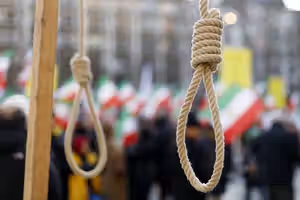
Iranian exiles hold a vigil against executions in Iran, Germany 2020.

Iran has executed at least 56 people on national security-related charges since March 19, including 27 in cases linked to protests earlier this year, UN human rights chief Volker Türk said on Wednesday.

Türk said executions and death sentences had risen since March, with more than 100 other people facing similar charges and the death penalty.

He urged Iranian authorities to halt all executions and move towards abolishing the death penalty.

The figures come after a series of executions in recent weeks of young people detained over the January protests, some of which drew gatherings by relatives and members of the public seeking to stop the sentences from being carried out.

Protesters executed

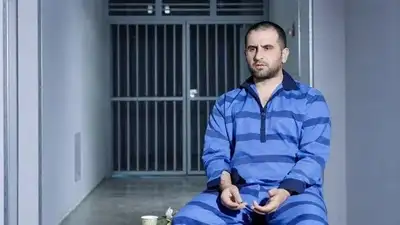
Iranian authorities executed 20-year-old Arvin Kheirkhah at Shahroud prison on Saturday after he was sentenced to death over his involvement in the January protests, according to information obtained by Iran International.

Kheirkhah had been convicted by a Revolutionary Court on charges including moharebeh, or "waging war against God."

His family gathered outside Shahroud prison on Friday night in an effort to stop the execution, according to Iran International. In a final conversation with his family, Kheirkhah urged them not to let him be forgotten.

His execution came days after authorities hanged Amirhossein Safari and Abolfazl Sepahi in Isfahan's Alikhani Square.

The two were among 12 young men sentenced to death in a case stemming from the January protests in the square. Iranian authorities accused the defendants of involvement in the deaths of four security personnel as well as arson and vandalism.

People gathered around the square overnight before the executions amid a heavy deployment of security forces.

Two other defendants in the same case, Golmohammad Mohammadi and Erfan Esfandiari, were executed on July 19, bringing the number put to death in the case to four.

Others remain under death sentences

A group of UN human rights experts, led by Mai Sato, the UN Special Rapporteur on the situation of human rights in Iran, urged Tehran in late July to halt the executions of defendants in the Isfahan case.

"Sentencing 12 people to death in one hearing, in a closed courtroom and without clarity as to each defendant's individual responsibility violates established fair trial standards," the UN experts said in a statement.

They said the defendants, aged from their late teens to early twenties, had reportedly faced arbitrary detention, enforced disappearance and, in some cases, ill-treatment.

The UN experts also raised concerns that convictions relied heavily on confessions broadcast on Iranian state television, while Revolutionary Court hearings were held behind closed doors and the judgments were not made public.

Most Viewed

Tehran records heaviest damage in latest war, municipal report shows
1

Tehran records heaviest damage in latest war, municipal report shows

2
EXCLUSIVE

Iran's president met Mojtaba Khamenei in the back seat of a car

3

Khamenei warns Pezeshkian next resignation will be accepted, in-law says

4

Aramco sidesteps Hormuz as Iran crisis cuts flows to a tenth

5

US depleted 'virtually all' long-range precision missiles in Iran war - Reuters

Banner
Banner
Banner

Spotlight

  • Anti-Islam posts follow Iran's dawn executions, sparking hardline backlash

    Anti-Islam posts follow Iran's dawn executions, sparking hardline backlash

  • Why Afghans still risk death to reach Iran
    ANALYSIS

    Why Afghans still risk death to reach Iran

  • Iran's president met Mojtaba Khamenei in the back seat of a car
    EXCLUSIVE

    Iran's president met Mojtaba Khamenei in the back seat of a car

  • Trump's U-turn reopens Tehran's political faultline
    INSIGHT

    Trump's U-turn reopens Tehran's political faultline

  • Deny first, negotiate later, Tehran's familiar diplomacy
    INSIGHT

    Deny first, negotiate later, Tehran's familiar diplomacy

  • Iran managing the inflation statistic, not the inflation
    ANALYSIS

    Iran managing the inflation statistic, not the inflation

  • More Iranian teenagers at risk of execution, rights groups warn

    More Iranian teenagers at risk of execution, rights groups warn

  • Iran executes two protesters amid heavy security in Isfahan

    Iran executes two protesters amid heavy security in Isfahan

  • Iran executes 20-year-old protester as fears grow for other detainees

    Iran executes 20-year-old protester as fears grow for other detainees

•
•
•

More Stories

Iran-linked attacks on US water systems aimed to project reach and intimidate

Aug 5, 2026, 10:35 GMT+1
•
Negar Mojtahedi
100%
AI-generated illustration depicting a cyberattack targeting a US water treatment facility.

Cyberattacks targeting water and wastewater facilities in at least seven US states appear to have been intended less to cripple infrastructure than to demonstrate Iranian reach, intimidate the public and shape perceptions, cybersecurity experts told Iran International.

"The psychological impact is what these attacks are intended to do,"said Annie Fixler, director of the Center on Cyber and Technology Innovation at the Foundation for Defense of Democracies (FDD).

"Iranian hackers in particular conduct what's called perception hacking," she said.

"They conduct a small-scale operation, they get into a network, they take a couple pictures of what they got, and then they claim to have caused a massive disruption because they're trying to cause a psychological impact even when they can't cause an actual true cyber impact."

Federal authorities last week warned that "malicious cyber actors" had targeted water and wastewater systems across at least seven states, with Minnesota reporting the largest number of incidents after around 30 water systems were disrupted. Officials urged utilities to disconnect vulnerable internet-connected equipment and switch to manual operations where necessary.

The FBI has opened an investigation but has not publicly attributed responsibility. However, multiple US media outlets, citing government officials familiar with the investigation, reported that Iran is the leading suspect.

President Donald Trump dismissed suggestions that Tehran was responsible, instead blaming Minnesota Governor Tim Walz, while Walz argued the attacks illustrated "what modern warfare looks like."

Why Iran?

Although no official attribution has been made, cybersecurity specialists say several characteristics of the campaign closely resemble previous Iranian operations.

"The particular systems they attacked are programmable logic controllers," Fixler said, referring to industrial control devices widely used in water facilities.

"The US government warned repeatedly earlier this year that Iranian actors were targeting those particular systems."

Earlier this year, the Cybersecurity and Infrastructure Security Agency (CISA) warned that Iranian-affiliated hackers were actively targeting internet-connected operational technology, including programmable logic controllers used in water infrastructure.

The agency later updated its advisory with additional guidance on securing vulnerable equipment.

Unlike financially motivated ransomware attacks, the latest incidents included no ransom demands.

"The first thing I look for is whether there's a ransom request," Fixler said. "We haven't seen that."

That absence points away from criminal hackers and toward a geopolitical operation, she said.

Amin Sabeti, a cybersecurity researcher specializing in Iranian cyber operations, said the campaign also reflects the typical strengths and limits of Iran's cyber capabilities.

"I don't think it was sophisticated, but it was a clever one," Sabeti said.

Rather than deploying cutting-edge exploits, he said the attackers appeared to exploit weak cybersecurity practices such as unchanged default passwords and poorly secured internet-connected equipment.

Compared with Russia and China, "they are a small boy in the town," Sabeti said, arguing Iranian operators excel at social engineering and exploiting simple vulnerabilities more than conducting highly sophisticated cyber campaigns.

A familiar playbook

The suspected campaign would fit a pattern established over recent years.

In late 2023, the IRGC-linked hacking group CyberAv3ngers targeted water facilities in Pennsylvania by compromising Israeli-made Unitronics programmable logic controllers, forcing operators to switch to manual controls.

Iran has also targeted Israeli water infrastructure. In 2020, Iranian hackers attempted to manipulate chlorine levels in Israeli water systems, according to Israeli and Western officials, prompting a reported Israeli cyber retaliation against Iran's Shahid Rajaee Port.

The same industrial control equipment targeted in previous Iranian operations has again become the focus of concern in the United States.

Fighting a war without missiles

Experts say the attacks fit neatly into Iran's broader doctrine of asymmetric warfare.

"They show that, for a big powerful country like America, they can still be reached. Iran can still touch them," security expert Roger Macmillan told Iran International.

"There is a huge psychological warfare piece... They can't attack us physically using missiles, but they can touch us digitally."

Macmillan said the campaign serves several purposes simultaneously: demonstrating that American critical infrastructure is vulnerable, gathering intelligence about similar systems across the country and reminding Washington that Tehran retains options beyond conventional military force.

"There's also an intelligence gathering piece," he said. "They will probe similar types of companies to see where the same weaknesses are and how they will exploit them."


Anti-Islam posts follow Iran's dawn executions, sparking hardline backlash

Aug 4, 2026, 22:13 GMT+1
•
Hooman Abedi
100%
AI-generated illustration depicting the juxtaposition of the Islamic dawn call to prayer (adhan) and executions carried out before sunrise in Iran.

Angered by a wave of early-morning executions of protesters and political prisoners, some Iranian social media users have directed their anger at Islam and the morning call to prayer, prompting an IRGC-linked campaign demanding their prosecution.

As executions have accelerated in recent weeks, some Iranian social media users have increasingly portrayed the pre-dawn adhan as a reminder of hangings rather than the beginning of the day’s religious observances.

The adhan is the Islamic call summoning Muslims to the five daily prayers.

Iranian regulations state that death sentences should ordinarily be carried out at sunrise unless the court specifies another time. Executions are nevertheless widely associated with the early-morning hours, when prisoners’ families and supporters often wait for news as the dawn call to prayer is broadcast.

  • Iran hangs two more political prisoners as execution wave widens

    Iran hangs two more political prisoners as execution wave widens

Social media anger turns toward religious symbols

Posts criticizing Islam and religious symbols circulated across Instagram and X following the latest executions.

An Instagram user wrote that the dawn adhan had become “a symbol and reminder of the execution of this country’s youth,” adding that a call intended to invite people to worship, peace and salvation had instead become associated with taking lives.

  • More Iranian teenagers at risk of execution, rights groups warn

    More Iranian teenagers at risk of execution, rights groups warn

Activist Masih Alinejad wrote after clashes outside an execution site that the dawn call to prayer had become “only a symbol of death and execution.”

Another Instagram user wrote before planned executions in Isfahan that the young prisoners were due to be hanged “to the sound of the dawn call to prayer,” adding that it now carried “only the smell of death.”

Other users went further, posting profanity directed at Islam, the Quran, Shi’ite religious figures, the adhan and the Arbaeen pilgrimage. Some wrote that they no longer associated the dawn call with prayer but with executions.

IRGC-linked campaign urges crackdown

The IRGC-affiliated Fars News Agency said more than 700 people had signed a campaign on its platform by Tuesday, calling for the “maximum punishment” of those accused of “insulting Islamic sanctities online.”

Organizers cited Article 513 of Iran’s Islamic Penal Code and urged judicial and security authorities to take what they described as “effective and deterrent” action.

Under Article 513, insulting Islamic sanctities is punishable by between one and five years in prison. Cases classified as sabb al-nabi, or insulting the Prophet, can carry the death penalty.

100%

Fars said campaign supporters called for tougher enforcement against people who “deliberately insult Islamic sanctities” online and urged authorities to prosecute offenders under existing legislation.

Judiciary spokesman Asghar Jahangir has previously said Iran continuously monitors cyberspace through a dedicated unit within the prosecutor general’s office and urged citizens to report alleged online offenses through official channels.

  • Iran executes 20-year-old protester as fears grow for other detainees

    Iran executes 20-year-old protester as fears grow for other detainees

The campaign adds to broader efforts by Iranian authorities to tighten oversight of online speech as criticism over the recent executions continues to spread across social media.

Why Afghans still risk death to reach Iran

Aug 4, 2026, 17:34 GMT+1
•
Negar Mojtahedi
100%
The father, a 35-year-old driver with his Afghan family, sits with his young daughter in a pickup van.

"Take care of my sons." Those were the final words of Hayatullah, an Afghan migrant who used his phone to record what would become the last moments of his life in the scorching desert as he tried to reach Iran.

"Pray for me. Mother, I'm dying," he said, pleading with his loved ones to look after his sons, especially Habib.

Hayatullah was among 14 Afghan migrants who died attempting to reach Iran, Afghan officials said, weeks after the vehicle carrying them broke down and they continued the journey on foot.

Why would anyone risk one of the world's deadliest migration routes to reach Iran?

The country is grappling with economic crisis and widespread repression. It has carried out one of the region's largest deportation campaigns against Afghan migrants and offers little prospect of permanent legal status.

"It's not about a choice between safety and danger," Yasin Samim, an Afghan governance and development analyst, told Iran International. "It's about what type of danger."

Samim said conditions inside Afghanistan had become so severe that many people continued to flee despite knowing the risks awaiting them in Iran.

"The fact that they come to Iran shows the severity of the situation and conditions in Afghanistan," he said. "The reasons they leave Afghanistan have not changed."

With the Taliban's return to power, legal pathways to Iran have become increasingly restricted, forcing many low-income Afghans into the hands of smugglers.

"Granting a visa has become a deal of the black market," Samim said, adding that visas can reportedly cost between $1,000 and $1,200—far beyond the reach of many Afghan families.

"The combination of poverty, unemployment and repression leaves people with no alternative," he said. "That is the only choice they have."

Those who cannot afford legal routes often attempt the crossing through Nimruz, one of the main transit corridors into Iran for irregular migration.

The route has become synonymous with one of the deadliest migration paths into the country. Migrants cross vast stretches of unforgiving desert where temperatures regularly exceed 45°C (113°F).

If smugglers abandon them or their vehicle breaks down—as happened in this case—survival quickly becomes a race against dehydration. Many die before reaching help. Others face robbery, exploitation or detention before ever reaching Iran.

Iran has long hosted one of the world's largest Afghan populations despite offering few permanent rights to those who settle there. Before its mass deportation campaign in 2025, an estimated four million Afghans lived in the country, including registered refugees, documented migrants and undocumented workers.

Yet many remained in legal limbo despite spending years—or even decades—in Iran. Children born in Iran to Afghan parents are not automatically granted Iranian citizenship, and for most there is no realistic pathway to becoming Iranian citizens.

"Iran has shut down legal pathways for Afghans in recent years," Omid Memarian, senior Iran analyst at DAWN told Iran International. "Because so many pathways have been blocked, they have to take much riskier ways to be smuggled from Afghanistan to Iran.”

That means the chance of being exploited is higher, Memarian added, and their rights are more likely to be violated.

Tighter restrictions appear to have little bearing on Afghans' calculations. It has only pushed them onto more perilous routes across deserts such as Nimruz, where extreme heat could quickly turn a journey into a death sentence.

"For them, the question is not, 'Let's go to the best ideal country.' The question is, 'Let us get out of here.' ... It's about survival," Memarian told Iran International.

Iran International reached out to the United Nations High Commissioner for Refugees (UNHCR) for comment.

A spokesperson referred us to a statement issued last month warning that Afghanistan is ill-equipped to absorb the growing number of returnees.

The agency said more than six million Afghans have returned since 2023, while nearly half the country's population already depends on humanitarian aid.

It called for returns to be safe, voluntary and dignified, warning that mass deportations risk deepening one of the world's worst humanitarian crises.

Tehran records heaviest damage in latest war, municipal report shows

Aug 4, 2026, 10:06 GMT+1
100%
A heavily damaged residential building in Tehran following the 40-day war with the United States and Israel.

Tehran sustained the heaviest damage of any Iranian province during the 40-day conflict with US and Israel, with more than 50,000 homes damaged and the capital accounting for 650 reported strikes, according to a municipal report published on Monday.

The figures, presented at a public event hosted by the University of Tehran's Faculty of Urban Planning, offer the most detailed breakdown yet of damage across the capital following the conflict.

The report says District 4 in northeastern Tehran recorded the highest number of strikes, followed by District 21 in the west, District 1 in the north and District 22 in the northwest.

"The number of strikes in District 4 alone exceeded the combined total recorded in some provinces," Hossein Nouhi, a certified construction expert in Tehran's municipality, said during the event.

  • War damage amounts to $3,000 per Iranian, with blockade set to add to losses

    War damage amounts to $3,000 per Iranian, with blockade set to add to losses

According to the report by Tehran Municipality's Urban Planning and Architecture Department, District 4 was hit 90 times, District 21 Tehran sustained 62 strikes, District 1 recorded 57 and District 22 recorded 55. District 17 in southwestern Tehran was the least affected, with three reported strikes.

Housing damage

The municipality said 50,849 residential units across Tehran sustained damage ranging from broken windows and doors to complete destruction.

Around 40,000 homes required minor repairs, about 8,900 suffered more extensive architectural damage, 415 buildings required structural reinforcement or reconstruction and 2,042 homes were completely destroyed and must be rebuilt, according to the report.

District 4 recorded the largest number of damaged residential units with 7,948, followed by District 2 with 4,037, District 15 with 3,490, District 11 with 3,432, District 21 with 3,205 and District 7 with 3,196.

100%
Smoke rises over Tehran following a strike during the 40-day war with the United States and Israel.

The report also found that District 7 had the highest number of completely destroyed homes, with 429 units, followed by District 4 with 325 and District 11 with 248.

Estimated economic and environmental costs

Nouhi put the country's economic losses from the 40-day conflict at an estimated $280 billion, excluding psychological impacts and the cost of restoring industrial production. He argued that the conflict highlighted the need to require shelters in new high-rise developments.

  • Iran economists say war is turning malaise into crisis

    Iran economists say war is turning malaise into crisis

Separately, geologist Mehdi Zare’ estimated that military strikes generated around 10 million metric tons of debris across affected urban areas by August 1. He said the waste includes concrete, steel, glass, asbestos and industrial pollutants that could create long-term environmental and public health risks.

Zare’ also said the demolition and cleanup process released millions of tons of greenhouse gases, adding to the environmental impact of the conflict.

Aramco sidesteps Hormuz as Iran crisis cuts flows to a tenth

Aug 4, 2026, 09:34 GMT+1
100%
General view of Saudi Aramco's Ras Tanura oil refinery and oil terminal in Saudi Arabia.

Saudi Aramco is routing crude around the Strait of Hormuz via its East-West pipeline as the Iran-related crisis has cut shipping through the strait to a tenth of pre-conflict levels, Chief Executive Amin Nasser said on Tuesday.

"The ongoing geopolitical crisis continues to aggravate the biggest supply shock in history," Nasser said, as the Saudi oil giant reported a 42% jump in second-quarter profit.

"We continue to optimize the flexibility of the East-West pipeline," Nasser said.

The pipeline gives Saudi Arabia an alternative route for crude exports, carrying oil from the kingdom's main producing areas in the east to the Red Sea and away from the Strait of Hormuz.

Nasser said Aramco had "managed risks effectively for some time" and that the Saudi government was also working to address risks to oil shipments.

"The government is tackling this risk and that has never limited our option to go through Bab el-Mandab," he said.

Aramco's East-West pipeline and global inventories have helped ease the supply shock caused by the crisis, lowering the net loss to around 1.8 billion barrels, Nasser said.

Strait losses mount weekly

"Current trade flows through the Strait of Hormuz are at a tenth of pre-conflict levels and the world will continue to lose more than 100 million barrels for each week the strait is closed," Nasser said.

The world has lost more than 2.6 billion barrels of oil destined for a number of critical industries as a result of the crisis, he said.

An average of 11 million barrels per day of liquids supply had been removed, while Asia's crude oil imports fell by around 6 million barrels per day at the peak of the crisis, Nasser said.

"If the strait were open today it would take up to 18 months at an average rate of 2.1 million barrels a day to replenish depleted inventories," he said.

Nasser also warned that pressure was building elsewhere in the global energy system, saying the global refining system was "stretched heavily."

"There is a disconnect between futures and physical markets," Nasser said, pointing to strong refining margins that reflected tightness in refined products.

"If refineries were to suffer any major unplanned or prolonged shutdown the global energy supply system could face more severe pressure," he said.

Nasser said Aramco continued to hope for "a resolution that restores normal shipping and stabilizes the market," but warned that a recovery would not be immediate.

"Normalization will take time," he said.