• العربية
  • فارسی
Brand
  • Iran Insight
  • Politics
  • Economy
  • Analysis
  • Special Report
  • Opinion
  • Podcast
  • Iran Insight
  • Politics
  • Economy
  • Analysis
  • Special Report
  • Opinion
  • Podcast
  • Theme
  • Language
    • العربية
    • فارسی
  • Iran Insight
  • Politics
  • Economy
  • Analysis
  • Special Report
  • Opinion
  • Podcast
All rights reserved for Volant Media UK Limited
volant media logo
EXCLUSIVE

Iran executes 20-year-old protester as fears grow for other detainees

Aug 1, 2026, 12:46 GMT+1

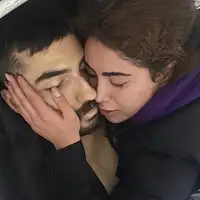
Iranian authorities executed 20-year-old protester Arvin Kheirkhah at Shahroud prison on Saturday morning, according to information obtained by Iran International, amid concerns that several other detainees could also face execution.

Kheirkhah was arrested during the January protests and sentenced to death by a Revolutionary Court on charges including moharebeh, or “waging war against God.” He was transferred to solitary confinement on Wednesday ahead of the execution.

His family gathered outside Shahroud prison on Friday night in an attempt to stop the sentence from being carried out. According to information received by Iran International, Kheirkhah told his family in a final conversation: “Don’t let them forget me. We stood up for the liberation of our homeland. Don’t let the path we chose be silenced.”

Iran’s Prince Reza Pahlavi condemned the execution and warned that several other detainees were at risk, naming Javad Ajam, Morteza Zamani, Mehdi Ranjar, Farshid Rahmani, Alireza Sagheri, and Pouya Sagheri.

Kheirkhah’s execution follows the hanging of two young protesters, Amirhossein Safari and Abolfazl Sepahi, in Isfahan’s Alikhani Square on Tuesday amid a heavy security deployment.

Twelve young men were sentenced to death in the Alikhani Square case over the January protests. Two others, Golmohammad Mohammadi and Erfan Esfandiari, were executed on July 19, bringing the number executed in that case to four and leaving eight under death sentences.

UN experts had urged Iran to halt the executions, raising concerns about fair-trial violations, closed hearings and the reported use of confessions broadcast on state television. Among those still facing execution is Shervin Bagherian Jebeli, who turned 18 only days before his arrest.

Most Viewed

US offers $15 million reward over IRGC drone network
1

US offers $15 million reward over IRGC drone network

2
INSIGHT

'Western trap': calls for restraint grow in Tehran after Ukraine attack

3
INSIGHT

State TV dispute exposes limits of oversight in Iran

4

Iran gambling network helped channel $4 billion through crypto exchange - Reuters

5
INSIGHT

Why Iran's leaders failed to see this generation coming

Banner
Banner
Banner

Spotlight

  • Why Iran's leaders failed to see this generation coming
    INSIGHT

    Why Iran's leaders failed to see this generation coming

  • Security forces seized Iran hospital, sent wounded protesters to morgue
    EXCLUSIVE

    Security forces seized Iran hospital, sent wounded protesters to morgue

  • Where steak is a dream
    VOICES FROM IRAN

    Where steak is a dream

  • 'Western trap': calls for restraint grow in Tehran after Ukraine attack
    INSIGHT

    'Western trap': calls for restraint grow in Tehran after Ukraine attack

  • Iran government pushes talks line, but power lies elsewhere
    INSIGHT

    Iran government pushes talks line, but power lies elsewhere

  • What does Trump mean by 'finish the job' in Iran?
    ANALYSIS

    What does Trump mean by 'finish the job' in Iran?

•
•
•

More Stories

Ghalibaf reveals Tehran feared street unrest after Iran International broke Khamenei news

Aug 1, 2026, 09:50 GMT+1
100%
Late Iranian Supreme Leader Ali Khamenei (L) with parliament speaker Mohammad Bagher Ghalibaf.

Iranian parliament speaker Mohammad Bagher Ghalibaf said authorities rushed to announce Ali Khamenei’s death and call supporters onto the streets after “overseas media” broke the news, fearing the situation on the streets could otherwise “take a completely different turn.”

By “overseas media,” Ghalibaf was referring to Persian-language outlets based outside Iran, a term Iranian officials sometimes use to refer to such broadcasters. Iran International was the first outlet to announce Khamenei’s death.

Ghalibaf said officials had initially decided to wait until 8 a.m. the following morning, when they planned to announce his death alongside the formation of a new Leadership Council.

“At 12:30 at night, the television channels abroad announced the martyrdom,” Ghalibaf said, adding that he and Ali Larijani re-established contact around 1 a.m. and decided the original plan could no longer stand.

Officials feared losing control of the streets

Ghalibaf said officials instead decided to announce Khamenei’s death around dawn, while people were eating their pre-dawn Ramadan meal, and immediately call supporters onto the streets.

“We decided that we absolutely had to announce it at dawn, when people were at the suhoor table, and at the same time say: whether you’ve eaten or not, everyone come out into the streets,” he said.

“Otherwise, believe me, the situation in the streets could have taken a completely different turn,” Ghalibaf added.

He described the street as one of four fronts that authorities needed to manage alongside the military, diplomacy and government services. “The military front is one front, diplomacy is one front, services are another, and the street is also a front,” he said.

Street pressure later turned on Ghalibaf

The comments shed new light on the government’s efforts to mobilize supporters immediately after Khamenei’s death. But some of the hardline demonstrators who took to the streets later turned their anger on Ghalibaf and other officials over negotiations with Washington.

The street criticism echoed a revolt among a small but vocal group of ultraconservative lawmakers, who accused Ghalibaf, Iran’s chief negotiator in talks with the United States, of crossing leadership red lines and shielding the negotiations from parliamentary scrutiny.

Iran's hangings are 'murders,' says former UN prosecutor

Aug 1, 2026, 03:37 GMT+1
•
Negar Mojtahedi
100%

Iran's latest wave of public hangings of protesters amounts to "killings" and "murders" that form part of a continuing crime against humanity, former United Nations prosecutor Professor Payam Akhavan told Iran International's Eye for Iran.

His comments came days after Iran publicly hanged two protesters in the central city of Isfahan, prompting renewed international condemnation and a rare display of public defiance.

He argued that the executions cannot be separated from the mass killing of protesters during January's nationwide uprising.

"There is no doubt that we have a crime against humanity," Akhavan told Eye for Iran.

“What we actually have in Iran are arbitrary executions. These are killings. They are murders,” Akhavan said. "Specifically, the case can be made that this is a crime of extermination, given the large scale of the killings."

Akhavan, who testified before the UN Human Rights Council during its January special session on Iran, said the scale and method of the killings could support the more specific charge of extermination.

The crime against humanity of extermination involves mass or large-scale killing. Unlike genocide, it does not require proof that the perpetrators intended to destroy a protected national, ethnic, racial or religious group.

Public hangings provoke defiance in Isfahan

Iran publicly hanged Amirhossein Safari and Abolfazl Sepahi on July 28 in Isfahan's Alikhani Square after accusing them of involvement in the killing of four police officers during the January 8 unrest.

The two men were among a group sentenced to death in connection with the case. Golmohammad Mohammadi and Erfan Esfandiari were executed in prison on July 19, while eight others reportedly remain under sentence of death.

The judiciary says Safari and Sepahi took part in the killings. Rights groups, however, have raised serious concerns about the proceedings, including restrictions on access to lawyers and case files, the rejection of potentially exculpatory evidence and the use of televised confessions that may have been obtained under coercion.

UN human rights experts called on Iran to halt the executions one day before the hangings, warning that coerced confessions must not be admitted as evidence and that broadcasting them before trial violates the presumption of innocence.

Rather than intimidating the public into silence, the hangings triggered a rare display of defiance.

Hundreds of people gathered near the execution site before dawn. Videos showed crowds booing police and chanting “shame on you” as the call to prayer rang out. Security forces later dispersed them through surrounding streets, with witnesses reporting the use of tear gas, Tasers and warning shots.

An online campaign opposing the death penalty was shared hundreds of thousands of times within a day. At Ghezel Hesar prison near Tehran, an estimated 1,500 death-row prisoners also staged a hunger strike as part of the “No to Executions” campaign.

“A death sentence which is carried out without any due process and on legal grounds that are entirely unacceptable is not really a lawful execution,” he said. “It becomes a form of murder or extrajudicial execution.”

International human rights law permits capital punishment only for the most serious crimes in countries that have not abolished it and only following strict respect for due process.

Akhavan said many of Iran’s death sentences instead rely on vague national-security charges, including moharebeh, or “waging war against God,” as well as forced confessions and trials in courts that cannot be considered independent or impartial.

“What we’re witnessing today in this surge in executions is not an isolated phenomenon,” Akhavan said. “It is inextricably connected with the events of January and it is really a continuation of the same criminal transaction.”

Article 7 of the Rome Statute defines crimes against humanity as certain acts committed as part of a widespread or systematic attack directed against a civilian population.

From January’s massacre to extermination

The UN Independent International Fact-Finding Mission on Iran previously concluded that serious violations committed during the 2022 Woman, Life, Freedom uprising amounted to crimes against humanity.

Its investigation into the January 2026 crackdown is ongoing. Akhavan acknowledged that the mission must complete its own investigation before issuing formal conclusions, but said his legal assessment is clear.

He cited the internet blackout, restrictions on reporting, allegations that hospitals were pressured to record gunshot deaths as natural causes and accounts of bodies being transported in refrigerated trucks and potentially buried in unmarked graves.

He also pointed to statements by senior Iranian officials depicting protesters as combatants, foreign agents or people “waging war against God,” language he said effectively created a licence to kill.

There is also evidence of snipers, heavy machine guns and armour-piercing ammunition being used against unarmed protesters.

“The case can be made that this is a crime of extermination, given the large scale of the killings.”

Executions as a display of control

Iran carried out at least 2,159 executions in 2025, Amnesty International has said, most in drug-related cases.

Since the January uprising, rights groups have documented a sharp increase in politically motivated executions. Amnesty says at least 52 people have been arbitrarily executed this year for alleged offences connected to the protests following torture-tainted and grossly unfair Revolutionary Court proceedings. At least 60 others remain at risk, including three who were children at the time of their alleged offences.

Public political executions remain comparatively rare. The last widely reported case was the 2022 hanging of Majidreza Rahnavard during the Woman, Life, Freedom uprising.

Akhavan said the return of cranes as public gallows was therefore particularly shocking and appeared designed to project strength and frighten a population that continues to challenge the state.

“Under cover of war, they are escalating executions in order to create fear,” he said.

“The biggest threat to the Islamic Republic is not the US and Israeli military operations, as damaging and unlawful as they may be. It is the Iranian people first and foremost.”

The authorities have now expanded their pressure beyond those facing execution. Tehran’s prosecutor has opened cases against an unspecified number of people accused of opposing executions or supporting defendants linked to the January uprising and the recent war.


Security forces seized Iran hospital, sent wounded protesters to morgue

Jul 31, 2026, 19:21 GMT+1
•
Farnoosh Faraji
100%

Iranian security forces took control of a hospital in the western city of Khorramabad during January's nationwide crackdown, according to medical staff, transferring dozens of critically wounded protesters to the morgue instead of receiving further treatment.

More than 200 bodies passed through Shohadaye Ashayer Hospital during the crackdown, according to an Iran International investigation based on more than two dozen sources, including medical personnel, eyewitnesses and people close to victims' families, as well as hospital records and videos obtained from inside the facility.

One eyewitness said at least 70 critically wounded protesters who could have been saved were transferred to the morgue instead of receiving further treatment.

Others were removed from treatment wards by security personnel before later reappearing in the morgue with fresh gunshot wounds to the upper body or what staff described as "finishing shots."

Iran International has so far verified the identities of 23 people killed in the city.

Hospital under siege

According to a member of the hospital's medical staff, Shohadaye Ashayer became the only hospital authorized to treat people wounded during the crackdown.

Armed security forces surrounded the hospital while police, intelligence officers and other security personnel operated inside the building. Officers stood over doctors and nurses as they treated patients, confiscated staff mobile phones and prevented them from contacting their families.

Hospital staff were effectively confined inside the facility for three days, the medical worker said. Several employees were arrested, while security forces moved through treatment wards identifying wounded protesters for detention.

Videos obtained by Iran International show dozens of bloodied bodies, many naked or partially unclothed, lying uncovered across the morgue floor and an adjoining room.

Some still had oxygen tubes in their mouths and electrocardiogram pads attached, suggesting they had been receiving treatment before being moved.

Several appeared to have been shot directly in the forehead, while others were covered with pellet wounds. Some had suffered catastrophic head injuries, with parts of their skulls missing. Several bodies also showed severe injuries to the genital area.

Some remained handcuffed despite bearing fatal gunshot wounds.

From operating room to morgue

Eyewitnesses described the hospital as overwhelmed, with blood covering corridors and bodies filling both the courtyard and the morgue. Multiple witnesses estimated that between 200 and 250 bodies passed through the hospital during the crackdown.

A student at Khorramabad University of Medical Sciences who witnessed patients arriving at the hospital described a similar pattern.

According to the student, wounded protesters repeatedly arrived alive on January 8 and 9, only for their deaths to be announced around 20 minutes after they had been taken into operating rooms. The student said the pattern was repeated across numerous patients.

The student also recalled a protester admitted on January 22 with extensive pellet wounds and a severe infection. Before treatment could be completed, security forces removed the patient from the hospital despite objections from the attending physician and took them to an unknown location.

Crackdown beyond the hospital

Witnesses said protests spread across much of Khorramabad on January 8 and 9, drawing tens of thousands of people into the streets.

They described security forces firing military-grade weapons, sniper rifles, shotguns and pellet guns at demonstrators, with several witnesses saying protesters were deliberately shot in the head and chest.

One witness said they personally saw at least five people killed after being struck from behind by bursts of gunfire.

Witnesses said security forces prevented many wounded protesters from reaching medical care, leaving some to bleed to death in the streets. Those who managed to reach Shohadaye Ashayer Hospital remained at risk of arrest, abduction or forced removal.

Witnesses also described an internet shutdown, movement restrictions and the widespread deployment of plainclothes officers, the Basij, the Revolutionary Guards and police units throughout the city.

Families under pressure

Eyewitnesses said bodies accumulated in the courtyard of Shohadaye Ashayer Hospital on January 9 while Basij forces prevented relatives from approaching them.

Some families removed the bodies of loved ones immediately, fearing security forces would seize them.

Among the victims whose identities Iran International has verified was Hossein Yaghmaei, who died after being shot and taken to a nearby home.

Retired municipal employee Hojjat Ahmadian was also among those killed. People familiar with his case said authorities pressured his family to record his death as suicide to avoid losing his pension.

Iran gambling network helped channel $4 billion through crypto exchange - Reuters

Jul 31, 2026, 10:38 GMT+1
100%
Playing cards, poker chips and dice are seen in this file image.

An illicit Iranian gambling network helped move at least $4 billion through an unlicensed Dubai-based cryptocurrency exchange that also handled funds for sanctioned Iranian institutions, a Reuters investigation found.

Blockchain data reviewed by Reuters showed the exchange, Shelbit, processed money for a Farsi-language gambling network spanning more than 2,000 websites. It also interacted with Iran's central bank, the sanctioned Iranian exchange Nobitex and wallets that Israel has linked to the Islamic Revolutionary Guard Corps.

Reuters traced tens of millions of dollars from the gambling network through Shelbit and found that at least $676 million moved from Shelbit-linked addresses to Binance, the world's largest crypto exchange, since May 2024.

Links to sanctioned entities

Shelbit processed at least $125 million connected to Iran's central bank and received funds from what blockchain investigators described as an Iranian bitcoin-mining operation, according to data reviewed by Reuters.

The exchange also handled money connected to gambling websites promoted by Iranian influencers Sasha Sobhani and Pooyan Mokhtari. Both men denied knowledge of Shelbit or any involvement in sanctions evasion, money laundering or transactions on behalf of Iranian state institutions.

Reuters found that the IRGC took control of major gambling websites accessible inside Iran years ago and used them to move money abroad. The news agency could not establish whether the Guards directly controlled Shelbit or the wider gambling network, or determine where much of the money ultimately went.

Dubai regulator takes action

Dubai's Virtual Assets Regulatory Authority said it had previously taken enforcement action against Shelbit for operating without a license. On July 24, it ordered the exchange to halt all unlicensed activity, citing concerns over money laundering, terrorism financing and cross-border transactions.

Shelbit's registered office was listed above a budget hotel in Dubai, but people working at the address told Reuters they had never heard of the company. The exchange no longer has an operating website and there is no apparent way for members of the public to use it.

Binance said Shelbit had never held an account on its platform and that transactions associated with it were not initially judged to be high risk. It said relevant accounts were investigated, frozen and reported to law enforcement.

Shelbit founder Siavash Kayvanpour, the Iranian government and the IRGC did not respond to Reuters requests for comment.

From cafes to buskers, Tehran tightens its grip on the fabric of everyday life

Jul 30, 2026, 12:53 GMT+1
•
Samira Rahi
100%
Demolished sidewalk planters outside cafes on Sanaei Street in Tehran.

In the quiet hours of Wednesday morning, municipal crews swept through Sanaei Street in central Tehran with sledgehammers, reducing sidewalk planters, benches, and concrete borders outside local cafes to rubble.

Just days earlier, authorities had affixed heavy metal seals to the doors of several cafes that had become popular gathering places for young people - 1401, Theory, Jo Cafe, Dobareh, Sam Cafe, Maan, and Nook. Now, even the physical footprint of these gathering spots was being erased.

The scene along Sanaei is not an isolated urban redevelopment project; it is the visible edge of an expanding domestic front. As the Islamic Republic navigates profound geopolitical vulnerability, military standoff, and international isolation, its security apparatus has turned inward with renewed vigor. The target is the physical fabric of daily life—the informal, everyday spaces where citizens meet, breathe, and quietly subvert official ideology.

The erasure of the 'Patogh'

In Iranian urban culture, the patogh - a hangout spot, whether a neighborhood coffee shop, a shaded bench, or a specific street corner- holds a special resonance. Central Tehran, with its historical universities, cultural venues, and tree-lined avenues, has long served as a sanctuary for students and young professionals seeking conversation away from state surveillance.

Cafes in this district do not merely sell coffee; they operate as vital breathing rooms in a pressure-cooker society. They are spaces where women routinely drop their headscarves, where independent acoustic music plays quietly, and where social networks form organically.

To the security state, these hubs represent something far more dangerous than simple rule-breaking: they are unmonitored incubator spaces for civil defiance.

By dismantling the planters and outdoor ledges where young people once congregated, the state is conducting a campaign of physical depatterning. The objective is simple: raise the friction of gathering, eliminate opportunities for unscripted human interaction, and force citizens back into the isolation of private homes.

  • Cafés close, tolerance ends: Iran’s post-war shift on compulsory hijab

    Cafés close, tolerance ends: Iran’s post-war shift on compulsory hijab

From central cafes to northern bazaars

The systematic clearing of social life is not confined to central Tehran's bohemian quarters. In the northern district of Tajrish—a bustling commercial hub anchored by its traditional bazaar, the Imamzadeh Saleh shrine, and the thoroughfares leading toward the Saadabad Palace—a parallel push is underway.

Here, the crackdown targets street musicians, artisans, and informal vendors whose presence gives the district its distinctive kinetic energy.

"Plainclothes men carrying two-way radios came up to me last week while I was playing," a young handpan musician who performed near Tajrish Square told Iran International. "They told me bluntly: 'The time for these antics is over. There will be none of this in the streets anymore.'"

For many, performing or vending in Tajrish was not a lifestyle choice, but a last resort. Following the internet blackouts imposed during recent nationwide unrest, thousands of small online businesses, home-craft pages, and digital storefronts collapsed overnight. Young artisans, women-headed households, and unemployed graduates migrated to the pavements of Tajrish to sell handmade goods or play music for passing crowds.

Now, even that economic and social retreat is being shut down. Vendors near the shrine report periodic sweeps by security personnel and vigilantes ordering them to pack up their "sinful stalls" under threat of physical violence.

  • Iran’s café culture buckles as everyday life contracts

    Iran’s café culture buckles as everyday life contracts

The asymmetry of public space

What makes this campaign so striking to Tehran residents is its stark selectivity.

While young people face sledgehammers and security sweeps for sitting on a sidewalk ledger or strumming a guitar, state-aligned groups enjoy unrestricted access to the city’s major arteries. For months, heavily subsidized groups have set up nightly ideological gatherings, loud ceremonial processions, and roadside stands with full logistical backing from the state.

This spatial double standard reveals the regime's broader urban philosophy: public space in Iran is not a shared civic commodity, but a state monopoly. The streets are permitted to be loud, crowded, and disruptive—provided that noise serves the government's narrative. The moment a street corner becomes a site for quiet civilian autonomy, it is treated as a security threat.

  • Iran seizes assets to punish dissent

    Iran seizes assets to punish dissent

The historical pattern: Internal repression as external defense

This tightening grip on everyday life follows a familiar pattern in post-revolutionary Iran. Historically, whenever the Islamic Republic faces severe external threats or internal crises, its immediate response is to signal total domestic control.

The destruction of cafe seating and the silencing of street performers occur alongside a sharp escalation in judicial violence, including a surge in executions and political detentions. The message directed at society is unified across every medium: the state retains absolute authority over who walks the street, who speaks, and who lives.

Yet, despite the shattered concrete on Sanaei Street and the quieted plazas of Tajrish, Tehran's urban ecosystem remains stubbornly resilient. The urge to assemble, connect, and reclaim small fragments of normal life has repeatedly outlasted physical destruction—proving that while a government can tear up a sidewalk, controlling the social life that flows over it is a far more difficult task.