Who was behind Iran’s deadly crackdown?
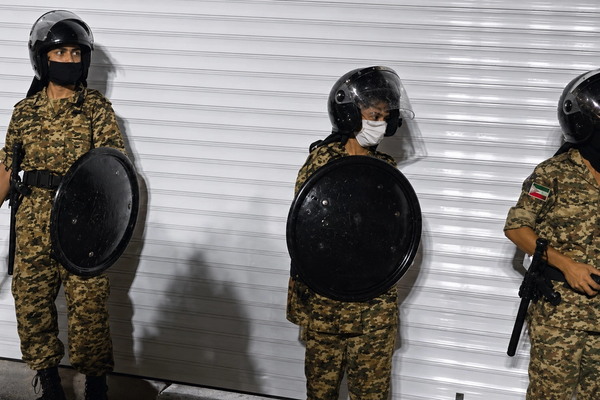
The reported killing of thousands of protesters across Iran in just two days has raised a central question: who carried out the deadliest crackdown in the country’s living memory?

The reported killing of thousands of protesters across Iran in just two days has raised a central question: who carried out the deadliest crackdown in the country’s living memory?

Recent statements by Iranian officials and their apparent acceptance by some foreign leaders have created a misleading sense of reassurance about the state’s response to the latest protests.

Iranian-American activists are calling on US authorities to deport relatives of senior Iranian officials who are living in the United States, according to a report published by the New York Post on Wednesday.

Turkey has adopted a calculated caution during the recent waves of protests in neighboring Iran, avoiding endorsement of those who took to the streets while stopping short of backing Tehran’s violent crackdown.

Iranian Prince Reza Pahlavi on Thursday outlined his vision for how Iran could reposition itself at home and abroad after five decades of isolation and confrontation with the world if the Islamic Republic were toppled.

As Iran remains in a near-total communications blackout, three people in different cities described what they said were the biggest protests since 1979—followed by a crackdown so severe it left many seething with anger and hollowed out by anguish.

A review of public statements by Iran’s senior officials since late December suggests a marked hardening of tone as protests escalated, a shift that coincided with a sharp intensification of the state’s security response.

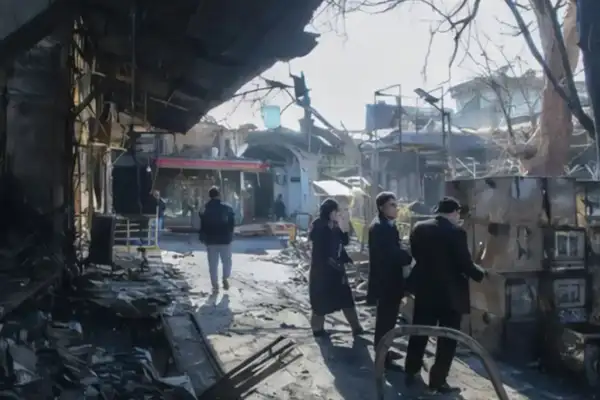
State media in Iran have widely circulated images of damaged mosques and burned Qurans inside, blaming protesters they brand “terrorists” and portraying its deadly crackdown on a protest uprising as a sacred defense of holy places.

The United States sanctioned Iran's influential security chief on Thursday along with top military officers it accused of being behind a deadly crackdown on protests, ramping up Washington's standoff with Tehran as it weighs a potential attack.

European airlines avoided Iranian and Iraqi airspace on Thursday, Reuters reported citing flight-tracking data, despite Iran reopening its skies after a brief closure a day earlier amid fears of possible US military action.

After Iran’s deadliest protest crackdown in decades, authorities have extended their response beyond the streets into morgues, hospitals and family homes, turning the protesters’ bodies into a key tool for suppressing dissent and controlling the narrative.

Uncertainty over Iran’s direction deepened on Wednesday as unrest at home coincided with mixed signals across the region, with military movements and diplomatic steps raising the risk of a broader conflict.

Iran’s judiciary said on Thursday that Erfan Soltani, a protester detained earlier this month, has not been sentenced to death, rejecting earlier claims by his family that such a ruling had been issued.

Any US military action against Iran risks falling short if it mirrors past “one-off” strikes without sustained political and economic pressure, analysts warned during an Iran International Insight town hall on Wednesday amid mounting fears of a US attack.

US Treasury Secretary Scott Bessent said on Wednesday Washington is tracking what he described as a surge of capital flight by Iran’s ruling elite, as fears grow over the possible collapse of the Islamic Republic amid unrest and threats of a US strike.

Israel’s apparent inaction amid Iran’s widespread unrest may look counterintuitive, but it reflects a long-standing strategic calculation rather than hesitation.

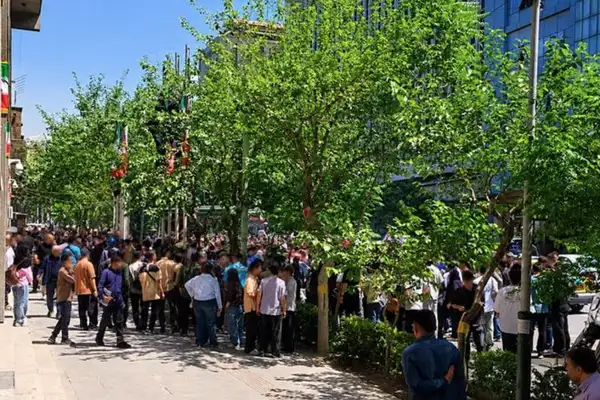
Iranian authorities have significantly expanded the presence of security forces across multiple cities, tightening control to prevent further protests in what some residents inside Iran described as a 'de facto curfew.'

A 25 percent tariff on US imports from any country that trades with Iran appears aimed at punishing third countries, but it is likely to hit Tehran far harder.

Armed security forces surrounded hospitals and government buildings in the city of Karaj after several days of deadly unrest and, in some cases, shot wounded protesters who could not move, witnesses and medical workers said.

Some personnel at the US military’s Al Udeid Air Base in Qatar were advised to leave by Wednesday evening, Reuters reported, as Iran warned regional countries that it would strike US bases on their soil if Washington attacks Iran.

Iranian authorities are moving quickly to launch a new project designed to make it possible to cut the country off from the global internet completely and for extended periods, according to information obtained by Iran International.