• العربية
  • فارسی
Brand
  • Iran Insight
  • Politics
  • Economy
  • Analysis
  • Special Report
  • Opinion
  • Podcast
  • Live TV
  • Iran Insight
  • Politics
  • Economy
  • Analysis
  • Special Report
  • Opinion
  • Podcast
  • Live TV
  • Theme
  • Language
    • العربية
    • فارسی
  • Iran Insight
  • Politics
  • Economy
  • Analysis
  • Special Report
  • Opinion
  • Podcast
  • Live TV
All rights reserved for Volant Media UK Limited
volant media logo

One killed, one missing after tanker incident off Dubai, charterer says

Sep 9, 2026, 13:21 GMT+1

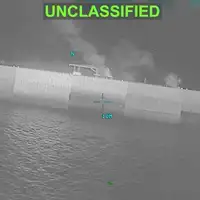
One crew member was killed and another seafarer was missing after the oil products tanker Hercules Star was involved in an incident at an anchorage off Dubai, charterer Peninsula said on Wednesday.

All other crew members were accounted for, Peninsula said.

Most Viewed

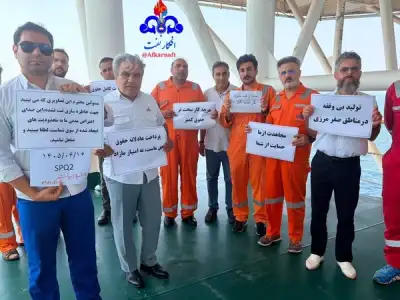
Iran oil workers protest pay conditions at offshore platforms, Assaluyeh
1

Iran oil workers protest pay conditions at offshore platforms, Assaluyeh

2

US sanctions all Iranian airlines in sweeping aviation crackdown

3
ANALYSIS

Iran’s new war strategy seeks to turn blockade into broader economic confrontation

4
ANALYSIS

Europe’s third-way ambitions on Iran give way to alignment with Washington

5
VOICES FROM IRAN

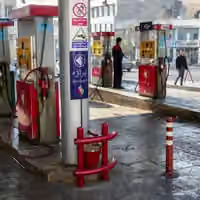
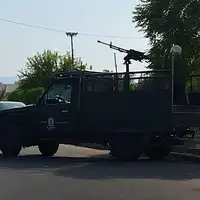
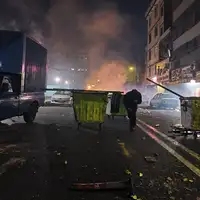
Iran deploys security forces as gasoline price rise takes effect

Banner
Banner
Banner

Spotlight

  • Iran’s gasoline price hike may add to revenues, but can it ease fuel shortage?
    ANALYSIS

    Iran’s gasoline price hike may add to revenues, but can it ease fuel shortage?

  • Iran deploys security forces as gasoline price rise takes effect
    VOICES FROM IRAN

    Iran deploys security forces as gasoline price rise takes effect

  • Iranian protester undergoes months of secret treatment to save wounded leg
    EXCLUSIVE

    Iranian protester undergoes months of secret treatment to save wounded leg

  • Iran’s new war strategy seeks to turn blockade into broader economic confrontation
    ANALYSIS

    Iran’s new war strategy seeks to turn blockade into broader economic confrontation

  • Europe’s third-way ambitions on Iran give way to alignment with Washington
    ANALYSIS

    Europe’s third-way ambitions on Iran give way to alignment with Washington

  • The gamble behind US attacks on Iran’s oil tankers
    ANALYSIS

    The gamble behind US attacks on Iran’s oil tankers

•
•
•

More Stories

Construction surges at suspected Iran nuclear site – CSIS

Sep 9, 2026, 13:08 GMT+1
100%
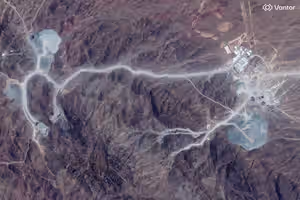
A satellite view shows tunnel entrances at Pickaxe Mountain, of the Natanz nuclear facility, near Natanz, Iran, June 30, 2026. (Reuters file photo)

Construction activity has surged at a deeply buried complex near Iran’s Natanz nuclear facility, but satellite evidence suggests the site may not yet be capable of uranium enrichment, according to a new analysis by the Center for Strategic and International Studies.

CSIS examined six years of satellite imagery of Kuh-e Kolang Gaz La, commonly known as Pickaxe Mountain, an underground complex about two kilometers south of Natanz and roughly 225 kilometers south of Tehran.

The analysis found more road activity at the site in 2026 than at any previous point in its history and what researchers described as a “clear surge in construction activity.”

Recent work included raising and hardening tunnel entrances, paving internal roads, reinforcing access areas and removing excavated soil, according to images taken in July and August.

  • What is Pickaxe Mountain, and why does Trump keep saying he will bomb it?

    What is Pickaxe Mountain, and why does Trump keep saying he will bomb it?

The researchers said the activity indicated that work had shifted from excavation toward probable construction inside the complex, while reinforcement of its exterior continued.

CSIS outlined three possible purposes for Pickaxe Mountain: a centrifuge assembly facility, a uranium enrichment plant or a protected location for other nuclear-related work, including uranium metal conversion.

The report said publicly available evidence was insufficient to determine what Iran intended to place inside the complex. It could neither confirm nor disprove reports that Tehran had moved centrifuges or centrifuge components there.

Continuous construction, the absence of increased internal security and the lack of vehicles or equipment unrelated to building work suggested the site was “not yet capable of enrichment work,” if enrichment was its intended purpose, the analysts said.

CSIS also said the complex would be extremely difficult to destroy using conventional weapons because it is buried deep inside a granite mountain.

Open-source estimates place parts of the facility between 80 and 100 meters underground, but the report cautioned that satellite imagery could not reliably establish its depth or internal design.

The GBU-57 Massive Ordnance Penetrator, the heaviest conventional bunker-busting bomb in the US arsenal, may not be able to reach and destroy the complex, according to the analysis.

A military operation could instead seek to collapse the tunnel entrances, potentially degrading or temporarily disabling the facility without destroying it.

CSIS concluded that military strikes might delay work at the facility but would not offer a sustainable solution to concerns about Iran’s nuclear program, arguing that any lasting resolution would require a verifiable diplomatic agreement.

The IAEA has requested information about Pickaxe Mountain and access to the site, but Iran has not responded, the report said.

Iran began building the facility in 2020 after an aboveground centrifuge assembly workshop at Natanz was damaged in suspected Israeli sabotage. Iranian nuclear chief Ali Akbar Salehi said at the time that a replacement centrifuge assembly facility would be built underground near Natanz.

US President Donald Trump said on September 4 that Washington may strike Pickaxe Mountain “very soon,” reiterating that Iran would not be allowed to have a nuclear weapon.

The Pentagon has made preparations this year to test classified capabilities against deeply buried targets, CNN reported on Wednesday, citing federal contracting records and people familiar with the effort.

Days before the war began on February 28, the Defense Threat Reduction Agency approved an emergency $1.2 million contract to repair a specialized underground testing facility at White Sands Missile Range in New Mexico. The work was intended to prepare the site for a live-fire test against rapidly emerging threats, according to the records.

Three sources told CNN that the planned test was connected to the Iran war and efforts to develop a way to strike Iran’s deepest underground facilities, potentially by simulating attacks on specific nuclear sites.

Satellite imagery reviewed by CNN showed excavation and vehicle activity at the White Sands site beginning in mid-February and continuing into March. CNN said it could not independently verify whether the test occurred or determine its purpose. The Pentagon and the contractor did not provide comment.

The US military also maintains operational plans for striking Pickaxe Mountain, and the facility was included in a target package considered earlier this summer, a source familiar with the matter told CNN. The plan involved some of the largest bombs in the US arsenal, though it remained unclear whether they could penetrate deeply enough to destroy the facility.

Another source told CNN that Defense Department officials recently held a “planning sprint” on options for attacking deeply buried sites. The US Air Force is separately developing a next-generation penetrator to replace its existing bunker-busting bomb, with initial prototype work commissioned in September 2025.

How body bags came to symbolize Iran's January killings

Sep 9, 2026, 13:04 GMT+1
•
Reza Haji Hosseini
100%
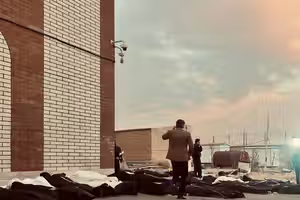
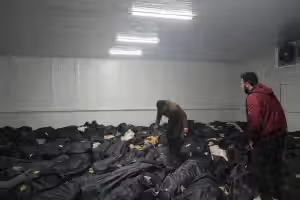
Families look for their loved ones in body bags piled outside a morgue in Iran, January 2026

Rows of black body bags became one of the defining images of Iran’s deadly January 2026 crackdown, as families searched among covered bodies and thousands of photographs for relatives killed or missing during the unrest.

Eight months later, images of the killings and crackdown remain vivid for survivors and the wider public. Iranians describing life after January have spoken of recurring nightmares, crying at night and difficulty returning to ordinary life. Some survivors have attempted suicide.

For many, life is now divided into before and after January.

Body bags have also acquired a place in Iran’s collective memory that they did not have before. Previously associated largely with films, natural disasters and major emergencies, they appeared repeatedly in footage documenting the aftermath of the January killings.

Images from earlier waves of unrest – the 2009 protests, November 2019 and the 2022 Woman, Life, Freedom movement – often showed the bodies of those killed: lying in streets, on hospital beds or wrapped in burial shrouds.

In January 2026, the dead were frequently hidden behind black bags and zippers. Faces disappeared from view and rows of bags remained.

The distinction matters. An object intended to preserve bodies for transportation and identification became one of the most recognizable images of the crackdown.

  • Seven months on, January protests still shape Iranians’ lives

    Seven months on, January protests still shape Iranians’ lives

Amnesty International counted at least 205 separate body bags in verified images from the Kahrizak morgue, south of Tehran. Human Rights Watch identified at least 400 bodies or body bags in three verified videos.

Eurovision News Spotlight, a verification project run by the European Broadcasting Union, also identified the green markings of Tehran’s Behesht-e Zahra cemetery on some of the body bags.

The trauma behind the bags

Part of the disturbing power of such images comes from what the bags conceal.

An exposed body, however difficult to see, retains a face and visible identity. Hundreds of nearly identical bags can instead reduce individuals to units: one package beside another, one number beside another, with the total continuing to rise.

For relatives searching for somebody missing, however, those bags have to be opened. Each zipper brings the possibility of encountering the body of a parent, child, sibling or friend.

This can be understood as a particular trauma associated with body bags: the combination of mass death, the temporary erasure of individual identity, the anxiety of identifying the dead and the repeated return of the same visual image.

There is also the question of dignity. Each bag contains a person whose family may be searching for them, yet footage showed bodies left in rows on the ground as relatives tried to identify them.

Such scenes are not unique to Iran.

  • 36,500 deaths in context: How Iran’s toll compares with wars and crackdowns

    36,500 deaths in context: How Iran’s toll compares with wars and crackdowns

After Egyptian security forces opened fire on protesters around Cairo’s Rabaa Square in the summer of 2013, the El-Iman mosque became a temporary morgue. Bodies were placed in tightly packed rows under white sheets. Volunteers wrote victims’ names on the coverings; some carried names and addresses, while others remained unidentified.

Families also searched morgues in Damascus after the fall of Bashar al-Assad’s government in Syria, opening bags, photographing faces and comparing them with images of missing relatives and acquaintances.

Those bags represented an archive of years of enforced disappearances, torture and deaths in custody.

Iran’s January 2026 images were different in one important respect. The bags appeared during the days and nights of the crackdown itself, within the existing system of hospitals, forensic facilities and cemeteries.

In much of the footage, rows of black bags are visible without names or identifying information that can be seen on their surfaces.

  • Over 36,500 killed in Iran's deadliest massacre, documents reveal

    Over 36,500 killed in Iran's deadliest massacre, documents reveal

The victims’ faces are concealed, but the sheer number of bags makes the scale of death visible.

The bags also did not arrive at morgues by themselves. Behind the images was a system responsible for collecting, transporting, recording and storing bodies.

What happened after the shooting

Mass killing does not end when shooting stops. Bodies have to be moved. That requires ambulances or other vehicles, body bags and labels, morgues or refrigerated containers and lists recording the dead. Decisions also have to be made about where bodies are stored, when they can be identified and under what conditions they are returned to families.

Reports following the killings on January 8 and 9 described shortages of body bags and bodies accumulating in hospitals and morgues.

That raises another question: where did the additional bags come from, and how prepared were authorities for handling large numbers of bodies?

Two procurement notices for body bags appeared around the time of the killings in Alborz province, one of the main centers of the protests and subsequent crackdown.

The Imam Hossein medical center in Alborz sought quotations on January 4, after the protests had begun, for 200 adult body bags and eight bags for children.

Shariati Hospital in Karaj had separately registered a request for 200 adult body bags on December 18, with the procurement notice published two days later.

  • Iranian protester undergoes months of secret treatment to save wounded leg

    Iranian protester undergoes months of secret treatment to save wounded leg

The timing, particularly of the Imam Hossein request, warrants scrutiny. But the records alone do not demonstrate that authorities anticipated mass killings, nor do they establish that these particular bags were subsequently used to carry protesters’ bodies.

Several links in the procurement chain are also missing, including final contracts, delivery receipts, shipment numbers and warehouse release documents.

Body bags are routine supplies for hospitals, cemeteries and emergency services. Purchasing them is therefore not in itself evidence of preparation for a crackdown.

Reports of shortages in cities including Arak, Khorramabad and Gorgan, however, suggest that ordinary stocks were rapidly exhausted. If so, additional supplies would have had to be distributed, potentially following further purchases.

That leaves a narrower but important question: what level of fatalities was the system for handling bodies equipped to manage, and did January’s death toll overwhelm that capacity?

Turning numbers back into names

In hospitals, forensic facilities and disaster operations, body bags serve practical purposes: separating and transporting the dead and protecting workers from contact with blood and bodily fluids.

Joint guidance from the World Health Organization and International Committee of the Red Cross says each body should be placed separately in a bag, with the location and time it was found recorded. Personal belongings should remain with the body and each person should receive a unique identification number.

That number is not intended to erase a name. Its purpose is to help establish an identity and ultimately return the body to relatives.

  • How one Tehran hospital became a window into Iran’s January massacre

    How one Tehran hospital became a window into Iran’s January massacre

For some Iranian families in January, the process appeared to work in reverse: they searched through bags and thousands of photographs in an effort to turn a number back into the name of somebody they knew.

The father of Iman Asadi spent five days searching police stations, prisons and hospitals before finding his son’s photograph among thousands of images of unidentified people.

In that collection, Iman was No. 11838.

A number intended to assist identification had become, at least temporarily, the marker of a person without a name.

Another father, Esmail Shokri, was filmed walking among body bags at the Kahrizak forensic facility in a 12-minute video, calling out for his son.

“Sepehr ... Sepehr, my son ... where are you?” Shokri called.

Every bag could have contained Sepehr. To his family, he had a face, a history and a name. From the outside, each closed black bag looked much like the next.

That is what distinguishes some of the most enduring images of January 2026 from those of earlier Iranian crackdowns. Previously, the victim’s body often occupied the center of the frame. This time, for many Iranians, the body bag stood between the dead and the public looking at them.

What flew into Ashgabat before the US struck Iran's railway bridge to Russia

Sep 9, 2026, 12:28 GMT+1
•
Amirhadi Anvari
100%
A Volga-Dnepr Airlines An-124

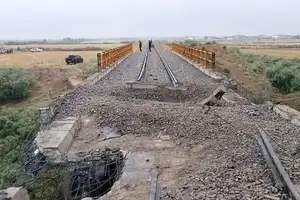
A US cruise missile strike on a railway bridge 700 miles from the war's main front has a puzzle at its center: Iranian media said it hit the China corridor, Iran's own figures say the line is minor and points at Russia, and Washington has not said why.

In the early hours of July 9, cruise missiles hit the Aq Tekeh Khan railway bridge near Aqqala in Golestan province, in Iran's far north-east. The Revolutionary Guards' regional corps and state media attributed the strike to US forces. Damage was limited, as it has been at other bridges hit in the war, and trains were running again within days. Washington has not commented, which is common for many strikes in this conflict.

The bridge sits on the Gorgan–Incheh Borun line, one of two railways connecting Iran's network to Central Asia through Turkmenistan. Iranian outlets described the strike as an attack on the corridor linking Iran to China through Kazakhstan and Turkmenistan, a reading that spread widely.

What the line actually carries

Iran's official statistics are opaque and frequently incomplete, and under nearly five decades of sanctions the state has had every incentive to blur figures that touch on trade, let alone anything with a military dimension. But even taken at face value, the numbers do not support the corridor claim.

Iran has two main rail gateways to Central Asia: Sarakhs, in the north-east, and Incheh Borun. Shortly before the war, in early 2026, the head of the Khorasan railway said 75 percent of all rail transit into and out of the country passed through Sarakhs, which handled 1.27 million tons in the ten months to late January. The Incheh Borun line's entire nominal capacity is around 500,000 tons a year, and how much of that is actually used is unknown.

Rail was never central to Iranian trade in any case. Before the war, the bulk moved by sea and road, with high-value, low-weight goods going by air.

Nor does the line point at China. Opened during Hassan Rouhani's first term as the Iranian section of a 930-kilometre Kazakhstan–Turkmenistan–Iran railway, completed in 2014 at a cost of about $1.4 billion, it was designed to link Russia and the Caspian region to warm-water ports through Iran, connecting northward toward Astrakhan and the Russian network.

The natural, cheaper route for Chinese rail freight is Sarakhs. Chinese traffic on the Incheh Borun line is not zero, with some reports counting several dozen freight trains from China over the past year, but it is marginal, and the line matters far more to Russia and Turkmenistan, notably for minerals, than to Iranian trade with the east.

Which leaves the question. If the bridge was not hit for what it carries for Iran, one possibility is what it carries for someone else.

Where Russia and Iran meet

Turkmenistan's neutrality is written into its constitution and recognized by the United Nations, and it has taken no side in Iran's wars. It has also become, since the US naval blockade closed Iran's ports, one of the country's principal overland routes to the east. That gives a small, closed and rarely reported state an unusual position: the place where Iranian and Russian logistics physically meet.

  • A remote bridge shows how US-Iran war is expanding

    A remote bridge shows how US-Iran war is expanding

The Islamic Republic has a long, documented history of military exchanges with Russia and China. Alongside the rail and road routes, which carry their own risks, combined routes for moving equipment are routine.

Ashgabat's airport is the nearest major airfield to Iran's north-eastern border. Iran International reviewed data on roughly 6,500 flights that landed there between the start of November 2025 and early July 2026, a window running from before the war through the ceasefires and the resumption of strikes.

The review has limits, and they should be stated first. Flight-tracking data depends on aircraft transmitting their position and on receivers within range picking it up, so gaps occur. The pre-war portion of the window is short, less than four months. And a change in what tracking systems record after a war begins may reflect changed behavior across a whole region rather than anything specific to one airport.

One category in the data carries more meaning than it might appear to. Scheduled passenger and cargo flights file public flight plans, so their origin and destination almost always appear in tracking records.

Flights that show no origin at all are therefore disproportionately state, military and private operations, which do not file in the same way. The category cannot tell a military transport from a government delegation or a private charter, and some freight operators also fall into it, but it does separate the traffic that files paperwork from the traffic that does not.

100%

The Antonov from China

The most concrete item is a single flight. On April 13, an Antonov An-124, the largest transport aircraft in regular service, landed at Ashgabat from Urumqi in western China, paused, and left early the same day for Cairo. Nothing like it appears elsewhere in the nine months of data.

The aircraft belongs to Volga-Dnepr Airlines, which is designated by the United States, the European Union, Britain, Canada, Australia, Switzerland, Ukraine and France. Britain listed it in June 2024 for "the provision of heavy airlift capacity to the Russian Armed Forces."

The EU, listing the group's owners and directors the same month, said Volga-Dnepr has been "playing a crucial role in servicing Russia's military-industrial complex and providing air transportation services for Russian military purposes," importing electronics and communications equipment for the war on Ukraine and receiving Russian government subsidies for doing so. The US designation carries a secondary sanctions risk, which applies in principle to any third party that does business with the airline, including by servicing its aircraft.

The specific aircraft carries the registration RA-82074. A Ukrainian investigation named it among Volga-Dnepr An-124s that sharply increased flights to countries friendly to Russia, including China, after the 2022 invasion, in transport the investigators linked to sanctioned goods and military products.

The website openDemocracy reported in 2023 on the company's role in carrying equipment critical to the Russian military from China. Only three of the company's An-124s are currently active.

There is an ordinary explanation available. Egypt is a major destination for commercial heavy cargo, and an An-124 routing from China through Central Asia to Cairo is consistent with legitimate project freight. Egypt is also a longstanding Russian arms customer. Volga-Dnepr has said it stopped carrying military cargo in 2018; Western governments that have examined its record disagree, and the Islamic Republic has spent more than four decades perfecting the art of moving sensitive goods under commercial cover.

The pattern around it

Around that flight, several categories of traffic rose after the war began.

Local callsigns in the 795 series, searchable under identifiers such as 795M12 and 795A01, were rare before the war and rose sharply from April: 11 in April, 7 in May and 15 in June. Most were logged with no recorded origin or as Mil Mi-8 military transport helicopters, sometimes several times in a day.

On July 6, three days before the bridge was struck, three such flights were logged. One caveat matters here: the same callsign sometimes appears several times within minutes, which may mean genuine repeat flights or may mean several ground receivers logging one signal, so these counts may be inflated.

Flights with no recorded origin rose from a single instance in January to 8, 6, 4, 9 and 7 in the months from February to June, with two more in the first nine days of July. Given what that category captures, this is the closest the data comes to a measure of non-commercial traffic, and it went from one a month before the war to an average of nearly seven a month after it began.

Callsigns in the RSD series, used by Russian state and military flights, together with Tupolev Tu-204 and Ilyushin Il-96 aircraft, increased noticeably in May. Ilyushin Il-76 heavy transports arriving from within Turkmenistan were logged twice in February and twice in May, with none in the pre-war months. Three AgustaWestland AW139 helicopters, a type used in government and military roles, landed in May and June, though similar flights also appeared in November.

None of this is evidence of military transfers through Ashgabat. There is no official statement or document to that effect, and the relative rise in irregular traffic could have explanations that have nothing to do with the bridge 100 kilometers to the south.

What the data does show is a change in the rhythm of arrivals at Turkmenistan's main airport that coincides with the intensification of the war, and that was building in the weeks before a railway line to Russia was hit.

Iran International has asked US Central Command to confirm the strike and explain the choice of target. It had not responded at the time of publication; this report will be updated if it does.

18 Iranian prisoners face possible death sentences over prison unrest

Sep 9, 2026, 12:03 GMT+1
100%

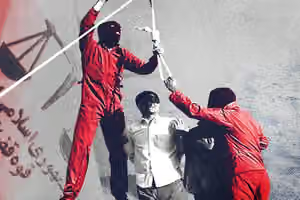
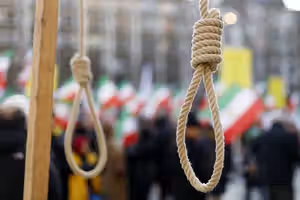
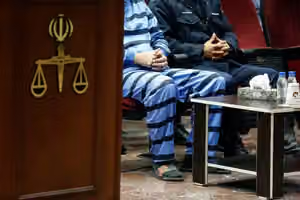
Eighteen prisoners held at Dastgerd prison in the central Iranian city of Isfahan could face death sentences over unrest and a fire at the facility, according to a judicial document obtained by Iran International.

The case has been sent to a Revolutionary Court, with some of the defendants accused of “leading the unrest” or “inciting war and killing,” charges that can carry severe penalties under Iranian law.

The document lists 75 prisoners as defendants in the case, while prosecutors in Isfahan have ordered at least 26 of them to stand trial.

The case was opened after unrest and a fire at Isfahan Central Prison, also known as Dastgerd, following an air strike near the prison in March. A military base and ammunition depot behind the prison were hit, while parts of the prison grounds and accommodation areas were also damaged.

Information accompanying the document said some prisoners were killed during the incident, and others died in the fire.

  • At least 916 executed in Iran since January - rights group

    At least 916 executed in Iran since January - rights group

Human rights groups, citing witnesses and relatives of prisoners, have said the unrest began after missiles struck a military site behind the prison and projectiles also hit parts of the prison complex. Guards and prison officials left some posts after the explosions, and inmates came out of their wards fearing the facility could collapse, according to those accounts.

The groups said some prisoners then set fire to blankets, sheets and other materials in an effort to force authorities to open doors and allow them into safer areas. Smoke spread through enclosed corridors as the fires grew.

Human rights groups have also said security forces later entered the prison and used live ammunition, pellet rounds and tear gas against inmates. According to witness accounts cited by the groups, some prisoners were shot, while others died from burns or smoke inhalation during the unrest.

  • Iran executes fifth defendant over January protests in Isfahan

    Iran executes fifth defendant over January protests in Isfahan

Serious charges brought

Prosecutors have brought charges including "inciting people to war and killing each other with the aim of disrupting national security," deliberate arson, destruction of public facilities and taking part in an illegal prison gathering that led to a riot during wartime, according to the document.

Other accusations include destroying surveillance cameras, windows and security doors, taking part in or assisting with property damage and setting fire to the prison infirmary.

Iran International identified 17 prisoners facing such accusations. The documents indicate that 18 prisoners could face death sentences.

  • Iran executes 20-year-old protester as fears grow for other detainees

    Iran executes 20-year-old protester as fears grow for other detainees

Five prisoners executed in separate case

The referral to the Revolutionary Court comes after five protesters held at Dastgerd were executed over the past two months in a separate case known as the "Alikhani Square" case.

Five other people sentenced in that case are at risk of imminent execution.

The latest case comes amid a rise in executions and heavy prison sentences in Iran in recent weeks as tensions with the United States have intensified.

Concerns over prison conditions

Concerns over Dastgerd have also grown over treatment of inmates and health conditions.

Political prisoner Abdolrasoul Mortazavi said in an audio message from the prison in June that some people detained during the January protests had been tortured. He also reported beatings, harsh interrogations, restrictions on contact with families and limits on outdoor exercise.

  • Iran executed at least 56 people since March, UN rights chief says

    Iran executed at least 56 people since March, UN rights chief says

Iran International has also received reports of worsening health conditions and a meningitis outbreak at the prison in recent weeks.

A source familiar with the situation told Iran International in August that several prisoners had died from infectious diseases. Information obtained by Iran International also indicated that meningitis had spread to most prison wards and that some inmates had been taken to Al-Zahra hospital in Isfahan.

Secret documents expose new network selling sanctioned Iranian oil

Sep 9, 2026, 11:27 GMT+1
•
Mojtaba Pourmohsen
100%
An aerial view shows a crude oil tanker at an oil terminal off Waidiao island in Zhoushan, Zhejiang province, China January 4, 2023.

A new Iranian oil trading network has been entrusted with selling millions of barrels of sanctioned crude even though its members still owe billions of dollars from earlier sales, according to documents obtained by Iran International and Oil Ministry sources.

One document, a confidential letter from the Supreme National Security Council’s protection unit to the Oil Ministry, raises concerns over the ministry’s decision to hand large volumes of crude to four trusted intermediaries, known as trustees, on credit and at steep discounts.

The crude was allocated after a new oil sales team took control in July, according to the letter.

The former chief executive of Naftiran Intertrade Company (NICO) had identified the intermediaries as carrying large debts and failing to return billions of dollars from previous oil sales, the document says.

The ministry nevertheless offered the intermediaries a discount of $8.50 per barrel, a level the confidential letter described as unusual.

100%

The documents and two Oil Ministry sources point to Mohammad Javad Bavand, a former Revolutionary Guards intelligence official appointed to oversee oil trading, as a central figure in the new arrangement.

Disputed cargo tied to sanctioned tankers

A second confidential document records a closed Oil Ministry meeting on June 28 concerning Iranian crude exported to China aboard three sanctioned tankers linked to Hossein Shamkhani, also known as Hector, an oil trader and son of Ali Shamkhani, a former adviser to slain Supreme Leader Ali Khamenei.

Two million barrels of crude were shipped through a front company aboard the tanker Lily to China’s Dongjiakou port on March 24, according to the document.

The owner of Lily subsequently took control of the cargo, citing a financial dispute with Panel Good Wholesalers, the company involved in the shipment, the document says.

Lily belongs to a shipping network and shadow fleet controlled by Hossein Shamkhani that has been sanctioned by the US Treasury. Dubai-registered Panel Good Wholesalers is also one of Shamkhani’s companies used for oil trading.

Oil trader Mohammad Hadi Momenin recovered the two-million-barrel cargo at NICO’s request and stored it in tanks at Dongjiakou, participants at the June meeting were told, according to the document.

100%

Momenin then sought $33 million in compensation from the Iranian oil company, including $27 million for the loss in value of the tanker Covenio following US sanctions and $6 million for charter costs involving another tanker, Jaya.

Bavand instructed Momenin to return ownership of the cargo to the Oil Ministry and, through one of Momenin’s companies, charter Covenio for one year at $90,000 per day, according to the meeting record.

Both Covenio and Jaya belong to Shamkhani’s sanctioned shadow fleet.

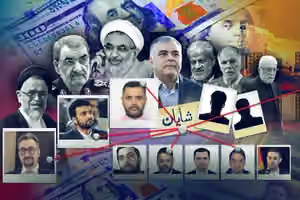
  • Mohsen Rezaei’s son among nine identified in $11-billion Iran oil network

    Mohsen Rezaei’s son among nine identified in $11-billion Iran oil network

Iran International reported three weeks ago that Momenin was a member of an Intelligence Ministry network known as the Shayan network. Momenin, born in 1989, has failed to return about $2 billion in Iranian oil proceeds, according to Iran International’s previous investigation.

Five traders form Bavand’s network

Momenin is one of five trustees in an oil trading network assembled by Bavand following his return to the Oil Ministry, two ministry sources told Iran International.

Another member is Mostafa Niazazari, the fifth defendant in the corruption case involving former senior judiciary official Akbar Tabari.

100%

Niazazari was accused in the case of giving Tabari 15,000 square meters of land as a bribe. After fleeing to Canada, he returned to Iran four years ago and has since resumed oil trading while residing in a European country.

Niazazari is the son of Kioumars Niazazari, a former Intelligence Ministry director-general in Mazandaran province.

Two businessmen known for importing essential commodities have also joined Bavand’s network after entering the oil trade during the tenure of former NICO chief executive Saeed Sadeghi, according to the Oil Ministry sources.

Hassan Afrashtehpour, also known as Dariush and the owner of Afra Holding, has for years controlled imports of some essential commodities. An Iranian court sentenced him to 25 years in prison for economic corruption in 1997, but he was released four years later.

100%

Masoud Modallal, a major importer of cooking oil and animal feed who has faced large banking debts, is another member of the network, the sources said.

Modallal previously received $985 million in preferential-rate foreign currency for essential-goods imports and owed 5.75 trillion rials to Sarmayeh Bank and 7.82 trillion rials to Pasargad Bank.

100%

Modallal shifted his focus toward oil trading after Iran ended preferential currency allocations, according to the sources.

The fifth member is Ali Bayandorian, a trader sanctioned by the United States six years ago over what Washington described as financing for the Revolutionary Guards’ Quds Force.

Bayandorian uses a network of companies registered in Iran and Southeast Asia to sell oil and petrochemical products outside conventional markets, according to the sources.

Together, the five traders make up what the Oil Ministry sources described as Bavand’s new trustee network.

The two confidential documents obtained by Iran International show members of this network continuing to receive Iranian oil despite outstanding proceeds from previous sales.

From Guards intelligence to oil sales

Bavand studied at Imam Sadiq University, known for combining Islamic studies with modern social sciences, and until 2021, served as deputy to Mostafa Ahadi, the economic deputy of the Revolutionary Guards Intelligence Organization.

Ahadi is a nephew of Ali Akbar Hosseini Mehrab, a security official whose name has appeared in major Iranian corruption cases, including the Crescent gas dispute.

Bavand entered a Supreme National Security Council committee in 2018 following the US withdrawal from the nuclear agreement and Washington’s restoration of sanctions on Iranian oil.

100%

The council created a working group to manage oil sales designed to bypass the restrictions, alongside a security committee composed of representatives from Iranian military and intelligence organizations.

The Revolutionary Guards Intelligence Organization sent Bavand, then deputy head of its economic division, to the security committee.

Bavand built a network of trusted oil intermediaries during his time on the committee, including Majid Azami, chief executive of Sepehr Energy Jahan Nama Pars, Majid Taj, brother of Iranian Football Federation president Mehdi Taj, and trader Hamed Kachoui.

Iran’s oil sales structure changed further after Ebrahim Raisi became president in 2021 and his government authorized the armed forces to participate formally in oil trading.

The Revolutionary Guards subsequently sent Bavand to the Oil Ministry, where he took responsibility for trading oil under sanctions.

A significant part of the problems involving trustees and unreturned oil proceeds emerged during that period.

Following Raisi’s death, Oil Minister Mohsen Paknejad initially entrusted management of sanctioned oil sales to officials with previous links to Shayan, an Intelligence Ministry official involved in fuel operations.

Bavand returned to the Oil Ministry following Shayan’s removal.

Paknejad appointed Bavand special assistant to the oil minister for supervision of oil trading after the previous NICO chief executive was removed following disclosures concerning trustees and unreturned oil proceeds.

Bavand is also related to Hossein Taeb, the former head of the Revolutionary Guards Intelligence Organization, who is currently the commander of the Basij paramilitary unit, and a figure close to Supreme Leader Mojtaba Khamenei.

Bavand now plays a central role in decisions over sanctioned oil sales and has assembled a new group of trusted intermediaries.

  • Iran arrests alleged financial intermediary over €300 million bank debt

    Iran arrests alleged financial intermediary over €300 million bank debt

The documents show that traders carrying large outstanding debts from earlier oil sales have again been entrusted with millions of barrels of Iranian crude, placing Bavand and his network at the center of the system used to sell Iran’s oil under sanctions.