18 Iranian prisoners face possible death sentences over prison unrest
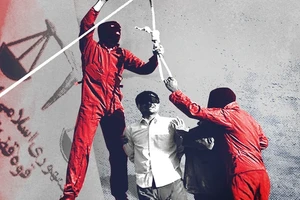
Eighteen prisoners held at Dastgerd prison in the central Iranian city of Isfahan could face death sentences over unrest and a fire at the facility, according to a judicial document obtained by Iran International.
The case has been sent to a Revolutionary Court, with some of the defendants accused of “leading the unrest” or “inciting war and killing,” charges that can carry severe penalties under Iranian law.
The document lists 75 prisoners as defendants in the case, while prosecutors in Isfahan have ordered at least 26 of them to stand trial.
The case was opened after unrest and a fire at Isfahan Central Prison, also known as Dastgerd, following an air strike near the prison in March. A military base and ammunition depot behind the prison were hit, while parts of the prison grounds and accommodation areas were also damaged.
Information accompanying the document said some prisoners were killed during the incident, and others died in the fire.
Human rights groups, citing witnesses and relatives of prisoners, have said the unrest began after missiles struck a military site behind the prison and projectiles also hit parts of the prison complex. Guards and prison officials left some posts after the explosions, and inmates came out of their wards fearing the facility could collapse, according to those accounts.
The groups said some prisoners then set fire to blankets, sheets and other materials in an effort to force authorities to open doors and allow them into safer areas. Smoke spread through enclosed corridors as the fires grew.
Human rights groups have also said security forces later entered the prison and used live ammunition, pellet rounds and tear gas against inmates. According to witness accounts cited by the groups, some prisoners were shot, while others died from burns or smoke inhalation during the unrest.
Serious charges brought
Prosecutors have brought charges including "inciting people to war and killing each other with the aim of disrupting national security," deliberate arson, destruction of public facilities and taking part in an illegal prison gathering that led to a riot during wartime, according to the document.
Other accusations include destroying surveillance cameras, windows and security doors, taking part in or assisting with property damage and setting fire to the prison infirmary.
Iran International identified 17 prisoners facing such accusations. The documents indicate that 18 prisoners could face death sentences.
Five prisoners executed in separate case
The referral to the Revolutionary Court comes after five protesters held at Dastgerd were executed over the past two months in a separate case known as the "Alikhani Square" case.
Five other people sentenced in that case are at risk of imminent execution.
The latest case comes amid a rise in executions and heavy prison sentences in Iran in recent weeks as tensions with the United States have intensified.
Concerns over prison conditions
Concerns over Dastgerd have also grown over treatment of inmates and health conditions.
Political prisoner Abdolrasoul Mortazavi said in an audio message from the prison in June that some people detained during the January protests had been tortured. He also reported beatings, harsh interrogations, restrictions on contact with families and limits on outdoor exercise.
Iran International has also received reports of worsening health conditions and a meningitis outbreak at the prison in recent weeks.
A source familiar with the situation told Iran International in August that several prisoners had died from infectious diseases. Information obtained by Iran International also indicated that meningitis had spread to most prison wards and that some inmates had been taken to Al-Zahra hospital in Isfahan.
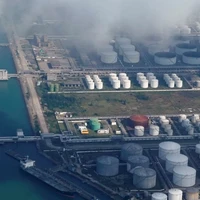
An aerial view shows a crude oil tanker at an oil terminal off Waidiao island in Zhoushan, Zhejiang province, China January 4, 2023.
A new Iranian oil trading network has been entrusted with selling millions of barrels of sanctioned crude even though its members still owe billions of dollars from earlier sales, according to documents obtained by Iran International and Oil Ministry sources.
One document, a confidential letter from the Supreme National Security Council’s protection unit to the Oil Ministry, raises concerns over the ministry’s decision to hand large volumes of crude to four trusted intermediaries, known as trustees, on credit and at steep discounts.
The crude was allocated after a new oil sales team took control in July, according to the letter.
The former chief executive of Naftiran Intertrade Company (NICO) had identified the intermediaries as carrying large debts and failing to return billions of dollars from previous oil sales, the document says.
The ministry nevertheless offered the intermediaries a discount of $8.50 per barrel, a level the confidential letter described as unusual.
The documents and two Oil Ministry sources point to Mohammad Javad Bavand, a former Revolutionary Guards intelligence official appointed to oversee oil trading, as a central figure in the new arrangement.
Disputed cargo tied to sanctioned tankers
A second confidential document records a closed Oil Ministry meeting on June 28 concerning Iranian crude exported to China aboard three sanctioned tankers linked to Hossein Shamkhani, also known as Hector, an oil trader and son of Ali Shamkhani, a former adviser to slain Supreme Leader Ali Khamenei.
Two million barrels of crude were shipped through a front company aboard the tanker Lily to China’s Dongjiakou port on March 24, according to the document.
The owner of Lily subsequently took control of the cargo, citing a financial dispute with Panel Good Wholesalers, the company involved in the shipment, the document says.
Lily belongs to a shipping network and shadow fleet controlled by Hossein Shamkhani that has been sanctioned by the US Treasury. Dubai-registered Panel Good Wholesalers is also one of Shamkhani’s companies used for oil trading.
Oil trader Mohammad Hadi Momenin recovered the two-million-barrel cargo at NICO’s request and stored it in tanks at Dongjiakou, participants at the June meeting were told, according to the document.
Momenin then sought $33 million in compensation from the Iranian oil company, including $27 million for the loss in value of the tanker Covenio following US sanctions and $6 million for charter costs involving another tanker, Jaya.
Bavand instructed Momenin to return ownership of the cargo to the Oil Ministry and, through one of Momenin’s companies, charter Covenio for one year at $90,000 per day, according to the meeting record.
Both Covenio and Jaya belong to Shamkhani’s sanctioned shadow fleet.
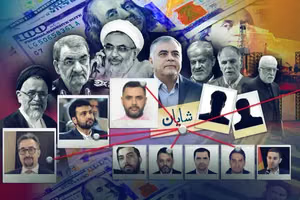
Iran International reported three weeks ago that Momenin was a member of an Intelligence Ministry network known as the Shayan network. Momenin, born in 1989, has failed to return about $2 billion in Iranian oil proceeds, according to Iran International’s previous investigation.
Five traders form Bavand’s network
Momenin is one of five trustees in an oil trading network assembled by Bavand following his return to the Oil Ministry, two ministry sources told Iran International.
Another member is Mostafa Niazazari, the fifth defendant in the corruption case involving former senior judiciary official Akbar Tabari.
Niazazari was accused in the case of giving Tabari 15,000 square meters of land as a bribe. After fleeing to Canada, he returned to Iran four years ago and has since resumed oil trading while residing in a European country.
Niazazari is the son of Kioumars Niazazari, a former Intelligence Ministry director-general in Mazandaran province.
Two businessmen known for importing essential commodities have also joined Bavand’s network after entering the oil trade during the tenure of former NICO chief executive Saeed Sadeghi, according to the Oil Ministry sources.
Hassan Afrashtehpour, also known as Dariush and the owner of Afra Holding, has for years controlled imports of some essential commodities. An Iranian court sentenced him to 25 years in prison for economic corruption in 1997, but he was released four years later.
Masoud Modallal, a major importer of cooking oil and animal feed who has faced large banking debts, is another member of the network, the sources said.
Modallal previously received $985 million in preferential-rate foreign currency for essential-goods imports and owed 5.75 trillion rials to Sarmayeh Bank and 7.82 trillion rials to Pasargad Bank.
Modallal shifted his focus toward oil trading after Iran ended preferential currency allocations, according to the sources.
The fifth member is Ali Bayandorian, a trader sanctioned by the United States six years ago over what Washington described as financing for the Revolutionary Guards’ Quds Force.
Bayandorian uses a network of companies registered in Iran and Southeast Asia to sell oil and petrochemical products outside conventional markets, according to the sources.
Together, the five traders make up what the Oil Ministry sources described as Bavand’s new trustee network.
The two confidential documents obtained by Iran International show members of this network continuing to receive Iranian oil despite outstanding proceeds from previous sales.
From Guards intelligence to oil sales
Bavand studied at Imam Sadiq University, known for combining Islamic studies with modern social sciences, and until 2021, served as deputy to Mostafa Ahadi, the economic deputy of the Revolutionary Guards Intelligence Organization.
Ahadi is a nephew of Ali Akbar Hosseini Mehrab, a security official whose name has appeared in major Iranian corruption cases, including the Crescent gas dispute.
Bavand entered a Supreme National Security Council committee in 2018 following the US withdrawal from the nuclear agreement and Washington’s restoration of sanctions on Iranian oil.
The council created a working group to manage oil sales designed to bypass the restrictions, alongside a security committee composed of representatives from Iranian military and intelligence organizations.
The Revolutionary Guards Intelligence Organization sent Bavand, then deputy head of its economic division, to the security committee.
Bavand built a network of trusted oil intermediaries during his time on the committee, including Majid Azami, chief executive of Sepehr Energy Jahan Nama Pars, Majid Taj, brother of Iranian Football Federation president Mehdi Taj, and trader Hamed Kachoui.
Iran’s oil sales structure changed further after Ebrahim Raisi became president in 2021 and his government authorized the armed forces to participate formally in oil trading.
The Revolutionary Guards subsequently sent Bavand to the Oil Ministry, where he took responsibility for trading oil under sanctions.
A significant part of the problems involving trustees and unreturned oil proceeds emerged during that period.
Following Raisi’s death, Oil Minister Mohsen Paknejad initially entrusted management of sanctioned oil sales to officials with previous links to Shayan, an Intelligence Ministry official involved in fuel operations.
Bavand returned to the Oil Ministry following Shayan’s removal.
Paknejad appointed Bavand special assistant to the oil minister for supervision of oil trading after the previous NICO chief executive was removed following disclosures concerning trustees and unreturned oil proceeds.
Bavand is also related to Hossein Taeb, the former head of the Revolutionary Guards Intelligence Organization, who is currently the commander of the Basij paramilitary unit, and a figure close to Supreme Leader Mojtaba Khamenei.
Bavand now plays a central role in decisions over sanctioned oil sales and has assembled a new group of trusted intermediaries.
The documents show that traders carrying large outstanding debts from earlier oil sales have again been entrusted with millions of barrels of Iranian crude, placing Bavand and his network at the center of the system used to sell Iran’s oil under sanctions.
Dogharoun border crossing between Iran and Afghanistan.
Iran's exports to Afghanistan have fallen by at least 25% since the US-Iran war began this year, while competitors have moved quickly to expand their share of the Afghan market, the head of the Iran-Afghanistan Joint Chamber of Commerce said on Wednesday.
Mahmoud Siadat told Iran's ILNA news agency that restrictions on exports of petrochemicals, steel, food and other goods had contributed to the decline, including limits imposed because of war damage and domestic demand.
Siadat said the greater concern was the speed at which other countries were moving into the market while Iranian trade was shrinking.
"The more important problem is that during the same period in which we faced a decline in exports to Afghanistan, our competitors entered the Afghan market very seriously," Siadat said.
He said Uzbekistan's exports to Afghanistan had risen 42% this year, adding that the growth was rapidly reducing Iran's share of the Afghan market. He also pointed to what he described as a multibillion-dollar Saudi gas extraction agreement near Iran's border.
Saudi Arabia-based Delta Energy International signed an agreement with Afghanistan's Ministry of Mines and Petroleum this week to explore and extract oil and gas in the Kushk-Tirpul basin in the western provinces of Herat and Badghis.
Afghan authorities put the initial investment at $200 million, while Delta has said a wider energy program could involve tens of billions of dollars in potential investment if exploration and feasibility studies support further development.
The decline comes amid a broader contraction in Iran's foreign trade since the war began. An Iranian trade official has said non-oil exports and imports fell by about 30% in the first four months of the current fiscal year, while customs data from China and Turkey showed steep declines in trade with Iran. Indian exports to Iran also fell sharply, although India's imports from Iran rose on higher purchases of Iranian crude oil and liquefied petroleum gas.
Siadat said Iran was also hurting its position in Afghanistan through long delays at its own borders, with hundreds of trucks waiting to cross at Milak and Dogharoun.
He said some trucks were being held for between 12 and 15 days before leaving Iran, while traffic moved much more smoothly on the Afghan side.
"There is no logic in our trucks being held for 13, 14 and sometimes 15 days at the border with Afghanistan," he said. "Long stops at the border cause an unusual increase in transport costs and freight rates and reduce our competitiveness in the Afghan market."
Siadat broadened his criticism beyond border management, saying the problem reflected wider weaknesses in Iran's state structure and fragmented decision-making.
"Many of the organizations that are not even directly under the government's supervision play a fundamental role in creating this problem," he said, adding that regulatory and military bodies needed to reach a common position.
He also criticized the limited role of businesses in policymaking. "The private sector in Iran is, in many cases, largely a ceremonial presence in decision-making," he said. "It only hears promises but sees no action."
US pressure adds to wider trade strain
Siadat said, however, that sanctions were making Iranian goods more expensive in export markets, adding another layer of pressure on businesses already dealing with transport restrictions.
The United States has intensified economic pressure on Iran through an oil export blockade and expanded secondary sanctions aimed at restricting Tehran's access to dollars, foreign financing and international trade channels. Iran's total trade has fallen by between 25% and 35%, according to President Masoud Pezeshkian.
Washington has continued to add measures. The US Treasury on Tuesday imposed a new round of Iran-related sanctions targeting the country's aviation sector and companies and intermediaries in several countries, part of the Trump administration's wider economic pressure campaign.
Siadat said Afghanistan had become more important because problems at Iran's southern ports and other trade routes had cut or reduced transit flows.
"Afghanistan's border is currently one of the few borders through which we can work," he said, warning that delays on the Iranian side were putting one of the country's remaining export outlets at risk.
Australian Senator Raff Ciccone, Chair of Parliament’s Joint Committee on Intelligence and Security
Australian Senator Raff Ciccone condemned threats against journalists by Iran’s Islamic Revolutionary Guard Corps, telling Iran International they were “outrageous” and an attack on press freedom.
“It is quite wrong for the IRGC to be threatening journalists simply for doing their job,” Ciccone, Chair of Parliament’s Joint Committee on Intelligence and Security, said. “Journalists are entitled to report on what is occurring anywhere around the world, particularly the events in Iran.”
He said journalists must be able to work “without harassment or intimidation, or violence for that matter,” adding that Iranians had a right to independent reporting about events inside the country.
“The Iranian people are looking to the rest of the world to understand what is happening,” Ciccone told Iran International. “They have a right to independent reporting, and journalists must be protected while carrying out that work.”
He said the threats also affected Iranian journalists and government opponents living abroad, including members of the diaspora in Australia.
He described such threats as part of a broader pattern of intimidation by the IRGC and said governments should respond collectively.
“It’s no surprise that these threats are coming from the IRGC,” Ciccone said. “But intimidation cannot be allowed to silence journalists or communities overseas.”
Ciccone pointed to steps already taken by Australia and said Canberra should continue working with international partners to hold Iranian authorities accountable.
“We also have to stand by the Iranian people,” he said. “The Iranian people are looking to the rest of the world for their support, and I can say that many people in Australia are with them 100%.”
He said Australia, Canada, Germany and other countries should stand with Iranians and condemn threats against journalists. He also backed diplomatic expulsions, sanctions against those linked to the IRGC and further action against the organization.
A senior official with Iran’s armed forces said in late August that journalists working for Persian-language media abroad could be placed on a list of military targets.
“Media outlets such as Iran International, BBC Persian and Radio Farda are directly connected to Mossad, the US Central Intelligence Agency and other foreign intelligence services and receive support from them,” said Abolfazl Shekarchi, a brigadier general and senior spokesman for Iran’s armed forces.
After his remarks, Canada also said its security and intelligence agencies are using a full range of tools to counter foreign interference and transnational repression.
In a response to Iran International, Public Safety Canada said authorities continuously monitor such threat s and can respond through investigations, criminal charges and disruption activities.
Houthi supporters in Yemen rally with rifles and flags, holding portraits and signs in support of the movement.
The escalating battle between Saudi Arabia and the Iran-backed Houthis may be a test of what remains of Tehran’s Axis of Resistance after months of war and mounting pressure on Iran itself.
But the fighting is also showing why a weakened axis can remain dangerous: it does not have to win territory to impose costs on Iran’s adversaries.
Yemen’s Houthis dramatically escalated their attacks on Saudi Arabia on Tuesday, striking four southern cities with missiles and drones. The group targeted a Saudi airbase in Khamis Mushait and Saudi Aramco assets in Abha, Najran and Jazan, setting oil installations ablaze. Saudi authorities said 73 people were wounded, including women and children.
The attacks also threatened to widen the war’s economic impact beyond the Strait of Hormuz, where the US-Iran conflict has already disrupted energy flows. Brent crude briefly touched $99.46 a barrel on Tuesday, its highest level since July 24.
“They’re not really fighting five separate wars, they’re just using five instruments of the same coercive strategy,” Fatima Abo Alasrar, a researcher and author on Yemen and Iran and founder of The Ideology Machine, told Iran International.
The timing, Alasrar said, matters.
Iran is exerting pressure around the Strait of Hormuz while the Houthis can create another pressure point around Bab al-Mandab, forcing Iran’s adversaries to contend with threats near two of the world’s most important maritime chokepoints.
“The lesson that the Houthis appear to have learned is that escalation produces leverage,” she said, even without territorial gains.
That leaves Saudi Arabia with a difficult choice: escalate in an effort to substantially weaken the Houthis and risk a wider war or seek a political exit that could reinforce the belief in both Sanaa and Tehran that military pressure can ultimately produce concessions.
Houthis called Saudi Arabia’s bluff
Mohammed al-Basha, a Yemeni-American geopolitical analyst and risk adviser who heads the Washington DC-based Basha Report, said the Houthis helped bring about the renewed war by assuming Saudi Arabia and Yemen’s internationally recognized government would avoid a return to full-scale fighting.
“The Houthis were hoping to call a bluff — a Saudi and a government bluff,” al-Basha told Iran International.
Asked whether they miscalculated, he replied: “Of course, of course.”
Yet al-Basha said the Iran war has also reinforced the Houthis’ belief in the value of escalation.
“They feel that the best way for you to get what you want is to use force,” he said.
The confrontation follows an earlier dispute over an Iranian aircraft carrying a Houthi delegation back from Tehran following the funeral of Supreme Leader Ali Khamenei.
Analysts told Iran International at the time that the flight may have been an opening move in an effort to establish an air bridge into Houthi-controlled Yemen and rebuild the group’s strategic capabilities.
“The alliance is no longer secretive or covert, it’s very public,” al-Basha said of the Iran-Houthi relationship.
Can battlefield gains change the equation?
Forces loyal to Yemen’s internationally recognized government have now launched counterattacks across several fronts, with officials openly declaring their intention to eventually recapture Sanaa.
But al-Basha cautioned against assuming the Houthis are close to defeat. He said losing strategically important territory, rather than simply patches of ground, could eventually push them toward negotiations.
One place to watch is Hodeidah, whose port al-Basha described as “the lung that the Houthis breathe from.” The group’s position around Hodeidah, Bab al-Mandab and the Red Sea is central to its ability to threaten maritime traffic.
Alasrar, however, said territorial losses do not necessarily eliminate Houthi leverage.
“They can lose ground and still increase their regional leverage,” she said.
The Houthis have threatened further attacks against Saudi economic and military infrastructure, raising the prospect of greater disruption around Bab al-Mandab while the Iran conflict continues to put pressure on Hormuz
A ‘win-win’ for Tehran?
Danny Citrinowicz of Israel’s Institute for National Security Studies sees that predicament as advantageous for Iran.
“For them it’s amazing. So it’s a win-win for them,” Citrinowicz told Iran International.
If Saudi Arabia backs down, he argues, Iran gains room to strengthen the Houthis. If Riyadh keeps fighting, instability around Bab al-Mandab creates another source of economic pressure while Iran contests Hormuz.
“It definitely worked in the Iranian favor,” he said. “The Iranians are learning from that, unfortunately.”
But it leaves Saudi Arabia with two costly options. Citrinowicz said the Houthis have “crossed the Rubicon” and are unlikely simply to retreat. As Saudi-backed forces approach areas the group considers critical, he expects Houthi attacks against the kingdom to intensify.
A moment of truth for the Mecca Defence Alliance
The escalation is also posing an early test for the Mecca Defence Alliance, the collective defense pact signed by Saudi Arabia, Turkey and Pakistan on August 7.
The agreement stipulates that an armed attack against any one of the three countries is to be regarded as an attack against all three.
Yet neither Turkey nor Pakistan has so far entered the fighting militarily on Saudi Arabia’s behalf.
Citrinowicz calls it “a moment of truth” for the alliance, with neither country so far entering the fighting militarily.
Will Washington hold Iran responsible?
The United States is now explicitly pointing toward Tehran.
“The Houthis in many ways are agents and proxies of the Iranians. I think behind some of this is clearly the Iranian hand,” US Secretary of State Marco Rubio told reporters when asked about the attacks on Saudi Arabia.
Rubio said Washington has a strong defensive military relationship with Riyadh and is closely watching developments.
His comments revive a warning President Donald Trump issued on July 23.
Trump said then that Washington would hold Iran responsible if the Houthis resumed attacks, describing the group as a “Surrogate and/or Proxy of Iran” and warning of “major military punishment” against Iran and the Houthis.
The Houthis have now resumed major attacks against Saudi Arabia. Rubio has publicly pointed to an Iranian hand, but Trump has yet to publicly repeat the threat he made in July.
That leaves a consequential question as the conflict widens: if Washington considers the Houthis an Iranian proxy, how far is it prepared to go in holding Tehran responsible for what they do?
The coming days and weeks are likely to bring advances and retreats on both sides, with territory changing hands and apparent victories proving temporary. The battlefield remains highly fluid, and both sides appear determined to keep fighting, making it too early to draw sweeping conclusions from any single development.
But even without a clear Houthi victory, Iran may stand to gain. As long as the fighting forces Saudi Arabia to expend resources, keeps pressure on Bab al-Mandab and stretches the attention of Tehran’s adversaries, the Houthis can continue to provide Iran with leverage even while under pressure themselves.
The conflict has a long way to go for now and consequences reverberate from Yemen across an already destabilized region.
Iranian musician Mohsen Namjoo, who returned to Iran in 2026 after nearly two decades abroad.
Mohsen Namjoo mocked the Quran, ridiculed religious figures and crossed political red lines that have brought severe punishment for others in Iran. Now back in the country, his return contrasts sharply with restrictions still imposed on female singers.
The contradiction is hard to miss. A government that has demanded ideological conformity from Iranians appears willing to overlook Namjoo’s past transgressions at a time when the Islamic Republic is under extraordinary military, economic and domestic pressure and is openly seeking to encourage some prominent Iranians abroad to return.
Rather than a sign of moderation, his return may reveal how flexible the Islamic Republic can become when its own rules are no longer useful.
Siavash Rokni, an expert on Iranian popular culture, and historian Shahram Kholdi told Iran International’s Eye for Iran that the apparent opening serves several purposes. It can distract from executions and political prisoners, project an image of a more tolerant Iran and send a message to the diaspora that even former critics may be able to return — although the state still decides who gets through the door.
“Diversion. I’m going to make this quite simple,” Rokni said.
Kholdi questioned whether the rules were really changing at all.
“Are they bending their own rules and principles?” he asked. “Or are they temporarily deactivating them?”
Namjoo is an extraordinary figure around whom to test that question.
The Mashhad-born musician left Iran in 2007 and was later sentenced in absentia to five years in prison for “insulting sanctities” over his use of Quranic verses in his music. It remains unclear publicly what became of that sentence before his return. Outside the country, he continued to ridicule religious and political symbols, including former Supreme Leader Ali Khamenei.
He has also faced multiple allegations of sexual misconduct and abuse, which he denies.
And yet he has been allowed home.
His return was also highlighted by Iranian state media, which praised what it described as his “patriotic” opposition to US and Israeli attacks. Namjoo himself said he had encountered considerable kindness since returning.
Who gets to break the rules?
The contrast is particularly stark when Namjoo’s treatment is compared with that of female musicians inside Iran.
Singer Parastoo Ahmadi drew international attention after performing without the compulsory hijab in an online concert in 2024. She was briefly detained after the performance. In June 2026, she and members of her production team were reported to have been sentenced to 74 lashes, along with two-year bans on travel and artistic activity.
Rokni also pointed to Hiva Seyfizadeh, another female singer who was arrested during a live performance in Tehran in 2025.
The juxtaposition gets to the heart of the controversy surrounding Namjoo. A male musician known for ridiculing symbols the Islamic Republic considers sacred — and who has faced sexual misconduct allegations abroad can return, while women continue to face state pressure over their clothing and their voices.
“Why are female singers not able to sing and an alleged sexual abuser is back, is invited back to the country?” Rokni asked. “What is this double standard happening in this country?”
Namjoo’s return has generated precisely the kind of attention such a contradiction might be expected to produce. Iranians have argued over his decision to return, his past and what his presence in Tehran means.
That noise may itself be useful.
Rokni described the use of popular culture as part of a sophisticated communications strategy capable of shifting attention away from far more damaging issues for the state — among them executions, political prisoners, economic hardship and the repression of women.
“Namjoo is not, in my opinion, an important subject of conversation,” he said.
The point is not that his return is insignificant. It is that the spectacle surrounding one musician can swallow up the conversation about thousands of people who do not have the luxury of choosing whether to engage with the Islamic Republic.
An invitation with conditions
Namjoo’s homecoming also carries a message beyond Iran.
If someone who mocked the Quran and the country’s former supreme leader can return, other members of the diaspora may reasonably wonder whether the rules have changed for them too. That question is no longer hypothetical. Culture Minister Abbas Salehi has said his ministry compiled a list of more than 100 cultural, artistic and intellectual figures abroad whose return it wants to facilitate.
But the door does not open equally.
“Returning to one’s country has become a game of preferential treatment,” Rokni said.
The Islamic Republic effectively retains the power to determine which Iranians can come home, which critics can be forgiven and what compromises are required to make that possible.
History gives reason to be wary of assuming that an open door will remain open.
Kholdi recalled the experience of writer and dissident Saidi Sirjani, a prominent critic of the Islamic Republic. Following the death of its founder, Ruhollah Khomeini, Sirjani believed a different political era might be emerging and encouraged other Iranian intellectuals abroad to consider returning, Kholdi said.
Sirjani was arrested in 1994 and died in custody later that year under circumstances that remain disputed.
Kholdi also pointed to Iranian-Canadian scholar Ramin Jahanbegloo, who was arrested in Tehran in 2006 and detained for months before eventually leaving the country.
“I would not consider such moves a sign of the fact that they have become more moderate,” he said.
The history even gives Kholdi reason to worry about Namjoo himself.
“As a human who deserves the security and safety of life like any other normal person, I am worried for his safety,” he said.
Today’s welcome, in other words, does not guarantee tomorrow’s protection.
The power of an open door
That uncertainty carries particular weight for millions of Iranians abroad who still have family, professional and emotional ties to the country.
Kholdi said he was warned as a young academic that outspoken criticism of the Islamic Republic could cost him access to Iran, its archives and the field research needed for his career.
The threat did not have to be explicit. Access itself became leverage.
The same calculation can apply to artists, journalists, academics and ordinary diaspora Iranians who want to see parents or relatives. The state controls the door, and the possibility of losing access can shape behavior long before anyone attempts to cross the border.
Namjoo’s return makes that door appear wider.
It also gives the Islamic Republic a useful image to present to the outside world: a former critic who once violated some of its most sensitive taboos is back in Iran. How intolerant can the system be if someone like him is allowed to return?
Kholdi warned that there is another side to that calculation. Iran has repeatedly detained dual and foreign nationals who later became subjects of negotiations or prisoner exchanges, a practice critics of Tehran describe as hostage diplomacy.
The same state that can invite people in retains the power to prevent them from leaving.
That is why Namjoo’s return matters less as a story of one controversial musician coming home than as a glimpse of how the Islamic Republic behaves when under pressure.
It can enforce religious morality against a woman who sings without a hijab while overlooking the past of a man who mocked the Quran. It can imprison critics while advertising the return of another. And it can present selective tolerance as evidence of change without surrendering the power to reverse that tolerance later.
Namjoo’s return also appears to be part of a broader effort to selectively reopen the door to prominent Iranians abroad while the state retains the power to decide who may return and under what conditions.
The Islamic Republic’s red lines have not disappeared.
What Namjoo’s return exposes is that those lines were never equally rigid for everyone and that when the regime sees an advantage in moving them, even the principles it calls sacred can suddenly become negotiable.