Trump's Iran dilemma after America's 'everything' election


President Donald Trump may have paid a heavy political price for his war with Iran, but last week's sweeping election defeat has done little to clarify what he will do next.
President Donald Trump may have paid a heavy political price for his war with Iran, but last week's sweeping election defeat has done little to clarify what he will do next.
Voters across America did not simply hand Democrats control of Congress. The wave reached further down the ballot, flipping hundreds of state legislative seats from Arizona to New Hampshire and giving Democrats control of states and localities few thought possible.
Last Tuesday was a referendum on much of what has happened since Trump took office for the second time in January 2025. The war was a powerful accelerant.
From the beginning, the administration has seemed intent on alienating voters and turning wins into losses. Its approach to immigration, overseen by figures such as Homeland Security Secretary Kristi Noem, helped turn what had been a Republican strength into a political liability.
Trump imposed, paused and reimposed a slew of punishing tariffs at a time when voters were already struggling. Headlines about alleged self-dealing and conflicts of interest, including the decision to accept a $400 million Boeing jet from Qatar's royal family, added to the damage.
In 2024, Republicans successfully portrayed Democrats as out-of-touch insiders; by 2026, they were facing similar accusations themselves.
All of this significantly weakened Trump's domestic political standing and tarnished the Republican brand. The controversies sucked oxygen from the most pressing issue on American voters' minds: the affordability crisis.
On the eve of the war, Trump's approval rating stood at 42 percent. When gas prices shot up, Republicans had little credibility left with working voters in states such as Ohio, Iowa and Texas. By last week's elections, his approval had fallen further, to 37 percent.
Iran was a major factor, not least because of the lack of clear deadlines or a convincing explanation to the American public of why the country was at war. Whatever the administration's strategic arguments, the average American voter had more immediate concerns.
Vice President JD Vance, whose political identity is closely tied to MAGA, has argued that the war was the reason Republicans lost up and down the ballot. “The reason we lost is the war,” Vance wrote the morning after the election.
The immediate verdict is that the war has been a political loser for Trump and the Republican Party. The long-term verdict on the argument Trump has made from the start—that Iran cannot be allowed to acquire a nuclear weapon—is less clear.
The president himself acknowledged the political costs in an interview with 60 Minutes after the election: “Is it a good decision for today and tomorrow? Maybe not, but I have to go with what's right for our country.”
What comes next is anybody's guess. After meeting with Qatar's prime minister this week, Trump declared that Iran “militarily, is effectively over” and called further strikes “quite unlikely.”
Trump has also signaled a pullback from Israel, Iran's principal regional adversary: a shift Vance says voters are demanding. On Election Day itself, the president announced that the US would stop sending Israel its roughly $4 billion in annual aid by the end of this year.
Democrats, meanwhile, will use every tool at their disposal to prevent the US military from extending its operations, starting with the power of the purse. “We are going to end the war,” Senate Democratic Leader Chuck Schumer has promised.
But America's mercurial president is difficult to predict and has a habit of saying one thing and doing another when it comes to Tehran. With the political damage already done, he could ramp up the pressure, keep the blockade in place or pursue a peace deal. Trump likes options, and he likes leverage.
After last week's Everything Election, those options remain on the table, even if the political room to pursue them has narrowed.










Iran’s leaders say no talks can begin until Washington accepts seven conditions. But Tehran has never published them, its own officials list them differently, and several are demands no US president could meet, while the one issue Washington cares most about is ruled out.
The conditions are back at the center of the war’s diplomacy this week. On Thursday Hossein Taeb, a cleric who ran the Revolutionary Guards’ intelligence organization until 2022 and now heads the Basij paramilitary force, gave the most detailed account yet of how messages are moving between the two sides.


Days before the US midterm elections, he said, a Trump representative went to Vladimir Putin, and a Russian envoy then flew to Tehran with a written message for Supreme Leader Mojtaba Khamenei. The envoy waited for a reply. Khamenei, Taeb said, calmly ordered that it be sent “at a suitable time.”
Then came a phone call between Putin and Mohsen Rezaei, secretary of the Supreme National Security Council, and Rezaei’s trip to Moscow, where he handed Putin a letter from Khamenei on November 5.
“Our position is that Iran’s seven conditions must first be met and accepted by the other side,” Taeb said. Only then would Iran decide how, and about what, to negotiate.
His account sits awkwardly beside his colleagues’. Rezaei told Al Mayadeen this week that there are no negotiations of any kind and that reports of talks are “lies.” On X he told Washington to stop “manufacturing FAKE NEWS about imaginary talks” and wrote that it was “time to SURRENDER to the seven conditions.”
Parliament Speaker Mohammad Bagher Ghalibaf, who formally leads Iran’s negotiating team, told Al Jazeera on Wednesday that Tehran had given Washington “a clear and transparent response” and was waiting for an official reply.
The US envoys Steve Witkoff and Jared Kushner met Putin in the Kremlin on Thursday, mainly to discuss Ukraine after talks in Abu Dhabi. Neither side has said whether Iran came up.
Rezaei announced the seven conditions on September 23, after a meeting with President Masoud Pezeshkian and Foreign Minister Abbas Araghchi, and said they had been put in writing and handed to Pakistan and Qatar. Iran later offered to reopen the Strait of Hormuz within seven days if they were met, then within two.
Iran has never officially released the text. Officials say the conditions grew out of the Islamabad understanding of June, which Hassan Ghashghavi, spokesman of parliament’s National Security and Foreign Policy Committee, says the presidents of both countries signed. Trump has disowned it.
No official list exists. Pieced together from what officials have said, it usually runs: an end to the war on all fronts, especially in Lebanon, the lifting of sanctions, the release of frozen assets, an end to the US naval blockade, compensation for war damage, guarantees against future attacks, and Iranian control of the Strait of Hormuz.
But the list moves. Vahid Ahmadi, a member of the same committee, includes “the management of the Strait of Hormuz” by Iran under a new route agreed with Oman. Ghalibaf, listing them on Wednesday, added guaranteed waivers for Iranian oil sales. The armed forces chief, Ali Abdollahi, has set out five conditions of his own, including recognition of Iranian authority over Hormuz and a new regional security framework. Some reports include a reduction of US forces in the region. “Sometimes we may mention some conditions,” Rezaei said in September, “but Iran has seven.”
On October 11 Rezaei said Washington had “agreed to some” of them. This week he said there was no response at all.
An end to war “on all fronts.” This asks Washington to stop wars that Iran’s allies are fighting. Ahmadi says the condition now covers not only Lebanon but “the other resistance fronts,” meaning Hezbollah, the Houthis and militias in Iraq. Lebanon already has its own track. A US-brokered framework between the United States, Israel and Lebanon in June led to direct talks between Israel and Lebanon. Tehran is tying its own deal to a war fought by a group it arms and funds.
Lifting sanctions. No US president can do this alone. Many US sanctions on Iran are written into law by Congress. United Nations sanctions returned in late September 2025 under the nuclear deal’s snapback mechanism. The European Union and Britain impose their own. Lifting sanctions under the 2015 nuclear deal took two years of negotiation. Iran is asking for it as a condition for starting to talk.
Frozen assets. Iran’s own figures do not agree with anyone else’s. Tasnim and the central bank put the total at about $24 billion; other estimates run past $100 billion. Some of the money is tied up in US court judgments won by victims of attacks blamed on Iran, and the $6 billion moved to Qatar in 2023 was frozen again after the Hamas attack on Israel that October.
Ending the blockade. The US blockade of Iranian ports began on April 13, after Iran choked traffic through Hormuz. The condition asks Washington to lift its response while Iran keeps the closure that caused it. Iran’s only offer in return is to reopen a waterway it closed.
Reparations. The government spokeswoman has put Iran’s losses at $270 billion without a breakdown. Trump has rejected paying anything. Tehran is demanding compensation while its own missiles and drones struck its neighbors. The UAE alone absorbed close to 3,000 attacks in the first months of the war, the Financial Times has reported.
Guarantees against attack. No US president can bind his successor, which is the lesson Iranian officials themselves draw from Trump’s exit from the 2015 deal. The same officials who say Washington cannot be trusted are demanding a promise from it.
Iranian control of Hormuz. The strait is an international waterway. A condition that Iran “manage” it, approve routes or collect tolls is not a term for ending a war. It is a claim to a power Iran did not have before the war began.
The issue Washington says the war was about is missing. Rezaei said this week that the nuclear file “is not under discussion,” and that “not even a particle” of Iran’s enriched uranium would leave the country.
The result is a list that asks Washington to give up every lever it holds, sanctions, the blockade, its forces and the money, before talks begin, while Iran keeps the two things the other side wants most: the closure of Hormuz until the end, and its nuclear material for good.
Officials have sold the conditions at home as the terms of a victory. Rezaei told Washington it was “time to SURRENDER to the seven conditions Iran has repeatedly set out.” Taeb told his audience that the 40-day war decided the elections in Israel and the United States, and that Trump would have to withdraw his forces or face “a wider social movement” at home.
Ghalibaf said on Wednesday that Tehran wants to end the state of “neither war nor peace,” but that this might come through “sustainable deterrence” rather than talks.
The cost of the stalemate falls on Iranians. Ghalibaf himself complained that the blockade has cut access to food and medicine. Taeb said gasoline output fell to about 102 million liters a day during the war against consumption of about 135 million, and that Iran still imports some seven million liters a day. Inflation reached about 77 percent in October.
Senior Iranian military and Revolutionary Guards officials issued a series of threats against the United States and Israel on Wednesday, including a pledge to kill their leaders and warnings of attacks on American bases in Europe and targets worldwide.
“We are determined to kill Trump and Netanyahu as long as we live,” Keyoumars Heydari, deputy chief of staff of Iran's armed forces, told state television, referring to US President Donald Trump and Israeli Prime Minister Benjamin Netanyahu.
Heydari also claimed that American forces had been driven out of the Persian Gulf and that US warships had retreated hundreds of kilometers from Iranian territory.
His remarks followed threats from senior Revolutionary Guards adviser Mohammadreza Naqdi, who said Iran's armed forces had received authorization from Supreme Leader Mojtaba Khamenei to retaliate without geographical restrictions.
“If the enemy makes another wrong move and seeks to act aggressively again, it will certainly receive deadly blows in different parts of the world,” Naqdi said.
He was referring to Khamenei's October 31 instructions to military commanders to respond immediately to threats, expand their potential targets and disregard geographical limitations.
Iran's top security official, Mohsen Rezaei, meanwhile, threatened to extend retaliatory strikes beyond the Middle East if Washington resumed attacks.
“We may even target some American military bases in European countries,” Rezaei, secretary of Iran's Supreme National Security Council, told Lebanon's Al Mayadeen television.
He said American bases in Europe and on distant islands could become targets if US aircraft used them to attack Iran. The extent of Iran's ability to strike such distant locations remains uncertain.
Revolutionary Guards spokesman Hossein Mohebbi separately told the Guards-affiliated Tasnim news agency that Iran's aerospace forces had developed sufficient military capabilities to confront a global superpower and bring it to a standstill.
Mohebbi credited the late supreme leader Ali Khamenei and military commanders, particularly Hassan Tehrani Moghaddam, regarded as the architect of Iran's ballistic missile program, for developing those capabilities.
The increasingly confrontational rhetoric accompanied continuing disagreements over negotiations with Washington.
Parliament Speaker Mohammad Bagher Ghalibaf told Al Jazeera on Wednesday that Iran was determined to end its prolonged state between war and peace through sustained military deterrence, potentially without negotiations.
He said Washington had yet to formally respond to Tehran's seven conditions for reopening the Strait of Hormuz and resuming talks.
The statements followed months of US-Israeli military operations and a continuing American naval blockade, with Tehran insisting on its conditions for ending the confrontation while Washington maintains economic and military pressure.
US President Donald Trump predicted Wednesday that the war with Iran would end soon, but Tehran rejected nuclear concessions and threatened US bases as far away as Europe, while Washington intensified economic pressure and tensions persisted in the Strait of Hormuz.
Speaking at a Veterans Day ceremony at Arlington National Cemetery, Trump declared that US forces had already defeated Iran militarily and suggested Washington could decide when to end the conflict.
“We won. It’s just a question of when we end it,” Trump said.
“I want to make sure we have a total victory, not a 93 percent victory,” he added, predicting that the conflict would end soon.
Tehran, however, showed little willingness to accept Washington's terms. Parliament Speaker Mohammad Bagher Ghalibaf said Iran was determined to end its prolonged state between war and peace through military deterrence, potentially without negotiations.
In an interview with Al Jazeera, Ghalibaf said Washington had not formally responded to Tehran's seven conditions for reopening the Strait of Hormuz and resuming talks. He insisted that those conditions must be fully implemented before either could proceed.
His remarks followed comments by President Masoud Pezeshkian on Monday that Supreme Leader Mojtaba Khamenei had ordered an end to the country's “no war, no peace” situation. Pezeshkian said Iran could resolve the dispute through negotiations but would not yield to pressure.
The impasse extends to Iran's nuclear program, one of the central disputes between the two countries.
Mohsen Rezaei, secretary of Iran's Supreme National Security Council, said Tehran would not transfer any of its enriched nuclear material abroad, rejecting a possible arrangement involving Russia.
“We have informed our Russian friends that the enriched material will remain in Iran, and we will use it ourselves,” Rezaei told Lebanon's pro-Hezbollah Al Mayadeen television.
Russia's Foreign Ministry said Wednesday that its offer to receive the material remained available, while emphasizing that Tehran alone would decide what happened to its stockpile.
The disagreement highlights the obstacles facing any diplomatic settlement, even as Pakistan continues efforts to mediate between Washington and Tehran.
Pakistani Prime Minister Shehbaz Sharif, who met Pezeshkian on the sidelines of the COP31 climate summit in Turkey, called for restraint and sustained diplomacy, saying negotiations offered the only path to lasting peace.
The Wall Street Journal reported Wednesday that US Vice President JD Vance was considering face-to-face talks with Iran's Supreme National Security Council Secretary Mohsen Rezaei, citing US and Middle Eastern officials and people familiar with the negotiations.
Trump has authorized Vance to negotiate with Iran, according to the report. Vance sent Rezaei a letter in October requesting a meeting, but no date has been set, with Doha under consideration as a possible venue.
But prospects for direct talks appeared uncertain. Mehdi Mohammadi, an adviser to Ghalibaf, said Tehran had rejected a request from US Vice President JD Vance for direct negotiations before Washington delivered its final response to Iran's proposal.
The Wall Street Journal, meanwhile, reported that Trump had privately questioned whether a Pakistan-brokered agreement reached in June had allowed Tehran to regroup before the United States imposed its naval blockade.
With negotiations stalled, Washington is seeking to intensify the economic pressure already imposed through maritime restrictions and sanctions.
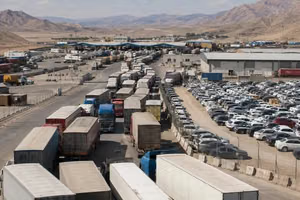
The New York Times reported Wednesday that US officials had spent weeks unsuccessfully pressing Iran's neighbors, particularly Iraq, Turkey and Pakistan, to restrict trade across their land borders.
The effort gained a new dimension with the establishment of Task Force Iron Gate, a US Central Command initiative aimed at disrupting the movement of weapons, sanctioned goods and illicit revenue across Iran's land borders and the Caspian Sea.
But neighboring governments have resisted measures that could damage their own economies and provoke unrest in communities dependent on cross-border trade.
According to the Times, Iraq rejected a US request to close all but two crossings with Iran, while Turkey has largely declined to change its border policies.
The Group of Seven foreign ministers pledged Wednesday to maintain economic and political pressure if diplomacy failed to address Iran's nuclear program and regional security concerns.
Iran's response has combined diplomatic resistance with increasingly expansive military threats.
Rezaei warned Wednesday that any US military base involved in a renewed war against Iran could be targeted, including facilities in Europe.
“NO SAFE DISTANCE. NO SAFE HAVEN. NO IMMUNITY,” he wrote on X.
Other senior Iranian military figures issued similar warnings. Deputy armed forces chief Keyoumars Heydari said Iran had prepared an expanded list of potential targets beyond the Middle East, while Revolutionary Guards adviser Mohammadreza Naghdi said the armed forces had authorization to retaliate without geographical restrictions.
Mohammadi, the adviser to Ghalibaf, also warned that Iran could consider preemptive military action if Washington continued tightening economic pressure. He claimed the United States was preparing for a limited strike, although there was no independent confirmation of such a plan.
An adviser to Supreme Leader Mojtaba Khamenei also warned that countries helping enforce a blockade against Iran could be treated as participants in an act of war.
Those threats came as the Strait of Hormuz remained a flashpoint, complicating efforts to restore commercial shipping and energy exports from the Persian Gulf.
Reuters reported Wednesday, citing three sources familiar with the matter, that Iran had attacked navigation infrastructure on Oman's Didamar island used to support shipping through the waterway. The extent of any damage was unclear.
Iran's navy also said a tanker had caught fire after striking a mine east of the strait, describing the area as unsafe and restricted and urging shipowners to coordinate passage with Iranian forces.
Tehran's rhetoric toward Washington is hardening, with senior Iranian officials threatening US military bases in Europe and commentators on state television calling for a complete closure of the Strait of Hormuz to force American concessions.
The increasingly confrontational language comes as Iran faces a continuing US naval blockade and uncertainty over whether the two countries can reach an agreement to end the war.
Mohsen Rezaei, secretary of Iran's Supreme National Security Council, warned Wednesday that Tehran could target US military bases in Europe and on distant islands if Washington attacked Iran again.
During a November 10 discussion on the state broadcaster's nightly talk show Be Vaght-e Iran, three analysts argued that Iran should use the Strait of Hormuz to drive up oil prices, deter further US attacks and pressure Washington to accept Tehran's terms for ending the war.
Nima Akbarkhani, a political and military analyst and regular panelist, argued that the United States would launch another war only after bringing oil prices down as far as possible, allowing it to contain the resulting increase once hostilities began.
He rejected the argument that a tighter closure of the Strait of Hormuz, or an Iranian attempt to break the US naval blockade, could prompt President Donald Trump to launch a full-scale war.
“We must definitely go after the blockade militarily. We must recognize that a blockade is a military action and demands a military response,” Akbarkhani said.
“Americans are monitoring the situation, and if it serves their interests, war will happen. We must do something to make it work against their interests.”
He argued that Washington had limited its military response even after US personnel were killed during the earlier war over Hormuz.
Yousef Azizi, an international relations and Middle East analyst, said Iran should keep oil prices high by closing the strait to deter another US attack.
Azizi also urged Iran's diplomatic apparatus to avoid releasing information that could drive oil prices down, including reports of possible meetings with officials from Iraq and Gulf Cooperation Council countries.
His remarks followed a denial by Rezaei of reports about a possible meeting with US Vice President JD Vance in Qatar and claims that negotiations with Washington were continuing.
In an interview with Al Mayadeen on Tuesday, Rezaei called the reports “completely false and a lie,” arguing that American claims about ongoing negotiations were intended to “reduce economic pressure and bring down oil prices.”
Azizi said Washington appeared to have concluded that it could not achieve its objectives through war. He considered a cycle of limited clashes, temporary ceasefires and interim understandings more likely than either side accepting all the other's demands.
Vahid Khazab, another regular analyst on Be Vaght-e Iran, said the costs of war could push the US and global economies into a deep recession and damage Trump's legacy.
An agreement, however, would require Washington to accept Iran's preconditions for ending the war and beginning nuclear negotiations, he said.
“More precisely, there is no unity, consensus or even a majority within the ruling camp in the United States in favor of making such concessions,” Khazab said.
Of three possible scenarios — war, an agreement ending the conflict, or continued economic pressure and a naval blockade — Khazab considered the third the most likely because it was the least costly option for Washington.
He argued that Iran should therefore close the Strait of Hormuz completely, denying Washington the option of maintaining economic pressure while some energy supplies continued to pass through.
Rather than focusing solely on raising oil prices, Khazab said Tehran should seek to influence market expectations about future supplies. A complete closure would prevent Trump from signaling that the strait might soon reopen, encouraging expectations of a return to normal traffic.
“Of course, this will also be reflected in prices, albeit with some delay,” he added.
He also argued that a tighter closure would prompt regional countries to pressure Washington to reach a resolution favorable to Tehran, without Iran having to attack their infrastructure.
Khazab said Tehran should present Washington with a stark choice: “Your only option is to reach an agreement with me and accept my seven conditions. If we want to get to this point, the way to do it is to close the strait.”
A supermarket refrigerator might seem an unlikely instrument of geopolitical confrontation. Yet France’s attribution of cyberattacks targeting refrigeration systems to Iran’s Revolutionary Guards brings a distant war into Europeans’ everyday lives.
With supermarkets in several other European countries also affected, this is more than a bilateral dispute between Paris and Tehran.
It raises a question Europe can no longer postpone: how should it respond to attempts to make European societies bear the costs of confrontation in the Middle East?
On November 10, France summoned Iran’s ambassador after publicly assigning responsibility for the attacks to the Islamic Revolutionary Guard Corps (IRGC). Tehran denied the allegations.
French prosecutors have requested international arrest warrants against several individuals linked to the Shahid Kaveh cyber unit. France’s decision to name the institution it holds responsible marks a political threshold.
Disrupting refrigeration can destroy stock, interrupt distribution and impose costs on businesses. It can also undermine public confidence in the authorities’ ability to protect ordinary routines.
This does not establish that the attackers could generate nationwide food shortages. But the implications extend beyond the immediate damage: civilian infrastructure can become vulnerable to a conflict that many Europeans consider geographically remote.
One dimension of France’s confrontation with Tehran is the deterioration of bilateral relations. French engagement with Iran has combined diplomatic dialogue and economic interests with disagreements over nuclear proliferation, regional security and human rights.
Iranian security institutions, however, appear to regard France’s diplomatic and cultural presence with suspicion.
The closure of the French Language Centre in Tehran, condemned by Paris in September, and reported attacks against embassy personnel illustrate the deterioration. Cultural institutions that maintain connections between societies have become pressure points in disputes between states.
Information operations exploiting social tensions in France can serve a similar purpose, increasing the domestic costs of confronting Tehran.
Tehran has long been suspicious of foreign engagement with Iranian civil society, often interpreting cultural contact and public criticism as potential subversion. Such an approach further narrows the space for normal diplomacy.
Another dimension concerns France’s military alliance with the United States, which exposes it to Iranian pressure despite its diplomatic opposition to the war.
France also maintains close security relationships with Washington’s partners in the Persian Gulf, including Qatar, Kuwait, Saudi Arabia and the United Arab Emirates, countries that have faced Iranian retaliation in a war they did not seek.
These relationships help explain why Tehran may regard European states as part of the strategic infrastructure sustaining American power in the Middle East. Several European countries host US military bases, making them potential targets in a confrontation that extends beyond the region.
Iran’s top security official, Mohsen Rezaei, reinforced those concerns on Wednesday, warning that Tehran could strike US military bases in Europe and on distant islands if Washington attacked Iran again.
Such threats illustrate the possibility of horizontal escalation: widening a confrontation geographically and expanding the range of potential targets. Pressure on European territory could be intended to influence Washington indirectly while encouraging European governments to constrain American military action.
Cyber operations are particularly suited to this form of pressure because they can disrupt civilian activity while allowing those responsible to conceal or deny their involvement. Responsibility can remain contested even when governments believe their intelligence establishes a convincing chain of attribution.
Beyond cyber operations, Iran’s announcement that it has lifted its self-imposed 2,000-kilometer missile-range limit adds another dimension to this signaling.
The announcement does not, by itself, establish the deployment of reliable longer-range capabilities. It nevertheless suggests that previously asserted geographical restraints should no longer be taken for granted.
Europe should assess these developments together without treating them as identical threats. Cyber sabotage, hostage diplomacy, intimidation of diplomats, information operations and missile signaling involve different methods and require different responses.
Their possible convergence matters because each can contribute to an effort to deter European involvement through the threat of retaliation.
A credible European response must combine collective political action with practical protection. European governments should share evidence, coordinate investigations and strengthen the security of vulnerable commercial systems. Where responsibility is established, sanctions should target the institutions and individuals involved.
Existing measures also need effective enforcement; otherwise, successive announcements risk becoming largely symbolic. Businesses, meanwhile, need clear security guidance. Diplomatic statements alone cannot protect vulnerable equipment.
Maintaining dialogue with Tehran presents a further difficulty. Official denials by Iran’s Foreign Ministry do not necessarily reflect the activities of its security apparatus, often described as the country’s “deep state.”
Iranian intelligence networks have been accused of exploiting diplomatic access and cover for operations abroad. This creates a challenge for European governments seeking to preserve diplomatic engagement while guarding against the misuse of diplomatic privileges.
Diplomatic channels remain necessary to reduce the risk of miscalculation, but they require scrutiny and safeguards. Europe should make clear both the consequences of further attacks and the possibilities for de-escalation.
France’s attribution could become a European wake-up call if it leads to a common policy that protects civilian infrastructure, supports regional partners and preserves diplomatic engagement while guarding against its exploitation by Tehran’s security apparatus.