• العربية
  • فارسی
Brand
  • Iran Insight
  • Politics
  • Economy
  • Analysis
  • Special Report
  • Opinion
  • Podcast
  • Iran Insight
  • Politics
  • Economy
  • Analysis
  • Special Report
  • Opinion
  • Podcast
  • Theme
  • Language
    • العربية
    • فارسی
  • Iran Insight
  • Politics
  • Economy
  • Analysis
  • Special Report
  • Opinion
  • Podcast
All rights reserved for Volant Media UK Limited
volant media logo

US infrastructure threats no reason to continue talks, senior Iranian cleric says

Jul 15, 2026, 13:21 GMT+1
Alireza Arafi
Alireza Arafi

A senior Iranian cleric said on Wednesday that Iranian officials should not continue negotiations with the United States by citing concerns over damage to the country's infrastructure, after President Donald Trump threatened to strike Iran's power plants and bridges.

Alireza Arafi, head of Iran's seminaries, said officials should not continue "negotiations and the memorandum with the infidels" because of economic difficulties, fear of the costs of war or the prospect of infrastructure being targeted.

"Officials must not retreat from the legitimate rights of the Islamic nation under the pretext of economic problems, fear of the costs of war or strikes on infrastructure, and they must not continue the path of negotiations and the memorandum with the infidels any further," Arafi said in a statement.

Trump said on Tuesday that the United States would strike Iran's power plants and bridges next week unless Tehran returned to negotiations.

Arafi also said retaliation for the killing of former Supreme Leader Ali Khamenei was "certain" and would be pursued regardless of changes in government or officials.

He called on President Masoud Pezeshkian, members of the Supreme National Security Council, military commanders and diplomatic officials to treat the memorandum with the United States as finished and pursue what he called "the path of jihad and resistance."

Arafi, a hardline cleric and longtime Khamenei protégé, served on the interim leadership council formed after Khamenei's death. He is also a member of the Assembly of Experts and has been viewed within clerical circles as a possible contender for Iran's highest office.

Most Viewed

Trump reinstates Iran naval blockade, notifies Congress of renewed fighting
1

Trump reinstates Iran naval blockade, notifies Congress of renewed fighting

2

Mossad recruited Ahmadinejad for Iran regime-change plot - report

3
ANALYSIS

Why so few Iranians have jobs despite low unemployment

4
INSIGHT

Iran risks its most valuable Arab partner over Hormuz

5

UK says support for Iran's IRGC outlawed under new state threats law

Banner
Banner
Banner

Spotlight

  • Two Iranians at the World Cup final – and neither represents the Islamic Republic

    Two Iranians at the World Cup final – and neither represents the Islamic Republic

  • One flight, two chokepoints: why Iran wants an air bridge to Yemen
    ANALYSIS

    One flight, two chokepoints: why Iran wants an air bridge to Yemen

  • Iran parliament drops two hardline critics of US talks from security panel posts

    Iran parliament drops two hardline critics of US talks from security panel posts

  • Iran risks its most valuable Arab partner over Hormuz
    INSIGHT

    Iran risks its most valuable Arab partner over Hormuz

  • Why so few Iranians have jobs despite low unemployment
    ANALYSIS

    Why so few Iranians have jobs despite low unemployment

  • January protesters trapped in 'hell' of Greater Tehran prison, inmates say
    EXCLUSIVE

    January protesters trapped in 'hell' of Greater Tehran prison, inmates say

  • Who is the cleric suddenly at the center of Iran’s power struggle?

    Who is the cleric suddenly at the center of Iran’s power struggle?

•
•
•

More Stories

Iran parliament probes favoritism in $55 million medical-import allocation

Jul 15, 2026, 11:13 GMT+1
100%

Iran’s parliamentary health committee is investigating the allocation of $55 million in subsidized foreign currency to one importer of hip and knee implants, after its chairman said much of the equipment went to private hospitals and a small group of surgeons.

Hossein-Ali Shahriari told the ILNA news agency that the company, which he did not identify, imports implants made by US medical-device manufacturer Zimmer. He said it received about $37 million at the heavily subsidized rate of 42,000 rials to the dollar in the Iranian year ending March 2025, followed by another $18 million at 285,000 rials per dollar in the following year.

  • Drug prices jump up to 400% as shortages strain Iranian pharmacies

    Drug prices jump up to 400% as shortages strain Iranian pharmacies

  • Iran’s legal drug market is being hollowed out as shortages feed illicit channels

    Iran’s legal drug market is being hollowed out as shortages feed illicit channels

  • AI self-diagnosis rises in Iran as healthcare costs drive patients online

    AI self-diagnosis rises in Iran as healthcare costs drive patients online

Both rates were far more favorable than those available on Iran’s open currency market, giving importers access to dollars at a fraction of their market cost. For comparison, the dollar trades at about 1,875,000 rials on Iran’s open market today. Average monthly income in Iran is about $150.

Shahriari said the committee had received complaints from across Iran about shortages of knee and hip implants in public hospitals. It has sought records from the Central Bank and the Food and Drug Administration to determine which companies received subsidized currency and what happened to the imported equipment.

According to figures cited by Shahriari, 73% of the implants distributed in Tehran went to private hospitals. He also reported sharply unequal distribution outside the capital, with some provinces receiving only a fraction of the supply.

Patients in several provinces were required to pay money directly before company representatives would provide an implant, he said.  “Why should people have to pay hundreds of millions, which many of them cannot afford, leaving them either to die or to sell their homes and cars for treatment?” Shahriari said.

  • Inside Iran’s maze of multiple exchange rates

    Inside Iran’s maze of multiple exchange rates

He called on the judiciary, the national inspectorate and intelligence and oversight agencies to examine the company’s previous currency allocations, arguing that the scale of the case suggested a wider network rather than the actions of one person.

Shahriari did not provide evidence establishing criminal wrongdoing, and the importer was not named in the interview. No response from the company or Iran’s Food and Drug Administration was included in the ILNA report.

The allegations point to a recurring problem in Iran’s multiple-exchange-rate system. Preferential dollars were intended to keep medicines and medical equipment affordable, but the gap between subsidized and market rates created lucrative opportunities for intermediaries. President Masoud Pezeshkian acknowledged the problem in January, saying recipients of dollars at the 285,000-rial rate had “pocketed” the benefit rather than passing it to consumers.

The dispute comes during a broader healthcare crisis. People in Iran have sent messages to Iran International about severe medicine shortages, delays in foreign-currency allocations and price increases of up to 400% for some drugs, pushing more patients toward unaffordable or illicit sources.

Trump says Iran power plants, bridges could be hit next week

Jul 15, 2026, 08:55 GMT+1
100%
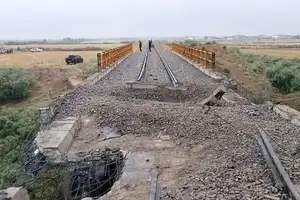
A man looking at the B1 Bridge linking Karaj to Tehran that was bombed by the US in April

US President Donald Trump said he would expand military strikes on Iran to power plants and bridges unless Tehran returned to negotiations, warning in a Fox News interview broadcast on Tuesday that attacks would intensify next week.

"We're going to hit them very hard tonight," Trump said. "We're going to hit them hard tomorrow night. We're gonna hit them really hard the night after."

"Next week it gets really bad for them because next week comes the power plants," he said. "Next week comes the bridges. We're gonna knock out all their power plants. We're going to knock out all their bridges unless they get to the table and negotiate."

Trump said US representatives had recently spoken with Iranian negotiators but said Tehran had repeatedly broken agreements.

"They want to make a deal. But every time they make a deal, they break it," he said.

"You better make a deal. You're not going to have anybody left," Trump added, saying the United States was taking care to limit harm to civilians.

  • How Tehran made the most of Trump's Hormuz proposal

    How Tehran made the most of Trump's Hormuz proposal

He also said Iran's military capabilities had been significantly weakened but retained some ability to fight back.

"They have some fight left, but they don't have much," he said.

Trump added that the United States could quickly strike a nuclear site outside Tehran where new activity had been reported.

"We can hit that one very easily," he said. "It only takes a matter of minutes for us to do it and do major damage."

Ground campaign and Kharg Island

Trump declined to say whether the United States could launch a ground campaign in Iran but suggested he would not rule out the option entirely.

"I don't want to say that either, but I would say no," he said when asked by Fox News whether he was ruling out a limited ground campaign. "Sometimes you need a ground campaign, but we have other people that will do the ground campaign for us."

Trump said US forces had already struck Iran's Kharg Island three times but had deliberately avoided its oil facilities.

  • A remote bridge shows how US-Iran war is expanding

    A remote bridge shows how US-Iran war is expanding

"I said, 'Hit everything but the oil,'" he said. "Leave that little area. Don't touch the oil because I don't want that in terms of the world economy."

Asked whether the United States could seize the island, Trump said: "If we degrade them far enough and deep enough back, I would do that."

Hormuz policy

Trump said he had abandoned plans to impose a 20% fee on cargo transiting the Strait of Hormuz, saying countries in the region had instead agreed to make major investments in the United States.

"I was going to charge a fee, but instead they'd rather spend a lot of money in the United States," he said.

He said the United States had reinstated a naval blockade on Iranian shipping and that its objectives, including keeping the Strait of Hormuz open, had largely been achieved, although commercial traffic through the waterway has fallen sharply.

"I think they're completed now, honestly," Trump said of the military campaign. "If we left right now, it would take them 20 years to rebuild what they have."

Iranian retaliation vows

Trump's remarks came as Iranian officials and lawmakers stepped up calls for retaliation following US strikes and the killing of former Supreme Leader Ali Khamenei.

About 180 lawmakers said on Tuesday that Iran should treat its memorandum of understanding with the United States as terminated after Trump declared the agreement over.

They pledged to pursue retaliation for Khamenei's killing and called for a special parliamentary committee to review negotiations with Washington.

The lawmakers also backed legislation on the management of the Strait of Hormuz and voiced support for Iran's armed forces.

Iran's army said on Wednesday it would deliver a "decisive response" after a US strike on a barracks in Bampur near Iranshahr killed seven military personnel.

"The retaliation for the blood of the martyrs of this crime is certain and imminent," the army said.

Calls for military action

Manouchehr Mottaki, a former Iranian foreign minister who is now a member of parliament, called for a ground assault on a US military base in the region.

"My proposal is that we launch a ground attack on one of the US bases in the region, capture 100 Americans and bring them to Iran," Mottaki said.

Another lawmaker, Shahrokh Ramin, criticized a parliamentary proposal titled "Revenge against Trump," saying genuine retaliation would not come through legislation.

"Someone who wants to take revenge does not turn it into a law," Ramin said. "If we are truly seeking revenge, we take revenge, and the way to do it is not through legislation."

Iran extends British prisoner's sentence by two years, family says

Jul 15, 2026, 08:45 GMT+1
100%
Craig and Lindsay Foreman pose for a selfie in an unknown location in this undated handout photograph taken in 2024 and obtained by Reuters on February 19, 2026.

A British man jailed in Iran on espionage charges was given an additional two-year prison term after authorities accused him of speaking to the media from prison, his family said.

Craig Foreman and his wife, Lindsay, were arrested in January last year while traveling through Iran by motorcycle on a journey from Europe to Australia. Both deny the espionage charges. They were each sentenced to 10 years in prison in February.

Joe Bennett, Lindsay Foreman's son and the family's spokesperson, said Craig Foreman was told he was being taken to see his lawyer but was instead brought before a judge and informed of the additional sentence.

“He was allowed no lawyer, no translator and no opportunity to defend himself,” Bennett said, adding that the family was “absolutely flabbergasted” by the decision.

The couple have been on hunger strike since May after prison authorities prevented them from calling their families. HRANA, a US-based human rights group, said last week that Craig Foreman had lost about 16 kilograms while Lindsay Foreman was suffering from dizziness and body tremors.

“My mum and Craig are 18 months into an ordeal they should never have known,” Bennett said. “They are weak, they are hungry, and now Craig is being punished simply for being heard. To add two more years to an innocent man's sentence, in secret and with no chance to defend himself, is a flagrant abuse of the most basic rights any person is owed.”

Last month, UN special rapporteurs Alice Edwards and Mai Sato called for the couple's release, saying they appeared to have been wrongfully detained and sentenced after proceedings that “failed to meet basic fair trial guarantees.”

Britain has advised against all travel to Iran since 2022, warning that British nationals may be detained because of their nationality or links to the UK. The Foreign Office has said it is working to secure the couple's release and that their welfare remains a priority. The family also welcomed the appointment this week of former Middle East minister Alistair Burt as Britain's first envoy for nationals detained abroad in complex cases.

One flight, two chokepoints: why Iran wants an air bridge to Yemen

Jul 15, 2026, 02:58 GMT+1
•
Negar Mojtahedi
100%
An Iranian Mahan Air flight lands in Sanaa airport in this screen-grab from a video by Houthi television Al-Masirah, July 13, 2026

An Iranian plane landing in Houthi-controlled Yemen looked like an oddly minor victory for Tehran. But it may have been the opening move in an effort to rebuild the allied force capable of threatening a second global maritime chokepoint alongside the Strait of Hormuz.

As the US-Iran memorandum of understanding unravels and the confrontation shifts toward the Strait of Hormuz, renewed fighting in Yemen is raising a broader question: is Tehran preparing another source of maritime pressure at Bab al-Mandab?

Hezbollah and Hamas have been severely weakened by Israeli military operations. The Houthis, by contrast, remain armed, entrenched and positioned astride one of the world's busiest shipping lanes.

Even a credible threat to Bab al-Mandab could unsettle shipping, energy markets and global supply chains. For Iran, that threat alone may be valuable.

The fight over one airplane

The latest escalation followed Yemen's decision to block an Iranian aircraft carrying a Houthi delegation returning from the funeral of Supreme Leader Ali Khamenei in Tehran. Yemen's internationally recognized government accused Iran of attempting to enter its airspace without authorization.

The dispute quickly escalated. An attack damaged Sanaa International Airport's runway. The Houthis blamed Riyadh before targeting Saudi Arabia's Abha International Airport with missiles and drones.

Senior Houthi official Mohammed al-Bukhaiti later warned of what he described as a "siege" of the Kingdom and openly identified Bab al-Mandab as a strategic pressure point.

"The key thing here was the precedent," Chatham House fellow Thomas Juneau told Iran International. "Iran and the Houthis are trying to force open the air bridge between Tehran and Sanaa."

Iran has long supplied the Houthis through maritime smuggling routes stretching around Oman and the Horn of Africa. Those routes are slow, costly and vulnerable to interdiction.

A direct air bridge would dramatically improve Tehran's ability to move sensitive military components into Houthi-controlled territory. That is why one apparently ordinary passenger flight mattered.

Rebuilding the Houthis

Farzin Nadimi, a defense and security analyst at the Washington Institute, believes Iran's urgency reflects another problem: after years of Red Sea operations and repeated US and Israeli strikes, the Houthis are running low on some of their more advanced military capabilities.

"They are very much eager to help the Houthis rebuild their strategic inventory in order to be a viable player again," he said.

Nadimi suspects the aircraft may have been carrying critical weapons components, although there is no independent confirmation of its cargo.

Modern missile and drone forces depend less on complete weapons than on a steady flow of electronics, guidance systems, engines and other specialized components.

If the Houthis are running low, a direct air link would offer Tehran a faster and more reliable route to replenish those capabilities.

A second chokepoint

The strategic importance extends well beyond Yemen.

The dispute between Tehran and Washington is already centered on the Strait of Hormuz, where Iran has demonstrated the leverage that can be created by threatening one of the world's most important energy corridors.

A revitalized Houthi force capable of disrupting Bab al-Mandab would force Washington, Saudi Arabia and their regional partners to consider the security of two strategic waterways simultaneously.

"Iran, having demonstrated the extraordinary value for itself of closing the Strait of Hormuz, absolutely understands that if it closes both Hormuz and Bab al-Mandab at the same time, the effect would be magnified," Juneau said.

"The effect on the global economy, the ability to pressure the US, to pressure Saudi Arabia and to pressure all of their allies."

Juneau cautioned that neither Tehran nor the Houthis appear poised to close Bab al-Mandab in the near term. But the ability to credibly threaten it would give Iran another source of strategic leverage.

Yemeni-American researcher and author Fatima Abo Alasrar believes the latest confrontation was deliberately engineered by Tehran.

"I think, honestly, Iran has engineered this escalation," she said.

In her view, widening the potential cost of confrontation creates another avenue through which Tehran can shape future negotiations with Washington.

Saudi Arabia's red line

The confrontation also threatens to upset the fragile balance that has prevailed in Yemen since the 2022 truce.

Saudi Arabia has spent years trying to extricate itself from a costly war that increasingly looked unwinnable.

"It's really Saudi Arabia that's been absorbing a lot of the pain here," Juneau said.

The Houthis understood Riyadh's reluctance to return to full-scale conflict and repeatedly tested how far they could push.

The attempt to establish a direct air bridge between Tehran and Sanaa appears to have crossed a different threshold.

Saudi Arabia may still prefer de-escalation. But allowing Iran an easier route to replenish Houthi military capabilities would strengthen an armed group positioned directly on its southern border and potentially restore its ability to threaten Saudi cities, airports and energy infrastructure.

Alasrar described Saudi Arabia and the Houthis as pieces on a much larger geopolitical chessboard.

"Houthis and Saudis are almost like pieces on a chessboard that are fighting with each other right now," she said. "But it's Iran and the US that get to impose everything."

Whether the Houthis intend to launch a renewed campaign around Bab al-Mandab remains uncertain. Juneau cautions they are not simply Iranian proxies waiting for orders, while Nadimi expects de-escalation unless the wider US-Iran confrontation expands significantly.

Hormuz has already demonstrated the leverage created by maritime chokepoints. Iran may not even need the Houthis to close Bab al-Mandab. If it succeeds in rebuilding their capabilities, simply making the threat credible could become a source of strategic pressure in its own right.


US-Iran conflict converges on Hormuz

Jul 15, 2026, 00:46 GMT+1
100%
A projectile is fired during what the US Central Command (CENTCOM) said were strikes on Iran, in this screen grab taken from a handout video released on July 12, 2026

The war between the United States and Iran is increasingly being fought over control of the Strait of Hormuz, with both sides using the strategic waterway as a source of military and political leverage.

CENTCOM said its forces began another round of strikes at 3 p.m. ET against Iranian military assets it said had been used to attack commercial shipping in the strait. It added that US forces were preparing to resume the blockade of Iranian ports and coastal areas at 4 p.m. ET.

The IRGC responded by explicitly threatening regional energy exports, saying that as long as US “evil actions” continued, “not a single drop of oil and gas” would leave the region. It added that further US attacks would delay any reopening of the Strait of Hormuz.

Washington says the strikes are intended to protect commercial shipping and restrict Iranian maritime activity, while Tehran portrays control of the strait as a sovereign right and links its reopening to broader political and military conditions.

The latest operation followed a five-hour wave of US strikes on military sites in Bushehr, Chabahar, Jask, Konarak, Abu Musa and Bandar Abbas, according to CENTCOM.

Iranian media later reported explosions across southern Iran, including Bandar Abbas, Sirik, Ahvaz and Qeshm, while authorities said part of a power plant on Kish Island had been damaged.

At least three people were killed in a US strike in Hormozgan province, according to local officials after an environmental protection post and a fodder warehouse were hit.

As US strikes expanded along Iran’s coastline, Iranian attacks spread across the Persian Gulf.

Kuwait said an Iranian strike hit one of its naval vessels, injuring four service members. Its armed forces also reported intercepting one ballistic missile, five cruise missiles and 33 drones, while falling debris damaged civilian and critical infrastructure.

Bahrain sounded warning sirens after its air defenses intercepted Iranian aerial attacks. The IRGC claimed it had struck US military infrastructure in Bahrain and Kuwait and said it had also targeted a US air base in Jordan with ballistic missiles.

The maritime front widened in parallel. Two crude tankers operated by ADNOC Logistics and Services were hit by projectiles while transiting the Strait of Hormuz.

One Indian crew member was killed and several others were injured, prompting India to summon Iran’s deputy ambassador and lodge a formal protest.

A separate tanker reported being hit by a missile off Oman, while Stolt Tankers said one of its vessels was struck by an unidentified external device, causing a fire in its engine room.

Iranian leaders reinforced the military message with competing claims over the strait. Vice President Mohammad Reza Aref said it was natural for Iran to administer Hormuz while other countries retained the right to use it.

An army spokesperson said the waterway would reopen only under arrangements acceptable to Iran’s armed forces.

Washington, meanwhile, framed the blockade and strikes as measures to keep Hormuz open to non-Iranian shipping.

President Donald Trump said no country or entity should charge vessels for passage and declared the strait open to all traffic except ships traveling to or from Iranian ports or carrying Iranian cargo.

The growing confrontation triggered diplomatic and economic alarm.

Oman called for respect for international law and freedom of navigation, while India and New Zealand summoned senior Iranian diplomats. The Gulf Cooperation Council and several Arab states condemned attacks on commercial vessels and regional countries.

Oil prices climbed as markets assessed the risk of prolonged disruption through the waterway, which carries a significant share of global energy exports. Major shipping companies also rejected proposals for transit fees or restrictions in international waters.

The war that began over Iran’s nuclear program is increasingly being fought over control of the world’s most important shipping lane.