• العربية
  • فارسی
Brand
  • Iran Insight
  • Politics
  • Economy
  • Analysis
  • Special Report
  • Opinion
  • Podcast
  • Iran Insight
  • Politics
  • Economy
  • Analysis
  • Special Report
  • Opinion
  • Podcast
  • Theme
  • Language
    • العربية
    • فارسی
  • Iran Insight
  • Politics
  • Economy
  • Analysis
  • Special Report
  • Opinion
  • Podcast
All rights reserved for Volant Media UK Limited
volant media logo
ANALYSIS

Why so few Iranians have jobs despite low unemployment

Mohamad Machine-Chian

Iran International

Jul 14, 2026, 01:42 GMT+1
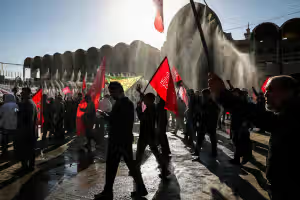
People walk in a crowded street in central Tehran in this undated file photo

Barely 37 percent of working-age Iranians have a job. Yet the government's official unemployment rate is only 7.5 percent. The gap between those two figures reveals less about Iran's labour market than about the way it is measured.

On paper, Iran does not have a jobs problem. A 7.5 percent unemployment rate is the sort of figure many governments would happily defend. But fewer than four in ten working-age Iranians are actually employed.

According to the International Labour Organization, the global employment rate is about 58 percent. Roughly six out of every ten working-age adults worldwide have a job. In Iran, it is fewer than four.

The explanation lies in how unemployment is calculated.

Of Iran's 87 million people, about 66 million are of working age. Around 24 million have jobs and two million are officially unemployed, meaning they are actively looking for work. The remaining 40 million are classified as economically inactive and excluded from the unemployment rate altogether.

That apparent contradiction rests on two statistical rules.

Anyone who worked for just one hour during the survey week counts as employed. A motorbike courier who completed two deliveries is counted alongside a salaried engineer with full benefits.

Only people actively searching for work are considered unemployed. Someone who searched for years before giving up disappears from the calculation entirely.

The more people lose hope, the healthier the official unemployment rate appears.

Not everyone outside the labour force should be counted as unemployed. Many are students, retirees or people who choose not to work.

Iran's own statistics provide some insight, although they have not published a detailed breakdown of the inactive population since 2017.

That census identified roughly 12 million students and 3.7 million retirees or people living on pensions or other non-employment income.

Retirement explains only part of the picture. Iran remains a relatively young country, with an average age of about 32 and only around seven percent of the population over 65.

University enrolment has also fallen sharply—from just under five million students a decade ago to just over three million today—meaning fewer young people are remaining in education while waiting for jobs.

The largest category was around 20 million "homemakers." In Iran, women have outnumbered men at university for years, yet only around 12 percent of working-age women participate in the labour market, compared with roughly 50 percent globally. That reflects not only personal choice but also decades of bureaucratic and social barriers limiting women's employment.

Another 3.7 million people could not be clearly classified at all: they were neither employed, studying, retired nor looking for work.

Even before the latest conflict, Iran's labour market was deteriorating.

In the Persian year ending in March 2025, economic growth of about three percent produced 298,000 net jobs. The following year, the figure collapsed to just 34,000, while around 800,000 people left the labour force altogether.

The official unemployment rate nevertheless fell to 7.5 percent.

The forty-day war with Israel and the United States then dealt another severe blow. Deputy Labour Minister Gholamhossein Mohammadi says more than one million jobs were destroyed and around two million people became unemployed. Labour economist Hamid Haj-Esmaili estimates the true losses could reach between three and four-and-a-half million within months.

The International Monetary Fund expects Iran's economy to contract by 6.1 percent this year. Taken together, those figures raise a broader question: how can unemployment remain at just 7.5 percent?

Start with the government's own baseline: two million unemployed in a labour force of 26 million equals about 7.5 percent.

Now add only what the deputy labour minister himself acknowledges—two million newly unemployed because of the war. The unemployment rate immediately doubles to roughly 15 percent.

Use labour economists' higher estimates of wartime job losses and it rises to around one in four.

The picture darkens further when considering the large number of people who have simply stopped looking for work.

Around 60 percent of Iranian workers are employed informally, without contracts or unemployment insurance. Of the millions believed to have lost their livelihoods during the war, only about 290,000 were eligible to claim unemployment benefits.

Even without counting every economically inactive Iranian as unemployed, it becomes increasingly difficult to reconcile an official jobless rate of 7.5 percent with the broader condition of the labour market.

Independent analysts estimate that, once discouraged workers and wartime job losses are taken into account, effective unemployment may now approach one in three people participating—or seeking to participate—in Iran's labour market.

Whether that estimate proves correct or not, the broader trend is unmistakable.

The government's headline unemployment rate increasingly reflects who is counted rather than who actually has work.

Historically, recessions push unemployment sharply higher. An economy expected to contract by more than six percent would normally produce a noticeable rise in joblessness. Yet many newly unemployed Iranians are likely to follow the same path as the 800,000 who left the labour force last year: stop searching for work and disappear from the statistics.

By March 2027, Tehran may still be reporting single-digit unemployment.

The more revealing figure may remain the one at the beginning of the story: barely 37 percent of working-age Iranians have a job.

Most Viewed

Senator Graham was a steadfast friend of the Iranian people, Prince Pahlavi says
1

Senator Graham was a steadfast friend of the Iranian people, Prince Pahlavi says

2

Iran tells pro-government rallies to continue until leader orders otherwise

3
INSIGHT

Can Tehran seek revenge and negotiate with Washington?

4

Mossad recruited Ahmadinejad for Iran regime-change plot - report

5

Diplomacy fades as US and Iran escalate over Hormuz

Banner
Banner
Banner

Spotlight

  • Iran risks its most valuable Arab partner over Hormuz
    INSIGHT

    Iran risks its most valuable Arab partner over Hormuz

  • Why so few Iranians have jobs despite low unemployment
    ANALYSIS

    Why so few Iranians have jobs despite low unemployment

  • January protesters trapped in 'hell' of Greater Tehran prison, inmates say
    EXCLUSIVE

    January protesters trapped in 'hell' of Greater Tehran prison, inmates say

  • Iran faces region’s harshest mix of wartime contraction and inflation

    Iran faces region’s harshest mix of wartime contraction and inflation

  • Is the Iran-US MoU dead – or are we asking the wrong question?
    PODCAST

    Is the Iran-US MoU dead – or are we asking the wrong question?

  • A truce for the world, a reckoning for Iran’s economy

    A truce for the world, a reckoning for Iran’s economy

  • Iran’s negotiators have 60 days; its factories may not

    Iran’s negotiators have 60 days; its factories may not

•
•
•

More Stories

Plastic waste becomes major environmental challenge in Iran

Jul 13, 2026, 10:53 GMT+1
100%
Plastic bags, bottles and other household waste cover the bank of a river in Iran.

Plastic waste has become a major environmental challenge in Iran, with poor enforcement of waste management regulations allowing single-use plastics to pollute natural areas and water resources, the country's environment chief said on Sunday.

More than two decades after Iran adopted its Waste Management Law in 2004, large parts of the legislation remain unenforced, leaving serious shortcomings in the management of household, medical, agricultural and industrial waste, Department of Environment chief Shina Ansari said.

“Plastic waste, particularly single-use plastics, has become a serious problem for nature, coastlines, tourist areas and water resources,” Ansari said. “Studies show that microplastics are entering the food chain, water resources and even drinking water, posing a serious threat to human health and the environment.”

Plastic consumption has become a growing environmental concern in Iran, driven largely by the widespread use of shopping bags, disposable tableware, drink bottles and food packaging. A 2024 review of municipal waste found that plastics account for about 7% of Iran’s waste stream by weight.

Enforcement gaps persist

Regulations governing waste disposal and recycling exist, Ansari said, but have only been implemented sporadically, leaving many environmental problems unresolved.

A 2022 regulation intended to reduce plastic bag consumption required manufacturers to phase out bags thinner than 25 microns and imposed obligations on large retailers. Ansari said the measures, like many environmental regulations, have not been properly enforced.

100%
Plastic waste washes ashore along a beach on Iran's coastline, highlighting persistent marine pollution caused by mismanaged waste and plastic debris entering coastal waters.

Many countries, she added, have introduced taxes, restrictions or bans on single-use plastic bags even before negotiations on a global plastics treaty are completed.

Short-lived use, long-term pollution

Around 95% of plastic bags in Iran are used only once, typically for between 12 and 20 minutes, before being discarded.

The problem is compounded by weak waste separation and recycling systems. Research on Iran’s plastic-waste sector points to gaps in regulation, enforcement, funding and technology, while informal collectors continue to play a major role in recovering valuable materials. As a result, much plastic waste is buried, openly dumped or left uncollected rather than being processed through an effective circular recycling system.

The bags can remain in the environment for 400 to 500 years before decomposing, contributing to long-term pollution of land and waterways, Ansari said.

The environmental effects are also increasingly visible. Researchers have detected microplastics in landfill areas, along Iran’s Caspian coast and in seawater, sediment and fish from the Persian Gulf.

Iran faces region’s harshest mix of wartime contraction and inflation

Jul 11, 2026, 12:32 GMT+1
•
Arash Sohrabi
100%

War has erased Iran’s already weak growth prospects. The economy shrinks as prices rise at one of the region’s fastest rates, forcing households to bear war, sanctions and years of economic mismanagement through fewer jobs, weaker incomes and collapsing purchasing power.

The International Monetary Fund expects Iran’s economy to contract by 6.1% in 2026, after an estimated decline of 1.5% last year. Average consumer-price inflation, already above 50% in 2025, is forecast to accelerate to 68.9%.

The combination matters more than either number alone. A recession means the economy is producing less, companies are selling less and opportunities for work and investment are narrowing. Inflation approaching 70% means the income that remains loses value at extraordinary speed.

  • For many Iranians, paychecks now barely cover food

    For many Iranians, paychecks now barely cover food

  • Iran’s economic pain deepens as factions trade blame

    Iran’s economic pain deepens as factions trade blame

For Iranian households, the result is a squeeze from both directions: fewer ways to earn money and far less purchasing power once they receive it.

The scale of the deterioration is also visible in the IMF’s revision. Only three months earlier, it had expected Iran to record modest growth of about 1.1%. It has now cut that estimate by 7.2 percentage points, one of the sharpest downgrades in the report.

“Growth in Iran in 2026 is revised downward by 7.2 percentage points, relative to January, to –6.1 percent,” the IMF said.

The fund links the reversal to damage to energy and transport infrastructure, diminished production and exports, and disruption around the Strait of Hormuz. It places Iran alongside Iraq, Qatar, Kuwait and Bahrain among the regional economies most directly exposed to the conflict.

The downturn is expected to reach the labor market. Unemployment is forecast to rise from 8% to 9.2%, though that figure captures only part of the pressure in an economy where informal work, underemployment and falling real wages are widespread.

  • Two-week banking disruption leaves Iranians struggling to access money

    Two-week banking disruption leaves Iranians struggling to access money

  • Iran's costly farewell for supreme leader draws backlash

    Iran's costly farewell for supreme leader draws backlash

The inflation data are even more severe. The IMF forecasts average inflation of 68.9% over the year and an end-of-year rate of 48.7%. The difference suggests the pace of price rises may slow later in the year, but not enough to restore anything resembling price stability.

It also means that a lower inflation rate would not make goods cheaper. Prices would still be rising rapidly from an already much higher base, leaving food, housing and other essentials increasingly beyond the reach of households whose wages have failed to keep pace.

The regional comparisons make Iran’s position clearer. Saudi Arabia and the United Arab Emirates are each expected to grow by 3.1%, while Oman is projected to expand by 3.5%. Their inflation rates are forecast at 2.3%, 2.5% and 1.7% respectively.

Qatar and Iraq face even deeper contractions, at 8.6% and 6.8%, largely because of damage and disruption to energy production. But inflation in both is expected to remain close to 3% or 4%. Iran’s particular crisis is that it combines a wartime recession with an inflation problem that was already deeply entrenched before the fighting.

Türkiye offers another useful comparison. It has struggled with years of high inflation, yet the IMF still expects its economy to grow by 3.4% in 2026 while inflation averages 28.6%. Iran’s inflation rate is more than twice as high, while its economy is moving sharply in the opposite direction.

Iran’s external position is also weakening. The current account – the broad measure of money flowing into and out of the country through trade and other transactions – is expected to move from a surplus of 0.6% of GDP to a deficit of 1.8%.

For a major oil and gas producer, that reversal points to lost export earnings, damaged production and less access to foreign currency. By contrast, the UAE is expected to retain a surplus of 11.4%, Qatar 11% and Oman 7.5%, giving those governments far larger financial cushions.

The figures should still be treated with caution. The IMF’s Iran data depend partly on national accounts, inflation and balance-of-payments information supplied by the Islamic Republic’s finance and monetary institutions. The fund also uses staff estimates where complete information is unavailable and says the timeliness, accuracy and completeness of its database cannot be guaranteed.

That makes the report an informed estimate, not an independent audit of Iran’s economy. Official statistics under the Islamic Republic are often delayed, incomplete or shaped by a system with several exchange rates and limited transparency.

The IMF itself uses the NIMA (an acronym for integrated system of foreign exchange) trade-related rate to convert Iranian GDP into dollars from 2018 onward, rather than the official rate that is lower, because it considers NIMA more representative of transactions.

  • Inside Iran’s maze of multiple exchange rates

    Inside Iran’s maze of multiple exchange rates

Even that does not fully reflect the much weaker market rate experienced by many Iranians because it still overstates the rial’s value compared with the open market: the dollar is about 1.48 million rials at the NIMA rate today, against roughly 1.78 million rials on the street, a gap of about 21%.

South Pars carries the shock beyond Iran

The damage is not confined to Iran. The IMF says strikes on the South Pars gas field sharply reduced the prospect of a quick recovery in regional gas supplies and were followed by Iran’s attacks on Persian Gulf energy facilities, including Qatar’s Ras Laffan complex.

  • Iran’s energy growth slows to a crawl as demand races ahead

    Iran’s energy growth slows to a crawl as demand races ahead

European benchmark gas prices rose 61% between August 2025 and March 2026, while Asian LNG prices jumped by more than 80%. Asia is particularly exposed because more than three-quarters of LNG shipments passing through the Strait of Hormuz are bound for Asian markets.

The IMF’s central forecast still assumes a relatively short conflict and a gradual restoration of production and transport. Under that assumption, global growth slows to 3.1% and inflation rises to 4.4%. But the report says a longer disruption could push global growth close to 2% and inflation toward 6%.

The same warning applies more acutely to Iran: the forecast contraction of 6.1% is not a worst-case estimate, but one built on the assumption that the war’s economic damage begins to ease.

For many Iranians, paychecks now barely cover food

Jul 10, 2026, 21:03 GMT+1
•
Maryam Sinaiee
100%
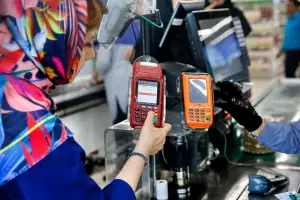
An Iranian family shops at a supermarket in Tehran as soaring food prices and shrinking purchasing power put growing pressure on households

Years of high inflation have pushed millions of Iranian households into a struggle over basic expenses, with new estimates showing wages barely cover food costs before rent, healthcare and other necessities are even considered.

While the government continues to provide monthly cash subsidies and electronic food vouchers to a large share of the population, many families say these measures no longer come close to covering rapidly rising living costs.

An analysis by economic news website EcoIran comparing official food prices, a minimum nutritional basket and the minimum wage found that the salary of a married worker with one child is now enough to cover little more than the minimum monthly food needs of a three-person household.

The analysis estimated that an individual needed around 78 million rials in June to meet minimum nutritional requirements.

For households relying solely on the minimum wage, it found that almost all monthly income would be consumed by food purchases alone, leaving little for rent, utility bills, transportation, healthcare, education or clothing.

Unrelenting inflation

The squeeze comes as many Iranian families already spend between 50% and 70% of their income on housing costs.

Food prices have continued to climb sharply, with staples including red meat, poultry, dairy products, rice, eggs, cooking oil, fruit and vegetables increasingly out of reach for many households.

According to data cited from the Statistical Center of Iran, annual inflation currently stands at about 66%, while year-on-year inflation has jumped by roughly five percentage points over the past month to exceed 88%.

Food and beverage inflation has climbed above 130%, with some categories recording even sharper increases. Prices of red meat and poultry have risen by nearly 180% compared with a year earlier, according to Iranian market reports, causing demand to fall significantly.

Many Iranians say their personal experience of inflation is significantly worse than official figures suggest.

Economists note that inflation indexes measure a broad basket of goods and services, while lower- and middle-income families spend a much larger share of their income on essentials such as food, rent, transportation and medical care.

Dwindling middle class

Economist Kamran Nadri told Tejarat News that years of sustained inflation have inflicted lasting damage on household finances.

“Economic pressure on low-income groups and the middle class may be tolerable for a short period, but when it persists for years, it leaves broad social and economic consequences,” he said.

“Since 2018, following the United States' withdrawal from the nuclear agreement, Iran has experienced average annual inflation of around 40 to 45 percent,” Nadri said. “During that period, wages did not increase in line with inflation under successive governments, and the purchasing power of the middle class has declined markedly.”

Economists caution that even if Iran reaches an agreement with the United States and the risk of military conflict subsides, inflation is unlikely to fall quickly.

Political economy researcher Kamal Athari told ILNA that even under the most optimistic scenario—including sanctions relief and removal of obstacles such as Iran’s inclusion on the Financial Action Task Force (FATF)—it would still take years for Iran to restore normal commercial relations with the global economy.

“Under such circumstances, inflation could eventually decline, but the process would not be rapid,” he said.

‘It’s all on Pezeshkian’

Growing concern over living standards has prompted renewed calls for additional government support.

Mohsen Bagheri, a board member of the Tehran Islamic Labour Councils' Coordination Council, told Khabar Online that wages, which were set in early April, should be revised upward in the coming months.

He also argued that the value of electronic food vouchers should increase, saying they have remained unchanged despite rising prices and earlier government promises.

The economic pressure has also become part of the wider battle over Iran’s political direction after the war.

Hardline critics who continue to advocate confrontation with the United States and Israel have blamed President Masoud Pezeshkian’s administration for the deteriorating situation.

“Pezeshkian destroyed the country,” one hardline user wrote on X. “He created limitless inflation. He allowed us to be deceived by the enemy three times. Zero achievements, countless losses.”

Others have pushed back, arguing that continued calls for confrontation ignore the country’s worsening economic reality.

“Families are literally being destroyed, education, healthcare, housing, inflation, employment, and every economic indicator point to a bleak future,” one user wrote. “Yet some profiteers have forgotten the suffering of the people and keep calling for more war.”

Iran’s economic pain deepens as factions trade blame

Jul 10, 2026, 18:50 GMT+1
•
Behrouz Turani
100%
People stand along the partially refilled bed of the Zayandeh Roud river in Isfahan after water briefly returned to the long-dry river, June 2026

As Iran navigates renewed confrontation with the United States and uncertainty over a fragile diplomatic process, a deeper crisis is returning to the center of public debate: how much longer ordinary Iranians can absorb the economic cost.

Outlets from different political camps are warning of mounting pressure from inflation, falling purchasing power, unemployment and infrastructure failures, even as they sharply disagree over who is responsible.

Independent and reformist-leaning publications such as Sharq, Etemad and Tose’e Irani have focused on the rising cost of basic goods, reporting that food prices have surged far beyond wage growth.

They point to basic commodities such as bread, poultry and vegetable oil rising between 130% and more than 200%, while wages cover only a fraction of estimated household costs.

Even outlets close to the government, including ILNA and Etemad, have highlighted the growing gap between income and survival, noting that the minimum wage of around 16.6 million tomans covers less than 40% of the estimated 45-million-toman basic subsistence basket for an average family.

Beyond inflation and market instability, Iranian media have also focused on a worsening infrastructure crisis.

Severe rolling summer blackouts have returned, disrupting factories, increasing pressure on businesses and making daily life harder during peak heat.

The search for blame mirrors Tehran’s broader political divisions.

Moderate and reformist outlets such as Sharq, Etemad and Arman Melli emphasize structural failures, isolation and the economic toll of years of confrontation.

They argue that sanctions, conflict, damaged infrastructure and policy failures have intensified pressure on the economy.

Some commentators have warned of an “inflation bomb” and questioned whether decision-makers understand the “accumulation of public dissatisfaction.”

Earlier this week, Jahan Sanat published industrial analyst Alireza Mahdiyeh’s commentary under the headline “The sound of an inflation bomb,” citing Central Bank figures that he said showed the economy facing one of its worst periods in decades.

“Inflation has now reached even the price of bread,” he wrote. “Bread is still available, but more expensive than before. Yet inflation in bread does not give the baker more bread. It only means that what reaches people’s tables is smaller and less than before.”

Moderate outlets have also pointed to domestic policy decisions, including severe internet restrictions and blackouts, arguing they have damaged the digital economy and created widespread “hidden unemployment.”

Hardline dailies Kayhan and Resalat offered a different diagnosis, placing responsibility on the United States and Israel.

They argue that Washington’s declaration that the June interim agreement is “dead,” combined with renewed military pressure, proves that Western economic warfare is driving instability.

These outlets have also accused “economic saboteurs,” domestic speculators and merchants of manipulating currency markets and hoarding essential goods.

The proposed solutions reveal two competing visions for Iran’s future.

Hardliners have called for a “resistance economy,” including tighter controls on markets, action against price gouging and expanded rationing networks.

Moderate economists and commentators writing for outlets such as Donya-ye-Eghtesad argue that internal crackdowns cannot solve deeper structural problems.

They say economic stability depends on reducing tensions, restoring international trade, easing restrictions on businesses and creating conditions for investment and reconstruction.

But optimism remains limited as the damaged diplomatic process between Tehran and Washington offers little immediate relief.

As economist Mehdi Pazouki told reform-leaning Fararu, further escalation could push the country into even more dangerous territory.

“If Israel’s warmongering policies and the hardline approaches of certain actors inside Iran intensify, there is a serious possibility that we will move toward hyperinflation and the dollarization of the economy,” he said.

A remote bridge shows how US-Iran war is expanding

Jul 10, 2026, 01:28 GMT+1
•
Umud Shokri
100%
An image related by Iranian media purportedly showing the damage to the Aq Takeh Khan bridge in northeastern Iran, July 9, 2026

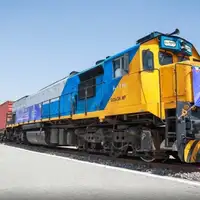
A reported US strike on a railway bridge in northern Iran has drawn attention to a lesser-known front in the widening conflict: the battle over the transport corridors linking Iran to Central Asia, Russia and China.

Iranian state media and the IRGC said cruise missiles attributed to US forces struck the Aq Tekeh Khan railway bridge near Aqqala in Golestan province early Wednesday, damaging the Gorgan–Incheh Borun railway line.

Washington has not confirmed the strike, and the claim has not been independently verified.

The bridge is part of Iran’s northern rail connectivity with Turkmenistan and wider Central Asian networks, making it relevant to military logistics, civilian trade, sanctions resilience and alternative transit routes.

Its targeting, if confirmed, would suggest that transport nodes are becoming strategic assets in the widening conflict, where pressure on dual-use infrastructure can disrupt connectivity without focusing only on conventional military sites.

Why the bridge matters

The Aq Tekeh Khan Bridge lies on the Gorgan–Incheh Borun railway, a key segment linking Iran’s interior to its northeastern border with Turkmenistan.

Incheh Borun serves as an important rail crossing and dry port in Golestan province, connecting southward into Iran’s national railway network and northward into the Kazakhstan–Turkmenistan–Iran corridor inaugurated in 2014.

The corridor, stretching from Kazakhstan through Turkmenistan into Iran, provides an overland connection between Iran and Central Asia, with links to Russia, China and wider Eurasian markets.

It also complements the International North-South Transport Corridor (INSTC) and overlaps with China’s Belt and Road Initiative ambitions by offering alternatives to vulnerable maritime routes.

For Iran, this northern railway artery is strategically valuable because it expands access to resource-rich Central Asian states and supports transit flows less exposed to Gulf chokepoints.

Freight trains from China have also moved along related corridors, underscoring the route’s place in broader East-West Eurasian trade.

Battle of transport networks

If confirmed, targeting railway infrastructure would suggest a broadening of strike objectives beyond traditional military facilities.

Railway bridges such as Aq Tekeh Khan are dual-use assets: they support civilian commerce, military mobility, sanctions-evading trade and rapid wartime logistics.

In modern conflicts, from Ukraine to the Middle East, infrastructure warfare has become increasingly central. Railways, ports, pipelines, bridges and power grids serve as chokepoints where military pressure and economic disruption intersect.

A damaged bridge can force rerouting, increase transport costs, delay supply chains and create bottlenecks whose effects exceed the physical scale of the strike itself.

For Iran, already facing pressure on southern ports, energy infrastructure and Gulf-facing trade routes, disruption to northern rail connectivity would test the resilience of its overland alternatives.

Targeting sanctions lifelines?

Damage to the Aq Tekeh Khan Bridge and associated rail services could limit Iran’s ability to move goods, fuel, equipment and strategic materials along its northern corridor.

Iranian authorities said the damage was repaired within a day and rail traffic had resumed, a claim that could not be independently verified. Even if temporary, the disruption highlights the importance of repair speed and infrastructure resilience in a conflict increasingly focused on transport networks.

Northern rail connectivity becomes especially important when southern ports or the Strait of Hormuz face military or political pressure. In such conditions, Iran’s ability to maintain alternative land routes through Central Asia, the Caspian region and Russia becomes part of its wider strategic depth.

Iran has spent years developing land corridors with Central Asia, Russia, China and the Caspian region to reduce dependence on maritime routes exposed to sanctions, surveillance and possible interdiction.

The Kazakhstan–Turkmenistan–Iran railway and INSTC-linked routes are central to that strategy, enabling transit revenues, regional trade and access to markets where sanctions enforcement may be less direct.

Strikes on such infrastructure could therefore be intended to erode Iran’s sanctions resilience by raising operational risks for partners and discouraging use of Iranian corridors during periods of conflict.

Regional consequences

The reported strike also carries potential implications for Turkmenistan, Kazakhstan and other Central Asian states.

These countries have invested in diversified transit routes through Iran to reach Gulf ports and global markets while reducing dependence on Russian or Chinese-controlled corridors.

If Iranian routes are viewed as vulnerable during conflict, governments and commercial operators may reassess their reliability.

For China, disruption to Iranian-linked corridors adds uncertainty to longer supply chains connecting East Asia, Central Asia and the Middle East.

For Russia, which has deepened logistical ties with Tehran, damage to Iranian transport infrastructure could complicate southern access routes.

The reported strike highlights how infrastructure has become part of modern strategic competition.

For Iran, the incident reinforces the challenge of protecting trade networks built to withstand sanctions and pressure on maritime access. It also shows that corridor politics, from the BRI to the INSTC, are increasingly shaped not only by commerce but by military risks.

Whether this leads to hardened infrastructure, shifts in regional trade planning or renewed pressure for de-escalation remains uncertain, but the bridge’s symbolic and practical importance now extends well beyond Golestan province.