• العربية
  • فارسی
Brand
  • Iran Insight
  • Politics
  • Economy
  • Analysis
  • Special Report
  • Opinion
  • Podcast
  • Iran Insight
  • Politics
  • Economy
  • Analysis
  • Special Report
  • Opinion
  • Podcast
  • Theme
  • Language
    • العربية
    • فارسی
  • Iran Insight
  • Politics
  • Economy
  • Analysis
  • Special Report
  • Opinion
  • Podcast
All rights reserved for Volant Media UK Limited
volant media logo
ANALYSIS

One flight, two chokepoints: why Iran wants an air bridge to Yemen

Negar Mojtahedi
Negar Mojtahedi

Iran International

Jul 15, 2026, 02:58 GMT+1
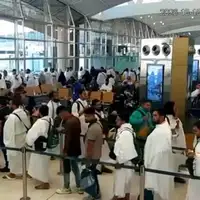
An Iranian Mahan Air flight lands in Sanaa airport in this screen-grab from a video by Houthi television Al-Masirah, July 13, 2026

An Iranian plane landing in Houthi-controlled Yemen looked like an oddly minor victory for Tehran. But it may have been the opening move in an effort to rebuild the allied force capable of threatening a second global maritime chokepoint alongside the Strait of Hormuz.

As the US-Iran memorandum of understanding unravels and the confrontation shifts toward the Strait of Hormuz, renewed fighting in Yemen is raising a broader question: is Tehran preparing another source of maritime pressure at Bab al-Mandab?

Hezbollah and Hamas have been severely weakened by Israeli military operations. The Houthis, by contrast, remain armed, entrenched and positioned astride one of the world's busiest shipping lanes.

Even a credible threat to Bab al-Mandab could unsettle shipping, energy markets and global supply chains. For Iran, that threat alone may be valuable.

The fight over one airplane

The latest escalation followed Yemen's decision to block an Iranian aircraft carrying a Houthi delegation returning from the funeral of Supreme Leader Ali Khamenei in Tehran. Yemen's internationally recognized government accused Iran of attempting to enter its airspace without authorization.

The dispute quickly escalated. An attack damaged Sanaa International Airport's runway. The Houthis blamed Riyadh before targeting Saudi Arabia's Abha International Airport with missiles and drones.

Senior Houthi official Mohammed al-Bukhaiti later warned of what he described as a "siege" of the Kingdom and openly identified Bab al-Mandab as a strategic pressure point.

"The key thing here was the precedent," Chatham House fellow Thomas Juneau told Iran International. "Iran and the Houthis are trying to force open the air bridge between Tehran and Sanaa."

Iran has long supplied the Houthis through maritime smuggling routes stretching around Oman and the Horn of Africa. Those routes are slow, costly and vulnerable to interdiction.

A direct air bridge would dramatically improve Tehran's ability to move sensitive military components into Houthi-controlled territory. That is why one apparently ordinary passenger flight mattered.

Rebuilding the Houthis

Farzin Nadimi, a defense and security analyst at the Washington Institute, believes Iran's urgency reflects another problem: after years of Red Sea operations and repeated US and Israeli strikes, the Houthis are running low on some of their more advanced military capabilities.

"They are very much eager to help the Houthis rebuild their strategic inventory in order to be a viable player again," he said.

Nadimi suspects the aircraft may have been carrying critical weapons components, although there is no independent confirmation of its cargo.

Modern missile and drone forces depend less on complete weapons than on a steady flow of electronics, guidance systems, engines and other specialized components.

If the Houthis are running low, a direct air link would offer Tehran a faster and more reliable route to replenish those capabilities.

A second chokepoint

The strategic importance extends well beyond Yemen.

The dispute between Tehran and Washington is already centered on the Strait of Hormuz, where Iran has demonstrated the leverage that can be created by threatening one of the world's most important energy corridors.

A revitalized Houthi force capable of disrupting Bab al-Mandab would force Washington, Saudi Arabia and their regional partners to consider the security of two strategic waterways simultaneously.

"Iran, having demonstrated the extraordinary value for itself of closing the Strait of Hormuz, absolutely understands that if it closes both Hormuz and Bab al-Mandab at the same time, the effect would be magnified," Juneau said.

"The effect on the global economy, the ability to pressure the US, to pressure Saudi Arabia and to pressure all of their allies."

Juneau cautioned that neither Tehran nor the Houthis appear poised to close Bab al-Mandab in the near term. But the ability to credibly threaten it would give Iran another source of strategic leverage.

Yemeni-American researcher and author Fatima Abo Alasrar believes the latest confrontation was deliberately engineered by Tehran.

"I think, honestly, Iran has engineered this escalation," she said.

In her view, widening the potential cost of confrontation creates another avenue through which Tehran can shape future negotiations with Washington.

Saudi Arabia's red line

The confrontation also threatens to upset the fragile balance that has prevailed in Yemen since the 2022 truce.

Saudi Arabia has spent years trying to extricate itself from a costly war that increasingly looked unwinnable.

"It's really Saudi Arabia that's been absorbing a lot of the pain here," Juneau said.

The Houthis understood Riyadh's reluctance to return to full-scale conflict and repeatedly tested how far they could push.

The attempt to establish a direct air bridge between Tehran and Sanaa appears to have crossed a different threshold.

Saudi Arabia may still prefer de-escalation. But allowing Iran an easier route to replenish Houthi military capabilities would strengthen an armed group positioned directly on its southern border and potentially restore its ability to threaten Saudi cities, airports and energy infrastructure.

Alasrar described Saudi Arabia and the Houthis as pieces on a much larger geopolitical chessboard.

"Houthis and Saudis are almost like pieces on a chessboard that are fighting with each other right now," she said. "But it's Iran and the US that get to impose everything."

Whether the Houthis intend to launch a renewed campaign around Bab al-Mandab remains uncertain. Juneau cautions they are not simply Iranian proxies waiting for orders, while Nadimi expects de-escalation unless the wider US-Iran confrontation expands significantly.

Hormuz has already demonstrated the leverage created by maritime chokepoints. Iran may not even need the Houthis to close Bab al-Mandab. If it succeeds in rebuilding their capabilities, simply making the threat credible could become a source of strategic pressure in its own right.

Most Viewed

Trump reinstates Iran naval blockade, notifies Congress of renewed fighting
1

Trump reinstates Iran naval blockade, notifies Congress of renewed fighting

2

Mossad recruited Ahmadinejad for Iran regime-change plot - report

3
ANALYSIS

Why so few Iranians have jobs despite low unemployment

4

UK says support for Iran's IRGC outlawed under new state threats law

5
INSIGHT

Iran risks its most valuable Arab partner over Hormuz

Banner
Banner
Banner

Spotlight

  • One flight, two chokepoints: why Iran wants an air bridge to Yemen
    ANALYSIS

    One flight, two chokepoints: why Iran wants an air bridge to Yemen

  • Iran parliament drops two hardline critics of US talks from security panel posts

    Iran parliament drops two hardline critics of US talks from security panel posts

  • Iran risks its most valuable Arab partner over Hormuz
    INSIGHT

    Iran risks its most valuable Arab partner over Hormuz

  • Why so few Iranians have jobs despite low unemployment
    ANALYSIS

    Why so few Iranians have jobs despite low unemployment

  • January protesters trapped in 'hell' of Greater Tehran prison, inmates say
    EXCLUSIVE

    January protesters trapped in 'hell' of Greater Tehran prison, inmates say

•
•
•

More Stories

US-Iran conflict converges on Hormuz

Jul 15, 2026, 00:46 GMT+1
100%
A projectile is fired during what the US Central Command (CENTCOM) said were strikes on Iran, in this screen grab taken from a handout video released on July 12, 2026

The war between the United States and Iran is increasingly being fought over control of the Strait of Hormuz, with both sides using the strategic waterway as a source of military and political leverage.

CENTCOM said its forces began another round of strikes at 3 p.m. ET against Iranian military assets it said had been used to attack commercial shipping in the strait. It added that US forces were preparing to resume the blockade of Iranian ports and coastal areas at 4 p.m. ET.

The IRGC responded by explicitly threatening regional energy exports, saying that as long as US “evil actions” continued, “not a single drop of oil and gas” would leave the region. It added that further US attacks would delay any reopening of the Strait of Hormuz.

Washington says the strikes are intended to protect commercial shipping and restrict Iranian maritime activity, while Tehran portrays control of the strait as a sovereign right and links its reopening to broader political and military conditions.

The latest operation followed a five-hour wave of US strikes on military sites in Bushehr, Chabahar, Jask, Konarak, Abu Musa and Bandar Abbas, according to CENTCOM.

Iranian media later reported explosions across southern Iran, including Bandar Abbas, Sirik, Ahvaz and Qeshm, while authorities said part of a power plant on Kish Island had been damaged.

At least three people were killed in a US strike in Hormozgan province, according to local officials after an environmental protection post and a fodder warehouse were hit.

As US strikes expanded along Iran’s coastline, Iranian attacks spread across the Persian Gulf.

Kuwait said an Iranian strike hit one of its naval vessels, injuring four service members. Its armed forces also reported intercepting one ballistic missile, five cruise missiles and 33 drones, while falling debris damaged civilian and critical infrastructure.

Bahrain sounded warning sirens after its air defenses intercepted Iranian aerial attacks. The IRGC claimed it had struck US military infrastructure in Bahrain and Kuwait and said it had also targeted a US air base in Jordan with ballistic missiles.

The maritime front widened in parallel. Two crude tankers operated by ADNOC Logistics and Services were hit by projectiles while transiting the Strait of Hormuz.

One Indian crew member was killed and several others were injured, prompting India to summon Iran’s deputy ambassador and lodge a formal protest.

A separate tanker reported being hit by a missile off Oman, while Stolt Tankers said one of its vessels was struck by an unidentified external device, causing a fire in its engine room.

Iranian leaders reinforced the military message with competing claims over the strait. Vice President Mohammad Reza Aref said it was natural for Iran to administer Hormuz while other countries retained the right to use it.

An army spokesperson said the waterway would reopen only under arrangements acceptable to Iran’s armed forces.

Washington, meanwhile, framed the blockade and strikes as measures to keep Hormuz open to non-Iranian shipping.

President Donald Trump said no country or entity should charge vessels for passage and declared the strait open to all traffic except ships traveling to or from Iranian ports or carrying Iranian cargo.

The growing confrontation triggered diplomatic and economic alarm.

Oman called for respect for international law and freedom of navigation, while India and New Zealand summoned senior Iranian diplomats. The Gulf Cooperation Council and several Arab states condemned attacks on commercial vessels and regional countries.

Oil prices climbed as markets assessed the risk of prolonged disruption through the waterway, which carries a significant share of global energy exports. Major shipping companies also rejected proposals for transit fees or restrictions in international waters.

The war that began over Iran’s nuclear program is increasingly being fought over control of the world’s most important shipping lane.

Persian Gulf startup hubs hold firm despite Iran war - Bloomberg

Jul 14, 2026, 11:45 GMT+1
100%

The Iran war has yet to trigger an exodus of entrepreneurs from the Persian Gulf, but falling investment, rising costs and slower funding are beginning to test the region’s heavily financed startup strategy, Bloomberg reported on Tuesday.

Abu Dhabi, Dubai, Riyadh and Doha have spent years trying to build globally competitive technology sectors through sovereign wealth, tax incentives, accelerator programs and direct investment.

Despite attacks in the region and renewed fighting between the United States and Iran, founders have largely remained in the region and government-backed programs continue to attract applicants.

None of the 27 companies selected for the February intake of Hub71, Abu Dhabi’s startup program, withdrew after the conflict began, according to Bloomberg. The program’s latest cohort also received a similar number of applications and was the first made up entirely of companies from outside the United Arab Emirates.

The financial effects, however, may not yet be fully visible. Middle East and North African startups raised $1.35 billion in the first half of 2026, down more than 20% from a year earlier, according to data platform Magnitt. The number of deals fell even more sharply to 214, while second-quarter activity dropped to its lowest level in at least two years.

“I don’t believe that the impact of the war has come into the numbers yet, that will come in Q3 and Q4,” Magnitt chief executive Philip Bahoshy told Bloomberg TV, adding that investors were already shifting their attention from early-stage companies toward more established businesses.

Some startups are also facing higher fuel, shipping and insurance costs, worsening cash flow and longer delays in receiving payments. Bloomberg cited one investor as saying that a sovereign investor withdrew a $1 million commitment from a funding round when the war began.

Regional governments are continuing to spend heavily. Hub71 offers successful applicants $140,000 in investment and incentives, while Qatar expanded its Fund of Funds program from $1 billion to $3 billion before the conflict. Startup Qatar has awarded more than $51 million to 45 companies, including 11 since the fighting began.

The Persian Gulf’s startup markets remain smaller than established centers in the United States, Europe and Asia, with limited late-stage financing, technology listings and specialist talent. But founders and investors told Bloomberg that access to capital, lower costs and government support continued to outweigh the risks for many companies.

US personnel faced phone-tracking campaign during Iran war – FT

Jul 14, 2026, 10:09 GMT+1
100%

US military personnel and contractors in the Middle East were targeted in a coordinated phone-tracking campaign before and during the Iran war, the Financial Times reported on Tuesday, citing telecom data, cybersecurity experts and officials familiar with the matter.

“Iran absolutely has capabilities to get real-time, immediate, and continuous location information,” Gary Miller, a senior research fellow at cybersecurity watchdog Citizen Lab, told the FT.

“It would surprise me very much if Iran were not using SS7, or mobile network access in the region, to track US users.”

Telecom networks under pressure

Middle Eastern telecom networks, according to the report, blocked repeated requests known as SS7 pings, which can reveal the approximate location of phones roaming outside their home networks.

Two cybersecurity experts who reviewed the data told the FT the activity appeared to be part of a coordinated effort to locate specific devices.

The tracking attempts came in the build-up to the US-Israeli attack on Iran in late February and continued during the early days of the conflict, when Iran launched missile and drone attacks on US forces and military installations across the region.

100%

A person familiar with the matter told the FT that Persian Gulf officials suspected Iran or allied groups had exploited roaming agreements with regional mobile operators to track US personnel.

Separately, a US official speaking anonymously said actors linked to Iran were also believed to have used commercial advertising databases to locate phones in Iraqi Kurdistan.

US lawmakers renew security concerns

US Central Command told Congress in April that it had received multiple threat reports about adversaries exploiting commercial location data to monitor or target US personnel deployed in the region.

However, Centcom said it had taken force-protection measures to safeguard its forces, while a US official told the FT there was no evidence that data tracking had played a significant role in attacks.

At least some blocked tracking attempts could be linked to an Iranian mobile operator based on a shared technical fingerprint.

“This appears to be very specific user targeting,” Miller told the FT. “They are targeting specific devices.”

The Iranian embassy in London did not immediately respond to the newspaper's request for comment.

The report also said Iran was suspected of using commercially available advertising technology to identify hotels housing US government employees and contractors.

Advertising identifiers assigned to smartphones can enable devices to be tracked without directly compromising the phones themselves.

US lawmakers cited by the FT said the findings underscored longstanding concerns about the military's exposure through commercial location data.

Ron Wyden, a Democratic senator, said he had warned successive administrations for years about the national security risks, while Republican Representative Pat Harrigan said legislation was needed to prevent technology companies from selling location data linked to government employees.

Trump says US will take over Strait of Hormuz

Jul 14, 2026, 08:35 GMT+1
100%
US President Donald Trump attends an event in the Oval Office at the White House in Washington, DC, on July 13, 2026.

US President Donald Trump said on Monday that the United States would take control of the Strait of Hormuz, continue military operations against Iran and seek compensation from regional countries for securing the strategic waterway.

"We're taking over the strait. They've got nothing," Trump said in a phone interview with Fox News.

Trump said the United States would assume responsibility for protecting shipping through the strait and expected other Middle Eastern countries to pay for the mission.

"And we're going to keep the strait, and we'll probably run it. We'll become the guardian of the strait. Maybe we'll call it the 'guardian angel of the strait.' And we should be reimbursed for that. When we do that, we're going to be reimbursed because the other nations are very wealthy, they're on our side."

He later elaborated on the proposal in a Truth Social post, saying Washington would restore a blockade targeting Iranian shipping while allowing all other commercial traffic to pass.

"The Hormuz strait is open, and will remain open, with or without Iran. We are reinstating the Iranian blockade, so named because it is only stopping Iran's ships or customers from entering or leaving. All other countries will have fair and open use of the strait," he said.

"The U.S.A. will be, from this point forward, known as 'the guardian of the Hormuz strait,'" Trump added.

He also said the United States would charge countries using the waterway a fee equal to 20% of the value of cargo shipped to cover "any and all costs necessary to do the job of providing safety and security to this very volatile section of the World." It was not immediately clear whether US allies had agreed to such an arrangement.

Trump said his administration had believed it had reached a lasting understanding with Tehran before deciding Iran had violated it.

"What nobody knows, we had a deal. It was a done deal, and then they broke it. They always break it. We've had 10 deals with these people, and so we're just going to hit them very hard."

  • Trump reinstates Iran naval blockade, notifies Congress of renewed fighting

    Trump reinstates Iran naval blockade, notifies Congress of renewed fighting

The remarks came after the United States carried out another round of strikes against Iran following Iranian attacks on US facilities across the Persian Gulf and Tehran's renewed declaration that the Strait of Hormuz was closed.

The exchange has effectively collapsed the interim memorandum of understanding reached in June, which had aimed to reopen the waterway and provide a framework for further negotiations.

Iran says it charges less

Iranian Foreign Minister Abbas Araghchi rejected Trump's statement that Washington would become the strait's guardian.

"POTUS is absolutely right. Whoever provides secure and safe passage of commercial vessels through the Strait of Hormuz should be compensated for this service," he said. "Iran has always been the guardian of the Strait and will remain so forever. 20% is of course too much. We will be fair."

New attacks on nuclear sites

Trump also said on Monday that Iran's Pickaxe Mountain nuclear site could soon become a US target.

Speaking to conservative radio host Hugh Hewitt, Trump said the United States was closely monitoring the deeply buried facility.

"A nice big fat shot right in the front door," Trump said, adding the United States would "probably give Pickaxe a shot relatively soon."

Trump also indicated further military action was imminent.

"It was a test. We didn't know," he said of the memorandum of understanding with Iran. "Memorandums of understanding, when you're dealing with sleazebags, don't mean much. It was sort of a test, and they weren't there. They didn't honor the test."

The renewed campaign has also reignited opposition in Congress.

Democratic Senator Adam Schiff said he would introduce a new War Powers Resolution this week to force another Senate vote on ending US military involvement in Iran, while Senate Democratic leader Chuck Schumer said Trump's "so-called understanding" with Iran had collapsed.

"Enough is enough. End the war," Schumer wrote on X.

Critics from both parties also argued the administration was stretching its legal authority. "The president can't just wish away months of war he said would last only four to six weeks," a senior Democratic aide in the House of Representatives told Reuters.

Meanwhile, the US military operation has continued alongside Trump's remarks. US Central Command said American forces have struck more than 300 Iranian military targets over the past week and announced additional attacks on Monday.

"These strikes will continue imposing a heavy cost on Iranian forces and degrade their ability to attack innocent civilians and commercial shipping in the Strait of Hormuz," CENTCOM said.

Against restraint: Iran's hardliners rewrite the rules of confrontation

Jul 14, 2026, 08:11 GMT+1
•
Behrouz Turani
100%
Mourners sit beneath a banner depicting US President Donald Trump, with a bullet aimed at his portrait and the slogan, "We have a blood feud with America," during funeral ceremonies for former Supreme Leader Ali Khamenei in Ahvaz, southern Iran, July 9, 2026

As renewed fighting pushes Iran and the United States away from diplomacy and back toward full-scale confrontation, influential hardline voices in Tehran are openly arguing that political assassination and a more aggressive foreign policy are both justified and necessary.

The revenge-laden rhetoric that dominated the week-long mourning ceremonies for former Supreme Leader Ali Khamenei is rapidly evolving into something broader.

State media have published images depicting not only US officials but also European leaders, including France’s Emmanuel Macron and Italy’s Giorgia Meloni, as targets.

On Monday, July 13, Ali Mahdian, a hardline seminarian and academic associated with the late Ayatollah Mohammad-Taqi Mesbah Yazdi, the ideological father of the ultraconservative Paydari Front, went further still, seeking to provide a religious justification for political assassination.

Writing in the Tehran municipality’s daily Hamshahri, Mahdian presented the killing of Western leaders and those he held responsible for the deaths of senior Iranian figures not as terrorism but as a “divine mission.”

Citing Ayatollah Khomeini’s fatwa against author Salman Rushdie, he rejected the argument that a sovereign state should not engage in targeted killings. Referring to remarks by Quds Force commander Esmail Qaani, Mahdian even suggested that an actor inside the United States might carry out such an attack.

“This is a global wrath… an era in which the head of Satan must be cut off,” he concluded with an apocalyptic call to action. “Everyone must help: scholars, clerics, preachers, speakers, broadcasters, channel writers, officials, Iranians, Iraqis, everyone.”

The significance lies less in the practicality of his appeal than in how openly such arguments are now being advanced in an established state newspaper.

Late last week, US forces resumed strikes on Iranian military infrastructure, while Iran retaliated against American bases across the Persian Gulf. President Donald Trump announced a renewed blockade of Iranian shipping, saying the United States would keep the Strait of Hormuz open.

Tehran, meanwhile, says transit through the strait is no longer possible because of US military action and insists it retains control over the strategic waterway, while threatening further retaliation.

The same day, Kayhan offered a strategic counterpart to Mahdian’s theological argument.

In a commentary by Alireza Mashouri, introduced as a scholar of international relations, the newspaper called for Iran to abandon its longstanding policy of “strategic patience” in favour of what he termed “offensive diplomacy.”

“When a state exercises restraint, enemies do not see it as moral high ground or peace-loving nature; they calculate it as a lack of capability or will to respond,” he wrote.

Mashouri argued that Iran’s year of compliance after the US withdrawal from the 2015 nuclear deal convinced its adversaries that Tehran lacked the will to respond, paving the way for “maximum pressure,” targeted assassinations and progressively bolder military attacks.

“In global politics, there is no such thing as a moral ledger where a state is rewarded later for its past good behavior,” Mashouri wrote. “This does not mean starting a war; it means making the cost of aggression real for the enemy.”

None of this necessarily means that Tehran has adopted political assassination or uncontrolled escalation as formal policy.

Iran has a long history of violence against opposition figures and regional adversaries, but public appeals for the killing of sitting Western leaders represent a notable escalation in the language emerging from influential hardline circles.

More significant than the rhetoric itself may be the erosion of the political and ideological case for restraint. As US and Iranian forces exchange attacks and the dispute over Hormuz becomes another front in the war, hardline voices increasingly portray negotiation not as a means of protecting Iran but as proof of weakness.

What began as funeral rhetoric is becoming something more consequential: an argument that the era of strategic patience is over, and that peace now demands a justification war no longer does.