Spain on Tuesday summoned Iran’s ambassador to Madrid to protest a crackdown on demonstrations, Foreign Minister Jose Manuel Albares said, according to AFP.
"The right of Iranian men and women to peaceful protest, their freedom of expression, must be respected," Albares told Catalunya Radio, adding that what he described as arbitrary arrests must stop.
"Iran must return to the dialogue tables and to the negotiating tables," he said, adding that Spain would put special emphasis on the rights of women.
Iranian Foreign Minister Abbas Araghchi criticized Germany on Tuesday after Chancellor Friedrich Merz commented on the uprising in Iran, accusing Berlin of lacking credibility on human rights and "unlawful interference" in the region.
German Chancellor Friedrich Merz pointed earlier to “the final days and weeks of this regime” and said “The population is now rising up against this regime.
Addressing the German government, Araghchi wrote on X, “Do us all a favor: have some shame. Better yet, Germany should end its unlawful interference in our region—including its support for Genocide and Terrorism.”

A video circulated by Iran’s state media to promote pro-government rallies has gained wide traction online, with social media users questioning its authenticity and pointing to apparent inconsistencies, reflecting broader public mistrust of official messaging.
As nationwide protests continue, authorities have taken steps including staging government-organized countermarches, shutting down the internet, and tightening controls on the media to shape the narrative.
One clip aired by state media and presented as aerial helicopter footage of pro-government rallies in Tehran drew fresh questions after viewers pointed to anomalies, including wind visibly blowing the reporter’s hair while leaving his clothing and microphone seemingly unaffected.
IRIB News shared the video on X on Monday, writing: “Breaking | The first aerial video of the people of Tehran, the capital of Iran, marching in support of the Islamic Republic of Iran has been released.”
Readers added context on X saying the video appears to have been altered using chroma key (green screen), citing what they described as “unnatural subject edges, mismatched lighting and shadows, wind affecting only the reporter’s hair and not his clothing, a lack of realistic depth of field, and the absence of a seatbelt and headset," calling it a crude propaganda edit.
Multiple users also suggested the post showing large crowds appeared to recycle older material rather than depict new footage from the ongoing protests.
In a follow-up video, the reporter featured in the clip defended the broadcast footage as authentic. Some users, however, said they also saw inconsistencies in the new recording, and continued to question the original video’s provenance and how it was produced.
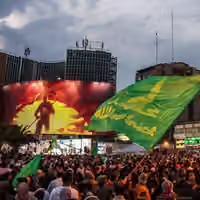
Separately, another image that circulated widely from the Monday rally showed demonstrators carrying a large Islamic Republic flag. In the photo, one person appears to be visibly inside the cloth, and some users pointed to irregularities in the flag’s details, including inconsistencies in the Arabic takbir rendered in white Kufic script along the edges of the green and red bands.
In another state-rally video, social media users focused on the color of trees in the background, arguing that the foliage appeared unusually vivid for mid-winter and did not match how Tehran’s street trees typically look at this time of year.
The government has a track record of recycling old footage and using AI-generated visuals, tactics that can help dominate the news cycle quickly.
In mid-2025, during a period of heightened regional conflict, state-run IRIB TV1 was shown in fact-check reports to have reused 2022 footage of Russian missile launches and presented it as Iranian strikes. State-run PressTV also published recycled images, including photos linked to a downed drone from the India-Pakistan border, which it labeled as an Israeli drone shot down over Iran.
State-affiliated social media accounts and some news broadcasts went further during the 12-day war with Israel, using high-fidelity graphics from the military simulator Arma 3 to claim “confirmed kills” of advanced fighter jets such as the F-35.
Such measures are framed by Iranian officials within the concept of soft war, an information and influence campaign in which the aim is not necessarily to persuade everyone indefinitely, but to create a temporary sense of superiority or confusion.
Iran has been under an almost complete internet blackout since January 8, when authorities largely cut off access amid nationwide protests, reducing connectivity to around 1 % of normal levels, according to internet monitoring group NetBlocks.

The UN human rights chief said on Tuesday he was "horrified" by rising violence by Iran’s security forces against peaceful protesters and condemned what he described as efforts to label demonstrators as terrorists to justify the crackdown.
"The killing of peaceful demonstrators must stop, and the labelling of protesters as ‘terrorists’ to justify violence against them is unacceptable," UN High Commissioner for Human Rights Volker Turk said in a statement read out by UN rights office spokesperson Jeremy Laurence.
"As we saw most recently in 2022, broad sections of the Iranian population have taken to the streets, demanding fundamental changes in the governance of their country," Turk said. "And once again, the authorities’ reaction is to inflict brutal force to repress legitimate demands for change."
"This cycle of horrific violence cannot continue," he said. "The Iranian people and their demands for fairness, equality and justice must be heard."
Turk said all killings, violence against protesters and other rights violations must be investigated under international standards and that those responsible should be held to account.

Several foreign influencers supportive of the Islamic Republic have published content portraying life in Tehran as calm despite an escalating deadly crackdown on protests across the country amid an internet blackout.
Video they share presents scenes of shopping, leisure and normal activity, offering images that contrast sharply with stark scenes of unrest and bloodshed emerging daily.
Foreign nationals in Iran typically operate under close monitoring, and public activity by visitors—particularly during periods of unrest—requires official permission. The influencers’ movements and access leaves little doubt that their ventures are state-sponsored or at least approved.
Among the most prominent figures is Maram Susli, a Syrian-Australian influencer known online as “Syrian Girl” or “Partisan Girl,” who has more than half a million followers on X.
Over the past several days, she has posted repeatedly in support of the Islamic Republic, framing Iran as the target of Western and Israeli misinformation.
In a post dated January 11 and captioned “Come shopping with me in Iran, Tehran,” Susli shared images showing herself without a hijab inside a Tehran shopping mall and the city’s Grand Bazaar.
“They are lying to you about Iran, and Iranian women, to sell you regime change for Israel!!!” she posted.
Counter-narrative
In another image, which she later acknowledged had been edited using artificial intelligence, Susli appears wearing a short-sleeved T-shirt and jeans in front of Tehran’s Azadi Tower while burning an Israeli flag.
Many users on social media noted that the images appeared to have been taken during summer months, while Tehran is currently experiencing winter conditions. Others pointed out that Susli appears to be posting from Australia, where she resides.
Another pro-Islamic Republic figure, Suleiman Ahmed, shared a video showing a woman burning an image of Reza Shah, the founder of the Pahlavi dynasty and grandfather of the exiled opposition figure Reza Pahlavi.
The post appeared to respond directly to a viral image circulating inside Iran of a young woman setting fire to a portrait of Supreme Leader Ali Khamenei and lighting a cigarette with it.
On Monday, other pro-Tehran influencers from various countries shared footage of state-organized rallies broadcast on Iranian state television, presenting the gatherings as evidence of mass public support—as the nation entered its fourth day of blackout.
Deadly crackdown
Fragmentary messages transmitted via Starlink connections and accounts from recent travelers indicate that security forces have carried out a widespread lethal crackdown.
Eyewitnesses and medics told Iran International the preliminary death tolls since protests began on Dec. 28 had ramped up in recent days to up to 2,000 people.
In an article published Sunday on Substack, the Berlin-based political analyst Hamidreza Azizi wrote that after January 8, Iranian authorities increasingly sought to frame the domestic unrest as a continuation of Iran’s recent confrontation with Israel, shifting the narrative from internal dissent to external conflict.
Officials have largely stopped referring to demonstrators as “protesters” or even “rioters,” instead describing them as “CIA- and Mossad-backed terrorists” and characterizing the unrest as “urban warfare.”
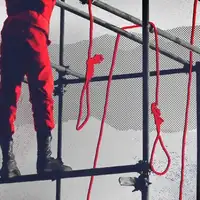
Senior officials, including the head of the judiciary, have said detainees will be prosecuted swiftly on charges of moharabeh or "waging war against God", an offense that carries the death penalty.
The contrast between the images circulating online and the conditions reported from inside Iran underscores the degree to which information itself has become a central battleground, as the state seeks to shape perceptions at home and abroad while restricting independent verification on the ground.

Several Iranian lawmakers warned that public dissatisfaction could worsen unless the government and parliament move to address people’s grievances.
Bafq lawmaker Mohammadreza Sabaghian said officials should not ignore public discontent.
"We should not forget that people have grievances that must be addressed by the government and parliament," he said. "Otherwise, what we have seen recently will happen again with a much steeper slope."
Other lawmakers echoed similar concerns.
Hossein Samsami, a lawmaker from Tehran, said poor economic decisions had fueled public anger, pointing to currency instability and price swings.
Separately, Mohammad Amir criticized management in the oil sector, accusing senior officials of treating state companies as personal property.
"Do you know that your managers in the oil companies think these firms are their father’s inheritance?" Amir said, addressing the oil minister.