• العربية
  • فارسی
Brand
  • Iran Insight
  • Politics
  • Economy
  • Analysis
  • Special Report
  • Opinion
  • Podcast
  • Live TV
  • Iran Insight
  • Politics
  • Economy
  • Analysis
  • Special Report
  • Opinion
  • Podcast
  • Live TV
  • Theme
  • Language
    • العربية
    • فارسی
  • Iran Insight
  • Politics
  • Economy
  • Analysis
  • Special Report
  • Opinion
  • Podcast
  • Live TV
All rights reserved for Volant Media UK Limited
volant media logo

Iran state media rally video draws online doubts as users flag altered footage

Jan 13, 2026, 10:55 GMT+0Updated: 12:13 GMT+0
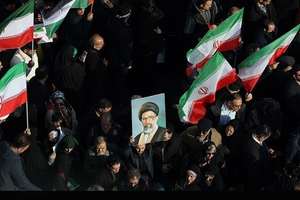
A pro-government rally in Tehran, January 12, 2026

A video circulated by Iran’s state media to promote pro-government rallies has gained wide traction online, with social media users questioning its authenticity and pointing to apparent inconsistencies, reflecting broader public mistrust of official messaging.

As nationwide protests continue, authorities have taken steps including staging government-organized countermarches, shutting down the internet, and tightening controls on the media to shape the narrative.

One clip aired by state media and presented as aerial helicopter footage of pro-government rallies in Tehran drew fresh questions after viewers pointed to anomalies, including wind visibly blowing the reporter’s hair while leaving his clothing and microphone seemingly unaffected.

IRIB News shared the video on X on Monday, writing: “Breaking | The first aerial video of the people of Tehran, the capital of Iran, marching in support of the Islamic Republic of Iran has been released.”

Readers added context on X saying the video appears to have been altered using chroma key (green screen), citing what they described as “unnatural subject edges, mismatched lighting and shadows, wind affecting only the reporter’s hair and not his clothing, a lack of realistic depth of field, and the absence of a seatbelt and headset," calling it a crude propaganda edit.

Multiple users also suggested the post showing large crowds appeared to recycle older material rather than depict new footage from the ongoing protests.

In a follow-up video, the reporter featured in the clip defended the broadcast footage as authentic. Some users, however, said they also saw inconsistencies in the new recording, and continued to question the original video’s provenance and how it was produced.

Separately, another image that circulated widely from the Monday rally showed demonstrators carrying a large Islamic Republic flag. In the photo, one person appears to be visibly inside the cloth, and some users pointed to irregularities in the flag’s details, including inconsistencies in the Arabic takbir rendered in white Kufic script along the edges of the green and red bands.

In another state-rally video, social media users focused on the color of trees in the background, arguing that the foliage appeared unusually vivid for mid-winter and did not match how Tehran’s street trees typically look at this time of year.

The government has a track record of recycling old footage and using AI-generated visuals, tactics that can help dominate the news cycle quickly.

In mid-2025, during a period of heightened regional conflict, state-run IRIB TV1 was shown in fact-check reports to have reused 2022 footage of Russian missile launches and presented it as Iranian strikes. State-run PressTV also published recycled images, including photos linked to a downed drone from the India-Pakistan border, which it labeled as an Israeli drone shot down over Iran.

State-affiliated social media accounts and some news broadcasts went further during the 12-day war with Israel, using high-fidelity graphics from the military simulator Arma 3 to claim “confirmed kills” of advanced fighter jets such as the F-35.

Such measures are framed by Iranian officials within the concept of soft war, an information and influence campaign in which the aim is not necessarily to persuade everyone indefinitely, but to create a temporary sense of superiority or confusion.

Iran has been under an almost complete internet blackout since January 8, when authorities largely cut off access amid nationwide protests, reducing connectivity to around 1 % of normal levels, according to internet monitoring group NetBlocks.

Most Viewed

Will Mojtaba Khamenei's absence help the Islamic Republic survive?
1
ANALYSIS

Will Mojtaba Khamenei's absence help the Islamic Republic survive?

2
EXCLUSIVE

Iran fuel reserves may run dry within weeks, sources say

3

Iran plotted to assassinate Netanyahu’s son in Florida – Newsmax

4
INSIGHT

Tehran debates waiting out Trump’s economic war

5

Iran flogs two women detained in January protests

Banner
Banner
Banner

Spotlight

  • Tehran debates austerity as US targets sanctions lifelines
    INSIGHT

    Tehran debates austerity as US targets sanctions lifelines

  • Three mediators in three days seek path back to Iran-US talks
    INSIGHT

    Three mediators in three days seek path back to Iran-US talks

  • ‘State-sponsored theft’: UN representative calls out rising seizures from Iran’s Bahá’ís

    ‘State-sponsored theft’: UN representative calls out rising seizures from Iran’s Bahá’ís

  • Will Mojtaba Khamenei's absence help the Islamic Republic survive?
    ANALYSIS

    Will Mojtaba Khamenei's absence help the Islamic Republic survive?

  • What Operation Economic Outcast means for Iran, and for everyone trading with
    INSIGHT

    What Operation Economic Outcast means for Iran, and for everyone trading with

  • Iran revives loyalty rallies after deadly crackdown on protesters

    Iran revives loyalty rallies after deadly crackdown on protesters