A pro-government rally in Tehran, January 12, 2026
Several foreign influencers supportive of the Islamic Republic have published content portraying life in Tehran as calm despite an escalating deadly crackdown on protests across the country amid an internet blackout.
Video they share presents scenes of shopping, leisure and normal activity, offering images that contrast sharply with stark scenes of unrest and bloodshed emerging daily.
Foreign nationals in Iran typically operate under close monitoring, and public activity by visitors—particularly during periods of unrest—requires official permission. The influencers’ movements and access leaves little doubt that their ventures are state-sponsored or at least approved.
Among the most prominent figures is Maram Susli, a Syrian-Australian influencer known online as “Syrian Girl” or “Partisan Girl,” who has more than half a million followers on X.
Over the past several days, she has posted repeatedly in support of the Islamic Republic, framing Iran as the target of Western and Israeli misinformation.
In a post dated January 11 and captioned “Come shopping with me in Iran, Tehran,” Susli shared images showing herself without a hijab inside a Tehran shopping mall and the city’s Grand Bazaar.
“They are lying to you about Iran, and Iranian women, to sell you regime change for Israel!!!” she posted.
Counter-narrative
In another image, which she later acknowledged had been edited using artificial intelligence, Susli appears wearing a short-sleeved T-shirt and jeans in front of Tehran’s Azadi Tower while burning an Israeli flag.
Many users on social media noted that the images appeared to have been taken during summer months, while Tehran is currently experiencing winter conditions. Others pointed out that Susli appears to be posting from Australia, where she resides.
Another pro-Islamic Republic figure, Suleiman Ahmed, shared a video showing a woman burning an image of Reza Shah, the founder of the Pahlavi dynasty and grandfather of the exiled opposition figure Reza Pahlavi.
The post appeared to respond directly to a viral image circulating inside Iran of a young woman setting fire to a portrait of Supreme Leader Ali Khamenei and lighting a cigarette with it.
On Monday, other pro-Tehran influencers from various countries shared footage of state-organized rallies broadcast on Iranian state television, presenting the gatherings as evidence of mass public support—as the nation entered its fourth day of blackout.
Deadly crackdown
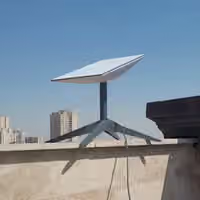
Fragmentary messages transmitted via Starlink connections and accounts from recent travelers indicate that security forces have carried out a widespread lethal crackdown.
Eyewitnesses and medics told Iran International the preliminary death tolls since protests began on Dec. 28 had ramped up in recent days to up to 2,000 people.
In an article published Sunday on Substack, the Berlin-based political analyst Hamidreza Azizi wrote that after January 8, Iranian authorities increasingly sought to frame the domestic unrest as a continuation of Iran’s recent confrontation with Israel, shifting the narrative from internal dissent to external conflict.
Officials have largely stopped referring to demonstrators as “protesters” or even “rioters,” instead describing them as “CIA- and Mossad-backed terrorists” and characterizing the unrest as “urban warfare.”
Senior officials, including the head of the judiciary, have said detainees will be prosecuted swiftly on charges of moharabeh or "waging war against God", an offense that carries the death penalty.
The contrast between the images circulating online and the conditions reported from inside Iran underscores the degree to which information itself has become a central battleground, as the state seeks to shape perceptions at home and abroad while restricting independent verification on the ground.