USCIRF Urges US Government To Support Iranian Protesters

The United States Commission on International Religious Freedom (USCIRF) urged the US government to assist Iranians amid worsening crackdowns on minorities and dissidents.

The United States Commission on International Religious Freedom (USCIRF) urged the US government to assist Iranians amid worsening crackdowns on minorities and dissidents.
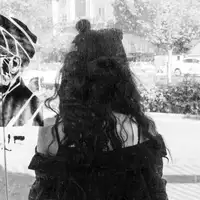
The USCIRF also emphasized the increased enforcement of compulsory hijab laws throughout 2023, along with increased surveillance and secret funding of a morality patrol to “harass uncovered women.”
“In 2023, religious freedom conditions in Iran remained extremely poor. Protests against mandatory hijab laws and other restrictions on freedom of religion or belief continued despite security forces’ violent repression … During the year, Iran executed at least eight protesters on religiously grounded charges,” read the commission’s 2024 annual report.
The report comes amid a crackdown on women from last month under the regime’s new initiative called Nour which has since seen social media flooded with footage of morality police using violence against women rebelling against the hijab, with allegations of police extortion, theft, and harassment prevalent.
Additionally, the report mentions the regime's suppression of religious minority groups, including Sunni Muslims and Baha'is. The latter lacks recognition as a legitimate religion by Iran's Shiite clerical regime, resulting in systematic and longstanding violations of Baha'is' rights in the country where only Islam, Judaism and Christianity are legally recognized religions.
“In 2023, authorities conducted individual and mass arrests of Baha’is across Iran, taking them to undisclosed locations and imposing excessively long prison sentences. Iranian security officials beat and brutalized Baha’is during raids and searches of private homes,” the report added.
It is estimated that there are approximately 300,000 Baha'is in Iran, one of the most persecuted minorities in the country. Harassment, forced displacement from residences and businesses, and unequal treatment in government employment and higher education are some of the challenges the group faces in the midst of the country's already deepening economic crisis.
USCIRF also pointed out that Iran's government continues to impose repressive policies abroad, including harassment of religious dissidents and targeting of Jewish sites. The report mentions three instances in Greece, Cyprus, and Brazil last year where the Islamic Revolutionary Guard Corps (IRGC) planned to attack Israeli targets.

On Teacher's Day, the Supreme Leader of the Islamic Republic often boasts that teachers "are the architects of Iran's future."
In Ali Khamenei's myopic worldview, this future likely entails today's young Iranians carrying on the torch of the 1979 Islamic Revolution, along with its tenets of political Islam.
But, the ruler's decades-long endeavor to indoctrinate and shape post-revolution generations of Iranians through the education system and dozens of state and religious propaganda outfits has failed, tarnishing the legacy of the Islamic Republic.
From widespread secularization to the populace's resolute anti-regime stance and protests, Iran has witnessed profound transitions over the past decade. In the process, it's evident that the people have turned their backs to the aspirations of both Supreme Leaders.
Today's youth, thoroughly detached from the state, often lead dual lives: experiencing pervasive oppression at schools and universities while encountering contrasting narratives of pre-revolutionary life at home. Despite crackdowns on internet access amid protests, Generation Z has found a window into life in the West, solidifying their rejection of their daily reality.
But, Khamenei can’t take all the credit for this rejection – after all, he is only the second Supreme Leader. His predecessor, Ruhollah Khomeini, did his share to try and forcibly imprint his worldview onto Iranian youth through school curriculums.

Khamenei, though, is unlikely to cease his efforts. Recently, the regime's education officials have hinted at several overhauls, indicating a further tightening of control over what is taught to children and students.
Here is a brief overview of what you need to know about the Islamic Republic’s quest to mold the future Iranian generations through schools and universities – and how they failed in their goal to establish Iran as a successful example of political Islam.
Islamic ‘Revolutionary’ Overhaul of Iran's Education System
Let’s take a step back.
For a period after the revolution in 1979, after the ouster of Iran’s monarch Shah Mohammad Reza Pahlavi, Iranian universities were shut down to completely alter the country’s education system according to the new government's ideological framework.
“Iran's new revolutionary authorities are engaged in a massive upheaval of the country's educational system from the primary grades through the universities,” reads a Washington Post article from 1980.
Literature textbooks would start with songs and slogans of the Islamic revolution – and instead of reading the great Persian poets, young children would learn chants like “Khomeini, Khomeini, you are light from God” and "This American shah should be executed."
In directives that could be called revisionism, history textbooks were rewritten to promote Islamic principles and so-called revolutionary values, with hardly any mention of the ancient kings of Persia.
The Islamic Republic’s first Supreme Leader Rouhollah Khomeini early on saw the potential in using the education system to pass on the ideals articulated with the birth of Islam 14 centuries ago.
Conversely, Shah Mohammad Reza Pahlavi’s “White Revolution” in the 60s and 70s had aimed to modernize Iran through means that included educational advances – including the deployment of teachers to villages that had no schools. The educational system was secular and mostly based on the European models, although students had a weekly hour about the White Revolution and modernization.
Schools Under Siege by Radical Indoctrination and Political Islam
Several studies show that over the last decades, the Iranian school curriculum for Grades 1 - 12, has promoted radical ideological indoctrination.
“Gender discrimination permeates Iran's textbooks. Women are accorded little importance as individuals, and their contributions to society outside the home are largely ignored. This attitude toward women is justified in the textbooks through numerous references to the Koran and the lives of prophets and Imams,” an extensive Freedom House study by Saeed Paivandi reads.
Textbooks advocate for the destruction of Israel, glorify child martyrdom and jihad, while fostering animosity toward the US. School materials also venerate past Iranian empires and promote false narratives in history textbooks.
“Iran largely continues to educate students for the prospect of a global war, and the spreading of the Islamist-Khomeinist revolution. There is a greater focus on Iran’s desire to export its global Islamic Revolution to the Arab Middle East compared to past curricula, with students encouraged to engage in militant activity to achieve Iranian hegemony,” a study by IMPACT-se read, which evaluated Iranian school materials for UNESCO peace and tolerance criteria.
Today, the regime continues its agenda to forcibly imprint political Islam on Iran’s youth, as evident by the growing influence of clerics and mosques in Iran's educational system – particularly with the recruitment of clerics as teachers, the establishment of mosque-centered and seminary-affiliated schools.
In line with Khamenei's anti-Western stance, measures have included prohibiting primary students from studying English and removing the requirement for older students to learn English. Arabic, however, remains compulsory "as the language of the Qur'an" for first and second-year secondary students, as per education officials.
In a nod to the government’s close economic dependance and ties to Beijing, Iranian authorities are reportedly seriously discussing the possibility of adding Chinese to the foreign languages taught in the nation's schools.
In some universities, the flags of Israel and the US are painted at entrances, a regime tactic to force students to walk over them as a sign of disrespect. Yet, social media videos often show Iranian students carefully avoiding to walk on the flags – highlighting their resistance and the failure of Khamenei's policies.
Schools, Universities as Battlegrounds Against Regime
Since 1979, schools and universities have emerged as focal points of unrest and opposition to the regime.
From prominent activist Majid Tavakoli’s historic speech in 2009 on the steps of Amir-Kabir University on the Day of students, bravely and directly attacking Supreme Leader Khamenei, to Iranian schoolgirls in 2022 ripping out images of Khomeini and Khamenei from their textbooks, while chanting “Death to the dictator” – the youth has shown their opposition to the regime’s doctrine.
Following the most recent round of nationwide anti-regime protests in 2022 and 2023, security forces unleashed a fresh wave of crackdowns at universities – using both verbal and physical assault to suppress the student opposition movements.
Amid protests, tens of thousands were arrested – including at least hundreds of students, teachers and professors.
The state has kept up its pressure and tactics to target teachers who joined demonstrations, including arrests, threats, expulsions, and forced retirements.
Regime's Repression Targets Iranian Schoolgirls
Girls’ school particularly became a focal point for unrest after the killing of Mahsa Jina Amini in September 2022, while she was in the custody of the so-called morality police for a hijab violation.
Amid and following those protests, thousands of schoolgirls were reportedly poisoned – with human rights activists and Iranian journalists blaming the regime in Tehran for another “form of gender-based attacks in the country.” Activists also suggest that the wave of attacks were a reprisal for the students’ participation in nationwide protests.
Strengthening those arguments, are the fact that it took Khamenei three months to comment on the attacks and that no arrests have been made in connection with the reported poisonings.
Last year, IranWire exclusively reported that Iranian schoolgirls have been forced to watch pornographic videos at school, aimed at deterring them from joining anti-government protests.
These sessions, conducted by the regime’s security forces, used the explicit content to argue that the protesters' demands would lead to moral decay.
“A cleric accompanied by a woman wearing a hijab and men in uniforms and civilian clothes visited the school and gathered students in 10th, 11th and 12th grades in a classroom. The visitors forced them to watch videos with porn scenes, including rapes and sexual intercourses between humans and animals, in a bid to convince the children that the protesters’ demands would lead to sexual decadence in Iran,” the report read.
The incident caused significant distress among the students, with one student suffering a nervous breakdown and needing to be hospitalized for two days.
Universities at the Heart of Regime’s Foreign Policy Strategy
Universities in Iran have also played an integral role in the Islamic Republic’s foreign policy strategy – which includes recruiting foreign students as ideological ambassadors. These students, often from influential families, are trained to promote Iran’s agenda globally under the guise of "cultural secretaries."
Iran’s Al-Mustafa International University plays a key role in this strategy, receiving substantial funding to educate foreign students and spread the regime’s Shiism worldwide. The institution has students from China, African countries and Latin America. The university has faced international sanctions for allegedly recruiting combatants for conflicts like the war in Syria.
Tehran’s Sharif University for instance, is also under international financial sanctions and known for its close ties to the military and being engaged in military and ballistic missile-related projects for the Iranian government.
Iran's Teachers Confront Hostility and a Failing Educational System
While the Supreme Leader has verbally revered the role of teacher’s in the country, teachers themselves have been met with hostility by the regime.
Their jobs have been hampered by severely low salaries, poor working and living conditions – and in return, placated with unfulfilled promises.
Recently, teacher’s have warned that the regime’s brand of ideological curriculum means a “dead end” for children – and that the authorities have failed in the education sector.
Teachers report that students are rejecting the mandated school curriculum, which is heavily dominated by ideological and religious content, even within science subjects. They say this has led to a significant loss of interest among students.
The regime's security forces have also often attacked gatherings of parents voicing their concerns about the significant qualitative shortcomings of the country's educational system, including a shortage of staff.
Among its shortcoming, an expert report published last year by the ‘reformist’ news outlet Etemaad, showed several significant qualitative deficiencies in Iran's education system – including a lack of justice in providing educational opportunities and a legitimacy gap, stemming from disparities between students' expectations and authorities' ideological perspectives.

Amid fears of more hostage-taking by the Iranian government, Tehran said expatriates can access an online service to check their “security” status.
According to Foreign Minister Hossein Amir-Abdollahian, Iranian expatriates can check online to see whether they will be arrested by the regime’s security forces in case they travel to their homeland as many have before them, such as high profile cases including British-Iranian Nazanin Zaghari-Ratcliffe, arrested on a visit home to her family in 2016 as part of a long-running debt Iran claimed the UK owed.
Though the online system has been in place for two years, the latest update comes amid growing concerns of Iranians abroad, many of whom have been subject to intimidation and threats to their lives from state security forces for supporting the 2022 uprising.
“The few Iranians who are at times worried about coming to Iran under the influence of certain hostile media outlets, can be assured of having trouble-free travel to the country by consulting the ‘Porseman-e Taradod’ system,” Amir-Abdollahian claimed.
Back in January, Alireza Bigdeli, Deputy Foreign Minister for Consular Affairs, vowed that the online system will provide “honest” answers to Iranian expatriates before their travel to the country.
Multiple cases of dual-nationals in Iranian prisons are ongoing such as Swedish-Iranian Ahmadreza Djalali, German-Iranians Nahid Taghavi and Jamshid Sharmahd and French-Iranian Fariba Adelkhah. In March, Iran demanded $2.5 billion for the release of US-Iranian Jamshid Sharmahd, who is on death row.
Iran has long used a policy of hostage taking to leverage power over Western governments. Last year, the United States allowed the release of $6 billion of Iran's blocked funds in South Korea in exchange for the release of five US-Iranian hostages.
As Iran becomes even more emboldened, it has expanded its hostage taking to public figures, including the arrest and imprisonment of an EU representative, Johan Floderus, amidst an ongoing dispute with Sweden which has sentenced a regime insider to life in prison on terror charges.

In a bid to deny the latest revelations about the state murder of teenager Nika Shakarami, Iran's judiciary released new pictures and claims about her death.
On Thursday, the judiciary's news agency, Mizan, released pictures of a woman's torso, concealing the head, without specifying the exact location, and claiming it belonged to Nika Shakarami. The so-called report cited the judge assigned to the case, who said that a day after Shakarami went missing, they got a call about a body found in a courtyard.
CCTV footage from an alley was also included in Mizan's report, supposedly showing Shakarami entering the building, but Nika's mother told BBC Persian she could not "under any circumstances, confirm that person is Nika."

The report details there being a backpack on a nearby roof and a mobile phone playing music when the body was found, suggesting she had jumped to her own death, but saying it was "impossible to identify the body because it had no identification."
Mizan claims security forces identified Shakarami after her mother reported that she was missing in September 2022 amid the uprising sparked by the death in morality-police custody of Mahsa Amini.
However, the report failed to mention why Shakarami had access to this seemingly random building since Iranian households' roofs are heavily protected and not easily accessible to strangers. Mizan claims that local residents heard a loud noise around 5am which they allegedly thought “was a cat,” a claim not readily accepted since a human body falling from the roof would have more impact.
As reported by the BBC on Tuesday, 16-year-old Shakarami was sexually assaulted and murdered by members of Iran's security forces after being arrested for having burnt her hijab in public.
Slamming the reports on Iran International, BBC, and CNN about the murder as “fake,” Mizan branded reports as “unverified news” and “fabricating false information.”
Four days after Amini was killed, videos appeared showing Shakarami setting fire to her hijab at a protest in Tehran. The young girl then suddenly vanished, authorities informing the family nine days later that her body had been found, and claiming that she had committed suicide.

The BBC report this week detailed how Shakarami was killed by Islamic Revolutionary Guard Corps (IRGC) forces, citing a "very confidential" document addressed to the organization’s commander-in-chief. Names of her killers and senior commanders who tried to conceal the truth were included.
The BBC report cites the teen was sexually assaulted in the back of the security guards van after her arrest. Quoting the forces themselves in the report, one of them “had his hands down her pants.”

According to the BBC's account, one officer physically restrained and assaulted Shakarami while she resisted, resulting in a fatal response with batons.
Shakarami's death came amid the biggest challenge to Iran's theocratic regime since the founding of the Islamic Republic.

According to Iran Human Rights, throughout the months-long rallies which began in September 2022, 551 protesters, including 68 children and 49 women, were killed by the security forces. There have also been 22 protesters who have died by suicide or under suspicious circumstances, among them four children and eight women.
On Thursday, the UN called the BBC investigation into the death of Shakarami “very very troubling”. The UN fact-finding mission in March announced the Iranian regime committed crimes against humanity by cracking down on the 2022 protests, such as by killing, incarcerating, torturing, and sexually assaulting protesters.

A fierce conflict between Iran’s presidential administration and the Parliament Research Center has erupted, especially concerning Iran's economic woes and challenges in other sectors.
The friction has extended beyond mere disagreement, igniting the media apparatuses of the presidential administration, and intensifying the standoff.
The Parliament Research Center conducts research projects to provide expertise to parliament members and its director is appointed by the Speaker, who is currently Mohammad Bagher Ghalibaf, a conservative politician and an IRGC veteran, with family ties to Supreme Leader Ali Khamenei.
As the newly elected parliament is set to convene this month, Ghalibaf finds himself in a battle of survival as Speaker, as hardliners in control of the administration have their eyes on the prize.
The Research Center has published reports across various sectors, including the economy, which have contradicted the Iranian government's claims, especially those of Iran's current hardliner President Ebrahim Raisi.
The Center’s reports on poverty and healthcare costs have drawn the ire of government officials, sparking a contentious debate between the two powers.
In the absence of independent governmental or private research institutions in the authoritarian regime, the occasional whiff of a critical report is welcomed by government critics and relatively independent journalists and experts.
One report by the Center highlighted the inadequacy of supportive budgetary policies in alleviating poverty, while another shed light on the alarming decrease in daily calorie consumption among Iranians, falling below global standards, and the country's subpar minimum wage.
These reports came amidst the Iranian government's assertions of significant progress and improvements in economic and social indicators, which independent experts frequently challenge, accusing the government of manipulating statistics to suit its narrative of success.
Moreover, the head of the Center, Babak Naghdari, warned that "if Trump assumes the US presidency, Iran should brace for intensified sanctions pressure" causing upheaval in asset markets.
In response, Iran Newspaper, the official daily newspaper of the government of Iran criticized the Center stating that its reporting is “biased”, and that parliamentarians and critics of the government are “Trump-fearing” and that their opinions are based on fantasies. Moreover, Iran Newspaper claimed that despite international challenges, the government successfully managed to stabilize the dollar's price, attributing this achievement to its policies.
Recently, state-affiliated ILNA, went as far as running a report accusing the research outfit of deviating from its intended purpose and becoming embroiled in political agendas. ILNA questioned the credibility of the Center and claimed that it is serving as a mouthpiece for “anti-revolutionary forces”, referring to media reports of Persian language media organizations in diaspora referencing the research reports by the Center in their reporting.
In response, Khane Mellat News Agency, associated with the Iranian Parliament, responded vehemently, defending the Center's integrity and independence.
These tensions come amidst the already struggling rial, with the dollar exceeding the 700,00 rials threshold in April and the country's inflation rate, now exceeding 52%, marking an 80-year high.

Sunni Kurd and political prisoner Anwar Khezri was executed on Wednesday after 14 years of imprisonment as Iran continues its wave of executions.
Human Rights Activists News Agency (HRANA) reported that the death sentence was carried out at Karaj's Ghezel-Hesar Prison.
Khezri was part of a case involving six other Sunni minority individuals, four of whom have already been executed.
They were detained in December 2009 on charges related to the murder of Abdolrahim Tina, the Imam of a mosque in Mahabad, who was assassinated by unidentified individuals in 2008.
The seven were charged with "acts against national security," "propaganda against the system," "membership in Salafi groups," and "waging war against God and corruption on earth."
After being initially sentenced to death in 2017, the Supreme Court overturned the verdict and referred the case to Branch 15 of the Revolutionary Court in Tehran for further review. They were, however, sentenced to death again by Branch 15 in June 2018. The Supreme Court confirmed the death sentences in February 2020.
In November, Ghasem Abasteh and Ayoub Karimi were executed, and in January, Davoud Abdollahi and Farhad Salimi. Following Khezri's execution, two others, Khosrow Besharat, and Kamran Sheykha, face the same fate.
According to Amnesty International, the seven Sunni Kurds were at risk of execution in February 2021 due to their unfair trials and tortured confessions.
Human rights organizations have repeatedly condemned the severe torture inflicted on the prisoners and the forced confessions extracted from them.
Minority Kurds in Iran have suffered massive persecution since the founding of the Islamic Republic. Of the more than 800 record high executions last year, huge numbers of those were Kurdish.