Check Online To See If You Are Wanted, Iran Warns Expatriates

Amid fears of more hostage-taking by the Iranian government, Tehran said expatriates can access an online service to check their “security” status.

Amid fears of more hostage-taking by the Iranian government, Tehran said expatriates can access an online service to check their “security” status.
According to Foreign Minister Hossein Amir-Abdollahian, Iranian expatriates can check online to see whether they will be arrested by the regime’s security forces in case they travel to their homeland as many have before them, such as high profile cases including British-Iranian , arrested on a visit home to her family in 2016 as part of a long-running debt Iran claimed the UK owed.
Though the online system has been in place for two years, the latest update comes amid growing concerns of Iranians abroad, many of whom have been subject to intimidation and threats to their lives from state security forces for supporting the 2022 uprising.
“The few Iranians who are at times worried about coming to Iran under the influence of certain hostile media outlets, can be assured of having trouble-free travel to the country by consulting the ‘Porseman-e Taradod’ system,” Amir-Abdollahian claimed.
Back in January, Alireza Bigdeli, Deputy Foreign Minister for Consular Affairs, vowed that the online system will provide “honest” answers to Iranian expatriates before their travel to the country.
Multiple cases of dual-nationals in Iranian prisons are ongoing such as Swedish-Iranian Ahmadreza Djalali, German-Iranians Nahid Taghavi and Jamshid Sharmahd and French-Iranian Fariba Adelkhah. In March, Iran demanded $2.5 billion for the release of US-Iranian Jamshid Sharmahd, who is on death row.
Iran has long used a policy of hostage taking to leverage power over Western governments. Last year, the United States allowed the release of $6 billion of Iran's blocked funds in South Korea in exchange for the release of five US-Iranian hostages.
As Iran becomes even more emboldened, it has expanded its hostage taking to public figures, including the arrest and imprisonment of an EU representative, Johan Floderus, amidst an ongoing dispute with Sweden which has sentenced a regime insider to life in prison on terror charges.

In a bid to deny the latest revelations about the state murder of teenager Nika Shakarami, Iran's judiciary released new pictures and claims about her death.
On Thursday, the judiciary's news agency, Mizan, released pictures of a woman's torso, concealing the head, without specifying the exact location, and claiming it belonged to Nika Shakarami. The so-called report cited the judge assigned to the case, who said that a day after Shakarami went missing, they got a call about a body found in a courtyard.
CCTV footage from an alley was also included in Mizan's report, supposedly showing Shakarami entering the building, but Nika's mother told BBC Persian she could not "under any circumstances, confirm that person is Nika."

The report details there being a backpack on a nearby roof and a mobile phone playing music when the body was found, suggesting she had jumped to her own death, but saying it was "impossible to identify the body because it had no identification."
Mizan claims security forces identified Shakarami after her mother reported that she was missing in September 2022 amid the uprising sparked by the death in morality-police custody of Mahsa Amini.
However, the report failed to mention why Shakarami had access to this seemingly random building since Iranian households' roofs are heavily protected and not easily accessible to strangers. Mizan claims that local residents heard a loud noise around 5am which they allegedly thought “was a cat,” a claim not readily accepted since a human body falling from the roof would have more impact.
As reported by the BBC on Tuesday, 16-year-old Shakarami was sexually assaulted and murdered by members of Iran's security forces after being arrested for having burnt her hijab in public.
Slamming the reports on Iran International, BBC, and CNN about the murder as “fake,” Mizan branded reports as “unverified news” and “fabricating false information.”
Four days after Amini was killed, videos appeared showing Shakarami setting fire to her hijab at a protest in Tehran. The young girl then suddenly vanished, authorities informing the family nine days later that her body had been found, and claiming that she had committed suicide.

The BBC report this week detailed how Shakarami was killed by Islamic Revolutionary Guard Corps (IRGC) forces, citing a "very confidential" document addressed to the organization’s commander-in-chief. Names of her killers and senior commanders who tried to conceal the truth were included.
The BBC report cites the teen was sexually assaulted in the back of the security guards van after her arrest. Quoting the forces themselves in the report, one of them “had his hands down her pants.”

According to the BBC's account, one officer physically restrained and assaulted Shakarami while she resisted, resulting in a fatal response with batons.
Shakarami's death came amid the biggest challenge to Iran's theocratic regime since the founding of the Islamic Republic.

According to Iran Human Rights, throughout the months-long rallies which began in September 2022, 551 protesters, including 68 children and 49 women, were killed by the security forces. There have also been 22 protesters who have died by suicide or under suspicious circumstances, among them four children and eight women.
On Thursday, the UN called the BBC investigation into the death of Shakarami “very very troubling”. The UN fact-finding mission in March announced the Iranian regime committed crimes against humanity by cracking down on the 2022 protests, such as by killing, incarcerating, torturing, and sexually assaulting protesters.

A fierce conflict between Iran’s presidential administration and the Parliament Research Center has erupted, especially concerning Iran's economic woes and challenges in other sectors.
The friction has extended beyond mere disagreement, igniting the media apparatuses of the presidential administration, and intensifying the standoff.
The Parliament Research Center conducts research projects to provide expertise to parliament members and its director is appointed by the Speaker, who is currently Mohammad Bagher Ghalibaf, a conservative politician and an IRGC veteran, with family ties to Supreme Leader Ali Khamenei.
As the newly elected parliament is set to convene this month, Ghalibaf finds himself in a battle of survival as Speaker, as hardliners in control of the administration have their eyes on the prize.
The Research Center has published reports across various sectors, including the economy, which have contradicted the Iranian government's claims, especially those of Iran's current hardliner President Ebrahim Raisi.
The Center’s reports on poverty and healthcare costs have drawn the ire of government officials, sparking a contentious debate between the two powers.
In the absence of independent governmental or private research institutions in the authoritarian regime, the occasional whiff of a critical report is welcomed by government critics and relatively independent journalists and experts.
One report by the Center highlighted the inadequacy of supportive budgetary policies in alleviating poverty, while another shed light on the alarming decrease in daily calorie consumption among Iranians, falling below global standards, and the country's subpar minimum wage.
These reports came amidst the Iranian government's assertions of significant progress and improvements in economic and social indicators, which independent experts frequently challenge, accusing the government of manipulating statistics to suit its narrative of success.
Moreover, the head of the Center, Babak Naghdari, warned that "if Trump assumes the US presidency, Iran should brace for intensified sanctions pressure" causing upheaval in asset markets.
In response, Iran Newspaper, the official daily newspaper of the government of Iran criticized the Center stating that its reporting is “biased”, and that parliamentarians and critics of the government are “Trump-fearing” and that their opinions are based on fantasies. Moreover, Iran Newspaper claimed that despite international challenges, the government successfully managed to stabilize the dollar's price, attributing this achievement to its policies.
Recently, state-affiliated ILNA, went as far as running a report accusing the research outfit of deviating from its intended purpose and becoming embroiled in political agendas. ILNA questioned the credibility of the Center and claimed that it is serving as a mouthpiece for “anti-revolutionary forces”, referring to media reports of Persian language media organizations in diaspora referencing the research reports by the Center in their reporting.
In response, Khane Mellat News Agency, associated with the Iranian Parliament, responded vehemently, defending the Center's integrity and independence.
These tensions come amidst the already struggling rial, with the dollar exceeding the 700,00 rials threshold in April and the country's inflation rate, now exceeding 52%, marking an 80-year high.

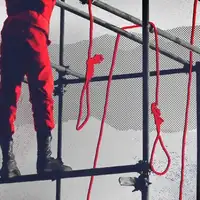
Sunni Kurd and political prisoner Anwar Khezri was executed on Wednesday after 14 years of imprisonment as Iran continues its wave of executions.
Human Rights Activists News Agency (HRANA) reported that the death sentence was carried out at Karaj's Ghezel-Hesar Prison.
Khezri was part of a case involving six other Sunni minority individuals, four of whom have already been executed.
They were detained in December 2009 on charges related to the murder of Abdolrahim Tina, the Imam of a mosque in Mahabad, who was assassinated by unidentified individuals in 2008.
The seven were charged with "acts against national security," "propaganda against the system," "membership in Salafi groups," and "waging war against God and corruption on earth."
After being initially sentenced to death in 2017, the Supreme Court overturned the verdict and referred the case to Branch 15 of the Revolutionary Court in Tehran for further review. They were, however, sentenced to death again by Branch 15 in June 2018. The Supreme Court confirmed the death sentences in February 2020.
In November, Ghasem Abasteh and Ayoub Karimi were executed, and in January, Davoud Abdollahi and Farhad Salimi. Following Khezri's execution, two others, Khosrow Besharat, and Kamran Sheykha, face the same fate.
According to Amnesty International, the seven Sunni Kurds were at risk of execution in February 2021 due to their unfair trials and tortured confessions.
Human rights organizations have repeatedly condemned the severe torture inflicted on the prisoners and the forced confessions extracted from them.
Minority Kurds in Iran have suffered massive persecution since the founding of the Islamic Republic. Of the more than 800 record high executions last year, huge numbers of those were Kurdish.

A pro-government ideologue in Iran says the Islamic Republic can use the potential of pro-Palestinian protesting students at US campuses to form a new proxy group in America.
“I think the potential to repeat in the US what the Islamic Republic did in Lebanon is much higher. Our Hezbollah-style base in the US is much larger than what we have in Lebanon,” said University of Tehran professor Foad Izadi in an interview with Iran’s state TV.
Iran played a major role in the foundation of the Lebanese Shiite militant group Hezbollah in the early 1980s. Since then, the group has been involved in attacks against Israeli and American targets in the Middle East and elsewhere.
Izadi urged the Iranian government to engage “on an operational level” with protesting students in the US and try to “recruit connections and build networks” among them. “We are watching the demonstrations and we like what we see, but it should not end with this,” he stressed.
The commentator called the pro-Palestinian students “our people,” further saying that “if tensions between Iran and the US rise tomorrow or the day after, these are the people who should take to the streets to support Iran.”
On Wednesday, Supreme Leader Ali Khamenei voiced support for pro-Palestinian protests at American campuses.
“Despite the extensive efforts of Zionists and their American and European supporters, the issue of Gaza remains the top global concern. Protests against the crimes of the Zionist regime in American universities and their expansion to European universities are signs of the continued sensitivity of public opinion worldwide to the Gaza issue,” he remarked.

Iran’s Foreign Ministry announced that the country has imposed sanctions against five entities and seven individuals in the US over their support for Israel.
The ministry claims the targets have been allegedly involved in “terrorist acts and gross violations of human rights through their support for the Zionist regime’s brutal actions against Palestinians, particularly the people in the Gaza Stip.”
Among the sanctioned entities are the Lockheed Martin Corporation, General Dynamics Corporation and Skydio, which Iran’s Foreign Ministry claims have armed Israel in its war against the Iran-backed Palestinian militants, Hamas and Palestinian Islamic Jihad.
Chevron Corporation has also been targeted due to its “cooperation with Israel in the drilling of gas wells in the eastern Mediterranean,” the statement said, further adding that an intelligence company called Kharon has been banned over collaborating with the US Treasury and trying to cut off Hamas and Islamic Jihad’s access to the cryptocurrency exchange network.
US government reports reveal that the IRGC has been using cryptocurrency in recent years to fund Palestinian militant groups. Families of victims of the Hamas terror attacks of October 7 and the families of hostages taken to Gaza have sued cryptocurrency exchange Binance for its role in funding the terror group between 2017 and 2023.
Iran has also slapped sanctions on seven Americans. Among them is Jason Greenblatt, the former executive vice president and chief legal officer to Donald Trump, Michael Rubin, a senior fellow at the American Enterprise Institute, Clifford D. May, the president of the Foundation for Defense of Democracies and Bryan Patrick Fenton, the commander of the US Special Operations Command.
It is as yet unclear how these sanctions will be imposed by Iran, which itself is already heavily sanctioned for its nuclear program, rights abuses and military support for Russia's war on Ukraine.
Also included is Brad Cooper, a US Navy vice admiral, Gregory J. Hayes, the CEO of RTX defense corporation, and Jason Brodsky, Policy Director at United Against Nuclear Iran (UANI), who has been a vocal critic of Tehran.
Hamas’s deadly October 7 invasion of Israel claimed the lives of 1,200 mostly civilians and saw over 250 taken hostage to Gaza. The invasion was the most deadly single day for Jews since the Holocaust. It triggered the longest and bloodiest Gaza war since Hamas took control of the strip in 2007.
For months after the start of the Israel-Hamas war, the Iranian government avoided direct involvement in the conflict and used its proxies such as Yemeni Houthis, Hashd al-Shaabi, and Hezbollah to target Israeli and American targets in the region.
However, on April 13, Iran launched its first ever direct offensive against Israeli territory with more than 350 drones and cruise and ballistic missiles, 99% of which were downed, according to the Israeli army. The attack was in response to an alleged air strike by Israel killing a senior Quds Force commander and IRGC officials in Damascus last month.
In response to Iran’s operation, the US and the EU imposed new sanctions against Iran’s missile and drone programs, though Iran remains defiant in the face of global sanctions.
There have also been calls from both Iranian dissidents and international figures to designate the IRGC as a terrorist organization over its role in suppressing dissent in Iran and orchestrating attacks abroad.