Trump says Iran wants talks but it’s 'too late'
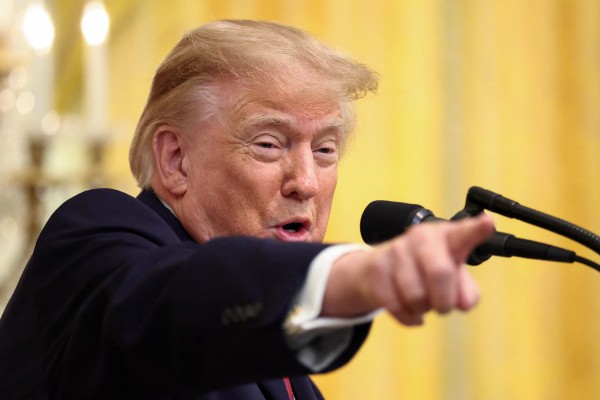
President Donald Trump said on Wednesday that Iran was seeking negotiations but warned it was “too late” as US-led strikes intensified in a widening conflict now entering its sixth day.

President Donald Trump said on Wednesday that Iran was seeking negotiations but warned it was “too late” as US-led strikes intensified in a widening conflict now entering its sixth day.

The White House says Iran rejected a US proposal to establish a joint civilian nuclear program with American investment in exchange for dismantling its uranium enrichment infrastructure before Washington and Israel launched strikes on the country.
A senior member of the European Parliament is calling for a fundamental shift in Europe’s approach toward Iran, arguing that continued negotiations with the Islamic Republic are no longer defensible after Tehran’s deadly crackdown on protesters.

Reports in major outlets that Tehran has floated a “commercial bonanza” to the Trump administration should be understood less as an investment roadmap than as a survival strategy.

The anxiety splashed across the front pages of Tehran outlets on Thursday did little to quiet the bluffs, threats and illusions that have defined a week of anticipation over possible Israeli or US strikes on Iran.

The mood in Tehran on the eve of the third round of talks with Washington appears to be a mix of guarded hope and tightening anxiety.

Iran said on Monday it does not support an interim agreement in talks with the United States and is seeking a swift, result-oriented deal focused on lifting sanctions and addressing nuclear issues, as the two sides prepare for another round of negotiations within days.

Tehran’s posture increasingly resembles that of an embattled state that sees greater odds of survival in confrontation than in compromise—one that views a decisive clash not as catastrophe, but as a potential turning point.

The second round of Iran–US nuclear talks was met with a muted and often critical reaction in Tehran, where official outlets questioned Washington’s commitment after American negotiators left Geneva within hours despite Iran’s offer to continue discussions.

The latest round of Iran-US talks in Geneva on Tuesday would likely not have taken place without sustained pressure from regional powers that leveraged their close relations with Washington to help avert a wider war.

Iran, the United States and their Omani mediators struck cautiously optimistic notes on Tuesday after a second round of nuclear talks in Geneva, with officials on all sides pointing to progress while emphasizing that significant hurdles remain.

The United States and Iran have begun indirect talks in Geneva on Tuesday under Omani mediation, with the threat of military action hanging over diplomacy and both sides still far apart on uranium enrichment and missiles.

Turkey’s foreign minister has warned that expanding nuclear talks with Iran to include its ballistic missile program and regional activities would risk triggering another war, even as Washington continues to press for a broader agreement.

Israel’s Prime Minister Benjamin Netanyahu believes only direct engagement with US President Donald Trump can prevent a limited nuclear deal with Iran—and turn this moment into a decisive blow against the Islamic Republic.

The message coming out of Tehran on the anniversary of the 1979 Islamic Revolution was that Iran is willing to negotiate with the United States, though it remains unclear how its declared “red lines” can be squared with Washington’s demands.

Israeli Prime Minister Benjamin Netanyahu’s hastily advanced trip to Washington this week underscores the rising stakes surrounding renewed diplomacy between Iran and the United States.

Tehran appears to be speaking in two voices about diplomacy with Washington: one calibrated for foreign capitals, the other aimed inward, shaped by fear, factionalism, and propaganda.

Iran’s foreign minister said on Sunday that Tehran’s right to enrich uranium on its own soil must be recognized for nuclear talks with the United States to succeed, two days after the two sides held indirect discussions in Muscat aimed at testing whether diplomacy can be revived.

As Iranian and US negotiators met in Oman on Friday to discuss the framework for renewed talks, Friday prayer leaders across Iran used their sermons to dismiss the process, expressing near-uniform pessimism about the prospects for diplomacy.

As Iran and the US convene in Oman for bilateral talks, reports suggest Muslim-majority states are pushing for a framework that would include a non-aggression pact, curbs on Iran’s nuclear program and its arms support for allied militants, and reassurances on its missiles.

A day of confusion, warnings and behind-the-scenes maneuvering ended with a fresh announcement that US–Iran talks were back on track, underscoring how fragile and contested the diplomatic process remains on the eve of a possible meeting.
Tehran appeared noticeably downbeat about the outcome of Thursday’s negotiations with Washington in Geneva, with signs of disappointment emerging first on the website of the government’s news agency.