Iran’s foreign minister, Abbas Araghchi, said the negotiations had produced “good progress” and opened a potential path toward a future agreement. But he also warned that diplomacy could not advance under military pressure, calling on Washington to desist from threats of force.
“Different ideas have been presented, these ideas have been seriously discussed,” Araghchi told Iranian media after the talks. He said the two sides had reached a general understanding on key “guiding principles” and now intended to begin working on the text of a potential agreement.
Oman’s foreign minister said there was “much work yet to be done,” but that both sides had left Geneva with “clear next steps” ahead of the next round of negotiations.
Axios quoted an unnamed US official as saying the talks had gone largely as expected, and that Iranian negotiators said they would return within two weeks with proposals aimed at addressing some of the gaps between the two sides.
The negotiations come amid persistent tensions and military signaling. The United States has bolstered its military presence in the Middle East in recent weeks, while President Donald Trump has warned of severe consequences if Iran fails to reach an agreement.
'Slap' against US military
Iran’s Supreme Leader Ali Khamenei struck a defiant tone as the talks unfolded, saying the United States would never succeed in toppling the Islamic Republic.
“The US president said in one of his recent remarks that for 47 years America has been unable to eliminate the Islamic Republic,” Khamenei said Tuesday. “I say: You, too, will not be able to do this.” He added that even “the strongest army in the world may at times receive such a slap that it cannot rise.”
Despite those pressures, Araghchi said a “new window of opportunity” had opened and expressed hope the talks could lead to a sustainable solution that recognizes Iran’s rights while addressing concerns over its nuclear program.
Still, fundamental differences remain.
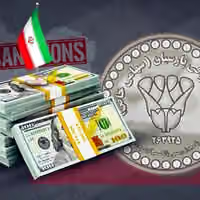
Washington has been pushing to broaden discussions beyond Tehran’s nuclear activities to include its missile program, but Iranian officials say they are willing to negotiate only limits on nuclear work in exchange for sanctions relief.
Iran insists its nuclear program is peaceful, though it has enriched uranium far beyond levels needed for civilian power. The United States and its allies believe Iran is seeking the capability to build nuclear weapons, a charge Tehran denies.
Both sides are expected to exchange documents in the coming weeks before scheduling the next round of talks, with officials emphasizing that any final agreement remains uncertain.