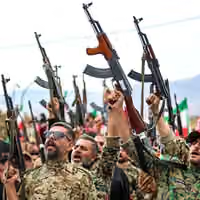
The signals of flexibility were buried beneath the usual chants of defiance and confrontational theatrics at the annual rally marking the foundation of the Islamic Republic. Coffins bearing photos of US officials were paraded through the streets. An effigy of Jeffrey Epstein was set on fire.
The messaging unfolded as Israeli Prime Minister Benjamin Netanyahu met President Donald Trump at the White House—a meeting that could reinforce calls in Washington for a harder line on Tehran.
Two dozen Western reporters were in Tehran. Some appeared delighted to meet Iranian schoolchildren speaking fluent English; others were charmed by Persian cuisine and elderly men eager to shake hands. Few seemed inclined to recall that, just four weeks earlier, thousands of protesters had reportedly been killed in those same streets.
Away from the orchestrated celebrations and from the state-approved “fixers” guiding journalists through carefully staged displays of loyalty, senior officials blended familiar defiance with cautious hints of compromise.
Foreign Ministry spokesman Esmail Baghaei said Iran was ready for talks about the level of enrichment and even the extent of its stockpile of enriched uranium.
“If the negotiations are meant to bear results, there needs to be some kind of compromise,” he added, acknowledging that “this is the difficult part of the job.”
Ali Larijani, secretary of the Supreme National Security Council, struck a similarly measured tone, telling Al Jazeera that talks in Oman had been positive while reiterating Tehran’s position that conflicts with Washington’s demand for stricter limits.
“There is no talk of zeroing out enrichment,” he said. “We need it in the fields of energy and pharmaceutical manufacturing.”
The comments followed Larijani’s visits to Oman and Qatar, where he reportedly delivered a red folder that some analysts suggested could contain Khamenei’s response to a message from President Trump.
Photographs show him handing a letter to the Sultan of Oman and later presenting a red envelope in Doha, despite aides’ denials that any formal message was conveyed.
In an interview with Oman’s state television, Larijani offered an unusually restrained assessment of US policy, saying Washington’s framework “has become more realistic.”
Whether these tonal shifts signal a durable change in Iran’s messaging or a tactical adjustment on a symbolic day remains unclear.
Another unusual development added to the speculation. For decades, Supreme Leader Ali Khamenei has marked the anniversary by meeting a delegation of Iranian Air Force officers, echoing a similar gathering with Ayatollah Ruhollah Khomeini in 1979.
This year, he skipped the meeting and instead sent the officers to pay their respects to Hassan Khomeini, the founder’s grandson and presumed heir—a gesture that reignited the never-ending whispers of succession.