Security agents have summoned relatives and demanded they describe those killed as "martyrs," a designation that would place their deaths within the Islamic Republic's official narrative of the protests.
Families refusing the designation and instead using the Persian term "Javidnam," meaning "forever remembered," have been warned they could be placed on lists of "terrorists," according to sources close to them.
The term is used by bereaved families to commemorate those killed during protests without accepting the authorities' account of their deaths.
Authorities have also offered certain benefits to families willing to accept the official designation and instructed relatives not to hold anniversary commemorations.
Bereaved family faces repeated security summons
Security agencies have continued summoning and threatening a bereaved family despite serious health problems affecting several of its members, one of them told Iran International.
The family member, whose identity is being withheld for security reasons, said their mother developed heart problems after suffering severe psychological distress while searching for the body of a loved one at Kahrizak.
Their father suffered a stroke in October, while the family member has an autoimmune disease.
Despite these circumstances, the individual has been detained several times in recent months and was summoned to a security agency in November.
During the latest summons, agents demanded that the family describe their slain loved one as a "martyr" and abandon plans for any anniversary ceremony.
Other families have faced similar restrictions.
Iran International previously reported that authorities opened a case against Sanaz Banisaeed, the wife of Mohsen Rashidi-Khaniabadi, who was killed during the January protests, and blocked her Instagram account.
The family of Iman Asadi, another person killed during the protests, has also been summoned repeatedly and warned against posting on social media, according to information received by Iran International.
Pressure continues after protest victim's mother dies
Security pressure on the family of Behboud Hassanzadeh has continued even after the death of his mother, Afrouz Eslampanah, a source close to the family told Iran International.
Authorities have blocked the SIM cards belonging to Hassanzadeh's brother and summoned him several times in recent weeks.
Security agents also warned him against holding memorial gatherings or anniversary ceremonies and demanded that the family recognize Hassanzadeh as a "martyr," according to the source. Eslampanah died on October 30.
Hassanzadeh, 37, a father of two daughters, was shot while helping an injured person during protests on January 8 in Kuhchenar, Fars province. He died two days later.
Pressure to accept official account
Efforts to secure families' acceptance of the government's account of the protest deaths began months before the approaching anniversary.
Authorities had, in some cases, made the return of protesters' bodies conditional on families signing undertakings accepting the official account of how their relatives were killed.
In one case, representatives of the Revolutionary Guards, the governor's office and the education department visited the family of Bahar Shahmehri, a 17-year-old student killed during protests in Neyshabur, northeast of Iran.
The representatives told the family that accepting the official "martyr" designation would be in their interests, a source close to the family told Iran International. Shahmehri's family refused.
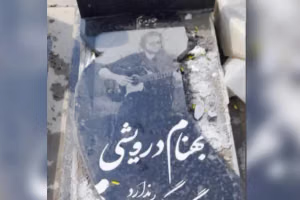
Earlier reports also documented damage to and destruction of gravestones belonging to several people killed during the protests.
Bereaved families regard such actions as attempts to prevent them from preserving the memory of their loved ones.
Despite repeated summons and security warnings, families continue to demand accountability and answers about the deaths of their relatives, according to sources close to them.