Iran’s war threats now reach Europe, from Cyprus to Britain
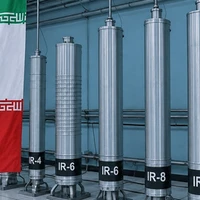
Missiles are displayed beside a large portrait of Iran's Supreme Leader Mojtaba Khamenei and images of military figures on a street in Tehran, Iran.
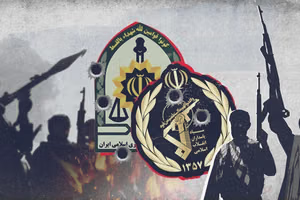
Iranian military officials and hardline lawmakers have warned that a new confrontation with the United States could extend beyond the Middle East, while conservative media have begun identifying American military facilities in Europe as potential targets.
The warnings follow a statement attributed to Supreme Leader Mojtaba Khamenei on Saturday, ordering Iran's armed forces to prepare for retaliation without geographic restrictions and expand their list of potential US and Israeli targets.
The hardline daily Kayhan went further, arguing that American and NATO facilities "in the heart of Europe" could be targeted if US and Israeli attacks on Iran resume.
The newspaper named military facilities in Cyprus, Greece, Romania, Albania, Italy and Britain, as well as the joint US-British base on Diego Garcia in the Indian Ocean.
Military commanders signal broader reach
Iran's Army spokesman, Mohammad Akraminia, said renewed fighting could spread beyond the countries and territories involved in previous rounds of the war.
"In the recent war, the conflict extended from the occupied territories to US bases in regional countries, but if another attack takes place, the geography of the war could expand beyond West Asia," he said.
He added that Iran was updating its list of potential US and Israeli targets.
A senior Basij commander, Ghassem Ghorayshi, also said Iran's armed forces would no longer be bound by previous limits on missile range, target selection or the scale of operations.
"In the past, target selection and missile ranges were restricted," he said, attributing those limits to decisions made under former Supreme Leader Ali Khamenei.
"From now on, the armed forces will have no restrictions on striking targets, determining missile range or the scale of missile operations," he added.
The remarks do not by themselves establish that Iran has developed new long-range missiles or formally changed its military doctrine.
Iranian newspapers identify European bases
A separate report in the newspaper Hamshahri also raised the possibility of targeting American military infrastructure in Europe, including air bases, logistics centers and support facilities.
The newspaper cited speculation that Iranian missiles could reach targets 4,000 to 5,000 kilometers away, significantly beyond the roughly 2,000-kilometer range Iran previously described as a self-imposed limit.
However, those longer-range estimates remain disputed, and the ability to extend a missile's theoretical range does not necessarily establish its accuracy, payload or operational effectiveness.
The reports reflect a broader shift in Iranian rhetoric toward threatening American military infrastructure outside the Middle East.
Western defense experts have offered more cautious assessments of Iran's long-range strike capabilities. The Washington-based Center for Strategic and International Studies lists Iran's principal ballistic missiles with ranges generally around 2,000 kilometers, with some variants potentially reaching 3,000 kilometers.
Britain’s Royal United Services Institute has said strikes as far as the UK may be theoretically possible, but would involve smaller, less accurate warheads traveling through defended airspace.
Lawmakers warn of wider conflict
Hassan Ghashghavi, spokesperson for parliament's National Security and Foreign Policy Committee, warned that renewed fighting could spread far beyond the countries already affected by the war.
"I don't want to use the term World War III, but the geography of the war would be almost on the scale of World War III," he told Iranian media.
He said another conflict would be considerably wider than the previous 12-day and 40-day rounds of fighting.
Ghashghavi also suggested that Iranian retaliation could affect civilian infrastructure and everyday life in countries involved in attacks on Iran.
"If they leave your people in darkness, you should leave their people in darkness too," he said.
In another warning, Tehran lawmaker Kamran Ghazanfari said Iran could retaliate against US assets in Europe and potentially on American territory if Washington used military bases in Arab states to attack Iran.
Ghazanfari also speculated that Iran might already possess nuclear weapons, without providing evidence. Tehran has not officially announced that it possesses a nuclear weapon.
Tehran links warnings to negotiating demands
The military warnings have come alongside renewed Iranian demands in negotiations aimed at ending the war.
Parliament Speaker Mohammad Bagher Ghalibaf said Tehran had delivered a "firm and rational response" to Washington and that "the ball is now in America's court" to prevent renewed fighting.
Iran's armed forces chief, Ali Abdollahi, separately outlined five conditions for lasting regional security: an end to fighting on all fronts, particularly in Lebanon and Gaza; the lifting of sanctions and release of frozen assets; war reparations; recognition of Iranian authority over the Strait of Hormuz; and guarantees against renewed attacks under a new regional security framework.
The demands come amid diplomatic efforts involving Qatar and other mediators, although a senior Iranian official told Reuters on Tuesday that Tehran and Washington remained far from an agreement.
Amirhossein Maleki and Amirhossein Ebrahimi were hanged in connection with January protests in Isfahan, Iranian authorities said on Tuesday.
Mizan, the judiciary-linked news agency, alleged that the protesters had been armed and that the Supreme Court had upheld their death sentences.
The men are among 12 defendants sentenced to death in the Alikhani Square case. The case stems from protests in Isfahan on January 8, during which Iranian authorities accused defendants of involvement in the deaths of four security personnel, weapons offenses, destruction of property and arson.
Seven other defendants in the case, including two Afghan nationals, have been executed since July 19, Iran Human Rights said. Among them were Alireza Raisi and Alireza Sepahi, who were put to death on October 5.
UN Special Rapporteur Mai Sato highlighted the case during an October 28 address to the UN General Assembly’s Third Committee as an example of Iran’s mass trials of protesters.
Shahrzad Shahbazi, a lawyer representing defendants in the case, has previously disputed the official account, saying none had formally been charged with murder and the alleged killings had not been tried.
Iranian authorities have long used broadly worded charges such as espionage, acting against national security, armed rebellion, enmity against God and corruption on earth to crush dissent and remove political opponents.
Human rights organizations say these labels are routinely applied to protesters, dissidents and political prisoners to portray them as security threats and provide a legal pretext for execution.
Amnesty International, Human Rights Watch and UN experts have documented repeated cases in which such convictions were issued by revolutionary courts after grossly unfair or highly expedited proceedings, with defendants denied meaningful access to lawyers and verdicts based on torture-tainted forced confessions.
Rights groups therefore describe many executions carried out under these charges as arbitrary and politically motivated, warning that the authorities’ allegations should not be treated as independently established facts.
Several employees at subsidiaries of Bank Pasargad, one of Iran's largest private banks, have been fired or barred from their workplaces amid tighter enforcement of the country's mandatory hijab laws, people familiar with the matter told Iran International.
Bank Pasargad CEO Majid Ghasemi dismissed six employees during an unannounced visit to one of the bank's subsidiaries on October 27 over their clothing, sources told Iran International.
During another visit the following day, several female employees were dismissed for wearing jackets and skirts, casual clothing or trainers, while a male employee was fired for wearing jeans, according to one of the sources.
Another person working at a company under Fanap Holding, a technology group linked to Bank Pasargad, said a company executive was forced to resign after refusing instructions to impose stricter dress code restrictions.
Employees at several companies, including Fanap, Fanap Infrastructure, Fanap Telecom, Dotin and Pasargad Electronic Payment, received notices warning that entry to workplaces from October 31 would be conditional on compliance with new clothing requirements.
The notices banned women from wearing headscarves, short or open-front manteaus, women's trouser suits and T-shirts. Some employees were subsequently denied entry over their clothing, the sources said.
One source said two or three colleagues were among those dismissed but were reluctant to speak publicly for fear of losing their severance payments and final employment settlements.
The reported dismissals come amid renewed pressure on Iranian businesses to enforce compulsory hijab rules, which require women to cover their hair and observe Islamic dress standards in public.
On October 30, Tehran Prosecutor Ali Salehi warned that managers of government agencies could face legal action for failing to enforce hijab regulations, according to the judiciary-affiliated Mizan news agency. He also called for increased monitoring of businesses, clothing retailers and public venues.
Iranian authorities have increasingly targeted businesses over alleged dress code violations. In August, Iran International documented at least 42 closures of cafes, restaurants, shops, sports clubs and other establishments across 17 cities in just three weeks.
More recently, Tehran prosecutors opened a case against organizers of the Tehran Art Fair over alleged violations of the country’s hijab laws, while the event's ticketing website and social media account were blocked.
Iran's compulsory hijab requirements have remained a point of contention since the 2022 protests sparked by the death of Mahsa Amini in morality police custody, with growing numbers of women appearing in public without headscarves despite the threat of penalties.
A US Navy MH-60R Sea Hawk takes off from the flight deck of the USS George Washington as the aircraft carrier supports enforcement of the US blockade against Iran, October 31, 2026. (CENTCOM/X)
Some Arab states have warned Iran that they could retaliate individually or collectively if Tehran targets their infrastructure, as Persian Gulf countries prepare for the possibility of renewed US strikes and Iranian retaliation, the Wall Street Journal reported Monday.
Qatar and the United Arab Emirates have been conducting security drills, including at airports, while some attendees at a major energy conference in Abu Dhabi were cutting short their stays on government advice. Schools in Riyadh were also set to remain online this week as Saudi Arabia faces attacks by the Iran-backed Houthis. UAE presidential adviser Anwar Gargash said his country hoped diplomatic efforts would succeed but was “braced for the worst.”
The warnings come against a backdrop of continuing attacks around the Strait of Hormuz. A tanker was struck by two unidentified projectiles near a Saudi port late Sunday, while another vessel was hit by an unidentified projectile off Oman early Monday. Iranian state media also reported Monday that an oil tanker caught fire after striking a mine in the eastern part of the strait.
The heightened preparations coincide with diplomatic efforts to prevent renewed fighting. Iranian negotiators left Doha on Sunday, with a draft proposal still circulating for feedback and a follow-up meeting possible. An Iranian source cited by the IRGC-affiliated Fars news agency said Monday that indirect communications with Washington had produced no diplomatic breakthrough and that Tehran continued to insist on its seven conditions. A third Qatari delegation in a week was heading to Tehran on Monday as Doha sought to bring Tehran and Washington closer to an agreement to end the war, Al-Araby Al-Jadeed reported, citing an informed Iranian source.
Axios reported that Qatari mediators had drafted an agreement outlining a three-day sequence of confidence-building measures aimed at resuming direct US-Iran negotiations. Trump told Axios he was “in no rush” to decide whether to resume fighting with Iran, saying: “One way or the other, we will do something, but there is no rush.” The diplomatic push has also exposed differing views within the Trump administration over how to proceed. CIA Director John Ratcliffe, Treasury Secretary Scott Bessent and Secretary of State Marco Rubio favor maintaining economic pressure without either a new war or a deal, while Vice President JD Vance and White House envoy Steve Witkoff are urging Trump to move toward an agreement, Axios reported.
Vance said Monday that Washington had made “some progress” toward a negotiated settlement. “The President and I both feel pretty good about the prospects for potentially coming to a negotiated settlement,” Vance said, adding: “We've certainly made some progress. We'll see if we can make some more.”
Despite those signs of progress, the possibility of renewed US military action remains. The Journal reported that Trump has been leaning toward a large attack on Iran after the US midterm election but has not decided whether to proceed. Trump told Israeli Prime Minister Benjamin Netanyahu in a call Saturday that he wanted to first give continuing diplomatic efforts a chance to succeed, according to people familiar with the call.
Amirhossein Maleki (left) and Abolfazl Ebrahimi (right), two Iranian protest detainees facing imminent execution in connection with the January protests in Isfahan.
Three young men sentenced to death in connection with Iran's January protests face imminent execution after their families were summoned for final visits on Monday, according to human rights activists.
The Norway-based organization Iran Human Rights said the families of Amirhossein Maleki and Abolfazl Ebrahimi had been summoned to Dastgerd Prison in Isfahan, warning that the two could be executed within hours or days.
Exiled political activist Ebrahim Allahbakhshi separately reported that Amirhossein Ebrahimi Analoujeh had also met his family for a final visit. Citing sources familiar with the cases, he said all three men had completed their final visits and were scheduled to be executed on Tuesday.
Iran Human Rights said the death sentences followed proceedings marked by torture, forced confessions and gross violations of due process.
The men are among 12 defendants sentenced to death in the Alikhani Square case. The case stems from protests in Isfahan on January 8, during which Iranian authorities accused defendants of involvement in the deaths of four security personnel, weapons offenses, destruction of property and arson.
Shahrzad Shahbazi, a lawyer representing defendants in the case, has disputed the official account, saying none had formally been charged with murder and the alleged killings had not been tried.
Seven defendants in the case, including two Afghan nationals, have been executed since July 19, Iran Human Rights said. Among them were Alireza Raisi and Alireza Sepahi, who were put to death on October 5.
The group said the Supreme Court had also rejected appeals by Analoujeh and two other defendants facing execution, Shervin Bagherian and Ali Dashti. It identified Bagherian as 17 at the time of his arrest and said lawyers defending the accused had themselves faced prosecution or imprisonment.
Torture allegations and unfair trials
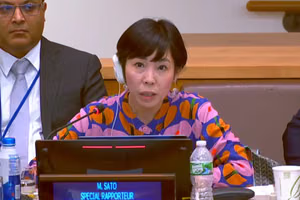
UN Special Rapporteur Mai Sato highlighted the case during an October 28 address to the UN General Assembly’s Third Committee as an example of Iran’s mass trials of protesters.
Sato said 12 defendants had been sentenced to death and seven already executed. She warned that the proceedings failed to establish individual criminal responsibility, rendering the resulting death sentences arbitrary.
Amnesty International previously identified all three men among defendants facing execution, warning in July that they had been sentenced to death following a grossly unfair mass trial.
The organization documented allegations that Bagherian was forcibly disappeared for 21 days, beaten and denied access to a lawyer during the investigation. His forced confession was broadcast on state television before his trial, Amnesty said.
In an October statement, Amnesty said Sepahi had been subjected to prolonged solitary confinement, beatings and electric shocks.
Erfan Nabian told Iran International that he was tortured and subjected to a mock execution while being interrogated about allegations linked to the case. The former political prisoner was held alongside several of its defendants.
Iran Human Rights urged governments maintaining diplomatic relations with Tehran to act immediately to halt the executions.
Members of the People’s Fighters Front reportedly took control of a section of the Khash-Zahedan highway in southeastern Iran for several hours on Saturday, October 31, 2026, setting up checkpoints and stopping vehicles.
At least seven members of the Iran-backed Afghan Fatemiyoun militia were killed Monday when gunmen attacked a school being used as a military base in southeastern Iran, the Baluch rights organization Haalvsh reported.
Armed men riding two motorcycles attacked the Bir Sofla school in Bir village, in the Kahir district of Konarak County in Sistan and Baluchestan province, at approximately 4 p.m. local time, Haalvsh said.
The attackers opened fire on Fatemiyoun members stationed inside the building, killing at least seven and wounding several others, including two critically, according to the report.
Haalvsh said a car followed the motorcycles into the village as fighting continued. At least one assailant was killed and his body was removed by security forces, it reported. The wounded were transported by ambulance to hospitals in Chabahar and Iranshahr.
The Revolutionary Guards-affiliated Tasnim news agency offered a different account, reporting that an armed group it identified as Jaish al-Adl had attempted to attack army personnel in Konarak.
Tasnim said security forces killed one attacker and forced others to flee wounded. It did not report any deaths among the personnel targeted.
A car belonging to the Iran's Sistan and Baluchestan traffic police shows signs of gunshots.
Fatemiyoun is an Afghan Shiite militia operating under the Revolutionary Guards’ Quds Force. The conflict-monitoring organization ACLED, citing local sources, has reported its deployment at military and Basij facilities and checkpoints across the province.
Haalvsh previously reported that more than 20 Fatemiyoun members were killed or wounded during prolonged fighting in Taftan County on October 13. That casualty figure could not be independently verified.
A series of deadly attacks
Monday’s confrontation follows repeated attacks on security personnel and installations across the province.
On October 27, Haalvsh reported that armed assailants attacked a police support headquarters and Police Station 12 in Khash, triggering prolonged gunfire.
Earlier, on October 7, gunmen attacked police headquarters in Golshan County using explosives and rocket-propelled grenades. The following day, separate attacks targeted police personnel near Nosratabad and a vehicle carrying army personnel near Nikshahr.
On October 14, a commander of a women’s Basij unit and a police officer were killed in separate shootings in Mehrastan County, according to Tasnim.
The US-based Human Rights Activists News Agency, HRANA, documented at least 63 armed incidents across Sistan and Baluchestan and neighboring Kerman between March 31 and October 10, leaving at least 94 people dead and 33 wounded. Its tally covered armed attacks and security operations, with 18 incidents recorded during the final 18 days of that period.
Jaish al-Adl joined other Baluch armed factions in December 2025 to form the People’s Fighters Front, known by its Persian initials JMM. The coalition claimed six of the incidents documented by HRANA, while most remained unattributed or could not reliably be linked to a particular group.
ACLED separately recorded approximately 70 armed confrontations between armed groups and Iranian security forces in Sistan and Baluchestan during 2026 by early October, the highest annual figure in at least a decade.
Poverty and longstanding grievances
The violence has unfolded in a region marked by economic deprivation and grievances among its predominantly Sunni Baluch population.
In an August 2025 report, the International Crisis Group described Sistan and Baluchestan as Iran’s most deprived province by most measures, citing unemployment, poor infrastructure and unequal access to public services.
Drawing on Iranian official data, the organization reported that approximately 30% of provincial households experienced severe deprivation. Unemployment stood at 12.4% in 2023–2024, compared with 8.1% nationally.
Baluch activist and journalist Khalilullah Balochi previously told Iran International that economic deprivation, ethnic and religious discrimination and repression were central drivers of armed mobilization. He argued that militarization had deepened the grievances behind recruitment.