UK sanctions Hezbollah-linked finance group Al-Qard Al-Hassan
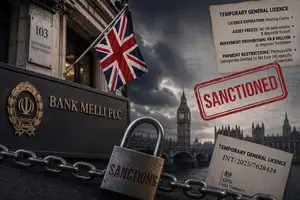
Britain is sanctioning Al-Qard Al-Hassan, a financial institution run by Lebanon's Hezbollah, Foreign Minister Ed Miliband said on Tuesday.
Lebanon's central bank last year barred banks and brokerages from dealing with Al-Qard Al-Hassan, which describes itself as a charitable organization providing interest-free loans under Islamic principles.
A general view of the Houses of Parliament at sunrise, in London, Britain.
Britain said on Tuesday it was expanding sanctions on Iran, targeting key sectors including energy, metals, banking, insurance and shipping as part of efforts to restrict Tehran's nuclear program and other hostile activity.
Minister of State Stephen Doughty said the government was introducing legislation to tighten financial and trade restrictions, widen powers to sanction ships linked to Iran and bar Iranian aircraft from landing in the UK unless exemptions apply.
“Today we are laying legislation which will tackle Iranian nuclear activity and other hostile Iranian activity,” Doughty said in a written statement to parliament.
Focus on nuclear program
Doughty said Iran had expanded its nuclear program in ways that had no credible civilian justification and pointed to its stockpile of more than 400 kg of uranium enriched to 60%.
“Iran is the only country without nuclear weapons to enrich uranium to this level,” he said.
Britain restored UN sanctions on Iran in October 2025 after the snapback mechanism was triggered and also designated 71 people and entities linked to Iran's nuclear program, including financial institutions and energy companies.
Wider trade and financial restrictions
The new rules expand restrictions on goods, technology and services tied to sectors including energy, software, metals and gold, as well as shipping, insurance and banking.
They also ban exports of additional goods and technology that Britain says could support Iran's conventional weapons and nuclear capabilities.
Doughty said the financial measures would “further reduce the Government of Iran’s ability to access the UK financial system and raise funds in support of its nuclear programme.”
Britain will also gain broader powers to sanction ships that it says enable or facilitate Iran's nuclear program or other destabilizing activity.
Iranian aircraft will be barred from landing in the UK unless exemptions apply, following Britain's termination of bilateral air service arrangements with Iran in 2024.
The legislation includes exemptions to allow continued operations at the Shah Deniz gas field in Azerbaijan, which supplies energy to European countries.
Doughty said Britain remained committed to diplomacy, saying a negotiated outcome was “the only long-term solution” to the dispute over Iran's nuclear program.
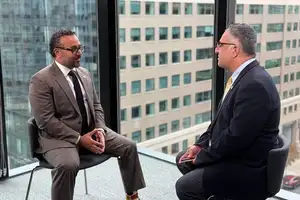
Four senior Australian opposition politicians have backed a role for Reza Pahlavi in a political transition in Iran and urged closer engagement with the exiled prince, telling Iran International they have invited him to visit Australia.
The Coalition politicians said they supported peaceful political change in Iran and planned to meet Pahlavi virtually. No date has been announced for the meeting or a possible visit.
“We want to see peaceful political change in Iran. We don't support the current regime,” Senator Dave Sharma, Shadow Assistant Minister for Citizenship and Multicultural Affairs, told Iran International.
“We think it's done immense harm not only to its own people, but to the neighbourhood, the region, and even to the world here in Australia.”
Iran International also spoke to Senator Andrew Bragg, Shadow Minister for Environment; Senator Jessica Collins, Chair of the Senate Foreign Affairs, Defence and Trade References Committee; and Julian Leeser, Shadow Minister for Education.
Coalition seeks engagement with Pahlavi
Engagement with Pahlavi is one of the Coalition's most important foreign policy objectives because of the role it believes he could play during a transition, Bragg said.
Senator Andrew Bragg, Australian Shadow Minister for Environment
“For the coalition, having a meeting with the Crown Prince is one of the most important foreign policy objectives that we have, because we believe that meeting with this key transitional figure is the best way to move the conversation on to a new government for Iran,” Bragg told Iran International.
Bragg described the Islamic Republic as “probably the worst government and the worst regime on the planet” and accused it of crimes against Iranians and sponsoring terrorism abroad, including in Australia.
The senator argued that political change would be difficult without serious international engagement with an alternative.
“This government will never be moved on unless we engage seriously with an alternative, and the alternative that we have as a transitional figure is the Crown Prince,” Bragg said.
Collins also described Pahlavi as “an important symbol of anti-regime and pro-democracy” and said the Coalition would continue engaging with him and hearing about the challenges facing Iranians.
The four lawmakers plan to hold a virtual meeting with Pahlavi ahead of a possible visit to Australia. The Coalition has extended an invitation for the visit, but no date has been announced for either the talks or the trip.
Peaceful political change
Pahlavi is an influential voice in Iranian politics, with many Iranians around the world looking to him for leadership, Sharma said.
The Coalition’s outreach aims to build a clearer picture of events inside Iran and support political forces seeking change, said Sharma, a former Australian ambassador to Israel.
“I think having the Crown Prince visit Australia will help show the Australian people that there are prospects for a brighter political future in Iran,” Sharma said.
“There are many Iranian people who want this to happen, and that he will play an important part in any transition.”
Senator Dave Sharma, Australian Shadow Assistant Minister for Citizenship and Multicultural Affairs
A visit could also renew Australian public attention on Iran following the authorities' deadly suppression of nationwide protests in January, Sharma said.
Leeser said the invitation was intended to give Australian politicians an opportunity to hear Pahlavi's assessment of conditions inside Iran and his vision for the country's future.
“The coalition has decided to invite Reza Pahlavi to Australia at this time because Reza Pahlavi has been advocating for freedom and democracy for the people of Iran, and we want to hear his perspective of what's happening on the ground and his hopes for the future of Iran,” Leeser told Iran International.
Leeser drew parallels between the invitation and Australia’s past engagement with figures in overseas political struggles, including Archbishop Desmond Tutu and Winnie Mandela during South Africa’s anti-apartheid struggle, and Xanana Gusmão and José Ramos-Horta during East Timor’s campaign for independence.
Julian Leeser, Australian MP and Shadow Minister for Education
“Reza Pahlavi would come to Australia in that tradition to provide us with his perspective and to provide us with important information that will help us develop our foreign policy in this area,” Leeser said.
Support for Iranians
All four politicians used the interviews to express support for Iranians seeking political change.
Collins said the Coalition shared what she described as the fundamental values sought by protesters, including “freedom, liberty and security.”
“We stand with you all the way, and I want you to know, I want all the Iranian people in Australia to know, and around the world, that we stand with you,” Collins said.
Chair of the Australian Senate Foreign Affairs, Defence and Trade References Committee
Sharma echoed that view, saying the Coalition’s engagement with Pahlavi reflected its support for Iranians seeking democratic change.
“The message this will send to the people of Iran is that you are not alone, that your fight for freedom and democracy is a fight that we share and that we are equally committed to, and that your success is our success,” Sharma said.
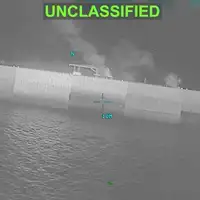
Smoke rises from a burning truck during what the Houthis say was an attack targeting trucks coming from Saudi territory, at Al-Wadiah border crossing near Al-Wadiah, on the Saudi-Yemen border, in this still image obtained from a handout video released September 7, 2026.
Yemen’s Iran-backed Houthis attacked energy facilities and cities in southern Saudi Arabia on Tuesday, wounding at least 73 people and raising fears of a wider regional war.
The strikes targeted civilian and economic sites in Abha, Khamis Mushait, Jizan and Najran, according to Turki al-Maliki, spokesperson for the Saudi-led coalition in Yemen. He said women and children were among those injured.
Yahya Saree, the Houthi’s military spokesman, also said that the group launched a “broad military operation” deep inside Saudi territory with drones and ballistic missiles to target Saudi energy sites belonging to oil giant Aramco.
Saudi Arabia’s Energy Ministry said the attacks caused fires at several energy facilities and utilities, temporarily halting some operations. Emergency crews were working to extinguish the fires, secure the affected sites and assess the damage.
“The coalition will take all necessary operational measures to deter this terrorist militia,” Maliki said, pledging a firm response.
The attacks came after Iranian officials warned that energy infrastructure across the Persian Gulf, including US oil and gas interests, was vulnerable following renewed exchanges of attacks involving vessels around the Strait of Hormuz.
Houthi attacks helped push oil prices to their highest levels in more than six weeks, according to Reuters. Shipping through the Strait of Hormuz and the Red Sea has already slowed amid threats to commercial vessels and uncertainty over access to the two critical waterways.
The Houthis, who control Yemen’s capital and much of the country’s north, declared a naval blockade against Saudi Arabia in July and have since attacked vessels in the Red Sea and targets inside the country.
The GCC denounced the strikes, describing them as a threat to regional security and backing measures taken by Riyadh to protect its territory and population. Qatar, Kuwait, Bahrain, Egypt and Jordan also issued separate condemnations.
The attacks mark a further escalation in the war that began with US and Israeli strikes on Iran on February 28. Repeated missile and drone strikes, along with attacks on shipping and energy infrastructure, have punctuated lulls in the fighting.
US President Donald Trump said on Monday that oil prices would fall sharply once the United States won the war, adding that “Iran will never have a nuclear weapon.”
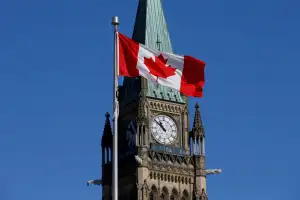
Canada’s Federal Court has ordered the government to decide within 60 days on a visitor visa application from a former project manager at Iran’s Bushehr Nuclear Power Plant after the case remained in security screening for more than 900 days.
Naser Mansoursharifloo, an Iranian citizen, applied for the visa in January 2024. About six weeks later, government records marked his case as “approved pending info from partners,” but no final decision followed for more than two years.
By the time the case reached a court hearing in August, the application had spent about 911 days in security screening, far longer than government processing estimates for Iranian visitor visas during the period.
Mansoursharifloo holds a doctorate in mechanical engineering and previously worked as a project manager at the Bushehr Nuclear Power Plant. He also served as head of engineering at Islamic Azad University in central Tehran, according to the court.
The court said the government had not provided enough evidence to explain why the screening had taken so long. It ordered authorities to make a decision within 60 days of the September 1 ruling.
The order does not require Canada to approve Mansoursharifloo’s visa and the court did not find that he was inadmissible. It only requires the government to make a decision.
The case comes amid a broader push by Canada to keep out or remove former senior officials of the Islamic Republic, particularly people whose past government roles could make them inadmissible under Canadian law.
Ottawa moved in 2022 to bar senior Iranian government officials from entering or remaining in Canada after the Islamic Republic’s crackdown on nationwide anti-establishment protests.
Canada has since pursued a number of cases involving former Iranian officials already in the country, while immigration authorities have increased scrutiny of applicants with backgrounds in Iranian government institutions.
Canada also listed the Islamic Revolutionary Guard Corps as a terrorist entity in 2024, adding another layer to its increasingly confrontational approach toward people and institutions tied to the Islamic Republic.
In one recent case, Canadian authorities are seeking to deport Abbas Omidi, a former senior official in Iran’s Ministry of Industry, Mines and Trade who lives in Toronto.
Canadian government documents reported by Global News said Omidi had played a significant role in Iran’s mining sector and that revenue generated by the sector helped support the Iranian government, its military and the IRGC.
Omidi acknowledged during his deportation proceedings that he had served as a deputy director general in the ministry but said his position was mainly technical.
The Canada Border Services Agency is seeking his removal on the grounds that he served as a senior Iranian government official.
Canada has also pursued other former officials under measures introduced after 2022, including people connected to Iranian state institutions and security bodies.
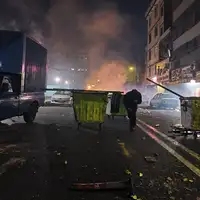
Trash bins block a street during protests in Tehran’s Naziabad neighborhood in January 2026.
A 34-year-old protester shot in the Iranian city of Qazvin on January 8 has undergone five major operations and months of largely secret medical care as doctors work to save and reconstruct his badly damaged leg.
“The bullet severely destroyed the bone in his right lower leg, and the lower part of his leg was almost attached to his body only by tissue and skin,” the protester’s brother told Iran International.
The protester was shot on Khayyam Street in Qazvin on the evening of January 8, according to information obtained by Iran International. The shot was fired from a Kalashnikov rifle at a distance of about 100 meters.
The shooting took place during nationwide protests that began in December 2025 amid worsening economic conditions and a sharp fall in Iran’s currency, then grew into broader opposition to the Islamic Republic.
Security forces killed tens of thousands of Iranians during the January 8-9 crackdown, making it the deadliest two-day protest massacre in history, according to documents reviewed by Iran International’s Editorial Board.
After initial attempts to stop the bleeding failed, the family sought help from an acquaintance to move him secretly to a hospital in Qazvin, his brother said.
The family has had to keep much of his treatment secret for fear he could be identified and detained, his brother said.
Iran International has documented similar cases since the January protests, in which wounded demonstrators avoided medical facilities or sought treatment in secret for fear of identification and arrest.
A photo provided to Iran International shows the wounded protester’s surgically treated leg alongside an X-ray showing an external fixation device used during months of treatment after he was shot in Qazvin on January 8.
Sources in Mamasani, in Fars province, previously confirmed that some wounded protesters there avoided medical centers because they feared their identities could be exposed and they could face prosecution.
Secret hospital exit after seven-hour surgery
The hospital in Qazvin was among those willing to admit wounded protesters despite the risks, his brother said.
Staff placed the 34-year-old in a darkened room with several other wounded people and cut power to parts of the hospital to stop surveillance cameras from recording patients’ movements, his brother said.
He lost consciousness after severe blood loss and underwent surgery at about 3 p.m. on January 9. The operation lasted roughly seven hours.
After surgery, hospital staff warned the family that he needed to leave quickly through a rear exit, fearing security forces could arrive and detain him, according to the family.
About an hour later, relatives and hospital staff moved him out of the building, before he had fully regained consciousness, and took him to a home to recover.
Iran International has previously documented the scale and severity of injuries inflicted during the January crackdown.
A specialist in a northern Iranian city said he and his son operated on dozens of wounded people on January 9 and 10. His son removed more than 270 pellets from the eyes of about 130 protesters, the doctor said.
Severe infection complicates recovery
Deep wounds and extensive damage to the protester’s lower leg complicated his recovery after the first operation, with large amounts of fluid draining from the wound each day, his brother said.
The family changed his dressings at home with help from a doctor they knew. As the infection worsened, they contacted the surgeon who had performed the first operation. He continued treating the protester at his private practice.
The family was told that the bullet had shattered a large section of his shinbone, leaving a gap that prevented the remaining ends from joining on their own.
The surgeon referred him to a colleague in Tehran for specialist treatment.
For months, the family has taken him from Qazvin to Tehran roughly every two weeks. He has undergone more than five major operations on his leg, his brother said.
Iran International has received other accounts of doctors secretly helping protesters wounded in January. In one case, a Tehran doctor treated dozens of wounded protesters free of charge and arranged for their radiology fees to be waived, sources said.
Surgeons remove 12 centimeters of bone
Surgeons eventually had to remove about 12 centimeters of damaged bone from his lower leg and make a surgical cut in the bone near his ankle.
They then fitted an Ilizarov apparatus, an external frame of metal rings, rods and wires used to gradually move sections of bone. The technique can help repair extensive bone damage and replace missing bone.
Doctors hope to use the device to gradually close the gap between the healthy sections before performing a bone graft, according to the family.
He faces a prolonged recovery, with no immediate prospect of regaining normal mobility or returning to work.
An X-ray provided shows extensive damage to the lower leg of a 34-year-old protester who was shot in Qazvin on January 8.
Treatment costs strain family
Months of surgery, medication, wound care and travel between Qazvin and Tehran have put the family under growing financial pressure, his brother said.