• العربية
  • فارسی
Brand
  • Iran Insight
  • Politics
  • Economy
  • Analysis
  • Special Report
  • Opinion
  • Podcast
  • Live TV
  • Iran Insight
  • Politics
  • Economy
  • Analysis
  • Special Report
  • Opinion
  • Podcast
  • Live TV
  • Theme
  • Language
    • العربية
    • فارسی
  • Iran Insight
  • Politics
  • Economy
  • Analysis
  • Special Report
  • Opinion
  • Podcast
  • Live TV
All rights reserved for Volant Media UK Limited
volant media logo

Canada deports former Iranian official linked to 2019 protest crackdown

Aug 18, 2026, 13:18 GMT+1
Salman Samani
Salman Samani

Canada has deported a former Iranian Interior Ministry spokesman who served during the deadly crackdown on nationwide protests in November 2019, Global News reported.

The Canada Border Services Agency confirmed that Salman Samani was removed from the country after a federal court rejected his appeal.

Global News said Samani is the second former Iranian official deported under a Canadian policy adopted in 2022 barring senior officials of the Islamic Republic from entering or remaining in the country.

Samani had entered Canada on a tourist visa after resigning from his government post. In his effort to remain in Canada, he argued that returning to Iran could expose him to “torture, execution or suicide,” according to the report.

Most Viewed

US rules out Iran truce extension as Tehran official sets new deadline
1

US rules out Iran truce extension as Tehran official sets new deadline

2
ANALYSIS

To survive maximum pressure, Iran kept pumping and broke its oil company

3

Iran’s new infiltration bill could make ordinary contact a crime

4
OPINION

The three snakes of Zahhak

5
EXCLUSIVE

Iraqi Kurdistan president’s office confirms Barzani’s US-Iran backchannel role

Banner
Banner
Banner

Spotlight

  • Seven months on, January protests still shape Iranians’ lives
    VOICES FROM IRAN

    Seven months on, January protests still shape Iranians’ lives

  • Forced to serve in the IRGC, now fighting to stay in Canada
    SPECIAL REPORT

    Forced to serve in the IRGC, now fighting to stay in Canada

  • Iran’s ‘infiltration’ bill sparks backlash over sweeping reach

    Iran’s ‘infiltration’ bill sparks backlash over sweeping reach

  • To survive maximum pressure, Iran kept pumping and broke its oil company
    ANALYSIS

    To survive maximum pressure, Iran kept pumping and broke its oil company

  • They carry the evidence of Iran’s crackdown on their bodies

    They carry the evidence of Iran’s crackdown on their bodies

  • The three snakes of Zahhak
    OPINION

    The three snakes of Zahhak

  • Iran lawmaker played direct role in deadly protest crackdown, witnesses say

    Iran lawmaker played direct role in deadly protest crackdown, witnesses say

  • Court Session Held To Deport Iranian Official From Canada

    Court Session Held To Deport Iranian Official From Canada

•
•
•

More Stories

US rules out Iran truce extension as Tehran official sets new deadline

Aug 17, 2026, 22:11 GMT+1
100%
US President Donald Trump boards Air Force One in a file photo posted by the White House on X on Aug. 9, 2026.

The 60-day period associated with the Iran-US interim peace deal ended Monday without a breakthrough, with Washington rejecting an extension and a senior Iranian official saying the US had a few weeks to meet the agreement’s terms before further talks.

President Donald Trump said he did not expect Iran to agree to the kind of deal he considered necessary and again made preventing Tehran from obtaining a nuclear weapon the central US demand.

“They’re not going to make the kind of a deal that I feel is necessary,” Trump said Monday. “Iran cannot have a nuclear weapon. And they won’t have a nuclear weapon.”

Asked whether Washington wanted to extend the interim agreement, Trump replied: “No.”

He also said the United States had “total control” over the Strait of Hormuz through its naval blockade.

Tehran disputes 60-day deadline

Foreign Ministry spokesperson Esmaeil Baghaei disputed the characterization of Monday as the expiry of the memorandum itself, although the text of the agreement says the two sides committed to achieving a final deal within a maximum of 60 days, extendable by mutual consent.

Baghaei insisted that the 60-day period linked to the Islamabad memorandum had been intended for negotiations and was no longer relevant because Washington had breached the agreement.

He said the memorandum contained no formal 60-day deadline and that Iran would not make decisions in response to ultimatums.

Foreign Minister Abbas Araghchi had said Friday that the memorandum referred to an “end to the war,” rather than a 60-day ceasefire requiring an extension.

Iran gives US ‘a few weeks’

A senior Iranian official told Reuters that Iran had set a period of “a few weeks” for Washington to fully implement the memorandum before further negotiations could take place.

“Within the short period of a few weeks set by Iran, all the agreement’s provisions must be implemented by the US. This is a precondition for further negotiations with the US,” the official said.

Reuters reported, citing the official, that Iran had adopted a “fully offensive” posture and would be prepared to escalate in the Strait of Hormuz and across the region if diplomacy failed.

The official said Tehran’s timeframe would be conveyed to Washington and regional governments through mediators.

Contacts continue without agreement

Trump also confirmed that his administration had established a direct backchannel with the Revolutionary Guards and said he was “not in a hurry” to end the war. The IRGC later denied that talks with US officials were under way.

Trump envoy Jared Kushner said later Monday that US conversations with different parts of the Iranian government were probably “more robust than ever,” but that the two sides had yet to reach an understanding.

Oil prices also rose Monday as investors grew more pessimistic about efforts to end the Iran war and shipping through the Strait of Hormuz remained constrained.

WTI settled 2.5% higher at $84.50 a barrel, while Brent rose 2.7% to $90.87, the Wall Street Journal reported. Gains accelerated after Iranian state media reported that an Emirati oil tanker had been seized in the strait.

To survive maximum pressure, Iran kept pumping and broke its oil company

Aug 17, 2026, 18:44 GMT+1
•
Mohamad Machine-Chian
100%
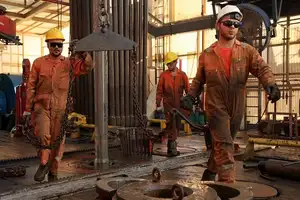
File photo released by ISNA in September 2013 shows a worker during the installation of an oil rig in Changuleh, Mehran county, Ilam province, western Iran.

Donald Trump’s maximum pressure is usually scored by counting tankers and tracking the rial, but Iran’s budget points to a deeper cost: more than $80 billion in NIOC bank debt and sovereign-fund arrears, repeatedly deferred as Iranians shoulder the burden.

On August 5, a state bank froze the accounts of the National Iranian Oil Company, NIOC, over about $1 billion owed to the sovereign wealth fund, two years past due. A separate case was already running: a $1.5 billion tax assessment the company says it simply cannot pay. Enforcement on that one stopped only when the presidency intervened.

The episode matters because the law shielding the company is also where its condition is recorded. NIOC publishes no audited accounts, and Iran's budget shows state companies only in aggregate, leaving its debt to be reconstructed from budget provisions and disclosures by other state institutions.

This year's budget sets the amount of NIOC debt to the central bank and commercial banks being deferred at 55 billion euros, about $63.5 billion, covering principal and interest on financing for upstream oil and gas development. It appears as a single sentence at the bottom of a table in which every other figure is in rials or percentages, renewed every year since 2019.

Iran's sovereign wealth fund, the National Development Fund, has separately said NIOC is its largest debtor, with $17 billion in unpaid loans.

Those two categories alone amount to more than $80 billion. No single official document presents them as one consolidated NIOC debt figure.

100%

Iran's entire general budget this year converts to roughly $37 billion at the open-market rate. For scale, the deferred bank debt alone is about 1.7 times what the government plans to spend in a year.

That burden grows without anyone borrowing another dollar. The debt is in foreign currency, and the rial has fallen from about 900,000 to the dollar in early 2025 to nearly 2 million today, a slide President Trump celebrated in August as his administration "destroying Iran's currency." Each step down makes the same $63 billion heavier against NIOC's rial costs and the state's domestic revenues.

That burden grows in rial terms without anyone borrowing another dollar. The debt is in foreign currency, and the rial has fallen from about 900,000 to the dollar in early 2025 to nearly 2 million today, a slide President Trump celebrated in August as his administration "destroying Iran's currency.” Each step down increases the rial value of the same $63 billion obligation and makes it larger relative to the state's domestic revenues.

Maximum pressure is usually scored from the outside: barrels tracked leaving the Persian Gulf, the rial's slide, the lengthening sanctions lists. By that scorecard the campaign is working.

A clearer measure is the condition of the company at the center of the sanctioned trade, and by that measure the campaign has worked more completely than the scorecard shows. The pressure did not stop Iran's oil. It changed the terms of the business, and the new terms have broken the company that produces it, in every sense but the accounting one.

The business model was set at the top. After the United States withdrew from the nuclear deal in 2018 and reimposed sanctions, Ali Khamenei told officials not to leave the economy waiting on "decisions to be made by others." The objective instead was to plan with the sanctions in place and, in his formulation, to neutralize them.

The oil ministry's version of neutralization was to keep production alive with domestic contractors, the Revolutionary Guard's companies among them. On its own terms, that part worked. Output that had fallen below 2 million barrels a day in 2020, the lowest in almost four decades by American government estimates, was rebuilt to about 3.6 million by mid-2024, a recovery the oil minister boasted of publicly.

Selling those barrels was another matter.

"We have unofficial or unconventional sales, all of which are secret," then-oil minister Bijan Zanganeh said in 2019, "because if they are made known America would immediately stop them." His deputy called it the grey market.

In practice, that meant selling at sanctions-driven discounts that have varied widely over time, reaching $10 to $15 a barrel below Brent through 2024 and 2025, particularly to China's independent refiners; using a shadow fleet, ship-to-ship transfers and obscured vessel identities; relabeling Iranian crude as originating elsewhere; and paying intermediaries to keep the chain moving. China has at times taken roughly 90 percent of Iran's exported crude.

Payment itself became another layer of the sanctions trade. Iranian oil proceeds have been trapped or restricted in foreign banking systems, while other sales have been settled through barter or in currencies that are difficult to repatriate freely.

India created a rupee payment mechanism for Iranian crude in 2019, and the channel stalled the same year when Indian purchases stopped. Roughly $6 billion in Iranian oil proceeds frozen in South Korea were eventually transferred to restricted accounts in Qatar as part of the 2023 prisoner exchange.

Every additional discount, commission and restriction reduces what reaches Iran. NIOC's statutory share of crude and condensate export proceeds is set at 14.5 percent, so lower realized export revenue narrows the company's own take as well.

The difference between what the model earned and what production cost was covered on credit, in foreign currency, from the central bank, state banks and the sovereign wealth fund, with parliament's authorization.

By January 2019 the state knew in writing that the arrangement was not paying for itself. The parliament's research arm reported that NIOC, then about $50 billion in debt on its own count of the previous year, could not repay what it owed. The party line continued anyway: the same parliament approved fresh lending in the same budget, and two months later wrote the first deferral into law.

The dollar figures were tracked for two more years, to about $60 billion in March 2020 and about $70 billion in March 2021. Then that series went quiet.

The liabilities themselves did not vanish from the record. Two years later the Economy Ministry put NIOC's debts for 2021 at 1,683 trillion tomans, the largest of any state company in Iran, ahead of Bank Sepah and Bank Melli. At the exchange rate of the day, that is the same $60 to $65 billion the dollar series had been reporting.

What disappeared was the ability to follow it: a comparable figure, year by year, in the currency the money was owed in. The largest corporate debt in Iran's history was reduced to one renewable sentence that for six years carried no number at all. When a number finally surfaced this February, it settled what the silence had left open. The bank debt did not go away. It was rolled forward.

The meter still runs, though not at one rate. The sovereign fund's published terms for foreign-currency oil and gas facilities are 3.5 percent for the fund plus 2.5 for the agent bank, 6 percent all-in. On the $17 billion it is owed, that alone is close to $1 billion a year, almost exactly the size of the claim that froze the company's accounts in August.

The central bank has never published its contract rate, so the future cost can only be estimated. If even a 4 percent rate were applied to the $63 billion outstanding balance, it would add more than $2.5 billion in interest over a year; at the sovereign fund's 6 percent rate, the figure would approach $3.8 billion.

What the budget does establish is that the deferred bank debt already consists of principal and interest. The cost of carrying the old debt has become part of the debt.

For comparison, $1.5 billion in foreign currency is allocated for medicine this year, in a spring when pharmacy prices jumped several hundred percent, cancer and dialysis drugs ran short, and officials blamed scarce foreign currency. Depending on the rates applied to NIOC’s different debts, the annual interest burden could exceed that amount by several billion dollars.

An Iranian who misses a single loan installment pays the contract rate plus a 6-point penalty. The oil company's interest simply accrues, uncollected, year after year. A deferral, in the end, is a bet that a better year is coming, one with a surplus large enough to settle old bills. The Islamic Republic has been promising that better year that is yet to come for forty-seven years.

100%

Because the loans are neither collected nor written off, the central bank and the state banks carry them as sound assets, the same accounting that keeps Iran's insolvent banks upright. When those banks come up short, they overdraw at the central bank, and that is where base money is created.

The transmission is not mechanical, but it is the route by which a single failed lender, Bank Ayandeh, accounted for about a quarter of the growth in Iran's monetary base in 2022-23. The bill reaches Iranians as inflation: the tax no one votes on, taking its largest share from the poorest.

Fifteen years of records say NIOC could not pay when conditions were merely bad. With its fields bombed and its exports blockaded, repayment is beyond reach in any scenario.

And the pressure is still tightening. On August 13, Treasury Secretary Scott Bessent, who runs the Economic Fury campaign against the Islamic Republic, promised measures "like have never been seen in the history of the economic isolation of a country," on top of a blockade meant to keep anything from moving in or out of Iranian ports. Whatever they turn out to be, they are aimed at the only revenue that could ever service this debt.

Nor does the optimistic case rescue the company. Even a full lifting of sanctions would not change the arithmetic quickly, because a company with damaged fields and war-hit infrastructure would have to borrow more before it could export more.

Maximum pressure set the terms of this downfall, but the decisive choices were Tehran's: to keep pumping at any margin, to stop publishing a comparable foreign-currency debt figure after 2021, and to push the bill forward one year at a time.

The company that once symbolized Iran's oil wealth was not felled by a rival or a market. It was sacrificed, quietly, by its own state, to the nuclear program and the regional ambitions that brought the sanctions, and to the business model built to outlast them, and the receipt is one sentence long, perpetually renewed every year.

The three snakes of Zahhak

Aug 16, 2026, 18:50 GMT+1
•
Roger Macmillan
100%
Zahhak Receives the Daughters of Jamshid, a manuscript illustration made in Tabriz, Iran, in the 1520s, in ink, gold and opaque watercolor on paper. Courtesy of Khalili Collections / CC-BY-SA 3.0 IGO.

In the Persian classic Shahnameh, Ferdowsi tells the story of Zahhak, the usurper king who is kissed on each shoulder by Ahriman, the spirit of evil, and finds two black snakes growing from the wounds.

Cut them off and they grow back. The only way to keep them quiet is to feed them, every day, with the brains of two young men. Zahhak reigns for a thousand years on a diet of sacrificed youth, propped up not by loyalty but by appetite.

The story has always worked as a parable for Iranian tyranny. What I think it misses, applied to the Islamic Republic today, is the arithmetic. Ali Khamenei did not build two snakes. He built three.

The Artesh, Iran’s conventional army, was the first snake, inherited from the Shah and never fully trusted. The IRGC was the second, created in 1979 specifically because the revolution did not trust the first. The Basij was folded into the IRGC as its third head.

It is worth remembering that all three answer, on paper as much as in practice, to a single neck. The Iranian constitution names the Supreme Leader as Commander-in-Chief of the Armed Forces in their entirety, Artesh, IRGC and Basij alike. There is no independent chain of command outside the Supreme Leader’s authority for a general to retreat into. Politicians and Western commentators in both London and Washington keep waiting for one of these heads to turn on the body. They’re waiting for the wrong signal, because they’re analysing 1979, not 2026.

When the Shah’s generals stood aside in February 1979, they did so because the Artesh of that era was a conscript institution led by officers who owed their careers to a monarch, not a movement, and who had no ideological stake in what came next. That Artesh is not today’s Artesh.

Ali Khamenei spent decades solving exactly that problem. Senior appointments in today’s Artesh are subject to security and ideological vetting tied to the Supreme Leader’s military apparatus. The Middle East Forum has documented how senior promotions require approval from the Supreme Leader’s office following scrutiny of an officer’s security and ideological background. The men at the top of the Artesh are appointees of the system, not survivors of it.

This is why this month’s move to complete the integration of the Armed Forces General Staff with the Khatam al-Anbiya Central Headquarters matters more than it has been given credit for. Mojtaba Khamenei, who inherited a system his father spent more than four decades constructing, has now moved to formalise a process of centralisation that had earlier been discussed but was not visibly underway in operational terms.

The lesson learned from 2025 and the Twelve-Day War, according to Iran’s own state reporting, was that redundant command structures slow decision-making. The latest restructuring is intended to reduce that redundancy and further narrow the distinction between the operational command of the Artesh and the IRGC. The underlying logic is clear: the system has little interest in preserving institutional space in which one military arm might begin to think or act independently of the others.

I would also gently push back on those looking for salvation in Iran’s reformists. Pezeshkian’s presidency provides a civilian face and international cover for the negotiating track, and that function matters. But it is not independence.

Ghalibaf is a former senior IRGC commander who has spent decades inside the Islamic Republic’s political and security establishment. Araghchi is a capable diplomat entrusted with representing Tehran in negotiations. Both men operate inside the system’s tolerances, not outside them. Reading their willingness to negotiate as evidence of a moderate faction pulling against a hardline one mistakes tactics for structure.

When Iran has had to cede ground, at Bürgenstock or Islamabad, it has ceded it in the way a company reprices a product: reluctantly, and only as far as survival requires. Ghalibaf gets attacked by the influential ultra-hardline Paydari Front for talking to Americans, and he absorbs it, because someone in the system has to run the diplomatic track.

None of this means the system is stable in the way it looks stable. Ali Khamenei is dead. His son, who has still not been seen or heard in public, inherited the office by appointment and is still consolidating the very apparatus his father designed. The strain is real. But strain inside a structure is not the same as a fracture between its parts. The three heads bicker over how much brain they are fed and by whom, not over whether to keep feeding.

So when I hear commentary asking whether this is the moment the Artesh finally breaks from the regime, or whether Ghalibaf represents the pragmatic wing that might yet reform the system from within, I think of Zahhak.

Nobody in that story is saved by one of the snakes deciding it has had enough. The snakes do not turn on the king. The rupture comes from outside the machinery of the court: Kaveh the blacksmith rises first, turning private grievance into public revolt, rallying the people and creating the conditions for Fereydun’s return. Fereydun then defeats Zahhak and binds him at Damavand. Until that structure itself breaks, all three snakes answer to the same shoulders.

Mohsen Rezaei’s son among nine identified in $11-billion Iran oil network

Aug 15, 2026, 21:27 GMT+1
•
Mojtaba Pourmohsen
100%

Relatives of some of Iran’s most powerful security figures, including Mohsen Rezaei’s son, were among nine people tied to an oil-sales network that sources say failed to return about $11 billion in proceeds, an Iran International investigation found.

The major corruption network involved in the sale of Iranian oil has been operating within the Islamic Republic’s Intelligence Ministry, according to multiple sources familiar with the matter.

The network was built around trusted intermediaries, known in Iran as “trustees,” who were given oil to sell as part of efforts to circumvent sanctions and were expected to return the proceeds to the state.

Iran International’s investigation found that the nine included the relatives of senior current and former officials, including a son of Supreme National Security Council Secretary Mohsen Rezaei and the sons-in-law of two former intelligence ministers.

On August 9, the Iranian Labour News Agency (ILNA), quoting Hossein Samsami, a member of parliament’s Economic Committee, named one of the trustees who he said had failed to return Iran’s oil revenue: Hossein Aghayari.

A day later, ILNA provided further details, saying Aghayari was born in 1982 and operated in Tehran using Iranian and Afghan passports. It said he had purchased 40 Iranian oil tankers, taken delivery of 90 million barrels of oil, sold it on the market and failed to return the proceeds.

100%

Aghayari has been based in the United Arab Emirates since before the start of the 40-day war. Two oil-industry sources told Iran International that five months ago, he stayed for several days at the Ritz hotel in London using a Dominican passport.

According to the sources, Aghayari’s name and details of his activities were deliberately provided to Iran’s domestic media as part of a security operation intended to conceal the identities of the principal figures in a much larger network of Intelligence Ministry trustees.

The sources identify the leader of the network as a senior Intelligence Ministry official known as Shayan, the ministry’s director-general for fuel and energy. He was dismissed 10 days ago and, according to three sources, is expected to be arrested.

The sources say the group, known as the Shayan Network, was responsible for about $11 billion in oil-sale proceeds not being returned to the state.

How the network operated

Since the administration of former President Ebrahim Raisi took office, Iran’s budget laws have allowed executive agencies and state, military and Social Security pension funds, in coordination with the Oil Ministry, to receive Iranian crude oil and gas condensate for sale as part of efforts to circumvent sanctions and return the proceeds to Iran.

The individuals and companies entrusted with selling the oil and transferring the revenue are commonly known in Iran’s political and economic terminology as “trustees.”

The administration of President Masoud Pezeshkian has continued to use similar mechanisms for oil sales.

According to Iran International’s sources, several large patronage networks emerged around the system, including one operating within the Intelligence Ministry through the cooperation of three figures.

One was Oil Minister Mohsen Paknejad, who previously headed the Oil Ministry’s Fuel Supply Oversight Headquarters.

The other two, according to the sources, were the principal organizers of the alleged network. One was Shayan, the Intelligence Ministry’s director-general for fuel, who had previously served as a senior ministry interrogator in major oil cases.

Sources say that Shayan used his influence over cases ranging from the missing oil rigs scandal to the Crescent case to accumulate considerable wealth.

The third figure was Meysam Darzinejad Rami, director-general of the Intelligence Ministry Pension Fund, through whom the sources say legal cover was provided for the oil sales. He previously headed security at the Execution of Imam Khomeini’s Order (EIKO), the vast economic conglomerate controlled by the office of Iran’s supreme leader.

According to Iran International’s sources, Shayan and Darzinejad built an extensive oil-sales operation around nine influential trustees, one of whom was Aghayari.

Mohsen Fallahian, son of an ex-intelligence minister

One of the best-known members of the alleged network is Mohsen Fallahian, the son of Ali Fallahian, who served as intelligence minister under President Akbar Hashemi Rafsanjani.

100%

Ali Fallahian has been widely accused of being one of the architects of the Islamic Republic’s campaign of assassinations against opponents abroad, including during the period when Shapour Bakhtiar, the last prime minister under Mohammad Reza Shah Pahlavi, was killed in Paris.

Mohsen Fallahian runs a company in Iran called Sepehr Sanat Negin, whose stated business activities were changed to include oil and gas operations in October last year.

Iran International’s sources say Fallahian obtained authorization to establish an oil-storage facility at Shahid Rajaei Port in Bandar Abbas through his father’s influence and subsequently joined the Shayan Network’s oil-selling operation.

According to the sources, Mohsen Fallahian lives in the UAE and trades oil under another identity, “Mohsen A.,” using a Turkish passport. In one instance alone, the sources say, he converted 200 million dirhams in Iranian oil revenue into cryptocurrency and transferred it to a European country.

Ali Rezaei, son of Mohsen Rezaei

Ali Rezaei, son of Iran’s newly appointed security chief Mohsen Rezaei, is also identified by the sources as one of the Shayan Network’s trustees.

Rezaei is married to the daughter of Leili Boroujerdi, a granddaughter of Ruhollah Khomeini. For years, he served as deputy for communications at the Secretariat of the Expediency Discernment Council, effectively serving as his father’s deputy.

100%

Iran International’s sources say Rezaei has for some time been living at the Address Mall hotel in Dubai, where he works as an oil trader. They allege that he is among the Shayan Network trustees who have failed to return hundreds of millions of dollars in oil-sale proceeds.

Ali Bayandorian, a trustee for several networks

Another member of the alleged network identified by Iran International’s sources is Ali Bayandorian, 52, who was born in Tehran and lives on Morvarid Street in Tehran’s Saadat Abad neighborhood, although he spends much of the year in the UAE.

The United States sanctioned Bayandorian in January 2020 over his links to Triliance Petrochemical, a Hong Kong-based broker that the US Treasury said facilitated sales of Iranian petroleum and petrochemical products on behalf of the National Iranian Oil Company.

100%

Iran International’s sources say Bayandorian sells oil and petrochemical products through a network of companies registered in Iran and Southeast Asia. They also allege that he handles financial transactions related to sanctioned oil sales and pays kickbacks to Shayan through an account in the UAE belonging to one of his wife’s relatives, a woman named Neda.

Before joining the Shayan Network, according to the sources, Bayandorian was a trusted intermediary for a network associated with the Supreme National Security Council.

Because he worked with several parallel networks, the sources say, he sometimes failed to pay Shayan’s share on time or in full. Shayan therefore created a rival for him: Ahmad Maroufkhani, chairman of the board of the Oil Products Exporters’ Union, whom the sources describe as one of the Intelligence Ministry network’s second-tier trustees.

Ehsan Sakhaei, son-in-law of Rouhani’s intelligence minister

Ehsan Sakhaei is another person identified by the sources as a trustee in the Shayan Network. He is 51, a Swiss citizen and the son-in-law of Mahmoud Alavi, who served as intelligence minister under President Hassan Rouhani.

According to Iran International’s sources, Sakhaei lives in Dubai’s Vision Tower.

100%

Six years ago, during a Bank Mellat corruption trial, Sakhaei was accused of acting as a fixer who used his father-in-law’s influence to secure multibillion-toman debt write-offs for major bank debtors.

Iran International’s sources say Sakhaei has failed to return several hundred million dollars in proceeds from Iranian oil sales.

Ehsan Tahayori, son of an IRGC brigadier general

Ehsan Tahayori is a well-known Iranian currency dealer who, according to Iran International’s sources, failed to hand over $700 million in Iranian oil revenue in one case alone.

Tahayori, owner of the Arz Iran currency exchange, is the son of IRGC Brigadier General Shams-Ali Tahayor, also known as General Tahayori.

100%

Iran International’s sources identify Tahayori as the principal suspect in a one-billion-dirham fraud involving Iran’s NIMA foreign-exchange system. They also allege that he was released and helped to flee with the assistance of the Intelligence Ministry.

Two sources told Iran International that authorities in the UAE arrested Tahayori during the war and that he is now in prison.

Photographs published earlier and reported to show his luxury cars at his villa in Lavasan had caused controversy in Iran.

Rouhollah Razavi, son-in-law of a Paydari Front spokesman

Another figure identified by the sources is Rouhollah Razavi, the son-in-law of Majid Mottaghifar, spokesman for the hardline Paydari Front.

Iran International’s sources say it was through this political connection that Razavi became one of Shayan’s trusted intermediaries and describe his office in Tehran’s Kamranieh neighborhood as a hub for backroom oil deals.

100%

The sources allege that Razavi has retained more than $1 billion in oil-sale proceeds and provided information about rival trustees in an effort to push them out of the market.

Mohammad-Hadi Momenin, major bank debtor and oil broker

Another trustee identified by the sources is Mohammad-Hadi Momenin, born in 1989.

Iran International’s sources allege that Momenin controls approximately $2 billion in Iranian oil revenue that has not been returned. His name has appeared on the boards of more than 40 companies in Iran.

100%

Last year, when the names of major bank debtors were released, it emerged that Momenin owed Karafarin Bank 743 billion tomans.

The sources say he fled the UAE for Oman during the war and later traveled from there to China, where they say he is refusing to respond to his creditors.

Ehsan Dastgheyb, son of Iran’s ‘Bribery King’

The ninth individual identified by the sources is Ehsan Dastgheyb, son of Abdollah Dastgheyb, a nephew of a former Shiraz Friday prayer leader who is known as Iran’s “Bribery King.”

100%

Ehsan Dastgheyb lives in Dubai and sells fuel oil for the Shayan Network, according to Iran International’s sources. They allege that he, too, has failed to return a large sum of money to Iran.

Network comes under pressure

Following Shayan’s dismissal, Iran International’s sources say both he and Meysam Darzinejad Rami are expected to be arrested and that the network has come under increasing pressure.

The sources say the Shayan Network is only one of several networks of trustees involved in Iranian oil sales and estimate that intermediaries across these networks have collectively failed to return as much as $110 billion in oil revenue.

They also say Oil Minister Paknejad could soon be dismissed, although he has mobilized his political connections in an effort to remain in office.

100%
Iran's oil minister Mohsen Paknejad

On July 24, Tehran prosecutor Ali Salehi said 59 cases had been opened against managers of trustee companies, with 43 reaching the indictment stage. He said 22 defendants had been sent to prison and that Interpol Red Notices were being pursued for 15 fugitives.

The prosecutor did not publicly identify the 15 fugitives, making it impossible from the announcement to determine whether any members of the Shayan Network were among them.

Iran International’s sources expressed doubt that the alleged network would be fully pursued, pointing to the powerful connections of those involved: they include sons and sons-in-law of former intelligence ministers, the son of the secretary of the Supreme National Security Council, and people connected to the Paydari Front and influential clerical families.

According to the sources, the Shayan Network alone was responsible for about $11 billion in Iranian oil-sale proceeds that were not returned to the state.
  • Scandal rocks Iran's secret oil money network as billions go 'missing'

    Scandal rocks Iran's secret oil money network as billions go 'missing'

Sanctions alone cannot topple Iran’s regime, former Treasury official says

Aug 15, 2026, 03:35 GMT+1
•
Kambiz Tavana
100%
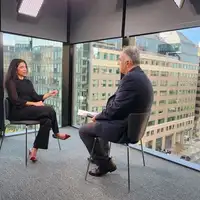
Kerri Bitsoff (left) in an interview with Iran International's Kambiz Tavana in Washington DC on August 13, 2026.

Sanctions can make Iran’s military and nuclear activities costlier and more difficult but cannot bring down the Islamic Republic on their own, former US Treasury official and weapons procurement expert Kerri Bitsoff told Iran International.

“Sanctions can't topple a regime on their own. That's not what they're for,” said Bitsoff, who previously worked at the Treasury Department’s Office of Foreign Assets Control, the agency responsible for administering and enforcing US economic sanctions. “They are intended to increase pressure.”

For Bitsoff, who worked on nonproliferation and weapons procurement at OFAC and is now executive director of investigations at TANGOS, the distinction is central to understanding what decades of US sanctions against Iran can and cannot accomplish.

Rather than expecting sanctions themselves to produce political change, she said their effect should be measured by how much they increase the cost and difficulty of the activities Washington is trying to constrain.

“They make everything that the regime does related to those more expensive, slower and more difficult to obtain,” she said, referring to activities such as Tehran’s nuclear and weapons programs. Sanctions, she added, are also intended “to set conditions for something else to happen” and “can't be alone.”

That argument comes after years in which successive US administrations have expanded, eased or more aggressively enforced different layers of sanctions against the Islamic Republic. Washington restored broad nuclear-related sanctions after withdrawing from the 2015 nuclear deal in 2018, targeting areas including Iran’s banking, energy and shipping sectors. President Donald Trump launched a renewed “maximum pressure” policy in February 2025, directing the Treasury Department to pursue a “robust and continual sanctions enforcement campaign” aimed at denying Tehran and its allied groups access to revenue.

Bitsoff said those measures should not be judged simply by how many Iranian individuals, companies or organizations Washington places on sanctions lists.

Enforcement matters more than numbers

“Numbers are not a good measure of the impact of sanctions and whether they are important,” Bitsoff said. “You can sanction thousands of individuals and entities within Russia, within Iran, within North Korea, and that's not really the answer.”

The more meaningful test, she said, is whether sanctions change the behavior of actors outside the targeted country — the banks, buyers, suppliers, shipping companies and intermediaries that allow sanctioned governments to continue obtaining money and material.

That often requires Treasury officials to identify specific weak points in complex networks rather than simply placing restrictions on an entire sector. Bitsoff described sanctions policy as operating on two levels: broad measures designed to restrict areas such as oil revenue or access to the financial system, and day-to-day operational measures targeting individual transactions, companies and procurement networks.

Weapons procurement provides one example of how that pressure works. Sanctions may not stop Iran from producing a missile or drone, Bitsoff said, but they can increase the cost of securing the components needed to build them and force manufacturers to rely on inferior alternatives.

“You raise the cost of procuring parts and components,” she said. “You force them to get worse parts and components, so their finished weapons are less effective.”

The effects can take years to become visible, she said, and may eventually be measured in missile failure rates or the ability of adversaries to jam drones and develop other countermeasures.

Iran’s reliance on foreign components has remained a focus of US sanctions. Treasury actions in 2025 and 2026 targeted networks in China, Hong Kong, the UAE and elsewhere accused of supplying Iran with drone components, missile propellant ingredients and other military goods. In June, OFAC sanctioned another group of China- and Hong Kong-based individuals and companies it said had supported weapons procurement for the Revolutionary Guards and Iran’s defense ministry.

Oil sanctions work differently, Bitsoff said. Rather than necessarily preventing a barrel of Iranian crude from reaching a customer, the restrictions can make every stage of that journey more expensive.

An Iranian shipment may have to pass through several intermediaries, rely on aging tankers carrying higher insurance costs, undergo ship-to-ship transfers and be sold at a discount to a limited pool of buyers willing to accept the risk of dealing in sanctioned oil. Ship managers, operators and others involved in the trade may also demand premiums because they risk becoming sanctions targets themselves.

“By the end of it,” Bitsoff said, Iran can be forced to absorb a “huge discount,” meaning export volumes alone do not provide a complete measure of whether sanctions are working.

The US Treasury has described many of the same methods in its recent actions against Iran’s oil trade, citing front companies, intermediary brokers, ship-to-ship transfers, falsified documents and manipulation of vessel identities. In April, Treasury said China was buying about 90% of Iran’s oil exports and that independent Chinese refineries, commonly known as teapots, accounted for most of those purchases.

Bitsoff said enforcement can therefore be thought of as a dial that Washington can turn up or down even when the underlying sanctions remain on the books.

She pointed to the period after the United States left the nuclear agreement in 2018, when tougher enforcement drove major buyers with exposure to the US financial system away from Iranian oil.

She contrasted that with the early years of the Biden administration, when she argued Washington eased enforcement as it sought to revive negotiations with Tehran, allowing Iran’s oil trade with China to adapt around smaller buyers with less exposure to the US financial system.

“The whole idea is to change behavior,” she said. “You don't wanna just sanction something and then walk away.”

Without continued enforcement, she said, companies treat a designation as a one-time event and find ways to adjust their operations around it. “If you don't keep up with that, if you don't make that enforcement visible, people are just going to keep doing what they want to do.”

Iran's sanctions evasion machine

Keeping up has become more difficult because Iran has spent years developing mechanisms to circumvent the restrictions imposed on it, Bitsoff said, describing a system largely developed by the Revolutionary Guards and the broader state during the intense sanctions pressure of the early 2010s.

“They have a sanctions evasion machine that works pretty well,” she said.

The core of that system has remained relatively consistent, relying on shadow banking, buyers willing to trade with Iran and efforts to avoid transactions vulnerable to the US financial system. But Bitsoff said Tehran has repeatedly adapted the mechanics when new opportunities appear, from deceptive tanker practices and cash smuggling to newer methods involving cryptocurrency.

“The pattern I can discern is that they'll just use anything at their disposal to evade sanctions,” she said.

China now occupies an especially important place in that system, both as the dominant destination for Iranian oil and as a source of components used by Iran’s military industries. The Treasury Department has increasingly targeted Chinese refiners, ports, shipping companies and procurement networks as part of the maximum-pressure campaign, including a June action against China- and Hong Kong-based actors accused of facilitating weapons purchases for the IRGC and defense ministry.

“Most evasion of sanctions, especially related to Iran, happens through China,” Bitsoff said. “Those are the front companies that move money. They're the buyers of oil. They're the suppliers of weapons components.”

That makes pauses in enforcement against China particularly significant, she argued, because companies and intermediaries watch US actions when deciding how much sanctions risk they are prepared to accept.

Bitsoff said this helps explain why sanctions cannot be regarded as an on-off mechanism capable either of completely stopping Iran’s activities or, at the other extreme, being dismissed as ineffective because those activities continue. Their purpose, in her view, is degradation: reducing revenues, increasing costs and making military and nuclear programs harder to sustain.

That pressure also has a domestic dimension, she said, because Iran’s leadership must contend with economic mismanagement while the public sees resources being directed toward military programs and allied armed groups rather than economic opportunity at home.

“The population knows that it's funneling money not to them, not to economic growth, not to opportunities, but back to its proxies, back to its nuclear program, back to its weapons program,” Bitsoff said.

But she stopped short of arguing that economic pressure can determine the Islamic Republic’s political future. Instead, she said sanctions can help establish the conditions in which other forces operate, with political change ultimately depending on Iranians themselves.

“The Iranian people are the ones that have to use that pressure,” Bitsoff said, adding that alongside sanctions, the United States should be “thinking of any possible way we can support that.”