• العربية
  • فارسی
Brand
  • Iran Insight
  • Politics
  • Economy
  • Analysis
  • Special Report
  • Opinion
  • Podcast
  • Live TV
  • Iran Insight
  • Politics
  • Economy
  • Analysis
  • Special Report
  • Opinion
  • Podcast
  • Live TV
  • Theme
  • Language
    • العربية
    • فارسی
  • Iran Insight
  • Politics
  • Economy
  • Analysis
  • Special Report
  • Opinion
  • Podcast
  • Live TV
All rights reserved for Volant Media UK Limited
volant media logo

Canada says ex-Iranian official 'critical' to revenue tied to terror funding

Aug 27, 2026, 09:50 GMT+1

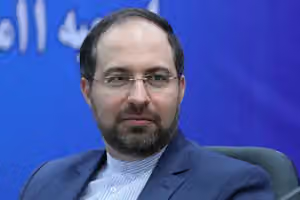
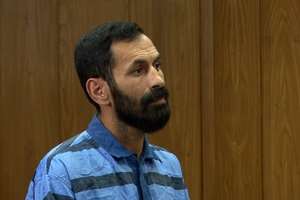
A former senior Iranian official living in Toronto played a “critical” role in generating government revenue that helped fund Iran's military, weapons production and armed groups in the Middle East, Global News reported, citing Canadian government documents.

The documents, released in redacted form by Canada's Immigration and Refugee Board at the request of Global News, include a Canada Border Services Agency assessment that said Abbas Omidi's senior role in Iran's mining sector benefited the government's ability to finance the Islamic Revolutionary Guard Corps and armed groups abroad.

“As a result of his power and influence, the subject directly benefited the Iranian economy and the government’s ability to continue to fund terrorism and human rights abuses throughout the world,” the CBSA said.

The agency said Omidi was “critical in the Iranian government’s continued ability to draw in mining revenue and fund the military, weapons manufacturing, and terrorism, both foreign and domestic.”

The assessment was written in 2024 and formed part of hundreds of pages disclosed in Omidi's deportation case, Global News reported.

Omidi's lawyer did not respond to requests for comment from Global News. At his deportation hearing, Omidi acknowledged serving as a deputy director general in Iran's Ministry of Industry, Mines and Trade but said his role was mainly technical.

CBSA links mining revenue to IRGC funding

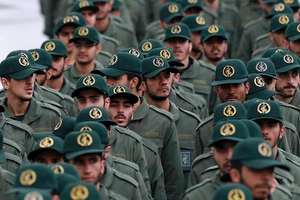
The CBSA said Iran's mining sector was closely tied to the military and the IRGC and provided revenue that helped Tehran support armed groups in the region.

“The abundant amount of wealth generated from the mining industry allows the Iranian regime and specifically, the IRGC, to continue to be a state sponsor of terrorism,” the CBSA report said.

The agency said the IRGC provided financing, training, weapons, technology and other support to groups including Lebanon's Hezbollah, Hamas, Palestinian Islamic Jihad, the Popular Front for the Liberation of Palestine and Iraqi group Kata'ib Hezbollah.

Canada lists the IRGC as a terrorist entity.

The CBSA said Omidi “directly and significantly impacted and benefited the Iranian economy and the government’s ability to continue to fund its military, weapons production, and terrorism and human rights abuses throughout the world.”

Global News said the allegations about Omidi's role in revenue used to support armed groups were contained in the CBSA assessment but were not raised during his deportation hearing.

Deportation case centers on senior government role

The CBSA is seeking to deport Omidi on the grounds that he was a senior official in Iran's government, Global News reported.

Canada moved in 2022 to bar senior Iranian government officials from entering or remaining in the country after Tehran's crackdown on anti-government protests.

Omidi arrived in Canada as a visitor in 2022 after serving in Iran's mining and trade ministry. The CBSA said he had “exerted significant influence on the exercise of government power,” according to Global News.

His deportation hearing began in March. The Immigration and Refugee Board said on Wednesday that the hearing had concluded and that a decision was expected in the fall.

Omidi had sought to keep the proceedings closed to the press, but the board rejected the request after Global News challenged the move.

Most Viewed

What Operation Economic Outcast means for Iran, and for everyone trading with
1
INSIGHT

What Operation Economic Outcast means for Iran, and for everyone trading with

2
EXCLUSIVE

Iran fuel reserves may run dry within weeks, sources say

3
ANALYSIS

Will Mojtaba Khamenei's absence help the Islamic Republic survive?

4
INSIGHT

Tehran debates waiting out Trump’s economic war

5

Iran plotted to assassinate Netanyahu’s son in Florida – Newsmax

Banner
Banner

Spotlight

  • Regional diplomacy tests path back to Iran-US talks
    INSIGHT

    Regional diplomacy tests path back to Iran-US talks

  • Tehran debates waiting out Trump’s economic war
    INSIGHT

    Tehran debates waiting out Trump’s economic war

  • Will Mojtaba Khamenei's absence help the Islamic Republic survive?
    ANALYSIS

    Will Mojtaba Khamenei's absence help the Islamic Republic survive?

  • What Operation Economic Outcast means for Iran, and for everyone trading with
    INSIGHT

    What Operation Economic Outcast means for Iran, and for everyone trading with

  • Iran keeps finding gas. Getting it out is the problem
    ANALYSIS

    Iran keeps finding gas. Getting it out is the problem

  • Tehran mosques used to surveil, shoot at January protesters
    EXCLUSIVE

    Tehran mosques used to surveil, shoot at January protesters

Banner
  • Canada says IRGC conscription alone no bar as Iranians face scrutiny

    Canada says IRGC conscription alone no bar as Iranians face scrutiny

  • The uneasy mix of diplomacy and pressure in Canada’s Iran policy

    The uneasy mix of diplomacy and pressure in Canada’s Iran policy

  • Canada deports former Iranian official linked to 2019 protest crackdown

    Canada deports former Iranian official linked to 2019 protest crackdown

•
•
•

More Stories

Iran sentences two more protesters to death as executions surge

Aug 26, 2026, 18:45 GMT+1
100%
Iranian demonstrators gather in a street during a protest in Tehran, Iran, January 8, 2026.

Two more protesters detained during Iran’s nationwide demonstrations in January have been sentenced to death, US-based rights group HRANA reported, amid a rise in executions and capital sentences following the unrest.

Hossein Nazari, 25, was sentenced to death by Branch One of the Revolutionary Court in Mashhad, northeastern Iran, HRANA reported Wednesday. He is being held in the city’s Vakilabad Prison.

HRANA said Nazari was convicted of “contact with hostile governments and groups” and “assembly and collusion to commit a crime against national security.” The sentence was issued in July.

Nazari was arrested by security forces during the January protests and transferred to Vakilabad Prison after interrogation and judicial proceedings.

His case was reported a day after HRANA said Amir Mohammad Majallal Choubari, 22, another protest detainee, had also been sentenced to death.

Majallal Choubari was arrested in Tehran on January 2 during the nationwide demonstrations and transferred to Qezel Hesar Prison in Karaj, west of the capital.

He had previously faced charges at Branch 33 of Tehran’s Public and Revolutionary Prosecutor’s Office, which handles security-related cases.

The charges included “assembly and collusion with the intention of committing a crime against national security,” disrupting public order, attempting to intentionally kill officers by trying to run them over and resisting officers.

100%
Amir Mohammad Majallal Choubari

Continued crackdown

The sentences come amid a sharp increase in executions and the use of capital punishment against protesters and political prisoners.

The US-based Abdorrahman Boroumand Center said Wednesday it had documented 950 executions in Iran since the beginning of 2026, including at least 20 women and 30 protesters. It said 45 executions had been recorded in August so far.

The group said Iran’s use of the death penalty takes place within a judicial system marked by unfair proceedings, lack of transparency and political influence.

It said systematic violations of fair-trial guarantees meant executions could amount to arbitrary deprivation of life under international law.

Iran International reported in late July that rights groups estimated around 100 political prisoners and protesters had received death sentences, while hundreds more faced charges that could carry the death penalty.

UN Human Rights Chief Volker Türk said earlier this month that Iran was using executions to “instil fear among the population and suppress dissent,” while raising concerns about torture-tainted confessions, rushed proceedings and a persistent lack of fair-trial guarantees.

Iran flogs two women detained in January protests

Aug 26, 2026, 16:12 GMT+1
100%
Setayesh (Behnoush) Sarabi (Left) and Neda Dadehjani (Right)

Iranian authorities flogged two women detained during January’s protests 31 times each before transferring them to prison to serve custodial sentences, according to rights groups.

Neda Dadehjani and Setayesh (Behnoush) Sarabi were summoned to a court in Qorveh on Saturday, August 22, where they were flogged before being transferred to the women’s ward of Sanandaj Central Prison, according to the Geneva-based Hana Human Rights Organization and Kurdish rights outlet Kolbar News.

A criminal court in Qorveh had sentenced each woman to one year in prison, 31 lashes and two years of exile in Nikshahr, in southeastern Sistan and Baluchestan province, after convicting them of “disrupting public peace and order.”

In a separate proceeding, the Qorveh Revolutionary Court sentenced each to another two years in prison for “assembly and collusion to commit a crime against internal security.”

The two women were first arrested by security forces during the January 2026 protests in Qorveh.

Kolbar News said Dadehjani and Sarabi had applied to serve their prison terms under electronic monitoring but received no response before being summoned to court.

Dadehjani is an artist, puppeteer, costume designer and theater makeup artist.

Hana condemned the flogging as “state torture and a tool for intimidating society” and called for the women’s release and access to independent medical care.

The group also questioned the enforcement of the flogging alongside the prison sentences, arguing that it was inconsistent with Article 134 of Iran’s Islamic Penal Code, which governs multiple convictions and sentences.

The cases come amid a broader crackdown following the January protests, during which courts have handed down prison terms, flogging, exile and death sentences.

Other people detained in connection with the protests have also received flogging sentences in recent weeks, according to rights groups.

Iran’s judiciary has used flogging against artists and activists in previous years, including singer Mehdi Yarrahi and campaigner Roya Heshmati, whose sentences were carried out.

Iran plotted to assassinate Netanyahu’s son in Florida – Newsmax

Aug 26, 2026, 11:24 GMT+1
100%

Iran allegedly plotted to assassinate Israeli Prime Minister Benjamin Netanyahu’s eldest son, Yair, while he was living in South Florida, Newsmax reported on Wednesday, citing a US law enforcement source familiar with the matter.

Iran allegedly plotted to assassinate Israeli Prime Minister Benjamin Netanyahu’s eldest son, Yair, while he was living in South Florida, Newsmax reported on Wednesday, citing a US law enforcement source familiar with the matter.

Israeli intelligence learned of the alleged plot in December and alerted US authorities, according to the source. Iranian operatives were believed to be in the Miami area and to have conducted surveillance of Yair Netanyahu’s home and movements.

The 35-year-old, who lived in Hallandale Beach and was accompanied by an Israeli security detail, was reportedly instructed to leave immediately. He departed without collecting his belongings and returned to Israel, where he now lives.

Israel’s Channel 12 reported that some news organizations had known about the alleged plot for months but were prevented from publishing details by Israeli military censorship.

Benjamin Netanyahu first disclosed the alleged assassination attempt during an interview with Israel’s Channel 14 on Monday but did not identify which of his two sons had been targeted.

“There is something here that is unbelievable. Iran targeted one of my sons. Iran tried to murder him, tried to murder one of my sons,” Netanyahu said while defending government-funded security for his family.

In July, Israel extended Shin Bet protection for Netanyahu’s wife, Sara, and his sons, Yair and Avner. The two sons are expected to retain protection for five years after Netanyahu leaves office, Newsmax reported.

The alleged plot emerged amid longstanding US accusations that Iran has pursued assassination operations abroad in retaliation for the US killing of Quds Force commander Qassem Soleimani in January 2020.

US prosecutors charged an alleged Iranian asset, Farhad Shakeri, in 2024 over what they described as an IRGC-directed plan to assassinate Donald Trump.

In 2022, the Justice Department charged IRGC member Shahram Poursafi with offering $300,000 to arrange the killing of former US national security adviser John Bolton.

Iranian state television also recently broadcast a video threatening Trump’s son Barron and claiming that his movements and security arrangements had been monitored.

The US Secret Service said it was aware of the broadcast and investigated threats against those under its protection.

He spent a decade helping vulnerable children. Iran handed him 31 years

Aug 24, 2026, 05:03 GMT+1
•
Negar Mojtahedi
100%

A 46-year-old Baha’í who devoted more than a decade to helping some of Iran’s most vulnerable children has been handed prison sentences totaling 31 years after a trial in which his family says he was denied a lawyer.

Afshin Heyratian’s days often began at 6 a.m. He would leave his home in Tehran and spend the day volunteering with an organization helping working children, Afghan children without birth certificates and others whose legal status could prevent them from accessing education.

Sometimes his work meant teaching. Sometimes it meant painting rooms or repairing tables and chairs. Often, it was simply spending time with the children and trying to make them happy.

“That was his passion,” his older brother, Ramin Heyratian, told Iran International’s Eye for Iran. “If one virtue was supposed to define a person, it is his kindness.”

A playwright and screenwriter, Afshin also helped friends write productions without receiving credit because of restrictions imposed on him, according to Ramin, who said this was his brother’s third imprisonment

A life interrupted

His latest ordeal began after he was questioned at the school where he volunteered. Security forces came to the family home on November 11, 2025, and arrested him.

Agents confiscated phones, tablets, computers, Baha’í books and even Baha’í pictures hanging on the walls, according to his brother.

Afshin then spent 34 days in solitary confinement. For the first days after his arrest, his family did not even know where he was.

Eventually, he was permitted to call his mother and tell her to prepare the deed to the family home, raising hopes that it could be used as collateral for his release.

The release never came.

Ramin said Afshin remained imprisoned for more than 260 days before being charged, while his mother was repeatedly sent between courts trying to find out what was happening.

“They were sending her back and forth almost every day,” he said.

Afshin had an opportunity to build a life outside Iran in the early 2000s and spent time in the United States, but ultimately chose to return.

“He truly loves Iran and Iranians,” Ramin said.

The case has drawn international condemnation. Nobel Peace Prize laureate Shirin Ebadi has called for his release, while the Canadian government described his treatment as an example of Iran’s “continued disregard for human rights.”.

‘No lawyer, no warning’

The ordeal has been particularly devastating for Afshin’s mother, an 80-year-old cancer survivor.

She can now visit her youngest son approximately once every two or three weeks, Ramin said. Afshin is also allowed to telephone her each day.

Ramin said the family had been told Afshin would receive legal representation and that they would be notified before his court date.

Neither happened.

Instead, one of Afshin’s fellow prisoners alerted his own family that Afshin had been taken to court. Afshin’s mother learned what was happening while she was on her way to an oncology appointment.

She rushed to the courthouse.

Ramin said she waited in the hallways, trying to determine where her son was, until she suddenly heard Afshin behind her as he emerged from court.

By then, the hearing was over.

Afshin pleaded not guilty but had no lawyer representing him, Ramin said.

“He was basically his own lawyer,” he said.

When his mother asked how he was doing, Afshin reassured her.

“I’m okay. Don’t worry about it. We’ll be fine,” Ramin recalled him saying.

‘Life sentence’

Branch 26 of the Tehran Revolutionary Court sentenced Heyratian to prison terms totaling 31 years, according to the Hengaw Organization for Human Rights.

The sentences included 12 years for “forming an illegal group,” 11 years for “propaganda activities contrary to the sacred law of Islam,” six years for “assembly and collusion,” and two years over allegations of “obtaining illegitimate property.” Financial penalties were also imposed.

Under Article 134 of Iran’s Islamic Penal Code, only the most severe sentence, 12 years, is expected to be enforceable.

Ramin rejects the allegations against his brother.

“The things that they have attached to those charges … are, first of all, completely untrue,” he said, adding that the organization where Afshin volunteered had been permitted to operate in Iran.

Iran’s Baha’í community has faced decades of state persecution and restrictions on education, employment and other aspects of public life. The Islamic Republic does not recognize the Baha’í faith as one of the country’s protected religious minorities.

Ramin said the length of his brother’s punishment was extraordinary even by the standards of that persecution.

“At Afshin’s age, this can be a life sentence,” he said, adding that the family had not abandoned hope.

“We believe that the future of Iran is absolutely brilliant,” Ramin said. “We are hoping for that to happen soon.”


Persian Murakami editions race ahead of English release with AI help

Aug 23, 2026, 22:41 GMT+1
100%
Covers of five Persian editions of Haruki Murakami’s The Tale of KAHO.

Haruki Murakami’s latest novel has yet to receive an official English translation, but at least six Persian versions have already been published or are in preparation in Iran, with some translators relying on unofficial English texts and AI tools.

The Tale of KAHO was published in Japan on July 3. Within weeks, three Persian translations had reached the Iranian market and at least three more were on the way.

Iran is not a party to the Berne Convention on international copyright, allowing publishers to release competing translations of foreign books without securing exclusive Persian-language rights.

But the latest race to translate Murakami has added a new element to Iran’s already unruly publishing market: AI.

Some translators have worked from an unofficial English version of the novel whose provenance is unclear and which, according to Barseghian, showed signs of having been generated using AI.

That raises the prospect of Persian editions based not directly on Murakami’s Japanese original or an authorized translation, but on an AI-generated intermediary text of uncertain origin.

‘Transparency and responsibilty'

The published versions are by Ali Mojtahedzadeh for Vazn-e Donya, Araz Barseghian for Milkan and Yasmin Davoudi for Chitra. Sahar Bastam is preparing a translation for Didavar, Kazem Kamrava for Sandoghcheh and Amir Behrouz Ghasemi for Kheyzaran.

Mojtahedzadeh told Iranian economic newspaper Donyaye Eqtesad that he obtained an unofficial English translation from a website specializing in such material and completed his Persian version in less than two weeks.

Barseghian said he bought the official Japanese Kindle edition and used an unofficial English version that appeared to have been generated with AI, comparing the texts with AI tools and checking issues including meaning, pronouns, point of view and paragraphing.

“The main issue for me is not whether artificial intelligence is used, but transparency and the translator’s responsibility,” Barseghian told Donyaye Eqtesad.

He said AI served as a tool for comparison and comprehension rather than as the final translator, with questionable passages checked against the Japanese original.

‘It’s only the beginning’

The speed and methods behind the competing editions have drawn criticism on Persian-language social media, particularly over copyright and the use of unauthorized source material.

“The translator proudly says I downloaded the book file from an illegal website and translated it. He doesn’t even seem to think there is anything wrong or ugly about it,” an X user named Milad wrote.

Others argued that AI was accelerating a problem that long predates the technology.

“The main problem is that none of them sees any need to buy the translation and publication rights from the original publisher,” X user Tiro Whakatika wrote. “Otherwise, the rights would normally go to one publisher and we wouldn’t see six simultaneous translations of one book.”

“Artificial intelligence has now reduced the cost and time of translation and turned this unregulated market into a race to publish bestselling books immediately,” the user added. “This is only the beginning, and it will probably get much worse.”