Two more men hanged in Iran as authorities ramp up executions

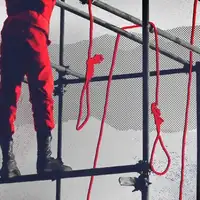
Iran executed two more men on Saturday after the Supreme Court upheld their death sentences for spying for Israel and cooperating with the Mossad intelligence service.

Iran executed two more men on Saturday after the Supreme Court upheld their death sentences for spying for Israel and cooperating with the Mossad intelligence service.
The judiciary’s media center said Yaghoub Karimpour and Nasser Bekrzadeh were hanged in Urmia Central Prison following legal proceedings.
The hangings come as authorities continue to carry out daily executions, taking place against the backdrop of a fragile ceasefire following the conflict that erupted on Feb. 28.
Authorities said Karimpour, a law graduate from Miandoab and a member of the Yarsan religious minority, maintained contact with Mossad and transmitted sensitive information. Rights group Hengaw said Karimpour was arrested in connection with the 12-day war between Iran and Israel last June.
The judiciary said Bekrzadeh, a 26-year-old Kurdish political prisoner, gathered and sent information on key locations, including the Natanz nuclear site, after he was recruited online.
Hengaw said Bekrzadeh’s death sentence was upheld in a fast-track process. "His death sentence was confirmed within just 10 days for the third time by Branch 39 of the Supreme Court and communicated to him on April 25," the group said.
Hengaw expressed concern over the transfer of the men and a third prisoner, 27-year-old Kurdish man Mehrab Abdollahzadeh, to execution cells under "vague pretexts." Abdollahzadeh was arrested during the "Woman, Life, Freedom" protests and sentenced to death on charges of armed rebellion.
"Hengaw warns of the serious and immediate danger of the execution of these three prisoners. Hengaw emphasizes that Nasser Bekrzadeh, Yaghoub Karimpour, and Mehrab Abdollahzadeh were sentenced to death in completely non-transparent processes, under torture, and without access to a fair trial," the group said.
UN human rights chief Volker Turk said this week Iran has executed at least 21 people and arrested more than 4,000 on national security charges since the start of the latest conflict in February.
"I am appalled that — on top of the already severe impacts of the conflict — the rights of the Iranian people continue to be stripped from them by the authorities, in harsh and brutal ways," Turk said.



Iranian Nobel Peace Prize laureate Narges Mohammadi was urgently transferred from Zanjan Prison to a hospital on Friday after losing consciousness twice and suffering a severe deterioration in her health, her lawyer and the Narges Foundation said.
The Narges Foundation said in a statement Mohammadi was moved by ambulance to a local hospital in Zanjan in northwestern Iran after prison doctors concluded her condition could no longer be managed inside the prison.
She was admitted to the coronary care unit, according to her lawyer Mostafa Nili.
Nili said Mohammadi had experienced extreme blood pressure fluctuations, acute chest pain and repeated episodes of severe distress in recent days. He said she first fainted after a sudden drop in blood pressure and was given IV fluids and anti-nausea medication in the prison clinic.
After emergency services arrived, Mohammadi initially declined transfer to a Zanjan hospital, citing warnings from two cardiologists that her history of three angiographies and stent placement made treatment in Zanjan dangerous and required care by her own medical team, Nili said.
A few hours later, she lost consciousness again. A neurologist then ordered urgent hospitalization, saying her neurological condition had become the immediate clinical priority despite her serious cardiac issues.
The foundation said Mohammadi’s family had sought proper medical care for weeks and described the hospital transfer as a “last-minute” step that may have come too late.
It said specialists had recommended her transfer to Pars Hospital in Tehran, where her own medical team could treat her.
According to the foundation, Zanjan’s forensic medical commission had already recommended a one-month suspension of her sentence for medical treatment, but prosecutors made it contingent on approval from Tehran.
Mohammadi was re-arrested on December 12, 2025, and sentenced on February 8, 2026, to an additional seven and a half years in prison, bringing her cumulative sentence to more than 18 years.
Dozens of residents in Tehran displaced by a 40-day war with the US and Israel said municipal authorities ordered them to vacate temporary hotel housing despite unsafe homes and limited aid, according to interviews published by Etemad newspaper on Thursday.
Several of those affected said they were told to leave by the end of the week after calls from Tehran’s crisis management body, even though official inspections had deemed their homes uninhabitable.
“I was told I had to leave the hotel by the end of the week, even though my home is unsafe and I have nowhere to go,” one resident said, describing a call from a municipal official who noted reconstruction had not begun due to lack of funds.
Unsafe homes, no rental support
A resident, who lived in a seventh-floor apartment damaged by a nearby missile strike in March, described shattered windows and debris that rendered both the unit and building access unusable. Emergency services later confirmed the structure was unsafe.
Despite this, the resident said no rental assistance or deposit support had been offered. “They told me I should find housing myself because there is no budget,” the resident added.
Other displaced residents reported receiving similar instructions. Many said they lacked the financial means to rebuild or secure new housing, leaving them at risk of homelessness.
Under earlier municipal pledges, affected households were to receive temporary accommodation, rental support, and reconstruction assistance.
Updated figures increased aid for household goods to 4 billion rials (about $2,200), rental deposits to 20 billion rials (about $11,000), and monthly rent support to 400 million rials (about $220).
However, residents said these commitments have not been consistently fulfilled.
Average income in Iran is around $150 to $200 per month, while the minimum wage is typically below $100.
Delays and conditions on compensation
Some families whose homes were destroyed said they were instructed to pay for basic household items upfront and submit receipts for reimbursement, which could take up to 10 months.
Others said even smaller grants had limited impact. One resident who received 2.5 billion rials (about $1,400) said it was insufficient to replace essential items such as a refrigerator, stove, and bedding.
“We lost everything in the strike and could not even recover clothes,” the resident said. “With that money, we could only buy a few basic items.”
In some cases, families forced to leave hotels reported moving into improvised spaces. One household said they had lived for months in a 30-square-meter storage room after being unable to afford rent.
Insurance payouts also stalled
Residents with damaged vehicles described similar difficulties in seeking compensation. Several said they were told by representatives of insurance that earlier claims from a previous conflict in June had not yet been settled.
“They told me there is no timeline for paying these damages,” one vehicle owner said after visiting an insurance office.
Official figures show that thousands of vehicles and tens of thousands of residential units were damaged in the 40-day conflict, adding to earlier destruction from a previous 12-day escalation in June.
City council response highlights gaps
A spokesperson for Tehran’s city council acknowledged reports of inconsistencies and said cases of forced eviction without support should be reviewed.
“This should not happen, and if such cases exist, they must be followed up,” Alireza Nadali said, adding that municipal policy ties the end of hotel stays to securing alternative housing.
The official also pointed to the scale of damage and budget constraints, adding that assistance programs were introduced voluntarily and may face delays.
At the same time, the council emphasized that reconstruction responsibilities differ depending on the level of damage and local planning rules, which has led to varied outcomes across districts.
Oversight concerns emerge
The accounts raise questions about the oversight role of the city council and the implementation of municipal commitments. Residents interviewed said many promises remained unfulfilled months after the initial damage.
Efforts to obtain direct comment from municipal crisis officials were unsuccessful, according to the report.
Canada’s government is under pressure to explain how Mehdi Taj, Iran’s football chief and a former intelligence officer of the Revolutionary Guards, was briefly allowed into the country after being granted a special permit despite Canada’s IRGC ban.
Speaking to reporters Thursday, Prime Minister Mark Carney declined to discuss Taj’s case, citing privacy laws, but defended the government’s position on the IRGC.
“Members of the [Iranian] Revolutionary Guard rightly have been prohibited from entering this country and they will not enter this country,” he said.
The comments followed reporting by Iran International on how Taj, president of Iran’s football federation and a former intelligence commander in the Islamic Revolutionary Guard Corps, received a Temporary Resident Permit, or TRP. The permit allows Canadian authorities to admit a person who would otherwise be barred under immigration law.
The issue moved quickly to Parliament. At Thursday’s meeting of the Standing Committee on Public Safety and National Security in Ottawa, Conservative MP Frank Caputo pressed Immigration Minister Lena Diab to explain how a person deemed inadmissible had received permission to enter Canada.
Caputo said “the rule of law demands transparency” and asked “who gave him a visa,” saying it took Iran International’s reporting to bring the case to public attention.
Who is Mehdi Taj, and what happened?
Taj, the president of Iran’s football federation, has longstanding ties to the Islamic Republic’s security establishment. After the 1979 revolution, he served as an intelligence commander in the IRGC in Isfahan, where units were involved in monitoring internal dissent, including among Kurdish populations.
Canada listed the IRGC as a terrorist entity in 2024, a move that makes people linked to the force inadmissible. Even so, Taj was issued a TRP to attend the FIFA Congress in Vancouver.
Sources who spoke to Iran International said Taj arrived in Canada but was turned back within hours. He and two people accompanying him left at 10:05 p.m. Tuesday after being questioned by authorities.
The immigration ministry commented only after his departure. It declined to name him, citing privacy laws, and said broadly that people linked to the IRGC are not welcome in Canada.
Taj’s brief presence came just before the FIFA Congress at the Vancouver Convention Centre, where members of the Iranian diaspora had planned protests after Iran International’s report.
Political backlash in Ottawa
The case has put the government under pressure from opposition figures who say Taj’s short stay does not answer the central question of why he was issued a permit at all.
Opposition Leader Pierre Poilievre criticized the government publicly, raising concerns about how a person deemed inadmissible was granted entry in the first place.
Conservative Deputy Leader Melissa Lantsman also pointed to Iran International’s reporting as she pressed the government for answers.
“Good riddance. He didn’t just get on a plane and come here to be sent back. Did the Liberal government issue him a permit? Yes or no?” she said.
Conservative MP Michelle Rempel Garner rejected the argument that the system had worked because Taj was ultimately refused entry.
“Come on, this guy was issued a permit. They made a conscious decision,” she told reporters Thursday in Ottawa.
She has described the case as evidence of serious immigration screening failures and called for accountability.
In the Senate, opposition leader Leo Housakos pressed the government in sharper terms.
“Your government can't seem to show the IRGC the door, but it can find a way to roll out the welcome mat… What’s the point of listing the IRGC if you're not serious about throwing him out of our country?” he said.
Foreign Affairs Minister Anita Anand suggested the permit may have been granted and later revoked.
“It’s not my personal lead, but my understanding is that there is a revocation of the permission. It was unintentional,” she said, pointing to a possible breakdown in the process.
International coverage and fallout
The case, first reported by Iran International, has since moved into wider international coverage. The New York Times, USA Today, Agence France-Presse and The Canadian Press have all covered the incident, citing the reporting that brought Taj’s entry to light.
The episode has turned a single immigration decision into a broader test of Canada’s policy toward officials tied to the Islamic Republic.
Canada has formally listed the IRGC as a terrorist entity, barring people linked to it from entering the country, yet discretionary tools like Temporary Resident Permits allow authorities to override that inadmissibility.
For critics, Taj’s case has exposed the space between the government’s public position and the way exceptions can be made in practice.
The controversy also comes amid deep anger over the Islamic Republic’s human rights record, including what has been described as one of the deadliest crackdowns in modern history earlier this year, adding to concern among Iranian-Canadians over how Western governments handle officials tied to Tehran.
Questions still facing the government
Taj’s brief entry and rapid removal have left the government facing the same basic issue that first put the case in public view: who approved the permit, why it was granted despite Canada’s inadmissibility rules, and what safeguards are in place to prevent a similar decision.
What began with Iran International’s reporting has become a political fight in Ottawa, one that now sits at the crossing point of immigration law, national security and Canada’s approach to the Islamic Republic.
Iranians condemned selective access to restricted internet services as discriminatory and corrupt in messages to Iran International, urging others to reject the scheme in recent days.
Dozens of citizens described the rollout of tiered internet, branded as “Internet Pro,” as part of a system of inequality emerging during months of widespread connectivity restrictions.
Internet access was first cut on January 8 alongside calls for nationwide protests and remained fully restricted until January 28. About a month later, during US and Israeli strikes on Iran, authorities imposed another shutdown that has now lasted more than 60 days.
Monitoring group NetBlocks has described the ongoing disruption as one of the longest state-imposed internet blackouts recorded globally, leaving tens of millions of people largely cut off from international connectivity.
Material circulating among users outlines a four-level structure of access, with so-called “white SIM cards” at the top offering largely unrestricted global internet, although their pricing has not been disclosed.
A second tier provides paid “Internet Pro” access with partial connectivity but continued filtering and daily limits, with operators formally setting prices at around 400,000 rials per gigabyte (about $0.22) and packages such as 50 gigabytes annually priced near 25 million rials (about $14).
Below that, users rely on VPN services for broader access, often at significantly higher cost – figures shared by users point to similar data volumes reaching about 70 million rials (around $39) – while the majority remain limited to a restricted domestic network, where access to local services is priced far lower, including packages around 3 million rials (about $1.70).
Average income in Iran is around $150 to $200 per month, while the minimum wage is typically below $100.
“In Iran, for more than two months the government has cut off people’s internet and now it has launched a fully legal form of internet rent-seeking,” one citizen said. “They sell limited annual access to businesses and casually turn the internet into a class-based system. This is an obvious injustice.”
Citizens link plan to wider corruption
Several citizens described the initiative as an extension of long-standing financial networks tied to filtering and circumvention tools. They argued that the same actors who benefited from selling virtual private networks are now promoting the new service.
One person said individuals previously involved in selling VPN access during periods of heavy restrictions have begun advertising Internet Pro packages.
Others framed the policy as a revenue stream. Some said authorities appear to be offsetting economic pressure through monetizing access to global connectivity.
“If the shutdown is truly about national security as you say, then what is this Internet Pro?” another citizen asked. “Is it another way to take money from people?”
Past reporting has pointed to a lucrative market around filtered internet access. In one instance, a member of parliament said the annual turnover of the VPN market reached tens of millions of dollars.
Businesses struggle despite limited access
Many messages said selective access has done little to ease the broader economic damage, with users saying that businesses cannot operate when customers remain offline, even if sellers regain limited connectivity.
“Many businesses have shut down and people’s lives have been disrupted,” one citizen wrote, describing internet access as a necessity rather than a privilege.
Another person questioned official reasoning that the policy aims to support commerce. “If a seller has internet but the buyer does not, what is the point?” the message read.
An online shop owner said the plan fails to help businesses dependent on social media platforms. “Even the Internet Pro they talk about is useless for us,” the person said. “We need customers online. If ordinary people cannot connect, our access means nothing.”
Students and professionals also described setbacks. A graduate student said research had stalled due to lack of access, while instructors continued to use less restricted connections without objection.
Others pointed to broader social effects, including disruption to education and rising psychological strain linked to isolation from global communication networks.
Media groups warn of wider impact
The Tehran Province Journalists’ Association criticized the internet shutdown and access controls in a Thursday statement, saying free internet “is the right of all and must not be sold under any name.”
“Repeated internet shutdowns, beyond causing serious harm to businesses and essential communications, have a destructive impact on media work and the economic condition of media outlets,” the statement said.
The association said offering higher-quality access to select users creates additional social problems, adding that “granting a public right to specific buyers at a higher price is against citizens’ legal rights and is unethical and must be removed from the government’s agenda.”
It called on authorities to provide equal and fair access to all journalists and media organizations, emphasizing that free and transparent flow of information is central to media activity.
“Access to free, high-quality and universal internet is not a luxury but a public right, and governments are responsible for ensuring it,” the statement said.
Separately, the newspaper Etemad highlighted the human impact of the shutdown, reporting that restrictions have not only damaged online businesses but also affected people’s mental well-being.
The report noted that platforms such as Instagram and Telegram had become part of daily life for many Iranians, and their sudden disruption has created a sense of disconnection.
It added that users had only recently begun integrating tools such as ChatGPT into everyday use, but are now cut off from such global services, with younger generations facing particular strain on their digital identity and mental health.
Calls grow to reject privileged access
A recurring theme in the messages was refusal to participate in the system. Many citizens described accepting privileged access as complicity in unequal policies.
A dentist in Tehran said he had declined multiple invitations to receive Internet Pro access. “Internet is the right of all people,” he said, urging colleagues not to accept what he called rent-based access.
Another citizen described support for the plan as a “betrayal to all Iranians” and encouraged collective refusal.
Some messages praised professional bodies that have rejected the offer. Iran’s nursing organization said on April 26 it would not seek special access for its members while the broader public remains restricted.
Similar positions were taken by associations representing graphic designers, nurses and lawyers, who described the policy as inconsistent with principles of equality.
“These decisions show that resistance is possible,” one citizen wrote, calling for wider adoption of similar stances.
Wider context of prolonged shutdown
Under current conditions, most citizens rely on costly and often insecure VPN services to access blocked platforms. Internet Pro offers limited alternatives but still includes filtering and usage caps.
Across dozens of accounts, citizens framed access to the internet not as a service to be rationed, but as a shared right – one they say should not depend on status, profession, or ability to pay.
Taliban leaders and affiliated figures voiced support for Iran after Israeli strikes in June 2025 and later US threats, signaling a limited and conditional alignment despite longstanding disputes with Tehran.
Despite a history of sectarian and political friction, recent statements from Taliban officials point to an alignment with the Islamic Republic during a period of heightened regional confrontation.
Differences over border clashes, water rights from the Hirmand (Helmand) River and the treatment of Afghan refugees remain unresolved.
The clearest articulation came from Taliban spokesman Zabihullah Mujahid, who said the group does not favor war but supports Iran’s right to respond to attacks.
“We are not in favor of war… Iran is right; defense is Iran’s right,” Mujahid said in a February 15, 2026 interview with radio. “Whatever happens, Afghans are ready to sympathize with Iran in times of war and hardship and cooperate within their means.”
Mujahid added that any assistance would depend on Iran making a request and said that diplomacy remains preferable to escalation.
The spokesman had earlier condemned Israeli strikes on Iranian nuclear and military targets on June 13, 2025, describing them as a “violation of international law and national sovereignty.”
Foreign ministry stance
Taliban Foreign Minister Amir Khan Muttaqi also conveyed support in direct contacts with his Iranian counterpart Abbas Araghchi.
In a March 2, 2026 statement, the foreign ministry said Muttaqi condemned what he described as “US and Israeli aggression against Iran” and expressed sympathy following the reported death of Iran’s supreme leader.
Muttaqi urged a diplomatic resolution, calling “violations of national sovereignty unacceptable under international norms.”
Haqqani network figures
Figures linked to the Islamist Haqqani network reinforced this position through social media activity. Mohammad Jalal, a senior member of the Taliban’s cultural committee, circulated images of damage in Israeli cities after Iranian missile strikes, framing Tehran’s response as “legitimate self-defense.”
Jalal also shared posts by Iranian Parliament Speaker Mohammad Bagher Ghalibaf promoting a campaign encouraging volunteers to defend Iran, aligning with broader anti-Israel rhetoric within Taliban circles.
Anas Haqqani, another senior figure, published a poem referencing the Strait of Hormuz in support of Iran.
Pro-Taliban commentators
Media figures close to the Taliban have gone further, portraying Iran as a model of national unity. Abdullah Raihan, a Kabul-based commentator, praised defiance following US threats to target Iranian infrastructure.
“Afghans should learn patriotism from Iranians,” Raihan wrote earlier in April, describing scenes of civilians gathering on bridges in response to threats of bombardment.
Raihan contrasted this with Kabul’s 2021 fall, arguing that “even critics of Iran’s government did not undermine national infrastructure.” He also condemned attacks on civilian sites and adding that foreign intervention is worse than domestic political shortcomings.
State media mirrors official line
Taliban-controlled national radio and television largely reflected official statements without advancing independent advocacy for Iran. Coverage focused on Mujahid’s interview and foreign ministry statements, framing developments through concerns about regional escalation and sovereignty.
Programming remained largely domestic in focus, though Iran-related coverage rose sharply during the most intense phases of the conflict.
Whether this limited convergence translates into tangible cooperation remains unclear, given enduring Iran-Taliban disputes and the Taliban’s preference for avoiding direct involvement in the conflict.