Up to 40 Afghan migrants die crossing into Iran in severe cold

Up to 40 Afghan migrants have died inside Iran after illegally crossing the border during a severe cold snap, sources in western Afghanistan told Afghanistan International.

Up to 40 Afghan migrants have died inside Iran after illegally crossing the border during a severe cold snap, sources in western Afghanistan told Afghanistan International.
Sources in Afghanistan's Herat province said the bodies of at least 15 migrants were transferred to the districts of Kohsan and Adraskan after they died on Iranian territory, with some estimates of the total death toll at around 40 people.
Afghanistan International, a sister channel of Iran International, spoke to an Afghan migrant who visited the morgues at Afghan cemeteries and Taybad hospital in Iran’s Razavi Khorasan province. The source said more than 40 Afghan migrants had died.
The figures have not been officially confirmed, and several migrants are still reported missing along the Iran-Afghanistan border.
Sources said hundreds of Afghans set out toward Iran in recent days and were caught in a severe cold wave along the route, which is ongoing.
The migrants were reportedly attempting to enter Iran through unofficial routes from Islam Qala toward the city of Taybad. Weather conditions in the border area have been described as extremely cold, with snow and heavy freezing rain.
Sources said families of the victims are searching for the bodies of their relatives.
Attempts by Afghan citizens to cross illegally into Iran doubled over the six-month period ending in October compared with the same period last year, a senior Iranian border commander said at the time, as Tehran accelerates deportations and tightens controls along its frontier with Afghanistan.
Over 1.6 million Afghan refugees and migrants have been expelled from Iran this year, according to Iranian authorities. The deportations sharply increased in June and July, following a brief war between Iran and Israel.
Iranian officials have cited national security as the primary justification, making unsubstantiated allegations that Afghans had acted as spies for Israel during the 12-day conflict.
The crackdown triggered a humanitarian crisis along the Afghanistan–Iran border and drew international criticism as a potential violation of international law.

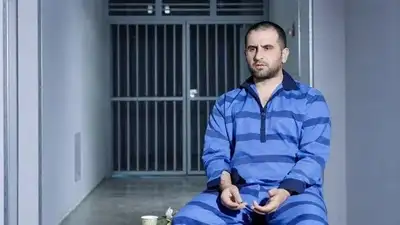
Sweden has received unconfirmed information that a Swedish citizen detained in Iran on espionage charges has been sentenced to death, Foreign Minister Maria Malmer Stenergard said on Friday.
“We have received information that the man has been sentenced to death at first instance, but these are unconfirmed reports,” Malmer Stenergard told a news conference.
She said Sweden’s foreign ministry summoned Iran’s ambassador on Wednesday to protest the reported sentence.
Sweden earlier confirmed that a person holding Swedish citizenship is imprisoned in Iran and accused of spying, saying its embassy in Tehran and the foreign ministry are in contact with the family and that the man has access to a lawyer. The ministry said it could not give further details for consular reasons.
Iran’s judiciary has said the case involves an Iranian-Swedish dual national accused of spying for Israel. Judiciary spokesman Asghar Jahangir said earlier this week the man was recruited by Israeli intelligence in 2023 and that a verdict would be issued soon. He said the defendant, identified only as a Swedish citizen since 2020, had travelled to six European capitals for espionage training, made several trips to Israel and entered Iran about a month before the war in June, staying at a villa near Karaj.
Iran has carried out several executions in recent months over espionage convictions linked to Israel, drawing concern from international rights groups over due process.

At least 17 Kurdish citizens have been detained in recent days in multiple Iranian cities, according to a Kurdish human rights group, amid what activists describe as increased security pressure on minorities and civil activists.
The arrests were reported in Abdanan, Oshnavieh, Bukan, Piranshahr and Miandoab. Security forces carried out several detentions without presenting judicial warrants, and detainees were taken to undisclosed locations, rights monitors said.
In Oshnavieh, three Kurdish citizens – Shaho Ebrahimi, Shafi Ahmadi and Siraj Elyasi, 16 – were detained within a 24-hour period and transferred to an unknown location, Kurdish rights outlet Kurdpa reported. Kurdpa said Ebrahimi is the brother of Shavaneh Ebrahimi, a political prisoner who was detained by security forces 11 days earlier and whose fate remains unknown.
Separately, at least three citizens were detained in Abdanan, Ilam province, by intelligence agents, human rights news agency HRANA reported. Kolbar News also reported the detention of several young residents of Abdanan and nearby villages, including minors, saying those held were transferred to undisclosed locations.
Additional arrests were reported in Bukan, Piranshahr and Miandoab in West Azarbaijan province, according to multiple human rights websites, bringing the total number of detainees to at least 17. With the exception of one detainee who was later released, no information has been made public about the charges, legal status or place of detention of those held.
Pressure after protest movement
The Islamic Republic has long relied on arrests and imprisonment of protesters and civil and political activists as a key tool of repression, rights groups say. The practice intensified after the Woman, Life, Freedom protests that began in 2022.
Iran International reported on Thursday that authorities had launched a new round of pressure on civil, media and political activists in several cities, citing informed sources who said the aim was to deter potential protests linked to possible government plans to raise fuel prices.
UN scrutiny
The arrests come as international scrutiny of Iran’s human rights record continues.
On Thursday, the UN General Assembly adopted a resolution condemning what it described as grave, widespread and systematic human rights violations in Iran, according to UN records.
The resolution, titled “Situation of human rights in the Islamic Republic of Iran,” was adopted by a vote of 78 in favor, 27 against and 64 abstentions, marking the 72nd such resolution adopted by the General Assembly.
According to the text, it “condemned in the strongest terms” the sharp rise in executions in Iran and raised concerns about transnational repression by Iranian authorities.

Rights abuses against women political prisoners in Tehran’s notorious Evin Prison have intensified since a 12-day war with Israel, an informed source told Iran International, with an inmate's suicide attempt highlighting mounting pressure in the ward.
Around 20 political prisoners in Evin’s women ward have repeatedly gathered in the head warden’s office over the past week, demanding an end to what they describe as deliberate obstruction by prison officials, a halt to guards’ violence and proper access to medical treatment, the source said on Thursday.
The prisoners have also called for improvements in food and hygiene inside the ward, saying basic standards have sharply deteriorated since the new security team from Qarchak prison took over.
The source, herself a political prisoner, said inmates have since been sent to solitary confinement on various pretexts, while family visits and phone calls are frequently cut off as punishment.
Suicide attempt
The source said one political prisoner in the women’s ward recently attempted suicide after officials repeatedly blocked the implementation of her release order.
Cellmates intervened and saved her before asking the duty officer for help, but the guard refused to assist despite the emergency, the source said.
The prisoner, whose name Iran International is withholding for security reasons, is said to be in a deeply fragile psychological state.
According to her fellow inmates, prison authorities keep finding pretexts to prevent her release despite repeated protests over the refusal to carry out a lawful decision.
Denial of care
In the absence of proper medical care, the prayer room of the women’s ward has effectively been turned into a makeshift space to hold sick prisoners, the source told Iran International.
The source accused prison officials of obstructing the implementation of laws on medical furloughs and conditional release on bail for inmates with serious illnesses, despite clear legal provisions allowing such measures.
According to the source, political prisoner Aida Najafloo, who underwent surgery for a fractured vertebra, was returned to prison before completing treatment and is now suffering from a severe infection and critical physical condition.
Najaflou is among five Christians handed combined prison terms totaling more than 50 years.
The source also cited the case of Masoumeh Sadr Eshkevari, who suffers from lung, respiratory, heart and mobility problems and breathes with the help of an oxygen device.
Despite doctors’ emphasis on the need for treatment outside prison, she has been denied medical furlough as well as her legal right to release her on bail, with fellow inmates left to push her wheelchair and help her use the bathroom and shower.
New charges
The source said that the release orders for two political prisoners, Baha’i community leader Fariba Kamalabadi and labor activist Narges Mansouri, have not been implemented since October because of obstruction by prison authorities.
Narges Mansouri, 46, is a member of the Syndicate of Workers of the Tehran and Suburbs Bus Company and the mother of a 13‑year‑old child.
Instead, they and five other women now face new charges after they protested officials’ role in the death of political prisoner Somayeh Rashidi, who passed away in Qarchak following alleged medical neglect.
Somayeh Rashidi died after several days in hospital following her transfer from Qarchak prison in September.
All seven have been charged with “insulting the Supreme Leader” and “disturbing prison order,” with courts setting bail of 80 million tomans for each, the source said. Some of the women have also faced weeks‑long bans on visits and phone calls as additional pressure.
According to Amnesty International, Iranian authorities have executed more than 1,000 people so far this year, the highest annual figure recorded by the group in at least 15 years.

A death row prisoner accused by Tehran of spying for Israel has been transferred to solitary confinement, a step that typically precedes executions, informed sources told Iran International.
Aqil Keshavarz, a student from Isfahan, was moved from the general ward to a solitary cell on December 17, sources said, adding that the transfer was carried out to prepare for the implementation of his death sentence.
Keshavarz was arrested in June during the twelve-day war between Israel and Iran and was later convicted of spying for Israel by Iran’s judiciary.
Until now, there had been no public reporting on his case, and his name had not appeared in media coverage or human rights reports.
The Kurdistan Human Rights Network identified Keshavarz as an architecture student at Shahroud University. According to the group, he was detained by agents of the Islamic Revolutionary Guard Corps Intelligence Organization while traveling to Urmia.
A source familiar with the case said Keshavarz was held for about a week at an IRGC intelligence detention facility in Urmia, where he was interrogated and tortured in an effort to extract a forced confession. He was later transferred to Tehran’s Evin prison.
The source added that Keshavarz was being held in Evin at the time the prison was bombed by Israel, after which he was moved to another detention center and eventually transferred to Urmia Central Prison.
In late summer, Branch One of the Urmia Revolutionary Court, presided over by Judge Sajjad Dousti, sentenced him to death on charges of espionage for Israel, the source said. The ruling was later upheld by a special court handling espionage cases.
According to the source, Keshavarz and his family had remained silent about the case due to threats from security interrogators. In recent days, authorities informed him that his sentence had been finalized and summoned his family for a final visit.
Iranian authorities have carried out a wave of arrests, trials and executions on espionage and security-related charges following the punishing conflict with Israel, which was capped off by US airstrikes on Iranian nuclear facilities.
Officials have said more than 700 people were detained on suspicion of spying or cooperating with Israel.
Human rights groups and the UN special rapporteur on Iran say at least twelve people have been executed this year on espionage charges, warning that many such cases lack fair trial guarantees.
Rights organizations say dozens of political prisoners in Iran currently face a serious risk of execution.

The France-based lawyer for jailed Nobel laureate Narges Mohammadi said on Wednesday she will ask the International Criminal Court to investigate alleged crimes by Iran including the sudden death of a rights lawyer this month.
Mohammadi herself is in Iranian custody after she was arrested at the memorial ceremony for Khrosrow Alikordi in Mashhad last week, who long campaigned against executions and prison mistreatment before his death.
Shirin Ardakani, her lawyer in France, told Iran International on Wednesday she is preparing to send a report to the ICC prosecutor in The Hague, urging an inquiry into what she described as serious violations committed by Iranian authorities.
Ardakani said the submission will highlight Alikordi’s death as part of a wider pattern of abuses targeting dissidents, prisoners and their legal representatives.
According to a post on Mohammadi's official X account, she was able to reach supporters during a brief phone call from prison in which she saidshe was beaten with batons during her arrest on Friday and has since been taken to the emergency room twice due to the severity of her injuries.
Alikordi, 46, was found dead under unclear circumstances, prompting some attorneys and activists to suggest possible Iranian government involvement.
Officials have suggested he suffered a heart attack, but relatives, colleagues, and rights groups have raised doubts, pointing to reports of injuries, blood at the scene, and removed security cameras.
Fellow lawyer Marzieh Mohebbi wrote on X that Alikordi died from a blow to the head, according to what she called trusted contacts. Security officers, she said, removed cameras from the area and that access to his family had become impossible.
“The ultimate goal is for Iran to one day be held accountable for these crimes,” Ardakani said. “Exposing crimes is not a crime. Arbitrary arrests, blinding protesters, using the death penalty to silence dissent and systematic violence are part of Iran’s record over decades – and those who speak about this reality are innocent.”
The Norwegian Nobel Committee condemned Mohammadi’s arrest last week and called on Tehran to specify Mohammadi’s place of detention, ensure her safety and well-being, and release her unconditionally.