Iran routed up to $2.5 billion via China sanctions workaround in past year - Reuters
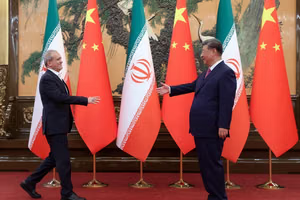
Chinese President Xi and Iranian President Pezeshkian meet in Beijing, File photo.
Iran routed an estimated $2 billion to $2.5 billion through a China-based trade mechanism over the past year, using proceeds from oil sales to pay for Chinese goods and, at least once, contracts for military equipment, Reuters reported on Thursday.
The barter-like arrangement allowed Tehran to turn payments for Iranian oil into credits for Chinese imports without sending money directly through international banking channels, Reuters said, citing two senior Iranian sources and three other people familiar with the mechanism.
Iran used the system to buy medicines, vehicles and communications equipment, while it was also used in connection with contracts worth millions of dollars to supply Iran with air defense equipment over the past year, the sources said.
Billions routed outside normal banking channels
The mechanism has been operating since at least 2021 but has become more important as Washington tightened sanctions on Iran and companies doing business with Tehran, according to the report.
A buyer acting on behalf of Chinese state-owned oil trader Zhuhai Zhenrong had, at least until this year, deposited hundreds of millions of dollars a month with a China-based financial entity known as ChuXin, three people familiar with the arrangement told Reuters.
Those payments covered Iranian oil purchases. ChuXin then sent funds to Chinese exporters and companies involved in infrastructure projects in Iran, likely through other Chinese financial institutions, Reuters reported.
Around 70% of the Iranian oil proceeds handled through the arrangement went to infrastructure projects, while the rest entered accounts belonging to a special purpose vehicle, or SPV, used to pay suppliers of goods to Iran, the sources said.
The two Iranian sources confirmed the existence of the SPV, which Reuters said had not previously been reported.
Oil exchanged for access to Chinese goods
The SPV is managed by two entities, one acting on behalf of China's Ministry of Commerce and another linked to Iran's central bank, according to all five sources.
When Iran's central bank approves an importer to use funds held in the SPV, the Iran-linked entity informs its Chinese counterpart so payments can be made to suppliers, three of the sources said.
The structure gives Chinese manufacturers access to payment without dealing directly with Iran, according to the report. Reuters said there was no indication that the Chinese manufacturers supplying civilian goods had broken sanctions.
Reuters could find no record of a financial institution called ChuXin in Chinese corporate registries, and one source said it may exist only on a spreadsheet.
China says unaware of arrangement
China's foreign ministry told Reuters it was "not familiar with the situation you describe" when asked about the mechanism.
"China has consistently opposed unilateral sanctions that have no basis in international law and have not been authorized by the United Nations Security Council," the ministry said.
Iran's UN missions in New York and Geneva did not respond to Reuters requests for comment. Iran's central bank, China's commerce ministry, the National Iranian Oil Company and Zhuhai Zhenrong also did not respond to questions about their reported roles.
US pressure raises stakes
China has long been the main buyer of Iranian oil. More than 80% of Iran's shipped crude went to China in 2025, averaging around 1.4 million barrels per day, according to Kpler data cited by Reuters.
The arrangement has helped Tehran keep trade flowing despite years of sanctions, while giving China access to discounted Iranian crude.
Its importance has grown as the United States has increased economic pressure on Iran during the six-month-old war. Treasury Secretary Scott Bessent warned countries in August to cut business ties with Tehran or risk losing access to the dollar-based financial system.
Reuters said it could not determine how the US naval blockade on Iranian oil exports had affected the China trade mechanism. No Iranian crude cargoes had successfully passed through the Strait of Hormuz to China since the blockade was reinstated on July 14, according to the news agency.
A UN embargo on exports of most major conventional weapons to Iran was restored in September 2025 along with other sanctions.
Andrea Ghiselli, an international politics lecturer at the University of Exeter who studies China's relations with the Middle East, told Reuters that Beijing wanted to resist US pressure without putting major Chinese banks and companies at risk of exclusion from the international financial system.
A satellite view shows tunnel entrances at Pickaxe Mountain, of the Natanz nuclear facility, near Natanz, Iran, June 30, 2026. (Reuters file photo)
Construction activity has surged at a deeply buried complex near Iran’s Natanz nuclear facility, but satellite evidence suggests the site may not yet be capable of uranium enrichment, according to a new analysis by the Center for Strategic and International Studies.
CSIS examined six years of satellite imagery of Kuh-e Kolang Gaz La, commonly known as Pickaxe Mountain, an underground complex about two kilometers south of Natanz and roughly 225 kilometers south of Tehran.
The analysis found more road activity at the site in 2026 than at any previous point in its history and what researchers described as a “clear surge in construction activity.”
Recent work included raising and hardening tunnel entrances, paving internal roads, reinforcing access areas and removing excavated soil, according to images taken in July and August.
The researchers said the activity indicated that work had shifted from excavation toward probable construction inside the complex, while reinforcement of its exterior continued.
CSIS outlined three possible purposes for Pickaxe Mountain: a centrifuge assembly facility, a uranium enrichment plant or a protected location for other nuclear-related work, including uranium metal conversion.
The report said publicly available evidence was insufficient to determine what Iran intended to place inside the complex. It could neither confirm nor disprove reports that Tehran had moved centrifuges or centrifuge components there.
Continuous construction, the absence of increased internal security and the lack of vehicles or equipment unrelated to building work suggested the site was “not yet capable of enrichment work,” if enrichment was its intended purpose, the analysts said.
CSIS also said the complex would be extremely difficult to destroy using conventional weapons because it is buried deep inside a granite mountain.
Open-source estimates place parts of the facility between 80 and 100 meters underground, but the report cautioned that satellite imagery could not reliably establish its depth or internal design.
The GBU-57 Massive Ordnance Penetrator, the heaviest conventional bunker-busting bomb in the US arsenal, may not be able to reach and destroy the complex, according to the analysis.
A military operation could instead seek to collapse the tunnel entrances, potentially degrading or temporarily disabling the facility without destroying it.
CSIS concluded that military strikes might delay work at the facility but would not offer a sustainable solution to concerns about Iran’s nuclear program, arguing that any lasting resolution would require a verifiable diplomatic agreement.
The IAEA has requested information about Pickaxe Mountain and access to the site, but Iran has not responded, the report said.
Iran began building the facility in 2020 after an aboveground centrifuge assembly workshop at Natanz was damaged in suspected Israeli sabotage. Iranian nuclear chief Ali Akbar Salehi said at the time that a replacement centrifuge assembly facility would be built underground near Natanz.
US President Donald Trump said on September 4 that Washington may strike Pickaxe Mountain “very soon,” reiterating that Iran would not be allowed to have a nuclear weapon.
The Pentagon has made preparations this year to test classified capabilities against deeply buried targets, CNN reported on Wednesday, citing federal contracting records and people familiar with the effort.
Days before the war began on February 28, the Defense Threat Reduction Agency approved an emergency $1.2 million contract to repair a specialized underground testing facility at White Sands Missile Range in New Mexico. The work was intended to prepare the site for a live-fire test against rapidly emerging threats, according to the records.
Three sources told CNN that the planned test was connected to the Iran war and efforts to develop a way to strike Iran’s deepest underground facilities, potentially by simulating attacks on specific nuclear sites.
Satellite imagery reviewed by CNN showed excavation and vehicle activity at the White Sands site beginning in mid-February and continuing into March. CNN said it could not independently verify whether the test occurred or determine its purpose. The Pentagon and the contractor did not provide comment.
The US military also maintains operational plans for striking Pickaxe Mountain, and the facility was included in a target package considered earlier this summer, a source familiar with the matter told CNN. The plan involved some of the largest bombs in the US arsenal, though it remained unclear whether they could penetrate deeply enough to destroy the facility.
Another source told CNN that Defense Department officials recently held a “planning sprint” on options for attacking deeply buried sites. The US Air Force is separately developing a next-generation penetrator to replace its existing bunker-busting bomb, with initial prototype work commissioned in September 2025.
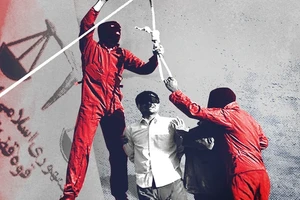
Eighteen prisoners held at Dastgerd prison in the central Iranian city of Isfahan could face death sentences over unrest and a fire at the facility, according to a judicial document obtained by Iran International.
The case has been sent to a Revolutionary Court, with some of the defendants accused of “leading the unrest” or “inciting war and killing,” charges that can carry severe penalties under Iranian law.
The document lists 75 prisoners as defendants in the case, while prosecutors in Isfahan have ordered at least 26 of them to stand trial.
The case was opened after unrest and a fire at Isfahan Central Prison, also known as Dastgerd, following an air strike near the prison in March. A military base and ammunition depot behind the prison were hit, while parts of the prison grounds and accommodation areas were also damaged.
Information accompanying the document said some prisoners were killed during the incident, and others died in the fire.
Human rights groups, citing witnesses and relatives of prisoners, have said the unrest began after missiles struck a military site behind the prison and projectiles also hit parts of the prison complex. Guards and prison officials left some posts after the explosions, and inmates came out of their wards fearing the facility could collapse, according to those accounts.
The groups said some prisoners then set fire to blankets, sheets and other materials in an effort to force authorities to open doors and allow them into safer areas. Smoke spread through enclosed corridors as the fires grew.
Human rights groups have also said security forces later entered the prison and used live ammunition, pellet rounds and tear gas against inmates. According to witness accounts cited by the groups, some prisoners were shot, while others died from burns or smoke inhalation during the unrest.
Prosecutors have brought charges including "inciting people to war and killing each other with the aim of disrupting national security," deliberate arson, destruction of public facilities and taking part in an illegal prison gathering that led to a riot during wartime, according to the document.
Other accusations include destroying surveillance cameras, windows and security doors, taking part in or assisting with property damage and setting fire to the prison infirmary.
Iran International identified 17 prisoners facing such accusations. The documents indicate that 18 prisoners could face death sentences.
The referral to the Revolutionary Court comes after five protesters held at Dastgerd were executed over the past two months in a separate case known as the "Alikhani Square" case.
Five other people sentenced in that case are at risk of imminent execution.
The latest case comes amid a rise in executions and heavy prison sentences in Iran in recent weeks as tensions with the United States have intensified.
Concerns over prison conditions
Concerns over Dastgerd have also grown over treatment of inmates and health conditions.
Political prisoner Abdolrasoul Mortazavi said in an audio message from the prison in June that some people detained during the January protests had been tortured. He also reported beatings, harsh interrogations, restrictions on contact with families and limits on outdoor exercise.
Iran International has also received reports of worsening health conditions and a meningitis outbreak at the prison in recent weeks.
A source familiar with the situation told Iran International in August that several prisoners had died from infectious diseases. Information obtained by Iran International also indicated that meningitis had spread to most prison wards and that some inmates had been taken to Al-Zahra hospital in Isfahan.
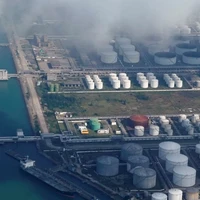
An aerial view shows a crude oil tanker at an oil terminal off Waidiao island in Zhoushan, Zhejiang province, China January 4, 2023.
A new Iranian oil trading network has been entrusted with selling millions of barrels of sanctioned crude even though its members still owe billions of dollars from earlier sales, according to documents obtained by Iran International and Oil Ministry sources.
One document, a confidential letter from the Supreme National Security Council’s protection unit to the Oil Ministry, raises concerns over the ministry’s decision to hand large volumes of crude to four trusted intermediaries, known as trustees, on credit and at steep discounts.
The crude was allocated after a new oil sales team took control in July, according to the letter.
The former chief executive of Naftiran Intertrade Company (NICO) had identified the intermediaries as carrying large debts and failing to return billions of dollars from previous oil sales, the document says.
The ministry nevertheless offered the intermediaries a discount of $8.50 per barrel, a level the confidential letter described as unusual.
The documents and two Oil Ministry sources point to Mohammad Javad Bavand, a former Revolutionary Guards intelligence official appointed to oversee oil trading, as a central figure in the new arrangement.
Disputed cargo tied to sanctioned tankers
A second confidential document records a closed Oil Ministry meeting on June 28 concerning Iranian crude exported to China aboard three sanctioned tankers linked to Hossein Shamkhani, also known as Hector, an oil trader and son of Ali Shamkhani, a former adviser to slain Supreme Leader Ali Khamenei.
Two million barrels of crude were shipped through a front company aboard the tanker Lily to China’s Dongjiakou port on March 24, according to the document.
The owner of Lily subsequently took control of the cargo, citing a financial dispute with Panel Good Wholesalers, the company involved in the shipment, the document says.
Lily belongs to a shipping network and shadow fleet controlled by Hossein Shamkhani that has been sanctioned by the US Treasury. Dubai-registered Panel Good Wholesalers is also one of Shamkhani’s companies used for oil trading.
Oil trader Mohammad Hadi Momenin recovered the two-million-barrel cargo at NICO’s request and stored it in tanks at Dongjiakou, participants at the June meeting were told, according to the document.
Momenin then sought $33 million in compensation from the Iranian oil company, including $27 million for the loss in value of the tanker Covenio following US sanctions and $6 million for charter costs involving another tanker, Jaya.
Bavand instructed Momenin to return ownership of the cargo to the Oil Ministry and, through one of Momenin’s companies, charter Covenio for one year at $90,000 per day, according to the meeting record.
Both Covenio and Jaya belong to Shamkhani’s sanctioned shadow fleet.
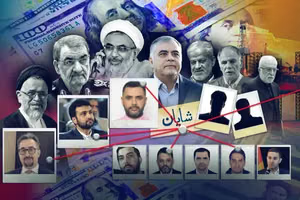
Iran International reported three weeks ago that Momenin was a member of an Intelligence Ministry network known as the Shayan network. Momenin, born in 1989, has failed to return about $2 billion in Iranian oil proceeds, according to Iran International’s previous investigation.
Five traders form Bavand’s network
Momenin is one of five trustees in an oil trading network assembled by Bavand following his return to the Oil Ministry, two ministry sources told Iran International.
Another member is Mostafa Niazazari, the fifth defendant in the corruption case involving former senior judiciary official Akbar Tabari.
Niazazari was accused in the case of giving Tabari 15,000 square meters of land as a bribe. After fleeing to Canada, he returned to Iran four years ago and has since resumed oil trading while residing in a European country.
Niazazari is the son of Kioumars Niazazari, a former Intelligence Ministry director-general in Mazandaran province.
Two businessmen known for importing essential commodities have also joined Bavand’s network after entering the oil trade during the tenure of former NICO chief executive Saeed Sadeghi, according to the Oil Ministry sources.
Hassan Afrashtehpour, also known as Dariush and the owner of Afra Holding, has for years controlled imports of some essential commodities. An Iranian court sentenced him to 25 years in prison for economic corruption in 1997, but he was released four years later.
Masoud Modallal, a major importer of cooking oil and animal feed who has faced large banking debts, is another member of the network, the sources said.
Modallal previously received $985 million in preferential-rate foreign currency for essential-goods imports and owed 5.75 trillion rials to Sarmayeh Bank and 7.82 trillion rials to Pasargad Bank.
Modallal shifted his focus toward oil trading after Iran ended preferential currency allocations, according to the sources.
The fifth member is Ali Bayandorian, a trader sanctioned by the United States six years ago over what Washington described as financing for the Revolutionary Guards’ Quds Force.
Bayandorian uses a network of companies registered in Iran and Southeast Asia to sell oil and petrochemical products outside conventional markets, according to the sources.
Together, the five traders make up what the Oil Ministry sources described as Bavand’s new trustee network.
The two confidential documents obtained by Iran International show members of this network continuing to receive Iranian oil despite outstanding proceeds from previous sales.
From Guards intelligence to oil sales
Bavand studied at Imam Sadiq University, known for combining Islamic studies with modern social sciences, and until 2021, served as deputy to Mostafa Ahadi, the economic deputy of the Revolutionary Guards Intelligence Organization.
Ahadi is a nephew of Ali Akbar Hosseini Mehrab, a security official whose name has appeared in major Iranian corruption cases, including the Crescent gas dispute.
Bavand entered a Supreme National Security Council committee in 2018 following the US withdrawal from the nuclear agreement and Washington’s restoration of sanctions on Iranian oil.
The council created a working group to manage oil sales designed to bypass the restrictions, alongside a security committee composed of representatives from Iranian military and intelligence organizations.
The Revolutionary Guards Intelligence Organization sent Bavand, then deputy head of its economic division, to the security committee.
Bavand built a network of trusted oil intermediaries during his time on the committee, including Majid Azami, chief executive of Sepehr Energy Jahan Nama Pars, Majid Taj, brother of Iranian Football Federation president Mehdi Taj, and trader Hamed Kachoui.
Iran’s oil sales structure changed further after Ebrahim Raisi became president in 2021 and his government authorized the armed forces to participate formally in oil trading.
The Revolutionary Guards subsequently sent Bavand to the Oil Ministry, where he took responsibility for trading oil under sanctions.
A significant part of the problems involving trustees and unreturned oil proceeds emerged during that period.
Following Raisi’s death, Oil Minister Mohsen Paknejad initially entrusted management of sanctioned oil sales to officials with previous links to Shayan, an Intelligence Ministry official involved in fuel operations.
Bavand returned to the Oil Ministry following Shayan’s removal.
Paknejad appointed Bavand special assistant to the oil minister for supervision of oil trading after the previous NICO chief executive was removed following disclosures concerning trustees and unreturned oil proceeds.
Bavand is also related to Hossein Taeb, the former head of the Revolutionary Guards Intelligence Organization, who is currently the commander of the Basij paramilitary unit, and a figure close to Supreme Leader Mojtaba Khamenei.
Bavand now plays a central role in decisions over sanctioned oil sales and has assembled a new group of trusted intermediaries.
The documents show that traders carrying large outstanding debts from earlier oil sales have again been entrusted with millions of barrels of Iranian crude, placing Bavand and his network at the center of the system used to sell Iran’s oil under sanctions.
Dogharoun border crossing between Iran and Afghanistan.
Iran's exports to Afghanistan have fallen by at least 25% since the US-Iran war began this year, while competitors have moved quickly to expand their share of the Afghan market, the head of the Iran-Afghanistan Joint Chamber of Commerce said on Wednesday.
Mahmoud Siadat told Iran's ILNA news agency that restrictions on exports of petrochemicals, steel, food and other goods had contributed to the decline, including limits imposed because of war damage and domestic demand.
Siadat said the greater concern was the speed at which other countries were moving into the market while Iranian trade was shrinking.
"The more important problem is that during the same period in which we faced a decline in exports to Afghanistan, our competitors entered the Afghan market very seriously," Siadat said.
He said Uzbekistan's exports to Afghanistan had risen 42% this year, adding that the growth was rapidly reducing Iran's share of the Afghan market. He also pointed to what he described as a multibillion-dollar Saudi gas extraction agreement near Iran's border.
Saudi Arabia-based Delta Energy International signed an agreement with Afghanistan's Ministry of Mines and Petroleum this week to explore and extract oil and gas in the Kushk-Tirpul basin in the western provinces of Herat and Badghis.
Afghan authorities put the initial investment at $200 million, while Delta has said a wider energy program could involve tens of billions of dollars in potential investment if exploration and feasibility studies support further development.
The decline comes amid a broader contraction in Iran's foreign trade since the war began. An Iranian trade official has said non-oil exports and imports fell by about 30% in the first four months of the current fiscal year, while customs data from China and Turkey showed steep declines in trade with Iran. Indian exports to Iran also fell sharply, although India's imports from Iran rose on higher purchases of Iranian crude oil and liquefied petroleum gas.
Siadat said Iran was also hurting its position in Afghanistan through long delays at its own borders, with hundreds of trucks waiting to cross at Milak and Dogharoun.
He said some trucks were being held for between 12 and 15 days before leaving Iran, while traffic moved much more smoothly on the Afghan side.
"There is no logic in our trucks being held for 13, 14 and sometimes 15 days at the border with Afghanistan," he said. "Long stops at the border cause an unusual increase in transport costs and freight rates and reduce our competitiveness in the Afghan market."
Siadat broadened his criticism beyond border management, saying the problem reflected wider weaknesses in Iran's state structure and fragmented decision-making.
"Many of the organizations that are not even directly under the government's supervision play a fundamental role in creating this problem," he said, adding that regulatory and military bodies needed to reach a common position.
He also criticized the limited role of businesses in policymaking. "The private sector in Iran is, in many cases, largely a ceremonial presence in decision-making," he said. "It only hears promises but sees no action."
US pressure adds to wider trade strain
Siadat said, however, that sanctions were making Iranian goods more expensive in export markets, adding another layer of pressure on businesses already dealing with transport restrictions.
The United States has intensified economic pressure on Iran through an oil export blockade and expanded secondary sanctions aimed at restricting Tehran's access to dollars, foreign financing and international trade channels. Iran's total trade has fallen by between 25% and 35%, according to President Masoud Pezeshkian.
Washington has continued to add measures. The US Treasury on Tuesday imposed a new round of Iran-related sanctions targeting the country's aviation sector and companies and intermediaries in several countries, part of the Trump administration's wider economic pressure campaign.
Siadat said Afghanistan had become more important because problems at Iran's southern ports and other trade routes had cut or reduced transit flows.
"Afghanistan's border is currently one of the few borders through which we can work," he said, warning that delays on the Iranian side were putting one of the country's remaining export outlets at risk.
Australian Senator Raff Ciccone, Chair of Parliament’s Joint Committee on Intelligence and Security
Australian Senator Raff Ciccone condemned threats against journalists by Iran’s Islamic Revolutionary Guard Corps, telling Iran International they were “outrageous” and an attack on press freedom.
“It is quite wrong for the IRGC to be threatening journalists simply for doing their job,” Ciccone, Chair of Parliament’s Joint Committee on Intelligence and Security, said. “Journalists are entitled to report on what is occurring anywhere around the world, particularly the events in Iran.”
He said journalists must be able to work “without harassment or intimidation, or violence for that matter,” adding that Iranians had a right to independent reporting about events inside the country.
“The Iranian people are looking to the rest of the world to understand what is happening,” Ciccone told Iran International. “They have a right to independent reporting, and journalists must be protected while carrying out that work.”
He said the threats also affected Iranian journalists and government opponents living abroad, including members of the diaspora in Australia.
He described such threats as part of a broader pattern of intimidation by the IRGC and said governments should respond collectively.
“It’s no surprise that these threats are coming from the IRGC,” Ciccone said. “But intimidation cannot be allowed to silence journalists or communities overseas.”
Ciccone pointed to steps already taken by Australia and said Canberra should continue working with international partners to hold Iranian authorities accountable.
“We also have to stand by the Iranian people,” he said. “The Iranian people are looking to the rest of the world for their support, and I can say that many people in Australia are with them 100%.”
He said Australia, Canada, Germany and other countries should stand with Iranians and condemn threats against journalists. He also backed diplomatic expulsions, sanctions against those linked to the IRGC and further action against the organization.
A senior official with Iran’s armed forces said in late August that journalists working for Persian-language media abroad could be placed on a list of military targets.
“Media outlets such as Iran International, BBC Persian and Radio Farda are directly connected to Mossad, the US Central Intelligence Agency and other foreign intelligence services and receive support from them,” said Abolfazl Shekarchi, a brigadier general and senior spokesman for Iran’s armed forces.
After his remarks, Canada also said its security and intelligence agencies are using a full range of tools to counter foreign interference and transnational repression.
In a response to Iran International, Public Safety Canada said authorities continuously monitor such threat s and can respond through investigations, criminal charges and disruption activities.