• العربية
  • فارسی
BrandBrand
  • Iran Insight
  • Politics
  • Economy
  • Analysis
  • Special Report
  • Opinion
  • Podcast
  • Live TV
  • Iran Insight
  • Politics
  • Economy
  • Analysis
  • Special Report
  • Opinion
  • Podcast
  • Live TV
  • Theme
  • Language
    • العربية
    • فارسی
  • Iran Insight
  • Politics
  • Economy
  • Analysis
  • Special Report
  • Opinion
  • Podcast
  • Live TV
All rights reserved for Volant Media UK Limited
volant media logo
ANALYSIS

Istanbul meeting: A new division of labor in the Iran war?

Ata Mohamed Tabriz
Ata Mohamed Tabriz

Iran analyst

Oct 23, 2026, 03:40 GMT+1
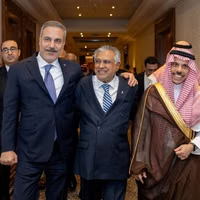
Turkey's Foreign Minister Hakan Fidan, Pakistan's Deputy Prime Minister and Foreign Minister Mohammad Ishaq Dar and Saudi Arabia's Foreign Minister Prince Faisal bin Farhan Al Saud leave after a committee meeting of Mecca defence pact in Riyadh, Saudi Arabia, October 5, 2026. Turkish Foreign Ministry/Handout via REUTERS

Turkey will host the foreign ministers of seven countries on Friday for talks on the Iran-US war, security in the Strait of Hormuz and Bab al-Mandab, developments in Yemen and the Israeli-Palestinian conflict.

For the first time, Turkey, Saudi Arabia, Egypt and Pakistan will meet Britain, France and Germany for security-focused talks. The meeting comes as attacks on ships and regional energy infrastructure continue and oil prices have reached their highest level in five months.

The Istanbul meeting could mark a shift from regional consultations toward broader security coordination. It follows months of efforts by regional states to build cooperation against threats from the Islamic Republic, particularly attacks by the Iran-backed Houthis.

Turkey, Saudi Arabia and Pakistan — the three members of the Mecca defense pact — will all attend and have committed to using their military capabilities to defend Saudi Arabia. Egypt is also considering military support for Riyadh.

The three European powers are now joining the talks with concerns of their own, particularly over energy.

The platform could lead to a form of division of labor in the Iran war, operating in parallel with US and Israeli military pressure on the Islamic Republic and focused primarily on containing the Iran-backed Houthis.

From regional consultations to defense cooperation

Turkey, Egypt, Pakistan and Saudi Arabia have held regular consultations since March following Houthi threats in Bab al-Mandab. The grouping has become known as the R4.

The four countries have emphasized direct regional involvement in resolving crises and in recent months have adopted common positions on the Iran war, Palestine and Saudi security.

Alongside these diplomatic efforts, Turkey, Saudi Arabia and Pakistan have expanded defense cooperation through the Mecca pact. Under the agreement, an external armed attack on one member is considered an attack on all three.

Officials from the three countries agreed on August 31 to establish a joint secretariat and expand defense cooperation. Their defense committee decided on October 5 to make agreed forces and military capabilities available for rapid deployment to Saudi Arabia.

The four R4 countries also condemned Iran-backed Houthi attacks on Saudi Arabia in an October 11 statement and backed Riyadh’s measures to counter the threats.

Turkey is meanwhile pursuing parliamentary approval of the Mecca pact, while Egypt’s parliament is due to decide on Monday, October 26, whether to deploy forces in military support of Saudi Arabia. Egypt is not a member of the pact, but the prospect of it joining is being seriously considered.

Despite these developments, the countries continue to emphasize a diplomatic solution to the Iran-US war, and some remain in contact with Tehran.

While seeking to prevent the war from spreading, they are also moving closer to joint defensive action against Iran-backed Houthi attacks. These parallel efforts could help contain the crisis and pave the way for a new regional security arrangement, but could also draw the countries deeper into the war and create domestic political tensions.

Containing the Iran-backed Houthis on a parallel track

Protecting critical infrastructure is a central priority for Saudi Arabia in its cooperation with Turkey and Pakistan.

Iran-backed Houthi attacks on Saudi economic and military facilities and insecurity in Bab al-Mandab have caused direct damage while putting pressure on the kingdom’s energy exports and investment plans.

Strengthening Saudi Arabia’s defensive capabilities could reduce some of that vulnerability. But the impact of the new cooperation may extend beyond protecting Saudi facilities.

Saudi defenses against such attacks currently depend on direct US support. A greater role for Turkey and Pakistan, combined with coordination among the four regional countries, could reduce that dependence and allow Washington to devote more resources and attention to the Iran war.

From this perspective, two parallel tracks are taking shape. The United States and Israel are pursuing direct military pressure on Iran, while the countries represented in Istanbul are cooperating to contain the regional consequences of the war.

The two tracks, however, do not constitute a single coalition. Despite their political and security ties with the United States, the regional countries have avoided joint arrangements with Israel, preventing the two approaches from becoming fully integrated.

Cooperation with Washington does not necessarily mean participation in Israel’s strategy. These countries can oppose an expansion of the war against Iran while acting to contain threats arising from it, particularly Houthi attacks.

The practical result could be a form of division of labor even without a formal agreement between the US-Israel camp and the R4.

Iran’s leverage and the risk of diminished influence

The emerging arrangement has particular significance for Iran. If the cooperation succeeds and takes on a military dimension, it would amount to action against an ally of Tehran.

For now, Iran is seeking to raise the cost of continuing the war for the United States and regional countries by leveraging its geographic position in the Strait of Hormuz and its support for the Houthis. Tehran has also promised to respond to actions against its interests.

Alongside maintaining these forms of leverage, Tehran is using diplomacy in an effort to turn them into political gains.

Iranian Foreign Minister Abbas Araghchi has said a seven-day proposal for restoring normal shipping through the Strait of Hormuz was conveyed through Qatar, with implementation conditional on Tehran’s demands being met.

On Yemen, he has said Iran is prepared to mediate between Saudi Arabia and Ansarullah while rejecting the assertion that the Houthis take direct orders from Tehran.

The two positions indicate that Tehran wants to preserve its ability to turn regional pressure into political leverage. Continued pressure, however, could produce a different outcome.

Governments facing attacks on infrastructure and disruption to maritime routes are moving toward closer defense cooperation to reduce their vulnerability, potentially increasing their capacity to confront Iran.

Crucially, reducing the impact of regional pressure does not necessarily require the military defeat of Iran-aligned forces.

If Saudi Arabia can better protect its infrastructure with help from new partners and the threat to shipping in Bab al-Mandab diminishes, part of Tehran’s bargaining power would be reduced.

Its leverage in the Strait of Hormuz would not be directly affected by these arrangements and would remain in Tehran’s hands, though it could become more fragile than before. Much will depend on Tehran’s response to actions taken by the countries participating in the platform.

Ansarullah, however, is an actor with demands of its own, and ending the Yemen war would require a separate agreement.

Continued contacts between Turkey, Pakistan and Egypt and Tehran also indicate that these governments still see a role for the Islamic Republic in reducing tensions. Anadolu Agency has reported that Pakistan’s army chief asked Tehran to use its influence to halt Houthi attacks on Saudi infrastructure.

Europe and the future of regional security

The involvement of Britain, France and Germany could broaden the scope of this emerging cooperation.

Their involvement reflects concerns about the wider consequences of the war, disruption to shipping through the Strait of Hormuz and, above all, energy supplies.

The European countries are joining the R4 states in an effort to address those concerns, but their involvement would also increase NATO’s presence in the region and could potentially lead to an expanded military role.

For Turkey, hosting the meeting provides an opportunity to strengthen its position in regional diplomacy. Saudi Arabia can combine the defensive support of regional partners with broader European consultations.

The European countries, meanwhile, are engaging governments that cooperate with the United States while maintaining political access to Tehran, allowing them both to maintain channels with Iran and signal their opposition to its actions.

Continued European engagement with the R4 could produce a multilayered structure linking political cooperation among the four regional countries, the defense commitments of three of them and diplomatic coordination with Europe.

Such a structure would not immediately replace the US presence and would not necessarily align with Israel’s strategy, but it could give regional countries a larger role in managing crises — a role Turkish President Recep Tayyip Erdogan has strongly pursued.

From this perspective, the Istanbul meeting may signal an emerging division of labor between two parallel tracks: US and Israeli military pressure on Iran on one side, and efforts by regional countries, with European participation, to contain Tehran’s regional proxies on the other.

While such cooperation could help reduce tensions, it also carries the risk of widening the war — a shared concern that has made all sides cautious about taking major military action.

Most Viewed

US blockade leaves Iran with millions of tons of surplus LPG
1

US blockade leaves Iran with millions of tons of surplus LPG

2
ANALYSIS

IRGC threatens undersea cables, but can it disrupt global internet?

3

German regulator orders liquidation of Bank Saderat Iran’s Hamburg branch

4

Iraq plays down Iran border disruption as more closures reported

5

Canada orders Iranian man deported over role in sanctions evasion

Spotlight

  • Istanbul meeting: A new division of labor in the Iran war?
    ANALYSIS

    Istanbul meeting: A new division of labor in the Iran war?

  • China values Iran but won't pay any price to defend it
    ONE-ON-ONE

    China values Iran but won't pay any price to defend it

  • ‘Living in despair’: uncertainty, economic turmoil erode hope in Iran

    ‘Living in despair’: uncertainty, economic turmoil erode hope in Iran

  • US blockade leaves Iran with millions of tons of surplus LPG

    US blockade leaves Iran with millions of tons of surplus LPG

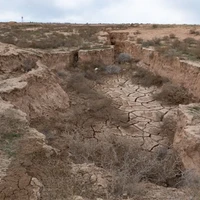
  • Land subsidence threatens villages and farms in southeast Iran

    Land subsidence threatens villages and farms in southeast Iran

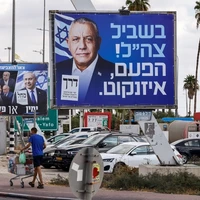
  • Iran in Israeli election: Netanyahu all-in on regime change, rivals want more
    INSIGHT

    Iran in Israeli election: Netanyahu all-in on regime change, rivals want more

Banner
Banner
Banner
Banner
Banner
•
•
•

More Stories

Iran is running out of economic escape routes

Oct 23, 2026, 01:48 GMT+1
100%
Vessels at the Strait of Hormuz, as seen from Musandam, Oman, October 19, 2026. REUTERS/Stringer

Iran faces mounting pressure on its ability to finance trade as a US maritime blockade cuts off oil revenue and cryptocurrency provides only a limited alternative for moving money, former US Treasury official Miad Maleki said in an interview with Iran International.

The freezing of some $350 million in Iranian cryptocurrency and a US maritime blockade that Washington says has prevented at least $25 billion in Iranian oil exports highlight the pressure on Tehran’s finances.

“Cryptocurrency is not really a method for a central bank or for a country’s trade,” said Maleki, a senior fellow at the Foundation for Defense of Democracies and former executive at the US Treasury Department’s Office of Foreign Assets Control.

Maleki said cryptocurrency was better suited to relatively small transactions and transfers, while blockchain transactions could be traced.

“You can see on the blockchain where it came from and where it went,” he said.

Iran has turned to cryptocurrency as economic pressure has narrowed its options, Maleki said, adding that such transactions can be traced and the funds blocked.

Oil revenue dries up

The larger problem for Iran is the loss of oil revenue.

US Central Command commander Admiral Brad Cooper said Thursday that the maritime blockade had prevented Iran from exporting at least $25 billion worth of crude oil over 100 days.

Iran initially continued selling oil that had left the Strait of Hormuz before the blockade and remained aboard tankers in international waters.

Those floating reserves were depleted by mid-October, the Wall Street Journal reported Wednesday, citing analysts at commodity-data firm Kpler.

“There’s no more oil to discharge to China anymore,” Kpler’s head of crude oil analysis Homayoun Falakshahi told the Journal.

“The economic clock of the Islamic Republic has basically stopped,” Maleki said, arguing that Tehran no longer has access to the oil income it previously used to finance imports.

Imports pose the next test

Some goods now entering Iran were paid for earlier, while other imports are continuing through land routes, Maleki said.

The greater pressure will come when Tehran has to finance new purchases and transportation costs without the oil revenue it previously relied on.

“When they can no longer pay the cost of buying and transporting the goods they are now importing over land, that is when the problems will become much more difficult for the Islamic Republic,” Maleki said.

He cautioned that it was difficult to determine how quickly that point would be reached.

“I can’t give you a number of days or weeks,” he said.

Maleki said cryptocurrency was suitable for limited transfers, while the loss of oil revenue would make it harder for Iran to pay for imports.

Maleki said it was difficult to estimate in days or weeks when the loss of revenue would translate into more severe economic pressure.

Iran’s trade squeeze spreads from sea to land

Oct 22, 2026, 22:11 GMT+1
•
Maryam Sinaiee
100%
A security wall runs along the Iran-Turkey border in eastern Turkey

Border closures and transit disruptions involving Pakistan, Iraq and Turkey are raising fears that Iran’s remaining trade routes could be further restricted, deepening the impact of US maritime and air restrictions.

Although Washington has not declared a land blockade of Iran, the closure of crossings with Pakistan and Iraq and continued disruption to freight traffic at the Turkish border have raised alarm in Tehran.

Mohsen Rezaei, secretary of Iran’s Supreme National Security Council, acknowledged in an interview with Drop Site published Thursday that Iran would suffer from a prolonged blockade.

“Anyone who says otherwise is not being realistic. Families will pay the price, investment will suffer, and maintaining some sectors of the economy will become more difficult,” he said.

But Rezaei argued that economic pain did not amount to strategic defeat and that Washington was wrong to believe worsening conditions would force Tehran to accept US demands.

Agence France-Presse reported Wednesday that the United States was pressing Iran’s neighbors to close border crossings, following a maritime blockade in southern Iran and air restrictions that have grounded most Iranian flights.

President Masoud Pezeshkian has said the maritime blockade has halted trade through southern sea routes, which previously accounted for 75% to 80% of Iran’s trade.

Pakistan: transit disputes

Iran has responded cautiously to Pakistan, which has been mediating between Tehran and Washington.

Foreign Ministry spokesman Esmaeil Baghaei attributed the suspension of operations at border crossings to “technical problems” on the Pakistani side and said the two countries were discussing reopening them.

After the US maritime blockade took effect, Iranian traders increasingly used Pakistani ports as alternative routes.

But tighter requirements for electronic bills of lading and difficulties transferring money have complicated trade, according to Peyman Sanandaji, a senior official at the Tehran Chamber of Commerce.

Pakistan closed the Rimdan–Gabd and Taftan crossings on Tuesday during a visit to Tehran by Pakistani Army Chief Asim Munir, citing security concerns and efforts to prevent smuggling.

Iranian officials said Munir ordered the crossings reopened during his visit, but the latest reports indicated Pakistan was allowing only Iranian gas tankers and perishable fruit and vegetable shipments to pass.

Fada-Hossein Maleki, head of the Iran-Pakistan parliamentary friendship group, warned Thursday that Iran could close its border if Islamabad continued preventing trucks from crossing.

Such a move could also hurt Pakistan, which uses Iranian territory to move some exports toward Turkey, Central Asia and the Caucasus and receives millions of liters of Iranian gasoline and diesel through official trade and smuggling.

Iraq: conflicting signals

Iraq has not announced a general closure of its border with Iran. But Al Jazeera reported that the Chazabeh–Al-Shaib crossing was closed Wednesday on the direct orders of Prime Minister Ali al-Zaidi and that further crossings were expected to shut.

Abdul Amir Taiban, an adviser to Iraq’s prime minister, said Thursday that Chazabeh had been closed to prevent the entry of drugs and counterfeit dollars and dinars.

He accused Iran of undermining Iraq’s economy, smuggling drugs and violating Iraqi sovereignty.

Iran and Iraq have 13 official border crossings, several of them major routes for exports and commercial traffic, particularly with central and southern Iraq.

Iraq temporarily closed its crossings with Iran a month earlier after a drone attack on Saudi Arabia’s east-west pipeline from Iraqi territory was attributed to Iran-aligned groups. The crossings reopened several days later.

Iran has reacted more openly to Iraq’s latest move than to Pakistan’s restrictions.

Deputy Interior Minister Ahmad Zeynivand said Thursday Tehran had sent Baghdad an official note seeking clarification, while claiming trade in essential goods through maritime routes and northern borders continued without disruption.

Turkey: long delays

Turkey is Iran’s third-largest trading partner, with formal and informal bilateral trade estimated at between $23 billion and $30 billion.

The Bazargan crossing in West Azerbaijan province is Iran’s most important land gateway for trade with Turkey and access to European markets.

Iranian media have reported delays of as long as 20 days at Bazargan in recent months. Although Turkey has capacity to receive 1,000 Iranian trucks daily, it has reportedly allowed only 200 to 300 through, while around 600 Turkish trucks enter Iran each day.

The bottleneck threatens a crucial alternative to Iran’s restricted maritime routes even without a formal closure of the Turkish border.

Alternatives remain limited

Iran shares land borders with seven countries, but the remaining routes offer only limited alternatives to its major trade corridors.

Crossings with Turkmenistan, Azerbaijan and Armenia remain open, providing routes toward Central Asia, Russia and the Caucasus. Afghanistan also remains open, but inadequate infrastructure and chronic congestion limit its usefulness as an alternative transit corridor.

Iran had increasingly looked to road and rail links through Central Asia after restrictions on maritime and air transport. Further border closures would therefore leave Tehran with progressively fewer ways of moving goods.

The disruptions have prompted some hard-line government supporters to call for retaliation against neighboring countries, including restrictions on Iranian electricity exports and internet transit to Iraq.

But several land routes remain open, and there is no declared land blockade. Limited capacity and existing bottlenecks mean those routes cannot readily replace maritime trade, leaving further closures capable of intensifying pressure on an economy already struggling with the effects of the US blockade.

War warnings and talk of diplomacy compete in Tehran

Oct 21, 2026, 21:26 GMT+1
•
Behrouz Turani
100%
Iranian lawmakers and military officials attend a parliamentary session to confirm Mehrdad Akhlaghi as Iran’s new defense minister, October 17, 2026

Iranian leaders raised the conditions for negotiations with the United States and issued fresh warnings of a wider military response on Wednesday, even as signs persisted that Tehran was leaving room for diplomacy.

President Masoud Pezeshkian said threats and sanctions must be lifted in practice before conditions for negotiations could be established, while Revolutionary Guards spokesman Hossein Mohebbi said Iran would launch offensive operations against any country that attacked it as part of a shift toward asymmetric warfare.

An unnamed senior security official also told state-run Press TV that Iran was prepared for an all-out war and would respond “without restraint” to renewed attacks or assassinations.

The rhetoric coincided with high-level discussions in Tehran. Iranian media reported Wednesday that Parliament Speaker Mohammad Bagher Ghalibaf had met Supreme Leader Mojtaba Khamenei to discuss the latest military and economic developments in the confrontation with the United States and Israel.

The meeting also addressed strengthening Iran's national capabilities, maintaining social cohesion, tackling economic difficulties and “advancing relations with strategic partners,” according to the reports.

Yet diplomatic channels remain active. Russian President Vladimir Putin told US envoy Steve Witkoff on Wednesday that there was still room for diplomacy over Iran and that an agreement with Tehran was needed, according to the Kremlin.

The competing signals leave open whether Tehran is raising the price of a negotiated pause or preparing for another phase of confrontation.

Talk of a negotiated pause

The conservative daily Jomhouri Eslami reported, citing “informed sources,” that discussions mediated by Qatar and Pakistan could take place this week around a framework for halting military clashes and securing reciprocal concessions.

The report followed Pakistani Field Marshal Asim Munir's visit to Tehran on Tuesday and came amid a flurry of diplomatic activity involving Russia and other regional powers.

According to Jomhouri Eslami, the framework would seek to halt military clashes, address outstanding disputes and sequence concessions in a way that reduced the risk of fighting resuming.

The newspaper said it expected that “the region will not see an escalation of tensions under current conditions.”

The prominence given to the prospect of an agreement by a conservative establishment newspaper is notable at a time when Iranian officials publicly deny that substantive nuclear negotiations with Washington are under way.

Sobh-e No, a newspaper aligned with Parliament Speaker Ghalibaf, also linked renewed discussion of talks to diplomatic contacts involving Pakistan and Russian Foreign Minister Sergei Lavrov, who visited Tehran on Tuesday.

The newspaper reported on a Russian proposal for a joint Iranian-Russian-Chinese initiative concerning the Strait of Hormuz, although Tehran has continued to insist on maintaining its authority over the waterway.

The Pezeshkian administration's Iran newspaper argued that the country's security depended on exercising sovereignty over the strait rather than sharing responsibility with outside powers.

“To preserve our security, we have no option but to exercise sovereignty over the Strait of Hormuz,” it wrote.

That position points to one of the difficulties facing any potential agreement: Tehran wants the Strait of Hormuz and broader maritime security addressed alongside the conflict, while Washington has continued to prioritize Iran's nuclear program.

Pressure in the other direction

Hardline lawmaker Hassan Nataj called for Supreme Leader Khamenei to reconsider the religious prohibition on nuclear weapons in response to the conflict.

“We should ask the Supreme Leader to revise the fatwa prohibiting nuclear weapons in light of the current situation,” he told the Didban Iran website.

The comments come amid a wider debate among Iranian politicians and commentators over whether the country's nuclear posture still provides sufficient deterrence against further US or Israeli attacks.

The simultaneous emphasis on diplomacy and escalation does not establish which course Tehran ultimately intends to pursue.

But the pattern has become clearer: diplomatic channels remain open while Iranian officials publicly raise the conditions for negotiations and stress that renewed attacks could bring a broader military response.

Iraq plays down Iran border disruption as more closures reported

Oct 21, 2026, 19:53 GMT+1
100%
Iraqi security forces stand at the Shalamcheh border crossing with Iran after Iraq closed the crossing following airstrikes on the Iranian side that security sources said killed an Iraqi citizen, Iraq, April 4, 2026.

Conflicting accounts emerged Wednesday over Iraq's plans for its border with Iran, as Baghdad attributed the closure of one major crossing to technical shortcomings while reports said more could be shut amid US pressure to restrict trade routes with Tehran.

Iraqi government spokesperson Haider al-Aboudi said the Sheeb crossing, known as Chazabeh in Iran, was closed because it lacked sufficient technical, technological and developmental readiness, according to the official Iraqi News Agency.

He said trade was proceeding normally through several other crossings with Iran.

But Al Jazeera cited an Iraqi government official on Tuesday as saying Prime Minister Ali al-Zaidi had ordered Sheeb closed indefinitely and several other crossings gradually shut in the coming days. No reason was given for the planned closures.

Separately, AFP reported Wednesday, citing two Iraqi political sources, that Washington was pressing Baghdad to close crossings with Iran as part of efforts to increase economic pressure on Tehran.

One source said the US Treasury Department raised the issue with Zaidi during his visit to New York for the UN General Assembly last month and that the proposed restrictions would leave only two crossings open, one in federal Iraq and another in the Kurdistan region.

The second source said Washington had asked other countries bordering Iran to take similar measures.

Reuters reported that Sheeb had been closed to passengers, vehicles and commercial trucks. An Iraqi border official told the agency the closure would allow security arrangements to be reviewed and detection equipment installed to prevent the smuggling of prohibited materials.

Tehran seeks reopening

Iranian officials said they had received no advance warning of the closure.

Valiollah Hayati, a security official in Iran's southwestern Khuzestan province, said consultations were under way with Iraqi authorities to reopen Sheeb and advised passengers and commercial trucks to use the nearby Shalamcheh crossing.

Iranian Interior Ministry spokesperson Ali Zeinivand said Iraq was required to notify Tehran of extended border closures but had not done so.

Foreign Minister Abbas Araghchi also criticized disruptions at Iran's borders on Wednesday, saying they had become places where traffic was held up rather than allowed to pass. He said the Foreign Ministry would seek to resolve obstacles originating in neighboring countries.

The uncertainty comes days after Pakistan suspended commercial activity at two major crossings with Iran, Taftan-Mirjaveh and Gabd-Rimdan, on October 17.

Iranian authorities said the border reopened on Tuesday, although the resumption of normal commercial traffic at both crossings has not been independently confirmed.

Iran and Iraq share a border of more than 1,400 kilometers (870 miles) and have extensive political, religious and economic ties.

Russia steps between Iran and US, but how far can it go?

Oct 21, 2026, 15:38 GMT+1
•
Maryam Sinaiee
100%
Russian Foreign Minister Sergei Lavrov and his Iranian counterpart Abbas Araghchi during talks in Tehran, October 20, 2026.

Russian President Vladimir Putin discussed Iran with US envoy Steve Witkoff on Wednesday and offered Moscow’s help, shortly after Foreign Minister Sergei Lavrov visited Tehran as Russia seeks a role in efforts to end the Iran-US conflict.

The meeting adds to signs that Moscow is positioning itself as both an ally of Tehran and a potential intermediary with Washington as diplomatic efforts remain deadlocked over Iran’s nuclear program and the sequencing of commitments.

Earlier this month, Putin said Russia was prepared to do everything it could to help resolve the crisis and subsequently conveyed Tehran’s position to US President Donald Trump. Neither the contents of the message nor Washington’s response was made public.

In Tehran on Tuesday, Iranian Foreign Minister Abbas Araghchi said the two countries had “never” worked as closely as they do now, while Lavrov described Iran’s cause as “just” and said Russian specialists who left the Bushehr nuclear power plant during the war were gradually returning.

Yet Iranian media and commentators questioned how much Moscow could achieve as an intermediary given the fundamental differences between Tehran and Washington.

Tabnak, a news website considered close to Supreme National Security Council Secretary Mohsen Rezaei, said Moscow could help by conveying messages, consulting with both capitals and supporting a political solution, but cautioned that no mediator could overcome the underlying disagreements on its own.

“As long as fundamental disagreements over the terms of an agreement persist, no mediator can guarantee success,” it wrote, citing differences over the sequencing of negotiations and the scope of commitments.

The reformist outlet Rouydad24 said there was little evidence Moscow had brought a comprehensive plan capable of breaking the deadlock.

“What has so far been presented by official Iranian and Russian sources points less to a ‘grand peace plan’ than to the continuation of Russia’s traditional role as a facilitator of dialogue,” it wrote.

Uranium emerges as key obstacle

A central obstacle in the diplomatic impasse is Iran’s stockpile of uranium enriched to 60%.

Russian officials, including Deputy Foreign Minister Sergei Ryabkov, have indicated that Moscow is prepared to receive the stockpile, a move that could address one of the central concerns surrounding Iran’s nuclear program.

Tehran, however, has rejected the idea of transferring its enriched uranium abroad and denied that nuclear negotiations with Washington are under way.

The position was reiterated during Pakistani army chief Asim Munir’s visit to Tehran on Tuesday. Rezaei told Munir that none of Iran’s enriched material would leave the country, describing it as a national asset intended for domestic use.

Before Lavrov’s arrival, conservative political activist Ali Gholhaki claimed Russia had been partly persuaded by an Iranian proposal, advanced when Ali Larijani was secretary of the Supreme National Security Council, to establish a framework for transferring uranium enriched to 60%.

But following the visit, Gholhaki said Lavrov had produced no tangible result and had left “without any particular achievement.”

The conservative newspaper Khorasan argued that negotiating over Iran’s enriched uranium could increase rather than reduce the danger of another attack.

It argued that while Iran did not possess a nuclear deterrent, its stockpile of highly enriched uranium itself acted as a form of deterrence by raising the risks of further US escalation.

Mohammad-Sadegh Alizadeh, a journalist interviewed by the conservative Farhikhtegan newspaper, said Tehran’s immediate priority should instead be ending the war on terms acceptable to Iran.

“Whether the Russians have agreed to accept Iran’s 440 kilograms of uranium enriched to 60% is a secondary issue to be addressed later,” he said. “First, the question of ending the war must be settled.”

Doubts over Moscow’s interests

Doubts about Russia’s intentions extend beyond whether it can bridge the divide between Tehran and Washington.

Reformist journalist Ahmad Zeidabadi argued that Iranian decision-makers should nevertheless welcome any Russian initiative capable of stopping another war.

“Russian interference is an evil, of course, but compared with the prospect of another war, it is the lesser evil,” he wrote on Telegram.

Commentator Mehran Tabatabaei argued that Moscow’s approach to Iran remained subordinate to its negotiations with Washington over Ukraine.

“Russia will not take any positive steps until it resolves the Ukraine issue and obtains the concessions it wants from the United States over Ukraine,” he wrote.

Journalist Mohammad Aghazadeh offered a starker assessment, saying failure by Lavrov to make progress would suggest diplomacy itself was approaching a dead end.

“Either the current state of uncertainty will continue, or an intense war will begin,” he wrote, “one that will probably not be as easy to end as it is to start.”