Private data undercounts oil shipments through Hormuz, US says
Private shipping data undercounts oil and oil-product shipments through the Strait of Hormuz because some vessels are moving covertly through the waterway, US Energy Secretary Chris Wright said.
Wright said in a post on X that the US Department of Energy and military had the best available data on oil leaving the waterway.
He said earlier that nearly 9 million barrels per day passed through Hormuz on a seven-day average.
Including oil shipped through pipelines and other export facilities, total regional flows averaged about 15 million barrels per day, he said.
He added that more than 20 million barrels of oil left the region on Sunday alone, exceeding the pre-conflict average.
Travelers line up with their luggage at check-in counters inside an airport departure terminal in Iran.
More than eight in 10 respondents to an Iran International Instagram poll said they would leave Iran if given the opportunity, reflecting deep frustration among those who took part over the country’s economic and social conditions.
The poll drew nearly 100,000 responses, with 83% saying they would emigrate and 17% saying they would stay. Economic hardship, inflation, social restrictions and uncertainty about the future featured prominently in comments from respondents considering leaving.
“We didn't have money to emigrate before; now we don't even have money to live in Iran,” one respondent wrote. Another said that with the exchange rate reaching 2 million rials to the US dollar, even getting to the border had become unaffordable.
Many emphasized that their desire to leave stems from a basic wish for stability, dignity, and a normal life without constant anxiety. "We only get one chance at life and youth, and I wish we could spend it somewhere in good spirits," one respondent wrote. "Why should we keep waiting years for Iran to be fixed?"
The findings align with independent research on societal hopelessness in the country. A poll conducted in March 2024 by the Washington-based Stasis Institute found that 76 percent of Iranians believed young people saw no successful future for themselves in Iran, a figure that rose to 82 percent among those aged 18 to 29.
According to United Nations data, more than 4.14 million Iranians have sought asylum abroad since 1980. Iran International estimates that an additional two million Iranians have emigrated through legal channels, meaning roughly one in every 15 Iranians now lives abroad, out of a population of 87 million. Unofficial estimates place the first-generation Iranian diaspora at over eight million.
Economic strain and brain drain
Persistent inflation, eroding purchasing power and limited job opportunities remain among the main factors driving the desire to leave. Iran has consistently ranked among the leading countries of origin for international students in North America and Europe and ranks fourth worldwide as a source of doctoral students in the United States.
Socio-political restrictions, air pollution, and declining public infrastructure further exacerbate the sense of impasse. Foreign diplomatic operations in Iran have also slowed following recent regional escalations, leaving many visa applications halted and adding to public frustration.
Travelers walk with their luggage inside an airport departure terminal in Iran.
Sociologist Hossein Ghazian previously told Iran International that push factors within Iran have consistently played a greater role in driving emigration than opportunities abroad. As those domestic pressures intensify, he said, the desire to leave is likely to grow.
Resistance versus departure
Despite the overwhelming majority favoring emigration, a segment of respondents rejected the idea, framing it as a surrender to the Islamic Republic. Some argued that remaining in Iran to demand political change is the only viable path forward.
"Emigrating means giving up," one respondent wrote. "Instead, we should rebuild Iran." Another added: "No, the ones who should leave are the Islamic Republic."
Others cited the popular protest song Suroud-e Zan (Women's Anthem) by Singer Mehdi Yarrahi, echoing its line: "Why travel? Stay and take it back."
For many, the decision remains contingent on the political regime itself. "If Iran were in good shape, never, but with the clerics in power, yes," one comment read.
For others, family ties remain the sole anchor. One woman noted she would have left two decades ago were it not for her mother, while another said she still hoped to build a better future for her children, even as she felt her own youth had slipped away.
As economic pressures intensify, the debate between leaving for stability and staying to push for change continues to define the daily reality of millions of Iranians.
Oil has reached mangrove forests on Iran's Qeshm island while a separate vast slick spreads toward Oman's coast, raising fears of environmental damage in waters already disrupted by war.
Oil slicks along Qeshm's southern coast have entered mangrove forests near the village of Naqasheh, prompting authorities to begin monitoring and cleanup operations, Iranian state news agency IRNA reported on Wednesday.
The source of the pollution has not been determined, IRNA said. Authorities were assessing the spread of the oil and working to prevent more from entering the mangrove forests.
The head of Qeshm's natural resources and watershed department said authorities were coordinating efforts to control and clean up the pollution.
"The exact cause and source of the oil slicks will be announced after expert assessments and the reports of the relevant agencies are finalized," he said, according to IRNA.
The pollution was first detected on Sunday night along about one km (0.6 miles) of the coast near Suza and had since spread to the Shib Deraz area, the head of Qeshm's environmental protection department, Shahmorad Jafari, was quoted as saying by Mehr news agency.
Shipping tracker points to Iranian attack
TankerTrackers.com, which monitors oil shipments and vessel movements, said on Wednesday that the Qeshm pollution appeared to have come from an Iranian attack on the bulk carrier Minoan Pioneer off Oman on Aug. 3.
"The spillage then drifted across the strait over to Iran," TankerTrackers said on X, describing it as "a self-inflicted wound by Iran."
Iranian authorities have not said the Qeshm slick was caused by the attack, and Iran's environmental officials said their investigation into the source was continuing.
Vast slick reaches Oman
Oil leaking from the grounded tanker Caroline Bezengi has started reaching Oman's mainland, the UN's International Maritime Organization said on Wednesday.
"Oil is drifting offshore to the northeast of Oman's Al-Qibliyyah Island, with some oil reported to be reaching the mainland," an IMO spokesperson said, adding that contingency planning was in place.
The Caroline Bezengi, carrying about 800,000 barrels of Russian oil bound for Asia, ran aground off Oman on June 30 and has been leaking for some time, the IMO said. Seasonal monsoon conditions have limited access to the vessel and delayed salvage operations.
Oman's government said on Monday that the slick covered almost 400 square km (150 square miles) near a nature reserve around the Hallaniyat Islands. The reserve is home to wildlife including Arabian Sea humpback whales and Socotra cormorants.
An environmental expert told Reuters that oil reaching shallow waters and the coastline could affect coral, birds and fish and could remain in the environment for years.
A view of Hara forests in Qeshm
Sensitive ecosystems
Qeshm's mangrove forests (Hara forests) are among the island's most important coastal ecosystems and provide habitats and breeding grounds for marine life and birds, IRNA said.
Iranian authorities stressed the need for urgent action to stop the pollution from spreading and limit possible damage to the mangroves.
Qeshm lies in the Strait of Hormuz along Iran's southern coast, while the Caroline Bezengi is grounded off Oman in the Arabian Sea.
The pollution on both sides comes as the war has disrupted shipping across waterways around Iran and the Arabian Peninsula, though authorities have not linked either spill to the hostilities.
A protester with a poster featuring the late Iranian Supreme Leader Ali Khamenei on his head joins a demonstration with Houthi supporters in solidarity with Iran and Lebanon, amid the U.S.-Israeli conflict with Iran, in Sanaa, Yemen, on March 6, 2026. Khaled Abdullah/Reuters
Six people were killed when Iran-backed Houthis attacked a vessel in Bab el-Mandeb, an escalation experts say reflects not a second front in the Iran war but two conflicts converging, as the Houthis pursue their own interests while adding pressure on Iran’s adversaries.
Analysts disagree over how directly Tehran is involved and what is driving the Houthis back into action after largely sitting out the Iran war. But whether Tehran is directing them or benefiting from decisions they make independently, renewed Houthi activity puts additional pressure on Iran's adversaries, particularly Saudi Arabia.
On Tuesday, the Houthis fired missiles at the Tanzania-flagged cargo ship Tihamah in the Bab el-Mandeb strait, killing four crew members and two members of the government-allied National Resistance Forces, according to Yemeni authorities.
Later on Tuesday, the Houthi-affiliated Al-Masirah network said the group targeted another vessel carrying what it described as Saudi “military equipment” in the Bab el-Mandeb.
Houthis pursue their own war
The Houthis' return to action appears rooted first in their own calculations inside Yemen.
Kamran Bokhari, a senior resident fellow at the Middle East Policy Council and strategic forecaster, describes Iran's so-called Axis of Resistance as a corporate brand in which some groups operate more like Iranian-controlled subsidiaries, while the Houthis resemble an independent franchise.
“They'll come in and participate in a conflict and they'll act as and when they see that it's in their interest to do so,” Bokhari told Iran International. “They're not like, you know, Iran says jump and they say how high?”
For months, that interest appeared to lie in staying out of the Iran war while its trajectory remained uncertain.
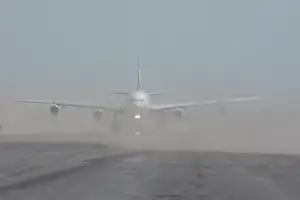
The calculation began to change following a confrontation involving an Iranian aircraft bound for Houthi-controlled territory. Saudi Arabia struck a Yemeni airfield after the aircraft attempted to land, helping trigger a renewed cycle of attacks between the Houthis and Riyadh.
The escalation also comes amid growing activity by Saudi-backed government forces and UAE-backed southern separatists inside Yemen.
“It's all domestic, is what I'm trying to say. It has nothing to do with Iran,” Bokhari said of the immediate Houthi calculation.
But that domestic struggle is unfolding in a regional environment transformed by the Iran war.
Iranian disruption around the Strait of Hormuz has already increased pressure on Saudi Arabia and other Persian Gulf states. Renewed Houthi activity around Bab el-Mandeb means Riyadh increasingly has to contend with threats around two critical waterways.
Saudi Arabia is also trying to build a stronger security architecture around itself. The recently signed Saudi-Pakistani-Turkish defense pact could give the kingdom greater regional support as it confronts those threats.
That may give the Houthis an incentive to press Riyadh now.
“The Houthis want to be able to extract concessions from the Saudis before the grid goes up, if you will,” Bokhari said.
Their ultimate objective, he argues, remains establishing themselves as Yemen's dominant political and military power and forcing Riyadh to accept that they cannot simply be eliminated.
Iran benefits
But the Houthis' pursuit of their own objectives does not mean Tehran is a bystander.
Fatima Al-Asrar, a Yemen and Iran specialist, sees the renewed Houthi pressure as increasingly intertwined with Iran's broader strategy against the United States.
“Of course, they [Iran] see it as an extension to them. They're no longer hiding it,” Al-Asrar told Iran International, pointing to Iranian rhetoric linking pressure around the Strait of Hormuz and Bab el-Mandeb.
She said Tehran is closely watching growing US fatigue with the Iran war and sees the approaching midterm elections as an opportunity to increase pressure on Washington.
“They're very transparent, very calculating, and they're using the Houthis on that front in order to press their advantage,” she said.
New reporting from Saudi-owned Asharq Al-Awsat raises the possibility of a more direct Iranian operational role.
Citing Yemeni security sources, the newspaper reported on Tuesday that IRGC officers are overseeing aspects of the Houthi escalation and that an Iranian official, Ali Mohammad Rezaei, is supervising an operations room managing military and security affairs in Houthi-controlled territory. Iranian officers have also helped establish additional missile and drone launch positions, according to the report.
Iran International has not independently verified the claims.
What will this lead to?
In July of this year, US President Donald Trump has warned Washington would hold Tehran responsible for renewed Houthi attacks, describing the group as an Iranian “Surrogate and/or Proxy” and threatening military punishment against both.
But retired Royal Navy Commander Tom Sharpe, who served for 27 years and commanded four warships, told Iran International that he doubts Trump will want to launch another major military campaign against the Houthis.
“He definitely doesn't want to be embroiled on a second tangent here,” Sharpe told Iran International.
Bab el-Mandeb also does not carry the same strategic weight as the Strait of Hormuz, Sharpe said, because ships have alternative routes, albeit at considerably greater cost and distance.
Yet Iran can still benefit.
Greater Houthi disruption could complicate shipping and potentially force the United States and its partners to devote resources to another strategic waterway.
“I think they'll be pleased,” Sharpe said of Tehran. “If it does draw away resources, US resources from the Gulf of Oman, then that's in Iran's favor.”
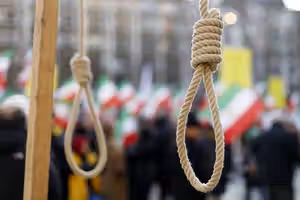
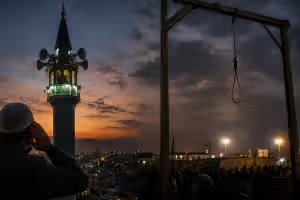
Iran has carried out at least 916 executions since the start of 2026, including 15 so far in August, the Abdorrahman Boroumand Center for Human Rights in Iran said on Tuesday.
The actual number of executions was likely much higher because Iranian authorities withhold information about many cases, the US-based rights group said.
It said many protesters were also facing charges that could carry the death penalty and criticized their trials as rushed and lacking due process.
The center said Iranian authorities were using death sentences and executions to intimidate the public and deter further protests.
Executions since March
The figures come amid growing concern from the UN over Iran's use of the death penalty, particularly in cases involving people arrested over anti-government protests.
UN human rights chief Volker Türk said last week that Iran had executed at least 56 people on national security-related charges since March 19, including 27 in cases linked to protests earlier this year.
Türk said executions and death sentences had increased since March, while more than 100 other people faced similar charges that could result in execution.
He called on Iranian authorities to halt all executions and move toward abolishing the death penalty.
Iranian authorities executed 20-year-old Arvin Kheirkhah at Shahroud prison on Aug. 1 after he was sentenced to death over his involvement in protests in January, according to information obtained by Iran International.
Kheirkhah had been convicted by a Revolutionary Court on charges including moharebeh, or "waging war against God."
His family gathered outside the prison before his execution in an effort to stop the sentence from being carried out.
Isfahan protest case
Authorities also hanged Amirhossein Safari and Abolfazl Sepahi in Isfahan's Alikhani Square in late July. They were among 12 young men sentenced to death in a case stemming from January protests in the city.
Iranian authorities accused the defendants of involvement in the deaths of four security personnel as well as arson and vandalism.
Two other defendants in the same case, Golmohammad Mohammadi and Erfan Esfandiari, were executed on July 19.
A group of UN human rights experts urged Tehran in July to halt executions in the case, raising concerns about closed proceedings, alleged ill-treatment and the use of confessions broadcast on state television.
"Sentencing 12 people to death in one hearing, in a closed courtroom and without clarity as to each defendant's individual responsibility violates established fair trial standards," the experts said.
They said the defendants, who ranged from their late teens to early twenties, had faced arbitrary detention, enforced disappearance and, in some cases, ill-treatment.
File photo shows commercial vessels near the Strait of Hormuz amid ongoing shipping disruptions.
The maritime confrontation around Iran widened Tuesday as US forces struck an Iran-bound vessel and Tehran-backed Houthis attacked a ship in Bab el-Mandeb, even as Pakistan and Qatar signaled progress in mediation over the Strait of Hormuz.
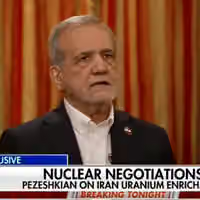
Pakistan’s Interior Minister Mohsin Naqvi met President Masoud Pezeshkian and Foreign Minister Abbas Araghchi in Tehran as Islamabad continued its mediation efforts.
Pakistan’s Defense Minister Khawaja Asif separately said signals from recent days suggested the US and Iran were close to “some sort of an arrangement,” while Qatar said Iran-Oman negotiations had reached an advanced stage.
The diplomatic push came as Washington escalated enforcement of its naval blockade. US Central Command said a Navy helicopter fired two Hellfire missiles at the Panama-flagged Vela Nova after its crew ignored repeated warnings and continued toward an Iranian port, disabling the vessel’s steering gear.
CENTCOM said the blockade remained “in full effect,” adding that US forces had redirected 55 commercial vessels, disabled three and boarded two as of Tuesday.
A deck cargo ship was also attacked by Yemen’s Iran-backed Houthis in the Bab el-Mandeb Strait on Tuesday, killing three crew members, Reuters reported, citing Yemeni coast guard sources and government military officials.
Asharq Al-Awsat reported the same day, citing Yemeni security sources, that IRGC officers were overseeing the Houthis’ escalating military operations in Yemen. Iran’s envoy to the group, Ali Mohammad Rezaei, was personally supervising an operations room managing military and security affairs in Houthi-controlled areas, according to the report.
Tehran, meanwhile, maintained that progress on shipping arrangements with Oman would not by itself reopen the strait. Supreme National Security Council Secretary Mohsen Rezaei said Hormuz would remain closed unless Washington changed its behavior and accepted Iran’s conditions, and that any agreement with Oman on a transit route would be separate from the broader closure.
Mohammad Mokhber, an adviser to Supreme Leader Mojtaba Khamenei, reinforced that position, saying the strait “will not be reopened until Iran’s conditions are met.”
Pressure on shipping also persisted. The Joint Maritime Information Center said IRGC attacks, attempted attacks and harassment continued in the strait, including UAV overflights, hailing and targeted surveillance of merchant vessels.
IRGC spokesperson Hossein Mohebi also warned that energy networks, power plants and global internet-linked infrastructure could be at risk if Iran were threatened again. He said the US had “30 to 40 warships in the region” before the recent 40-day war but that “not even one US warship” remained in the Persian Gulf.
Despite the continuing confrontation, oil flows showed signs of recovery. US Energy Secretary Chris Wright said the seven-day average for oil leaving the Strait of Hormuz had risen to nearly 9 million barrels per day, with total regional flows averaging about 15 million barrels per day when pipeline and export-facility shipments were included.