• العربية
  • فارسی
BrandBrand
  • Iran Insight
  • Politics
  • Economy
  • Analysis
  • Special Report
  • Opinion
  • Podcast
  • Live TV
  • Iran Insight
  • Politics
  • Economy
  • Analysis
  • Special Report
  • Opinion
  • Podcast
  • Live TV
  • Theme
  • Language
    • العربية
    • فارسی
  • Iran Insight
  • Politics
  • Economy
  • Analysis
  • Special Report
  • Opinion
  • Podcast
  • Live TV
All rights reserved for Volant Media UK Limited
volant media logo
INSIGHT

Oil prices or US prestige? Tehran analysts weigh Trump's next move

Maryam Sinaiee
Maryam Sinaiee

Iran International

Nov 9, 2026, 23:20 GMT+0
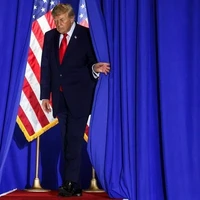
FILE PHOTO: US President Donald Trump speaks during a rally at Guardian Centers in Perry, Georgia, US, October 24, 2026.

Two Iranian analysts have offered contrasting assessments of what could prompt Donald Trump to launch another attack on Iran before the new US Congress convenes in January.

Speaking on the popular Tehran-based online talk show Azad, conservative commentator Mehdi Kharratiyan argued that the prospect of surging oil prices and damage to US financial markets could restrain Trump, despite his continued authority to order military action following the Republican defeat in the midterm elections.

International relations analyst Rahman Ghahremanpour disagreed, saying Trump might be willing to accept substantial economic costs if he believed America's international standing or his presidential legacy was at stake.

Kharratiyan warned that another major conflict could further disrupt energy supplies and push Brent crude prices as high as $130 a barrel, exposing the US and global economies to the risk of recession.

He argued that Iran would retaliate against regional infrastructure in the event of a major US attack, potentially worsening the economic consequences for Washington. Following the Republicans' heavy midterm losses, he said, Trump would struggle to justify another war that could further damage his party's prospects in the 2028 elections.

Ghahremanpour, however, argued that preserving American credibility could take precedence over financial considerations.

He drew a comparison with Britain's experience during the 1956 Suez Crisis, when London was forced to abandon its military intervention under international pressure, suggesting Trump would be determined to avoid a similar humiliation for the United States.

The discussion aired on Azad, known for hosting debates among commentators with opposing views. Its YouTube channel has more than 160,000 subscribers, and the episode had attracted nearly 190,000 views.

The platform was shut down by Tehran prosecutors in August over allegations of spreading false information and operating without a licence, but was allowed to resume broadcasting in late October.

Despite their disagreement over Trump's calculations, both analysts warned that the period before the new Congress convenes could be particularly dangerous for Iran.

“As long as Mr. Trump is in the White House and Netanyahu is in the prime minister's office in Israel, even if they are in a weakened position, the possibility of unpredictable actions, even foolish ones, or actions driven by desperation, remains,” Kharratiyan said.

“If we are not alert, we could suddenly be caught off guard, as we have been in the past.”

Kharratiyan said Iranian officials appeared determined not to allow another surprise attack. If Tehran concluded that Washington had decided to strike, he argued, Iranian forces could launch a pre-emptive attack.

He said a major US-Israeli operation would depend on Washington and Israel identifying an intelligence opportunity, finding potential assistance within Iran and believing they could disable Iran's ability to retaliate in the opening minutes.

Ghahremanpour also warned that Trump's midterm defeat could push him in opposite directions, making him either more cautious or more willing to take risks.

“The election results could make Trump more cautious in his foreign policy, but they could also make him act more boldly and recklessly,” he said in recent remarks to the Iranian Students' News Agency (ISNA).

“Which of these happens will naturally depend on Trump's own assessment and that of his team.”

Ghahremanpour, who favours a negotiated settlement, said the absence of substantial concessions from either Tehran or Washington suggested that any agreement reached in the coming days would likely be fragile, temporary and limited.

He argued that an understanding between Trump and congressional Democrats could reduce the risk of renewed war. But if the president anticipated aggressive moves against him once the new Congress convened, he might instead seek a military confrontation to reinforce America's standing and secure his political legacy.

Most Viewed

Iran’s northern routes test the limits of US bid to extend blockade overland
1
ANALYSIS

Iran’s northern routes test the limits of US bid to extend blockade overland

2
EXCLUSIVE

Iran acquires oil facilities in China to bypass US sanctions, leaked document shows

3

Shroud-wearing hardliners accuse Revolutionary Guards of defying Khamenei

4

Iran's Guards warn tankers as Houthis target Riyadh

5
VOICES FROM IRAN

Iranian citizens condemn executions, criticize US response

Banner
Banner
Banner
Banner
Banner
Banner
Banner

Spotlight

  • Oil prices or US prestige? Tehran analysts weigh Trump's next move
    INSIGHT

    Oil prices or US prestige? Tehran analysts weigh Trump's next move

  • Trump lost the midterms. Did Iran win?
    PODCAST

    Trump lost the midterms. Did Iran win?

  • Iran tortured boy at 13 before killing him at protest, source says

    Iran tortured boy at 13 before killing him at protest, source says

  • Iran acquires oil facilities in China to bypass US sanctions, leaked document shows
    EXCLUSIVE

    Iran acquires oil facilities in China to bypass US sanctions, leaked document shows

  • Iran's solar ambitions falter as Chinese panel imports collapse

    Iran's solar ambitions falter as Chinese panel imports collapse

  • Tehran hails US economic pain as Iranians struggle to make ends meet
    INSIGHT

    Tehran hails US economic pain as Iranians struggle to make ends meet

  • Opportunity or trap? Vance's Iran war remarks divide Tehran
    INSIGHT

    Opportunity or trap? Vance's Iran war remarks divide Tehran

•
•
•

More Stories

Debate continues in Tehran over prospects for US deal after midterms

Nov 9, 2026, 22:03 GMT+0
•
Behrouz Turani
100%
An Iranian flag flies above Tehran's sprawling skyline, shrouded in haze, November 9, 2026

Four Iranian reformist intellectuals have urged Tehran to seize an opportunity for diplomacy following Donald Trump's midterm election defeat, while warning that the US president could respond to his political setback by escalating rather than ending the war.

Writing in three articles published in the reformist newspaper Etemad on Sunday, November 8, Mohammad-Javad Haghshenas, sociologist Mahmoud Sadri, international relations analyst Alireza Ghandriz and political analyst Alireza Rajaei offered differing assessments of what Democratic control of Congress could mean for negotiations.

Their shared premise is that the elections have raised the domestic cost of the war for Trump without removing his authority to wage it. Trump himself acknowledged that “part of it was Iran,” while defending his decision to attack.

Haghshenas, a former leader of the National Trust Party, offered the most optimistic assessment, arguing that Tehran should move quickly rather than wait for uncertain political developments in Washington.

Citing reports of a purported letter from Vice President JD Vance proposing direct talks, Haghshenas argued that Vance, a potential contender for the 2028 Republican presidential nomination, had a political interest in ending a war that has damaged his party.

Echoing Qatar's prime minister, he urged both sides to accept a workable agreement rather than hold out for an ideal one.

Making a deal politically possible

Sadri and Ghandriz, writing jointly, argued that any agreement must be politically defensible in both Tehran and Washington.

They warned that Democratic opposition to Trump's handling of the war should not be mistaken for opposition to pressure on Iran.

President George W. Bush, they wrote, responded to the Republican defeat in the 2006 midterm elections by ordering a military surge in Iraq rather than withdrawing.

Citing the gradual normalisation of US-Vietnam relations in 1995 as a model, they proposed starting with limited humanitarian and maritime cooperation before expanding civil, academic and business ties.

Above all, they warned that presenting an agreement in Iran as an American surrender would undermine the very figures in Washington whose support would be needed to sustain it.

The danger of a wounded Trump

Rajaei offered the most guarded assessment, comparing Trump to a political gambler who might raise the stakes rather than accept a visible defeat. He stressed that he was describing political behaviour, not making a psychological judgment.

He outlined three possible scenarios: a limited agreement, continued pressure through sanctions and military threats, or renewed escalation triggered by failed negotiations, Israeli pressure or miscalculation.

Rather than trying to predict Trump's next move, Rajaei urged Tehran to strengthen crisis management, civilian resilience and transparent public communication.

His warning comes as Washington continues to combine diplomatic signals with military and economic pressure.

On the eve of the midterms, Trump said a deal with Iran “could happen,” and Tehran has since conveyed proposals through Qatari mediators. Meanwhile, the US naval blockade and sanctions remain in place.

Reports of preparations for a larger US offensive and the expected arrival of an aircraft carrier group in the region have added to uncertainty.

The conflicting signals make it difficult for Tehran to distinguish genuine negotiating opportunities from attempts to extract concessions under pressure.

Trump's record of abrupt changes in negotiating positions, including his public rejection of Iran's account of the Islamabad memorandum in June, adds to the risks of relying on a sweeping agreement rather than limited, reciprocal steps.

Each reversal could also strengthen Iranian hardliners who argue that Washington cannot be trusted, echoing Supreme Leader Mojtaba Khamenei's November 4 warning against expecting changes in US policy simply because political control shifts between parties.

The three articles offer a snapshot of reformist thinking at a moment when Tehran faces competing pressures to negotiate and maintain its confrontational posture.

Haghshenas sees an opportunity that should be seized quickly. Sadri and Ghandriz argue that any agreement must withstand political opposition on both sides. Rajaei warns that Trump's electoral defeat could encourage escalation rather than compromise.

What unites them is a warning that Trump's electoral defeat is neither an Iranian victory nor a guarantee of American restraint.

Iran picks another IRGC general as new Iraq envoy: who is Mesgarian?

Nov 9, 2026, 20:07 GMT+0
100%
File photo by IRGC-affiliated Tasnim News shows Mesgarian during a speech

Iran has selected Abdolreza Masgarian, another IRGC Quds Force commander, as its next ambassador to Iraq, according to Iraqi and Iranian reporting, extending a pattern of military figures holding a diplomatic post central to Tehran’s regional influence.

The brigadier general’s reported appointment comes weeks after former foreign minister Mohammad Javad Zarif’s criticism of that approach resurfaced, questioning why Iran sends representatives of the Guards’ overseas operations arm to neighboring countries rather than diplomats and businesspeople.

US government-funded broadcaster Al-Hurra first reported the nomination on Monday, citing an Iraqi Foreign Ministry source who said Baghdad had received Masgarian’s name as the proposed replacement for Mohammad Kazem Al-e Sadegh.

Akram Ehghaghi, chief foreign policy correspondent for Iran’s semi-official ISNA news agency, subsequently described Masgarian as the newly selected ambassador in a profile posted on X, saying he would succeed Al-e Sadegh after his four-year tenure.

Iraqi outlet Shafaq News separately cited an informed source as saying Masgarian would take up the post at the beginning of 2027 under his full name, Abdolreza Nobakht.

Iran has not yet officially confirmed the appointment. Al-Hurra said neither country’s foreign ministry had announced the nomination.

Masgarian’s reported responsibilities already place him at the intersection of Iran’s military, political and diplomatic dealings with Iraq.

100%
A photo of Mesgarian in IRGC uniform

According to Al-Hurra, he oversees joint security coordination between Tehran, Baghdad and Erbil, having previously handled security coordination between Iran and Iraq’s Kurdistan Region.

The US advocacy group United Against Nuclear Iran has identified him as commander of the IRGC’s Ramadan Headquarters, with responsibilities that include coordinating with Iraqi Shiite armed factions.

Ehghaghi’s account emphasized his longstanding involvement in Iraqi affairs and his relationships across the country’s political spectrum.

She described him as a Kurd from the western Iranian city of Kermanshah with close ties to Kurdish officials, saying his detailed knowledge of Iraq was among the reasons for his selection.

Diplomatic outreach already underway

Those contacts were on display on Sunday, when, according to Ehghaghi, Masgarian visited Erbil and met Kurdistan Region President Nechirvan Barzani.

Barzani’s office confirmed a meeting with an Iranian delegation on November 8, although its published readout did not name Masgarian. It said discussions covered relations with Iran, security cooperation and security agreements involving Baghdad and the Kurdistan Region. Both sides emphasized diplomacy and peaceful approaches to resolving disputes.

100%
A photo of the Iraqi Kurdistan's president meeting Mesgarian on Nov. 8, released by the KRG office.

The reported selection would continue Tehran’s practice of assigning commanders with experience in Iraq to its embassy in Baghdad, where relations with the central government overlap with ties to Kurdish leaders and Iran-backed armed groups.

One prominent predecessor, Iraj Masjedi, was a senior Quds Force officer and close adviser to its former commander, Qassem Soleimani.

The US Treasury sanctioned Masjedi while he was ambassador in October 2020, accusing him of overseeing support for Iraqi militias and using his diplomatic position to facilitate financial transfers for the Quds Force. Those allegations illustrated Washington’s concern that the embassy served military networks alongside its diplomatic functions.

Zarif’s criticism addressed the thinking behind such appointments.

In footage from a 2025 speech that circulated again last month, he argued that treating neighboring countries primarily as security threats shaped both Iran’s choice of ambassadors and the relationships it pursued.

“Why are our ambassadors in Afghanistan, Syria and Iraq representatives of the Quds Force?” he asked. “Because we see them as threats.”

He argued that an approach centered on opportunities would instead favor businesspeople and diplomats, allowing economic cooperation to play a larger role in Iran’s regional policy.

The remarks drew an angry response from the hardline Kayhan newspaper, which accused him of undermining Iran’s security institutions and helping Washington. Zarif, who served as foreign minister from 2013 to 2021, has defended Iran’s regional military capabilities while advocating greater reliance on diplomacy and economic ties.

The reported change in Baghdad also comes amid friction over US efforts to restrict Iran’s access to trade routes through Iraq.

Al-Hurra linked the nomination to tensions following Iraq’s October 21 closure of the al-Sheeb border crossing in Maysan province. It previously cited Iraqi government sources alleging that Al-e Sadegh was encouraging tribal leaders to pressure Baghdad to reopen it.

Ehghaghi, however, presented the succession as the end of the incumbent’s term. Neither account establishes that the border dispute prompted his replacement.

Qatar takes Iran mediation to Trump as regional peace efforts gather pace

Nov 9, 2026, 15:38 GMT+0
100%
FILE PHOTO: U.S. President Donald Trump speaks with Qatar's Prime Minister Sheikh Mohammed bin Abdulrahman bin Jassim Al-Thani during a meeting onboard Air Force One during its refuelling stop at Al Udeid Air Base near Doha, Qatar, October 25, 2025.

Qatar's prime minister held a 45-minute meeting with US President Donald Trump in Washington on Monday amid regional efforts to end the Iran war, following an Iraqi prime ministerial visit to Tehran and a Turkish announcement of planned high-level US-Iran talks in Doha.

Sheikh Mohammed bin Abdulrahman Al Thani, who also serves as Qatar's foreign minister, met Vice President JD Vance separately before his talks with Trump, following a visit to Tehran last week.

The Qatari leader sought to persuade Trump to give diplomacy more time, Axios reported, citing sources familiar with the mediation. Vance has been personally involved in indirect negotiations with Iran over the past two weeks, speaking with Al Thani almost daily.

Qatar has been mediating a proposed agreement under which Washington would ease its naval blockade and release frozen Iranian funds, while Tehran would allow international nuclear inspections and reopen the Strait of Hormuz.

Ibrahim Kalin, head of Turkey’s National Intelligence Organization, said in a conference in Ankara on Monday that Qatar would host Vance and Iran’s Supreme National Security Council secretary Mohsen Rezaei next week, Türkiye newspaper reported.

Kalin said the planned Doha meeting could help advance negotiations between Washington and Tehran. He warned that failure to reach an agreement could lead to another US attack on Iran.

IRGC-affiliated Tasnim news agency subsequently cited an unnamed senior security official in Tehran as denying that such a meeting was planned.

“Iran’s policy and plans regarding negotiations have not changed, and until the American side takes practical action within the framework of the seven conditions, no plans for negotiations with the American side will be considered,” the official said.

The diplomatic activity followed talks in Tehran on Friday between Iraqi Prime Minister Ali Falih al-Zaidi and Iran’s chief negotiator Mohammad Bagher Ghalibaf, according to IRGC-affiliated Fars news agency.

Citing an informed source, Fars said Zaidi’s visit lasted several hours and focused exclusively on Iraq’s efforts to end the war between Iran and the United States.

Ghalibaf outlined Iran’s “two-day plan” and said Washington needed to respect Iran’s rights within that framework for negotiations to advance, the source said.

Iran’s proposal would halt US bombing, ease sanctions and end the US blockade of Iranian ports in exchange for reopening Hormuz, with nuclear negotiations to follow, Reuters reported.

US Secretary of State Marco Rubio said on Sunday that a breakthrough was not imminent, describing Iranian conditions as “outrageous and ridiculous and really not realistic.”

The diplomatic push comes after President Donald Trump played down the prospect of escalating the war in a “60 Minutes” interview aired on Sunday.

“Well I’m not looking to. I don’t think there’s any reason to,” Trump said when asked whether he would escalate the conflict following the US midterm elections.

‘Seven-point agreement’

Speaking at “The Search for a New Regional Social Contract in the Middle East” conference in Ankara, Kalin said Turkey and other regional mediators were working on a seven-point agreement, with the main disagreement concerning which side should act first.

The proposed plan envisages lifting sanctions against Iran and releasing frozen Iranian assets. In return, Tehran would commit not to develop nuclear weapons, begin negotiations with the International Atomic Energy Agency and lift its blockade of the Strait of Hormuz, according to Türkiye newspaper.

Kalin urged Tehran to show greater flexibility and warned that the next few days could be decisive.

Iran signals readiness for talks but demands US lift restrictions

Nov 9, 2026, 13:18 GMT+0
100%
File photo by CENTCOM shows a U.S. Air Force crew chief directing a Fairchild Republic A-10C Thunderbolt II attack aircraft in preparation for takeoff from a base in the Middle East.

Iran signaled a willingness to negotiate an end to its confrontation with the United States on Monday, but insisted Washington must first lift measures imposed since the Islamabad understanding, as disputes over nuclear activities and control of the Strait of Hormuz continued.

President Masoud Pezeshkian said former Supreme Leader Ali Khamenei had instructed officials to end the country's prolonged state of uncertainty between war and peace, opening the door to negotiations.

"The supreme leader ordered us to end the no-war, no-peace situation," Pezeshkian said. "We can hold talks with dignity and bring the matter to an end with dignity."

The president also called for changes in how Iran is governed, saying the country's resources should not leave its people struggling to meet basic needs.

"I cannot accept that anyone in the country goes to bed hungry," Pezeshkian said.

Iran sets conditions for two-day proposal

The president's remarks came as the foreign ministry outlined conditions for a proposed diplomatic arrangement that it said could restore regional security within two days.

  • Iran steps up diplomacy as Trump reels from midterm defeat

    Iran steps up diplomacy as Trump reels from midterm defeat

Iran would fulfill its commitments under the proposal if Washington lifted sanctions, the naval blockade and other measures imposed since the Islamabad understanding, Foreign Ministry spokesperson Esmaeil Baghaei said.

The proposal was a shortened version of an earlier seven-day plan, Baghaei said, adding that Qatar and Pakistan remained in regular contact with both sides.

The demands drew a sharp contrast with Washington's position after US Secretary of State Marco Rubio described Iran's terms as unacceptable.

Baghaei rejected the criticism and accused Washington of imposing unreasonable conditions on negotiations.

"We have made it very clear that if the United States meets the Islamic Republic's demands, security will return to the region within two days," Baghaei said.

Nuclear disputes remain unresolved

Iran will not transfer its enriched uranium abroad, and inspections of nuclear facilities damaged by US attacks cannot proceed under existing conditions, Baghaei said separately in an interview with Lebanon's Al Mayadeen television.

The spokesman said International Atomic Energy Agency inspectors had visited the Bushehr nuclear power plant several days earlier and that Iran remained in contact with the UN nuclear watchdog.

However, he argued that the attacks had complicated Iran's ability to fulfill its safeguards obligations.

The remarks coincided with comments from Iranian lawmakers about the country's nuclear capabilities and future policy.

Esmail Kowsari said US strikes during the 12-day war had destroyed aboveground buildings near nuclear facilities at Fordow, Natanz and Isfahan but had not damaged centrifuges or uranium enriched to 60%.

Another lawmaker, Hamidreza Gudarzi, argued that Iran should acquire nuclear weapons to deter future threats, while acknowledging that decisions on changes to the country's nuclear doctrine rested with senior authorities.

Hormuz dispute and regional diplomacy

Beyond the nuclear issue, Iran and the United States continued to dispute the security situation in the Strait of Hormuz.

The Revolutionary Guards denied that US forces had cleared any naval mines from the strategic waterway.

"No war mines have been cleared from the Strait of Hormuz, and this claim is an outright lie," Revolutionary Guards spokesperson Hossein Mohebi said.

The disagreement came as regional governments sought to prevent further military escalation.

Turkish President Recep Tayyip Erdogan said he had told US President Donald Trump during a recent telephone conversation that Ankara opposed another round of attacks on Iran and favored a diplomatic solution.

The United Arab Emirates also warned that a comprehensive settlement between Washington and Tehran remained difficult.

The consequences of the war could persist for years, requiring stronger defense capabilities and sustained diplomatic engagement, UAE presidential adviser Anwar Gargash said.

China pursued its own diplomatic contacts, with special envoy Zhai Jun meeting Iranian security official Ali Bagheri Kani during a regional tour that also includes Oman and Saudi Arabia.

  • Iran’s northern routes test the limits of US bid to extend blockade overland

    Iran’s northern routes test the limits of US bid to extend blockade overland

Beijing emphasized that the widening Middle East conflict could not be resolved through military force.

Monday's developments left Iran and the United States expressing sharply different conditions for ending their confrontation, with nuclear disputes, sanctions and maritime security remaining central obstacles to a negotiated settlement.

Trump signals openness to Iran deal amid renewed Hormuz tensions

Nov 8, 2026, 22:19 GMT+0
100%
US President Donald Trump campaigns ahead of midterm elections, in San Antonio, Texas, US, October 7, 2026. REUTERS/Callaghan O'Hare

US President Donald Trump said Sunday that further strikes on Iran were unlikely if negotiations produced a strong agreement, even as fresh explosions in southern Iran and attacks on shipping near the Strait of Hormuz underscored the risk of renewed fighting.

In a telephone interview with CNN, Trump said it was “highly unlikely” that another attack would be necessary if Iran agreed to a strong deal. He nevertheless warned that the United States had identified potential infrastructure targets, including 38 bridges that he said could be destroyed within an hour if fighting resumed.

The US and Israeli militaries had prepared for the possibility of renewed strikes against Iran over the weekend, but Trump ultimately issued no order to attack, The Jerusalem Post reported Sunday, citing two sources.

Israeli Prime Minister Benjamin Netanyahu met with senior security officials Friday, while two diplomatic sources told the newspaper that Trump had given Vice President JD Vance and other senior administration officials “a few days” to reach an agreement with Tehran.

The comments came amid Qatar's efforts to mediate between Washington and Tehran. A senior Iranian official told Reuters that Tehran had submitted a nuclear proposal through Doha, but further discussions depended on Washington meeting Iranian demands, including sanctions relief, access to frozen assets and war reparations. The United States insists that nuclear issues be addressed in initial talks.

Iranian Foreign Minister Abbas Araghchi said Sunday that mediators had been inactive for several days following the US midterm elections and that more time was needed before diplomatic efforts could resume.

He also reiterated Tehran's proposal to reopen the Strait of Hormuz within two days if its conditions were met, including an end to hostilities on all fronts, warning of military retaliation if Washington chose renewed war.

Explosions and maritime confrontation

The diplomatic uncertainty coincided with a series of explosions reported along Iran's southern coast, where the Strait of Hormuz remains a focal point of the confrontation.

Iranian media reported four explosions on Qeshm Island and further blasts in Bandar Abbas on Sunday, following reports of explosions around Qeshm, Jask and Sirik on Saturday.

The IRGC-affiliated Tasnim news agency reported Sunday that a projectile fired by US forces had struck Qeshm, but the claim could not be independently verified.

Earlier, Tasnim had reported that two missiles struck the island during Saturday's incidents, while Iranian state television said officials had not confirmed missile strikes on Iranian territory and suggested that some explosions might be related to Iranian military activity.

Washington had previously acknowledged limited strikes against Iranian air defenses on Qeshm on November 2, describing the operation as a defensive response to Iranian surface-to-air missile activity against US assets.

The confrontation has also continued at sea, where Washington and Tehran are imposing competing restrictions on commercial shipping.

The IRGC said two oil tankers had caught fire after striking mines while attempting to pass through what it called an unauthorized route in the Strait of Hormuz. The semi-official Fars news agency separately reported that a third tanker had suffered an explosion and caught fire. The claims could not be independently verified.

Separately, the United Kingdom Maritime Trade Operations (UKMTO) reported Sunday that a tanker had been struck by an unidentified projectile while sailing out of the Strait of Hormuz on Saturday. Another tanker caught fire near Khasab, Oman, prompting its crew to evacuate. It was unclear whether these incidents were connected to those reported by Iran.

The shipping incidents came alongside a US operation Saturday in which American forces said they disabled a commercial vessel in the Gulf of Oman after its crew ignored repeated warnings and attempted to breach Washington's naval blockade of Iran.

The US military said an aircraft fired precision munitions at the stern of the St. Kitts-flagged M/V Huda, disabling the vessel.

Washington is also seeking to extend its restrictions beyond maritime routes. US Central Command announced Task Force Iron Gate, an initiative intended to disrupt the movement of advanced weapons, dual-use technology, sanctioned materials and illicit revenue through Iran's land borders and the Caspian Sea.

Trump said Sunday that the task force was operating at full strength and claimed the naval blockade had severely restricted the movement of goods into and out of Iran. The IRGC dismissed the initiative, saying efforts to isolate Iran through its land borders would fail.

Regional attacks deepen the disruption

Regional tensions also intensified Sunday as the Saudi-led coalition said its air defenses had intercepted two ballistic missiles and two cruise missiles launched by Yemen's Iran-backed Houthis toward Riyadh and other parts of the kingdom.

Falling debris damaged an administrative building belonging to Saudi Aramco in Riyadh's financial district, although Saudi authorities reported no casualties. The Houthis said they had targeted Saudi oil and other facilities, while Saudi officials did not establish a direct link between the interceptions and the damage to the building.

In Iraq, an explosive-laden drone struck the Khor Mor gas field in the Kurdistan Region's Sulaymaniyah province, causing a fire and prompting a suspension of production. The regional electricity ministry said nearly 2,800 megawatts of electricity generation had been lost from the grid. Responsibility for the attack remained unclear.

The attacks added to the regional disruption caused by the confrontation, particularly to energy supplies and infrastructure, while Washington and Tehran remained divided over the terms of a settlement.

The strait remains central to both the military confrontation and diplomatic negotiations. With Iranian forces continuing to enforce their own shipping restrictions and Washington expanding its blockade, Trump's willingness to avoid further strikes has yet to resolve the dispute over access to the waterway.