• العربية
  • فارسی
Brand
  • Iran Insight
  • Politics
  • Economy
  • Analysis
  • Special Report
  • Opinion
  • Podcast
  • Iran Insight
  • Politics
  • Economy
  • Analysis
  • Special Report
  • Opinion
  • Podcast
  • Theme
  • Language
    • العربية
    • فارسی
  • Iran Insight
  • Politics
  • Economy
  • Analysis
  • Special Report
  • Opinion
  • Podcast
All rights reserved for Volant Media UK Limited
volant media logo

Iran executes two January protesters as post-war crackdown continues

Jun 16, 2026, 12:57 GMT+1

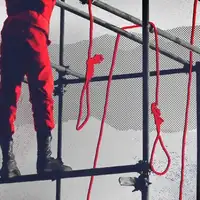
The Islamic Republic executed Javad Zamani and Abolfazl Saedi, two men arrested during the January protests in Shahrud, early Tuesday, the judiciary-affiliated Mizan news agency reported.

Mizan described the two men as “enemy foot soldiers” and “armed leaders of the January coup” in Shahrud, saying protesters had created what it called the pretext and conditions for hostile action by Iran’s enemies.

Mohammad-Sadegh Akbari, the head of the judiciary in Semnan province, accused Zamani and Saedi of taking part in unrest, damaging bank branches, creating disorder outside the governor’s office, overturning and burning a police vehicle, and attacking homes and cars.

Mizan said the charges against them also included inciting people to attend protests, assembly and collusion against domestic and foreign security, moharebeh, or “waging war against God,” and “corruption on earth.”

Officials and state media in Iran have repeatedly sought to discredit anti-government protests by labeling them “riots,” “unrest” or a “coup” and linking them to foreign actors, including the United States and Israel.

Mizan also published a 50-second video it described as the men’s confessions, with their faces blurred.

Rights groups and former detainees have repeatedly reported the use of forced confessions under pressure, torture and harsh detention conditions in the Islamic Republic’s prisons.

Iran has sharply increased executions in recent months, including political prisoners accused of taking part in the January protests or facing espionage-related charges.

In early June, the Islamic Republic executed Mehrdad Mohammadinia and Ashkan Maleki, two January protesters, over allegations that they set fire to a mosque in Tehran.

Most Viewed

Iran media publish purported details of Iran-US draft agreement
1

Iran media publish purported details of Iran-US draft agreement

2

World leaders welcome Iran-US deal, back path to final agreement

3
INSIGHT

Iran media split over US MoU as hardliners warn of retreat

4
INSIGHT

Iran-US MoU draws praise and backlash across Tehran’s political spectrum

5

New Zealand considering IRGC terrorist designation, deputy PM says

Banner
Banner

Spotlight

  • Iran-US MoU draws praise and backlash across Tehran’s political spectrum
    INSIGHT

    Iran-US MoU draws praise and backlash across Tehran’s political spectrum

  • Iran media split over US MoU as hardliners warn of retreat
    INSIGHT

    Iran media split over US MoU as hardliners warn of retreat

  • Trump's Iran strategy underrates regime's resilience, ex-US diplomat says

    Trump's Iran strategy underrates regime's resilience, ex-US diplomat says

  • Lebanon may become first test of emerging Iran-US deal, experts say
    PODCAST

    Lebanon may become first test of emerging Iran-US deal, experts say

  • The uneasy mix of diplomacy and pressure in Canada’s Iran policy
    ANALYSIS

    The uneasy mix of diplomacy and pressure in Canada’s Iran policy

  • How Nourabad Mamasani became an early flashpoint of Iran’s January bloodshed

    How Nourabad Mamasani became an early flashpoint of Iran’s January bloodshed

  • Iran executes another political prisoner, bringing tally to 37 since March

    Iran executes another political prisoner, bringing tally to 37 since March

•
•
•

More Stories

How Nourabad Mamasani became an early flashpoint of Iran’s January bloodshed

Jun 11, 2026, 15:15 GMT+1
•
Farnoosh Faraji
How Nourabad Mamasani became an early flashpoint of Iran’s January bloodshed
100%
Protestes in Iran's Nourabad Mamasani

Days before nationwide protest calls for January 8 and 9, Nourabad Mamasani was already under fire. Accounts received by Iran International describe live ammunition, snipers and heavy weapons used in a crackdown that culminated outside the town courthouse.

By January 4, the town in Fars province had entered a second wave of demonstrations, with gatherings reported on Haft-e Tir Boulevard, Imam Boulevard, Shariati Street, the main square and near public buildings as armed forces deployed and internet access was disrupted.

Nourabad, the main city of Mamasani County in southern Iran, had joined the protests earlier than many other parts of the country. Images, witness accounts and information sent to Iran International indicate that government forces began attacking protesters there from January 4 with tear gas, pellet rounds and live fire.

The violence escalated over the following days. By January 10, the area around the Nourabad courthouse had become the scene of a large-scale killing whose full toll remains unclear.

Residents described a heavy security presence from the early hours of the protests. Forces first tried to disperse crowds with tear gas, then opened fire as demonstrations continued. Some residents took shelter inside shops to escape the shooting.

Several protesters, including a 14-year-old girl, were wounded by bullets and pellet rounds during the January 4 crackdown. One witness said a relative was hit by pellets in the eye, nose and abdomen.

Reports also emerged of one protester killed by direct fire and another resident dying from respiratory complications linked to tear gas exposure.

Arya Zarei was among those killed during the Nourabad protests, according to information sent to Iran International. After his death, his family came under pressure to sign an official statement and avoid publicly discussing how he had been killed.

Behnam Izadi, a 35-year-old resident of Nourabad, was also among the early participants in the protests. On January 4, he used his car to help wounded protesters and others in the streets when the vehicle was hit by gunfire and tear gas and badly damaged.

Izadi was wounded in the attack but later returned to the protests. On January 8, according to accounts sent to Iran International, he was killed by a sniper positioned on the roof of a Basij base. The Basij is a paramilitary force under the Islamic Revolutionary Guard Corps. The shot hit Izadi in the head and eye.

Crackdown intensifies

As protests spread on January 8 and 9, strikes across Nourabad became more widespread and security and military forces deployed through the city with military-grade weapons.

Residents burned tires and blocked roads, standing against government forces and pushing them back in some areas.

On the evening of January 8, residents heard explosions and sustained gunfire in parts of the city. Electricity was cut for about 20 minutes. Videos and accounts from that night showed thick smoke and shooting in protest areas.

Demonstrators gathered on streets leading to Bank Melli, the Education Department square and the courthouse area, chanting slogans against the Islamic Republic. Government forces responded with live ammunition.

One account sent to Iran International said government forces killed at least 12 protesters on January 9. Iran International has not been able to independently confirm the precise death toll because of internet disruptions, the transfer of bodies and wounded people to facilities linked to the Revolutionary Guards, and pressure on families.

Kamiab Ahmadi was among those killed during those days. A large crowd attended his funeral, and after the ceremony mourners moved toward the city center and the courthouse area.

Protrests in Nourabad Mamasani
100%
Protrests in Nourabad Mamasani

Courthouse siege

On Saturday, January 10, protests in Nourabad took an even bloodier turn after funeral ceremonies for several of those killed.

Crowds moved from the funerals toward central Nourabad and gathered near the courthouse by late afternoon.

Multiple accounts said government forces had already positioned themselves inside the courthouse, on its roof and on surrounding buildings before protesters arrived.

As demonstrators approached the courthouse compound, members of the Revolutionary Guards and other armed units opened fire from several directions. Protesters later set fire to the courthouse building after coming under attack.

Witnesses said gunmen fired from the courthouse roof, the building behind Bank Melli, Pezeshkan Street and Koocheh Taxiha, or Taxi Alley, using Kalashnikov rifles, machine guns and heavier weapons.

According to those accounts, protesters were trapped around the courthouse and the shooting began without warning.

One witness said blood loss among the wounded and dead was so severe that blood flowed down the stairs from the building’s second floor to the lower level.

Mehrshad Gha’edi, Armin Shahrivar, Parisa Lashkari, Kamiab Ahmadi, Armin Gorjian and Ali Babakarami are among the names linked by residents to the Nourabad killings.

Residents said government forces removed bodies and wounded people from the area after dispersing the crowd, transferring some to facilities affiliated with the Revolutionary Guards.

Other accounts described wounded people being shot at close range in the streets after the initial assault.

Days later, bloodstains were still reportedly visible outside the courthouse. According to one account, government forces washed the street and sidewalk to remove traces of blood.

After rainfall later blocked a covered drainage canal, residents said two bodies were found there. According to those accounts, some wounded protesters had tried to hide inside the canal while fleeing gunfire and died there.

Bodies, pressure and restricted burials

Reports sent to Iran International show that authorities returned the bodies of those killed gradually, sometimes releasing only a few each day.

Families were required to sign written commitments, hold funerals before 6 or 7 a.m. and prevent large public gatherings, according to those accounts.

Some relatives said they were asked to pay sums ranging from 3 billion to 10 billion rials, or about $1,700 to $5,600, under the label of “bullet costs” before receiving the bodies of their loved ones.

In other cases, families said the release of a body was made conditional on accepting the official claim that the person killed had been a Basij member.

The pressure on families and restrictions on funeral ceremonies did not end public anger. According to another account, clashes broke out again during later funeral processions and government forces attacked mourners.

Amirreza Ahmadi, a 17-year-old who had taken part in protests between January 8 and 11, was arrested about a month later.

He was later released, but died one day after returning home from a cardiac complication, according to the account sent to Iran International. Relatives believe torture and injections of unidentified substances during detention contributed to his death.

The accounts from Nourabad Mamasani suggest the city was not only among the first to join the January protests before the main nationwide calls, but also one of the first places where government forces used live ammunition, snipers and heavy weapons against protesters in an organized way.

The full scale of what happened in Nourabad remains unclear.

Iran International’s public campaign seeks to document the names of those killed, the evidence around their deaths and the accounts of families and witnesses, building a public record of a crackdown authorities have sought to obscure.

Iran defrocks cleric after challenge to state-backed Shiite narratives

Jun 10, 2026, 14:16 GMT+1
Iran defrocks cleric after challenge to state-backed Shiite narratives
100%
Cleric Abdolrahim Soleimani Ardestani (right) during a youtube debate show with cleric Hamed Kashani (center)

Iran’s Special Clerical Court has sentenced dissident cleric Abdolrahim Soleimani Ardestani to six years in prison, a fine and removal from the clergy, months after his public challenge to state-backed Shiite narratives drew threats and political pressure.

Soleimani Ardestani, a religious scholar, former Mofid University professor and member of a reformist association of Qom seminary teachers and researchers, is being held in Qom’s prison.

According to Mojtaba Lotfi, an official from the office of the late dissident cleric Hossein Ali Montazeri, the court convicted him on all eight charges brought against him.

Lotfi said Soleimani Ardestani does not plan to appeal unless the court agrees to hold a public hearing.

In a letter from prison, Soleimani Ardestani said the charges against him included disturbing public opinion, insulting sacred values, insulting the leadership in relation to Ali Khamenei and his son Mojtaba, taking part in a gathering over the house arrest of Mir-Hossein Mousavi, and assembly and collusion against domestic security.

Mousavi, a former prime minister, has been under house arrest since 2011 after rejecting the official result of Iran’s disputed 2009 presidential election and becoming one of the symbols of the Green Movement protests.

Soleimani Ardestani also listed accusations such as propaganda against the system, spreading falsehoods online, insulting senior religious authorities, damaging the dignity of the clergy and “mind control and psychological suggestion” – a striking charge even by the standards of Iran’s broad political indictments.

He has called the indictment weak and baseless, criticized his arrest and solitary confinement, and said he wrote his defense not to seek acquittal but to leave a record for history.

The case began with remarks in a debate with pro-government cleric Hamed Kashani. Soleimani Ardestani questioned long-promoted Shiite accounts about the death of Fatemeh Zahra, the daughter of the Prophet Muhammed and wife of Ali, the first Shiite Imam.

In Iran, the story of Fatemeh’s martyrdom is not only a religious narrative but part of a vast state-backed culture of mourning, ritual and political identity.

Soleimani Ardestani argued that if Ali had merely watched his wife being attacked and had not intervened, then the traditional account would raise questions about his justice. He later said he had not insulted Fatemeh and was challenging what he called the “stories told by religious singers or eulogists (maddahs).”

  • Q&A: Who are Iran's ‘eulogists’ and what is their role in the Islamic Republic?

    Q&A: Who are Iran's ‘eulogists’ and what is their role in the Islamic Republic?

He also questioned mourning ceremonies for Muhammad Taqi, the ninth Shiite Imam, saying his death was linked to jealousy by his wife after he remarried and that mourning the event 1,300 years later was meaningless.

The backlash was immediate. Pro-government eulogists, who play an influential role in mobilizing religious crowds, attacked him with vulgar and sexist language. Reports also emerged of a group attack on his home.

  • Eulogists Are Khamenei's Favorite Politicians, Mob Influencers

    Eulogists Are Khamenei's Favorite Politicians, Mob Influencers

Hardline figures called for prosecution and defrocking, while some religious voices went further, suggesting that denial of Fatemeh’s martyrdom could amount to leaving Shiite doctrine.

The controversy also split parts of the political middle ground. Reformist figures criticized Soleimani Ardestani’s tone and timing, while others warned that violent threats, home attacks and denunciations violated freedom of belief.

The sentence is significant because it shows how quickly the Islamic Republic can convert a dispute over religious history into a security case.

Soleimani Ardestani was not an outside critic of clerical rule. He was a cleric from inside the seminary world, which makes his challenge more sensitive.

By sentencing him to prison and stripping him of clerical status, the system is not only punishing one man. It is policing the boundaries of who is allowed to interpret religion, how far internal debate can go, and what happens when religious scholarship collides with the political theology of the state.

Iran judge says asset seizures will weaken diaspora’s anti-regime protests

Jun 9, 2026, 06:47 GMT+1
Iran judge says asset seizures will weaken diaspora’s anti-regime protests
100%
Iranian expatriates rally against the Islamic Republic and in support of exiled Prince Reza Pahlavi on the National Mall, in Washington, DC, on March 29, 2026.

Confiscations of assets belonging to exiled Iranians will weaken their protests in front of the Islamic Republic’s embassies overseas, a judge said on Tuesday.

“When an expatriate sees that a home, shop or any other asset they owned in Tehran, Isfahan or any other Iranian city has been seized, anti-Iran gatherings outside embassies of European and American countries clearly become emptier, weaker and more hopeless,” said the head of Isfahan province’s judiciary, according to judiciary-linked Mizan News.

Asadollah Jafari described the seizures as a judicial tool to counter what he called “the enemy’s economic and media war.”

Iranian judicial authorities have been ordering the seizure of assets belonging to dozens of people, many living abroad, over allegations of cooperation with Israel and actions against national security.

Since the January protests, Iranians abroad have held regular demonstrations outside Iran’s embassies and consulates in Europe, North America and elsewhere, in support of protesters inside Iran and against the Islamic Republic’s crackdown.

Jafari said the confiscation of assets belonging to expatriates are aimed at having a “deterrent effect.”

New tool helps Iranian fans display Lion and Sun flag at World Cup

Jun 8, 2026, 10:08 GMT+1
New tool helps Iranian fans display Lion and Sun flag at World Cup
100%

A group of Iranian activists has launched a digital platform designed to display the Lion and Sun flag and political messages inside 2026 World Cup stadiums after FIFA restricted the symbol’s entry, according to comments by a former national boxing team captain.

The platform, called IranSync, synchronizes the screens of mobile phones held by spectators to create large coordinated images and messages across sections of a stadium, Salar Gholami told Iran International.

“We created a system that allows people to display unified images and messages without bringing physical banners or flags into the stadium,” Gholami said.

According to Gholami, users do not need to install an application and can access the service through the IranSync website. After participants register, the system generates a design based on the number of people taking part, allowing neighboring phone screens to form a larger image.

Gholami said the platform can be used to display the Lion and Sun flag as well as slogans including “Free Iran,” “Reza Pahlavi,” and “Regime Change for Iran.”

Alternatives after FIFA restrictions

The launch follows efforts by some members of the Iranian diaspora, particularly in the United States, to challenge FIFA’s decision to bar the Lion and Sun flag from World Cup venues and to find alternative ways of displaying the symbol during matches.

Gholami said the project aims to attract international media attention to developments in Iran and prevent the issue from being overshadowed by coverage of the World Cup.

“The presence of international media at the World Cup creates an opportunity to amplify the demands of protesters and bring the voice of the Iranian people to a global audience,” he said.

  • Iran’s lion-and-sun flag at center of FIFA row before 2026 World Cup

    Iran’s lion-and-sun flag at center of FIFA row before 2026 World Cup

The 2026 World Cup will be hosted by the United States, Canada and Mexico, with Iran’s matches scheduled to take place in the United States.

Gholami argued that supporters of the Islamic Republic could seek to use the tournament to improve the regime’s international image, adding that Iranian communities abroad should organize their own visibility campaigns.

During the 2022 World Cup in Qatar, the Islamic Republic sought to prevent the voices of protesters in the Woman, Life, Freedom uprising from being heard in stadiums by sending large numbers of its supporters to the country.

The United States has issued visas to Iran's national football team players and coaching staff, but some members of the delegation have not been granted entry permits.

Student protests over university entrance exam rules continue across Iran

Jun 7, 2026, 15:11 GMT+1
Student protests over university entrance exam rules continue across Iran
100%
Students in Kermanshah, western Iran, gather outside the Kermanshah provincial directorate of education.

Student protests over Iran’s university entrance exam system continued on Sunday, spreading across at least 20 provinces as pupils demanded changes to rules that give school grades a decisive role in university admissions.

Videos received by Iran International showed students in the northeastern city of Mashhad chanting: “We have heard many promises, but seen no result,” and “If our problem is not solved, there will be protests every day.”

Other videos from the central city of Isfahan showed students chanting: “Student, shout, cry out for your rights.”

The protests, which began in late May in western and central Iran, initially focused on how final exams were being held. They later grew into a broader demand to cancel the fixed impact of 11th-grade GPA scores on the national university entrance exam, or at least change it to a positive-only effect.

Iran’s national university entrance exam, known as the konkur, is a highly competitive test that plays a major role in determining access to higher education and future career prospects.

Students say repeated changes to exam rules, the role of school grades in admissions and the way final exams are being held have placed heavy psychological and academic pressure on them.

Abdolvahed Fayyazi, a member of parliament’s Education and Research Committee, told the semi-official ILNA news agency that responsibility for the entrance exam decision lies with the Supreme Council of the Cultural Revolution, a powerful state body that sets major education and cultural policies in Iran.

He said the council continued to insist on including school grades in the entrance exam process.

Fayyazi urged protesting students to “give up the protests and go study,” saying “there is no other choice and protests are useless.”

The protests have reached at least 20 provinces, including Tehran, Isfahan, Khuzestan, Fars, Razavi Khorasan, Sistan and Baluchestan, Gilan, Lorestan, Mazandaran and Yazd.

They have also spread to cities including Tehran, Isfahan, Mashhad, Shahrekord, Khorramabad, Arak, Qom, Yazd and Saveh.

Reports from some cities said security forces confronted protesters, injuring several students and arresting at least one person.

Students had previously gathered outside the Education Department in Mashhad, demanding the resignation of Abdolhossein Khosropanah, secretary of the Supreme Council of the Cultural Revolution.

Khosropanah defended the policy in an interview with Iranian state television on Sunday, saying members of the council had reached a consensus on keeping the decisive role of 11th- and 12th-grade academic records in the 2026 entrance exam.

He also accused “most” of the protesters of being linked to the “konkur mafia,” a term Iranian officials use to refer to private tutoring and exam-preparation businesses that profit from the university entrance system.

The remarks drew criticism from students, who said the accusation ignored the real concerns of pupils facing repeated policy changes, exam pressure and uncertainty over their educational future.

Khosropanah acknowledged that some demands, including those of repeat entrance exam candidates and students seeking to improve their grades, could not be dismissed.

He said proposals including more opportunities to improve grades, single-subject grade improvement and changes to exam scheduling would be reviewed.

Students say their generation has already faced school closures, online learning, social crises and repeated changes to education rules, and should not have to pay the price for sudden and contradictory decisions by officials.

They have said the protests will continue until their demands are addressed.