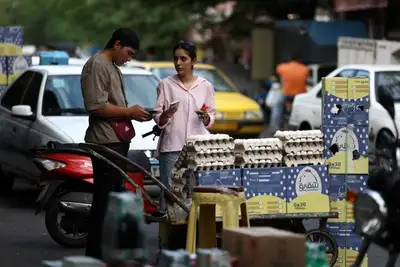
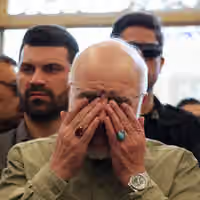
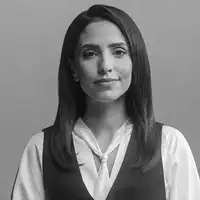
A screen grab from Hassan Namazee’s interview with Iran International
Hassan Nemazee inherited one of Iran’s best-known charitable legacies, lost his family’s fortune to the 1979 revolution and later found a new cause inside a US prison: justice reform.
A businessman, philanthropist and Democratic fundraiser, Nemazee told Iran International that the revolution, the confiscation of his family’s assets and his years in prison reshaped how he thinks about Iran, freedom and justice.
In Shiraz, the name Namazi Hospital remains more than the name of a medical center. It is a reminder of a philanthropic legacy built decades before the Islamic Republic, when Nemazee’s father used his fortune to create institutions that served the public.
“My father made his fortune outside of Iran and he repatriated that fortune to Iran,” Nemazee said. “He built the first modern hospital, the first modern nursing school, the first modern orphanage, and the first modern medical school.”
He said his father also built the country’s first piped water system, both to provide clean water for the hospital and to help finance free medical care for local residents.
“What he did was unique,” Nemazee said. “Most Iranians of that time and afterwards made their money in Iran and took it out. Philanthropy was an unknown process at that time.”
A legacy in Shiraz
Born in Washington, DC, and educated in the United States, Nemazee returned to Iran at 22 after his father’s death. He said he saw no other choice.
“There was no choice for me to do anything other than return to Iran when my father passed away,” he said.
Continuing his father’s work in Shiraz, he added, gave him “the greatest satisfaction” of his life.
Nemazee became chairman of the board of Namazi Hospital, the nursing school and the Shiraz Waterworks, and also oversaw the family’s broader charitable institutions through Bonyad Iran.
At the same time, he entered business during what he described as Iran’s “golden years” of rapid economic growth before the revolution. He invested in insurance, banking and real estate, including joint ventures with major American institutions.
That life ended abruptly when he left Iran in December 1978 for what he expected to be a short business trip to the United States.
“I left Iran on what I thought would be a two-week business trip,” Nemazee said. “The Shah left in January of 1979. Khomeini returned in February of 1979. And in March, the Iranian government nationalized 51 families. We were one of the 51 families.”
He said the confiscation covered nearly everything he owned in Iran.
“Everything that I owned in Iran, my house, my possessions, horses, dogs, bank accounts, land, factories, everything was confiscated,” he said.
Nemazee said many people initially believed the revolution would target only the Shah and those closest to him, but its reach quickly widened.
“The revolutionaries had an agenda, and the agenda was to completely eradicate a certain level of people within the Iranian society,” he said.
The entrance of Namazi Hospital in Shiraz
Politics after exile
After returning to the United States, Nemazee rebuilt his life in business, philanthropy and politics.
He became a prominent Democratic fundraiser and developed close ties with Bill and Hillary Clinton, as well as other senior Democrats including John Kerry, Al Gore, Joe Biden and Barack Obama.
He said his entry into American politics was partly shaped by the lesson he drew from Iran.
“I decided that I didn’t want to make the same mistake that I believe I had made in Iran, and that was abdicating any political responsibility for the country in which I lived,” he said.
President Bill Clinton later nominated Nemazee to serve as US ambassador to Argentina, but the nomination was blocked in the Senate. Nemazee summed up the reason in one word: “Politics.”
Years later, his life took another dramatic turn.
Nemazee pleaded guilty in the United States to inflating assets in loan documents, but said the banks did not lose money and that his punishment was excessive.
“The truth of the matter is that those assets were inflated,” he said. “The truth of the matter is as well that the banks never lost any money.”
He was sentenced to 12 years in prison and entered prison on August 27, 2010. He served nine years before being released in 2019 under the First Step Act, a criminal justice reform law signed by President Donald Trump.
A longtime Democrat, Nemazee said he remains grateful to Trump for signing the law that allowed his early release.
“You have to give credit where credit is due,” he said. “It is ironic but true that Donald Trump was responsible for my coming home early.”
A prison sentence becomes a cause
Nemazee said prison changed the course of his life. While incarcerated, he read 2,651 books, wrote two books, taught GED classes and mentored hundreds of fellow inmates.
He said a friend had advised him before prison not to see the sentence only as lost time, but as “a gift of time” to write, teach, exercise, read and mentor others.
After his release, Nemazee turned much of his attention to criminal justice reform and helping former prisoners rebuild their lives.
He now serves on the board of the Fortune Society, a New York-based organization that supports former inmates with housing, education, employment and reintegration.
Nemazee said the United States has failed by imprisoning too many people for too long.
“The United States has 5% of the world’s population, yet it has 25% of the world’s prisoners,” he said. “That’s a statistic that is not only morally wrong, it’s economically unfeasible.”
He said many former prisoners face basic barriers after release, including difficulty opening bank accounts, finding housing and securing jobs.
“How can you begin to put your life back together if you don’t have the fundamental rights that every other human being has?” he said.
Despite the upheavals in his own life, Nemazee said he still hopes to return one day to Shiraz.
“I would love to be able to return to Shiraz. I would like to return to Iran,” he said. “It’s been 46 long years. It’s time for Iran to be able to turn the page and for all Iranians to have the freedoms that they so richly deserve.”
Asked what he would have done if the revolution had not happened, Nemazee said he would probably have continued the life he was building in December 1978: running businesses while expanding the hospital, nursing school, vocational schools and orphanages linked to his family’s legacy.
“Iran is a country of magnificent talent and opportunities,” he said. “It’s unfortunate that it’s taken this moment in history during our lifetimes to not allow the people of Iran to progress in the ways that they deserve to progress.”
His is a story of loss and reinvention, but also of Iran itself: what was built, what was lost, and what future the country may still choose.
Participants in Ali Khamenei's funeral in Tehran are carrying red flags symbolizing vengeance. July 6, 2026
Ali Khamenei's funeral was intended to project national unity, but hardline attacks on the president and Iran's negotiators, the absence of former presidents, and renewed calls for revenge exposed deep divisions within Iran's political establishment.
The funeral processions in Tehran and Qom were overshadowed by hardline supporters chanting slogans against President Masoud Pezeshkian and Foreign Minister Abbas Araghchi, a sign of growing tensions over the government's diplomatic course.
Videos circulating on social media showed Pezeshkian being escorted through crowds by his security detail as mourners shouted "Death to the compromiser." Another video captured an even more hostile reception for Araghchi, with chants including "Death to the traitor," and "Shameless."
Yousef Pezeshkian, the president’s son and adviser, condemned the incident, writing: "If anger is directed against our own forces, targets Muslim unity and undermines domestic cohesion, it means we have become a tool in the enemy's hands and opened a window of hope for it to inflict further blows."
The attacks prompted strong criticism from reformists as well as some conservatives who support parliamentary speaker Mohammad-Bagher Ghalibaf's cooperation with the government and negotiations with the United States.
Conservative journalist Mohammad Mohajeri criticized senior officials, particularly Supreme National Security Council Secretary Mohammad-Bagher Zolghadr and some members of the Supreme National Security Council, for remaining silent. "Their silence is itself creating an even greater sedition."
Reformist journalist Ali Asghar Shafieian argued that the slogans damaged Iran's national interests. "On the day of the funeral, when even critics wore black out of respect for Iran and its leader, slogans against the state's decision to end the war and against negotiators seeking sanctions relief dealt a blow to national dignity and security."
Notable absences
The funeral also drew attention for the absence of former presidents Mohammad Khatami and Hassan Rouhani, despite official expectations that the ceremonies would showcase unprecedented national solidarity. Former foreign minister Mohammad-Javad Zarif was also absent, while images showed former president Mahmoud Ahmadinejad attending the public procession.
Authorities have not explained whether the former officials chose not to attend or were prevented from doing so.
Unlike Pezeshkian, Ghalibaf, and Hassan Khomeini – the grandson of Islamic Republic founder Ruhollah Khomeini – attended only the tightly controlled farewell ceremony at Tehran's Mosalla rather than the public street procession.
Political analyst Ahmad Zeidabadi argued that the hostile atmosphere explained the absences. "[The behaviour of] those who ignored the sanctity of the funeral by insulting the president and foreign minister clearly explains why figures such as Mohammad Khatami and Hassan Rouhani did not attend."
He added: "If they showed no mercy even to Pezeshkian, who enjoyed Khamenei's full trust and respect, it is obvious what they would have done had Khatami or Rouhani appeared."
The reformist-leaning website Rouydad24 described the absence of former presidents as "not merely a ceremonial issue, but the loss of an opportunity to demonstrate political consensus at one of the country's most sensitive moments."
Calls for revenge dominate messaging
During the mourning ceremonies, some participants repeatedly called for retaliation against the United States, Israel, and particularly US President Donald Trump, whom they blamed for Khamenei's death. Many mourners carried red flags symbolizing vengeance.
One supporter wrote: "Officials, do you see these flags of revenge? People will be calmed by revenge against the enemy – not by negotiations."
Hardline journalist Parisa Nasrabadi argued: "Avenging the martyred leader is a decisive step toward restoring lost deterrence, a duty to prevent future assassinations of leaders, and an absolute necessity to protect the position of Iran's young leader."
Hossein Shariatmadari, editor of the hardline Kayhan newspaper, called on the government to officially declare Trump and even the pilots allegedly involved in Khamenei's killing worthy of death wherever they are found, and proposed offering a bounty for anyone who kills Trump.
Another commentary published by Tabnak argued that the massive turnout and chants demonstrated that Iranian authorities had "no option but to exact retribution against the killers of the martyred leader."
Was the funeral a referendum?
Several pro-government figures portrayed the turnout as a public referendum endorsing the Islamic Republic.
Lawmaker Jafar Ghaderi described it as "the revolution's largest popular referendum," arguing that the government should now respond by addressing economic concerns and rewarding public loyalty.
Zeidabadi challenged the analogy, writing: "It would be good to explain exactly what this referendum is about and in which law a 'street referendum' is defined."
A social media user similarly argued that authorities have long portrayed public gatherings as proof of popular endorsement without specifying either the subject of the alleged referendum or its legal basis.
Foreign influencers welcomed
The funeral also featured several foreign journalists and pro-Iran commentators, including American media personality Jackson Hinkle, The Grayzone editor Max Blumenthal, and British journalist and blogger Bushra Sheikh, all of whom are known for criticizing Western policy toward Iran. Their presence was widely celebrated by government supporters online.
A widely shared video showed Hinkle standing on a stage in Tehran’s Enghelab Square, leading mourners in chants of “Death to Zionists,” “Death to Israel” and “Death to America,” with the crowd repeating the slogans after him.
US President Donald Trump during a meeting with NATO Secretary General Mark Rutte (not pictured) on the sidelines of the NATO summit in Ankara, Turkey, 08 July 2026.
US President Donald Trump said on Wednesday a memorandum of understanding with Iran aimed at ending the conflict was over, describing Iran's leaders as "liars and scums" and saying he no longer wanted to negotiate with them.
"As far as I'm concerned, it's over," Trump told reporters in Ankara before a NATO summit.
"I don't want to deal with them anymore. They're scum... they're sick people, they're led by sick people, and they're vicious, violent people."
Trump said he would allow US negotiators to continue talks if they wished but signaled he no longer believed diplomacy would succeed.
"They want to negotiate. They're good people... but they have to come back to me," he said. "As far as I'm concerned, it's just a waste of time dealing with them, they're liars."
Last month, Washington and Tehran had signed a memorandum of understanding setting out a framework to end the conflict, including steps toward a ceasefire and renewed talks over Iran's nuclear program.
Trump defended US strikes carried out overnight, saying they came after Iran launched missiles at ships a day earlier.
"We hit them very hard last night, very hard," he said. "I told them every time you hit, we hit."
He said Iran targeted commercial shipping after Washington had allowed time for funeral ceremonies for supreme leader Ali Khamenei following earlier fighting.
"We said, 'Go and do your funeral stuff,' and instead of that they start shooting rockets at ships yesterday."
Trump repeated that Iran could never be allowed to obtain a nuclear weapon.
"They can't have a nuclear weapon," he said. "We're going to denuke it. We're not going to let them."
He said Iran killed US troops through proxy attacks and blamed former Iranian military commander Qassem Soleimani for supplying roadside bombs that killed American soldiers.
"They've killed thousands and thousands of our soldiers," Trump said. "They've killed hundreds of thousands of innocent people."
Trump also said Iran had sought to kill him.
"I saw things this morning. I'm on every single one of their lists," he said. "So far I guess I've been lucky."
He described Iran's leaders as "evil, sick people" and compared the country to "cancer."
"You've got to cut out cancer early."
'They killed 54,000 people'
Trump also said Iran's authorities killed thousands of protesters during anti-establishment demonstrations.
"They killed 54,000 people as of now that were protesting," he said.
"When people say, 'How come they haven't taken over?' They can't take over because they're dead."
He also added that Iran repeatedly breaks agreements.
"We make a deal... everyone's agreed, no nuclear weapon... they go outside, talk to the press, they say we never even talked about it," Trump said.
"There's something wrong with them. They're cuckoo."
Criticizes NATO allies
Trump also renewed criticism of NATO, saying several allies refused to support the United States during the conflict with Iran.
He said Britain, Germany and France declined requests to assist Washington during the fighting.
"They said, 'We don't want to help you now, but we'll help you when the war is over,'" Trump said.
He said the United States had been "treated unfairly" by NATO and paid "billions and billions of dollars too much" for the alliance's defense.
Trump also repeated criticism of Spain, calling it "a terrible partner in NATO" and saying he wanted to end US trade with the country.
The remarks came after the United States carried out a new wave of strikes on military targets in Iran in response to attacks on commercial shipping in the Strait of Hormuz. Iran later launched missile and drone attacks on US military sites in Bahrain and Kuwait, further eroding the memorandum signed earlier this week to halt the fighting.
Pro-establishment participants gather during the funeral procession for slain Supreme Leader Ali Khamenei in Tehran on July 6, 2026.
Ali Khamenei’s funeral has been marred by confusion from Tehran to Najaf, after organizers abruptly shortened the procession route in the Iranian capital and conflicting accounts emerged over who would lead prayers when ceremonies move to Iraq.
The funeral convoy had been scheduled to move from Enghelab Street toward Azadi Square, but organizers changed the route without prior notice and sent it along Azadi Street instead, significantly shortening the procession.
Hassan Hassanzadeh, commander of the Islamic Revolutionary Guards Corps in Tehran, apologized to pro-establishment supporters on Tuesday, saying organizers had wanted the convoy to pass through Enghelab Street to allow more people to take part.
But he said “the large public presence and blocked roads” made the original route impossible.
The explanation came only hours after Hassanzadeh had denied any change to the route and said “all necessary arrangements” were in place.
Ali-Akbar Pourjamshidian, secretary of the funeral organizing committee, said the route was altered to protect the "security, safety and well-being" of participants.
State news agency IRNA reported that pro-establishment people had gathered since early morning near Enghelab Square expecting the procession to begin there and voiced frustration when the convoy instead departed from Azadi Street.
The change also drew criticism from figures close to the Islamic Republic. Hardline lawmaker Hamid Rasaei accused organizers of lacking honesty, while Mehdi Fazaeli, a member of Khamenei's office, said supporters "feel they have been misled at funeral."
Social media users offered a different explanation, arguing the route was shortened because turnout was lower than expected and that organizers sought to limit images of sparse crowds.
"The ceremony was so poorly attended that officials were forced to change Khamenei's funeral route so they could at least fill a few hundred meters of one street, but the emptiness of Azadi Square ruined that deception," an X user identified as Ali Reza wrote.
"The blood of those killed in the Bloody January protests did not let go of the lowly dictator, even in the depths of hell," he added.
Another X user wrote that a successful display of public support "doesn't require this much justification, apology and finger-pointing."
"But when media outlets close to the government spend hours explaining why the crowd was small, why the route changed, why people were left wandering and why supporters were unhappy, the display itself has failed," the user wrote, adding that what had been intended as the Islamic Republic's biggest show of legitimacy "became a propaganda disaster."
Questions over Najaf funeral prayers
Funeral ceremonies are due to continue in the Iraqi city of Najaf on Wednesday, but that stage of the proceedings has also been overshadowed by conflicting reports over who will lead prayers over Khamenei's body.
The Islamic Revolutionary Guards-affiliated Fars News Agency reported on Monday that Mohammad Reza al-Sistani, son of Grand Ayatollah Ali al-Sistani, had sent a message to the office of Iran's supreme leader saying it would have been appropriate for his father to lead the funeral prayer but that his health prevented him from doing so.
Pro-establishment participants gather during the funeral procession for Ali Khamenei in Tehran on July 6, 2026.
A day later, several Iranian media outlets, citing Iraqi networks, reported that the remarks attributed to Mohammad Reza al-Sistani were inaccurate.
The conflicting accounts have fueled questions about whether media close to the Iranian authorities sought to explain Grand Ayatollah Sistani's absence from the ceremony.
Sistani, 95, is regarded by many Shiites as the foremost religious authority and has led funeral prayers only once before, for his teacher.
Several Iranian media outlets said the funeral prayer in Najaf would instead be led by another cleric Muhammad Taqi al-Hakim.
Khamenei was killed on February 28, the first day of the recent war. The Assembly of Experts subsequently selected his son, Mojtaba Khamenei, as Iran's third supreme leader.
Mojtaba Khamenei has not appeared in public since his appointment and was absent from funeral ceremonies held in both Tehran and Qom.
A child places a picture of Ali Khamenei among handwritten messages left by mourners on a memorial wall set up during funeral ceremonies in Tehran, July 5, 2026
The weeklong funeral ceremonies for Iran’s slain Supreme Leader Ali Khamenei have been mired in chaotic planning, last-minute changes and political controversy.
Even state-aligned media hinted at organizational problems during one of the Islamic Republic’s most significant public ceremonies in decades, while social media reflected sharp divisions over the scale and meaning of the events.
The problems began almost immediately. Although state media had repeatedly announced that ceremonies would begin on Saturday, July 4, organizers abruptly moved the start forward by one day after realizing that foreign dignitaries had already arrived in Tehran on July 3 because of confusion over invitations.
A major disruption involved the movement of the coffins.
IRGC commander Hassan Hassanzadeh, who oversaw parts of the ceremony, initially announced that designated trucks would carry them from the east toward the west of Tehran, where they would be airlifted to Qom and later transferred to Iraq.
Hours after the scheduled start, state television reported that the plan had been reversed and the coffins would instead move from west to east.
Hassanzadeh later apologized to people who had gathered in eastern Tehran, according to IRGC-linked Fars News, explaining that the change was necessary because the “very large and early presence of people” and the closure of roads made the original route impossible.
Earlier reports also cited concerns that some bridges along the route might not withstand the weight of the crowds, potentially causing a catastrophe.
Hundreds of users on X and Telegram complained that they had arrived in eastern Tehran as early as 5 a.m. on organized tours, unaware of the change.
Critics noted that such logistical issues could have been assessed before the ceremony.
Questions were also raised about official crowd estimates, with social-media users comparing images of gatherings at Tehran’s Grand Mosalla with historic mass events such as the 72,000-person Freddie Mercury concert at Wembley Stadium in 1985.
Some questioned official claims that “millions” had attended the funeral.
Online narratives on X and Telegram were sharply divided.
Pro-government accounts and some Western commentators amplified footage showing a “festival-like” atmosphere outside the Grand Mosalla, with electronic religious music and free drinks.
Others inside Iran expressed frustration over state-mandated disruptions to daily life, rising economic concerns and heavy security measures during a period of national uncertainty.
Reports also emerged of pressure to mobilize participation.
Tehran residents described receiving orders from trade and real-estate unions requiring businesses including gyms, offices and parts of the Grand Bazaar to remain closed.
Basij members reportedly warned some shopkeepers that failing to comply could result in their stores being sealed.
In provinces such as Hamedan, charitable organizations were allegedly pressured to contribute funds, while restaurants in industrial towns near Tehran were reportedly ordered to prepare thousands of free meals for mourners or face closure.
Despite these pressures, videos circulated online appearing to show government officials—including Tehran’s mayor—being served expensive meals from well-known restaurants, while many participants received simple lunches such as egg sandwiches.
Media outlets also noted that the 12-hour procession through Tehran to Mehrabad Airport—and the subsequent transfer of the body to Qom, Najaf, Karbala and finally Mashhad for burial—created immense logistical challenges.
Analysts have compared the extreme caution surrounding Khamenei’s burial to memories of Ayatollah Khomeini’s chaotic 1989 funeral, when crowds overwhelmed security, tore the burial shroud and forced officials to remove the body by helicopter.
But for many observers, the most striking aspect of the ceremonies has been the political messaging.
Aggressive slogans, posters targeting US officials and widespread displays of red flags symbolizing revenge have dominated parts of the funeral.
Critics said the tone appeared at odds with Tehran’s diplomatic calendar, with Iranian officials expected to meet US counterparts next week for talks aimed at reaching a broader agreement and easing Iran’s economic crisis.
Senior Iranian officials attend the funeral of slain supreme leader Ali Khamenei. From left to right: foreign minister Abbas Araghchi, parliament speaker and lead negotiator Mohammad Bagher Ghalibaf, chief justice Gholamhossein Mohseni Eejei, and president Masoud Pezeshkian, July 4, 2026
As Iran adjusts to life after Ali Khamenei, a question once considered unthinkable is moving into the open: is the role of Supreme Leader itself being redefined?
For nearly half a century, the Islamic Republic has rested on one central principle: the Supreme Leader has the final word.
Presidents, parliament, the judiciary and the military could disagree. Institutions could compete. Factions could fight. But ultimately, Iran’s Supreme Leader settled the argument.
That assumption now appears shaken—and is being openly questioned from inside the system itself.
The debate began with what appeared to be a dispute over the government’s memorandum with the United States.
Vice President for Executive Affairs Mohammad-Jafar Ghaempanah argued that Supreme Leader Mojtaba Khamenei’s views were subject to institutional review rather than automatic implementation.
“If every opinion expressed by the Leader were implemented without question, there would be no need for institutions such as Parliament or the Supreme National Security Council,” Ghaempanah said.
Ultra-hardliners accused Ghaempanah of attacking the doctrine of Velayat-e Faqih, or Guardianship of the Islamic Jurist, arguing that he had reduced the Supreme Leader’s judgment to the level of other officials.
“It’s a very new thought,” said Patrick Clawson, deputy director for research at the Washington Institute for Near East Policy, “the idea that the Supreme Leader is not the one who makes the final decision.”
Clawson cautioned against overstating Ghaempanah’s personal influence. Although he holds the title of vice president, the position functions largely as a presidential adviser rather than one of Iran’s principal decision-makers.
The significance, he said, lies not with the messenger but with the idea itself.
“There has always been some collective element,” Clawson said. “But the Supreme Leader has been the final decision-maker.”
The suggestion that institutional decisions might themselves become definitive, without requiring the Leader’s final approval, would represent “a very new and different way of doing things,” he added.
Historian Arash Azizi said the controversy reflects a deeper problem.
“The Islamic Republic's constitutional design has had a tension or a contradiction built into it from the beginning,” Azizi said, arguing that the office of Supreme Leader was built around a “philosopher-king” model: an unelected cleric standing above politics and resolving disputes between competing institutions.
Under Ali Khamenei, that contradiction largely disappeared.
“He effectively turned Iran into an autocracy ... a personalistic system really, where his final word just carried the ultimate weight,” Azizi said.
But no successor, he argues, was likely to inherit that degree of authority.
“It had long been clear that there would be no smooth succession,” Azizi said. “It had also long been clear that it is much more likely that the future of leadership in the Islamic Republic would be less clerical and more collective.”
According to Azizi, that transition had already begun before Ali Khamenei’s death.
Following the 12-day war, he argued, day-to-day authority increasingly shifted toward the Supreme National Security Council, where Iran’s major institutions, including the presidency, judiciary, IRGC and intelligence services, are represented.
In that context, Ghaempanah’s remarks become more than a defense of negotiations with Washington.
They suggest the office of Supreme Leader itself may be evolving from the unquestioned source of authority into one power center among several.
If that trend continues, Azizi believes the constitutional framework itself may eventually need to change.
“I believe that in the next few years, they'll change the constitution and perhaps get rid of the position of Supreme Leader, merge it with the president, or fundamentally change the constitution of the Islamic Republic.”
Janatan Sayeh, a research analyst at the Foundation for Defense of Democracies, sees another force behind the shift.
“No one had undermined the Supreme Leader's role like this,” he said.
“The military establishment does not feel the need to appease the clergy as much as they used to,” Sayeh added.
Rather than replacing the office of Supreme Leader, Sayeh argues, the Islamic Revolutionary Guard Corps benefits from preserving it as a source of religious and constitutional legitimacy while real power increasingly flows through security institutions.
“Ideally they want a Velayat-e Faqih that's IRGC-dominated and not influenced by the clergy,” he said.
The government insists Ghaempanah’s comments have been distorted and that he never challenged the Supreme Leader’s authority.
Yet the debate his remarks unleashed reveals something almost unimaginable under Ali Khamenei.
For decades, Iran’s institutions competed beneath a single unquestioned authority. Today, the competition increasingly appears to be over that authority itself.
Whether power ultimately settles with the Supreme National Security Council, the IRGC or another coalition of political elites remains uncertain.
The deeper question is whether the office of Supreme Leader, as it functioned under Ali Khamenei, can survive the man who defined it.