• العربية
  • فارسی
Brand
  • Iran Insight
  • Politics
  • Economy
  • Analysis
  • Special Report
  • Opinion
  • Podcast
  • Iran Insight
  • Politics
  • Economy
  • Analysis
  • Special Report
  • Opinion
  • Podcast
  • Theme
  • Language
    • العربية
    • فارسی
  • Iran Insight
  • Politics
  • Economy
  • Analysis
  • Special Report
  • Opinion
  • Podcast
All rights reserved for Volant Media UK Limited
volant media logo
INSIGHT

Iran scrambles for Omani back channel around the Hormuz blockade

Farnaz Davari
Farnaz Davari

Journalist at Iran International

May 22, 2026, 13:28 GMT+1

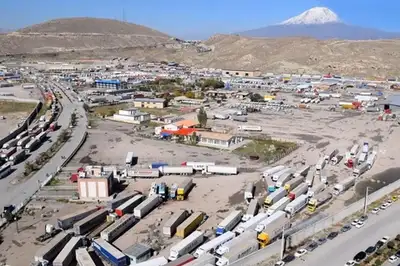
A small port on Oman’s Musandam Peninsula has become part of Iran’s workaround to the maritime blockade in the Strait of Hormuz, traders say, as goods once routed through the UAE are shifted through costlier channels.

Before the war involving the United States, Israel and Iran, Khasab was better known to many Iranians as a stop on informal maritime routes used by fishermen, tourists and fast boats moving between Oman and Iran’s southern coast.

Among those boats were vessels known locally as shooti boats, a term borrowed from Iranian smuggling slang. In Iran, shooti usually refers to high-speed cars that carry untaxed or smuggled goods across long distances, often traveling in groups and avoiding stops.

Around Khasab, traders and locals use the same word for fast boats that make quick crossings to places such as Qeshm and other Iranian coastal points.

For years, the route was associated mostly with informal trade and small-scale smuggling. Iranian cigarettes, alcohol and hashish were moved from Iran to Oman, while consumer goods, home appliances and luxury items were brought back from Oman to Iran.

Iranian fishing boats around Khasab were also a familiar part of the area’s maritime landscape.

A port at the mouth of Hormuz

Khasab is the capital of Oman’s Musandam governorate, an exclave separated from the rest of Oman by the United Arab Emirates.

Its geography gives it unusual importance: the port sits near the mouth of the Strait of Hormuz, about 35 kilometers from Iran, surrounded by dry mountains and fjord-like inlets that before the war were mostly associated with leisure boats and maritime tours.

The blockade has changed the function of the route.

With main passages in the Strait of Hormuz closed to Iranian ships and vessels linked to the Islamic Republic, Khasab has shifted from a local secondary route into one of several alternatives for moving goods into Iran.

Cargoes that previously traveled through standard commercial channels and UAE ports are now, in parts of the transport network, being redirected through Oman and Khasab.

How the route works

A trader told Iran International that since the ceasefire, Iran-bound cargo is first carried from UAE ports to Khasab on vessels flying non-Iranian flags.

The goods are then unloaded at Khasab’s pier onto Iranian vessels, which take them to Iranian ports outside the main controlled routes.

A significant share of the movement is carried by landing craft, the trader said.

Those vessels are useful for the route because they can move through shallow waters and dock at smaller piers. Some can carry hundreds of tons of cargo, and in some cases close to 1,000 tons, including containers, vehicles and heavier freight.

The goods moving through Khasab are not limited to one category, according to trade sources.

They can include cars, spare parts, home appliances, consumer goods, hygiene products and some items linked to petroleum products.

Iranian vessels carrying goods from Khasab toward Iran (file photo)
100%
Iranian vessels carrying goods from Khasab toward Iran

A costly workaround

The route is significantly more expensive than Iran’s previous channels.

One trader told Iran International that moving goods through Khasab costs about six times more than the earlier route from the UAE to the southwestern port city of Khorramshahr.

Still, the trader said the higher cost has become one of the few remaining options for many businesses trying to continue operating.

Local officials in Iran have also referred to the growing use of Omani ports.

Khorshid Gazderazi, head of the Bushehr Chamber of Commerce, said on Thursday that the UAE had previously served as Iran’s main hub for exports and imports, but that after the war began and loading and container departures were disrupted, using Omani ports was placed on the agenda.

He named Khasab, Suwaiq, Shinas and Muscat among the ports being used to move goods.

Morad Zerehi, governor of Bandar Khamir in Hormozgan province, also announced a plan called “boat transport” for the “legal transfer of basic goods from Omani ports” to the county. 

A route advertised online

The shift is also visible on Iranian social media, where accounts selling goods have begun advertising the Oman route.

Some accounts have posted videos of goods being moved from Oman, presenting the route as proof that imports into Iran are continuing despite the war and maritime restrictions.

They market Khasab as a new way to bring goods into Iran and encourage customers to keep buying.

But the route also shows the limits of Iran’s workaround.

For traders, Khasab offers a way to keep goods moving. For Iran’s trade network, it is also a sign of how the blockade has pushed ordinary commerce into longer, more expensive and less predictable routes.

Most Viewed

How Iran’s blackout warps online picture of public opinion
1
INSIGHT

How Iran’s blackout warps online picture of public opinion

2
INSIGHT

Calls for pragmatism grow in Iran but rulers appear unmoved

3

Hardliners attack Pezeshkian over talks and wartime candor

4
INSIGHT

The strange afterlife of Iran’s firebrand president

5

Rights group warns Iranian ex-MMA champion faces imminent execution

Banner
Banner

Spotlight

  • Iran scrambles for Omani back channel around the Hormuz blockade
    INSIGHT

    Iran scrambles for Omani back channel around the Hormuz blockade

  • From pulpits to parliament, why Iran’s officials speak in threats
    OPINION

    From pulpits to parliament, why Iran’s officials speak in threats

  • Why oil giant Iran struggles to supply gasoline
    ANALYSIS

    Why oil giant Iran struggles to supply gasoline

  • Iran can build missiles but can't afford chicken
    INSIGHT

    Iran can build missiles but can't afford chicken

  • The strange afterlife of Iran’s firebrand president
    INSIGHT

    The strange afterlife of Iran’s firebrand president

  • Families help identify more victims linked to Alghadir hospital
    SPECIAL REPORT

    Families help identify more victims linked to Alghadir hospital

  • State-backed rallies in Iran add matchmaking stalls to push marriage drive

    State-backed rallies in Iran add matchmaking stalls to push marriage drive

  • Rapid deterioration of Iran-UAE ties threatens a critical trade lifeline

    Rapid deterioration of Iran-UAE ties threatens a critical trade lifeline

  • Iran-UAE breakdown leaves Iranian expats in limbo

    Iran-UAE breakdown leaves Iranian expats in limbo

•
•
•

More Stories

UK court hears alleged money trail in Iran International journalist stabbing trial

May 22, 2026, 11:32 GMT+1

The trial over the stabbing of Iran International presenter Pouria Zeraati turned to the alleged money trail behind the attack, with prosecutors describing payments routed through a west London construction company and relatives of one defendant.

Woolwich Crown Court on Thursday was told that Nandito Badea, 21, and George Stana, 25, received thousands of pounds through payments linked to Hemroc Ltd, a company based in Park Royal, west London, which was incorporated in 2020 and listed its business as the construction of domestic buildings.

Badea and Stana are accused over the March 2024 stabbing of Zeraati outside his home in Wimbledon, southwest London. They deny the charges.

Prosecutors allege the attack was carried out by criminal proxies acting on behalf of the Islamic Republic, an allegation Iran’s embassy in London has called “baseless.”

  • Iran International journalist stabbed at Tehran's behest, UK court told

    Iran International journalist stabbed at Tehran's behest, UK court told

Prosecutors said Hemroc had links to another company, Besuch Ltd, which operated “unlicensed restaurants and cafes” and traded under the name Tehran Lounge.

The court was told a man named Constantin Matache was a director of the company and that Hemroc made 183 payments totaling £80,540 to Stana’s sister, Florina, with the reference “loan.”

Florina then made 130 payments to Stana, who mainly passed the money on to others but used some for food, travel, cash withdrawals and other spending, retaining £1,330, prosecutors said.

Badea received 78 payments from Florina, the court heard. Prosecutors said he used the money for daily expenses and payments to Hotel Lily in West Brompton, where the men stayed while conducting surveillance, retaining £8,312.

Earlier in the trial, jurors were shown CCTV that prosecutors said captured the alleged getaway after Zeraati was stabbed three times in the leg in broad daylight.

The court has heard the defendants flew in from Romania and spent about a month carrying out surveillance near Zeraati’s home. On the day of the attack, prosecutors allege, Andrei grabbed Zeraati from behind while Badea stabbed him and Stana waited in a side road as the getaway driver.

The men later took a taxi to Heathrow Airport, changed clothes and boarded a British Airways flight to Geneva, the court was told.

Police found the car two days later. Arrest warrants were issued on October 3, and all three men were arrested in Romania on December 4. Badea and Stana were extradited to Britain 13 days later. Andrei could not be extradited because he was subject to domestic proceedings in Romania.

Iranian authorities in 2022 labeled Iran International a terrorist organization and said anyone working with the broadcaster would be deemed a threat to national security.

That year, posters were put up in Tehran featuring pictures of several journalists, including Zeraati, under the heading “Wanted: dead or alive.”

The court has also heard that police provided armed security for Iran International’s offices in Chiswick in 2022, and that the broadcaster later moved to Washington for a period after being told its employees could not be adequately protected in the UK.

The trial is continuing. The defense case is expected to begin next week.

In a separate case earlier this month, a trial date was set for three defendants charged over an alleged arson incident near Iran International’s studios in northwest London. That trial is scheduled to begin on January 25 next year at the Central Criminal Court.

Inflation pushes Iranians to buy food in installments

May 22, 2026, 09:47 GMT+1

Rising inflation in Iran has pushed households to buy even basic food items in installments, reshaping consumer habits.

Official figures published this year showed point-to-point inflation climbing above 73%, sharply increasing the cost of household essentials compared with the previous year. Food prices rose particularly fast, with some staples more than doubling in price.

The shift has extended installment payments beyond traditionally expensive products such as refrigerators and washing machines to groceries and supermarket packages, according to local media reports.

Chain stores and smaller retailers now advertise food, hygiene products and household supplies with payment plans spread over several months.

File photo of shoppers browsing goods inside a supermarket in Iran.
100%
File photo of shoppers browsing goods inside a supermarket in Iran.

“When even basic necessities are sold in installments, it clearly reflects the pressure inflation has placed on household finances,” Tehran-based Eghtesad News wrote in a report published on Thursday.

Second-hand market expands

The inflation surge has also accelerated demand for second-hand appliances, furniture and electronics as many households move away from buying new goods outright.

A Tehran mother identified only as Maryam told the outlet she bought a used refrigerator for roughly half the price of a new one after concluding the retail cost was no longer manageable.

“It is better to take some risk and buy second-hand than pay the heavy cost of a new product all at once,” she said.

Negin, a university student whose classes are now held online rather than in person, needed a laptop to continue her studies. Faced with soaring prices, she settled for a lightly used second-hand laptop. “This option allowed me to continue my studies without taking out a loan,” she said.

File photo of second-hand household appliances displayed for sale in Iran.
100%
File photo of second-hand household appliances displayed for sale in Iran.

Vendors in electronics and appliance markets also reported higher demand for used goods, with some sellers describing increases of between 40% and 60% compared with previous years.

Food and housing costs squeeze budgets

Economists and local observers say the change reflects deeper structural pressure on household budgets as spending on food, housing, utilities and services consumes a growing share of monthly income.

Annual inflation has surpassed 53%, according to official data, while prices for dairy, meat, rice, cooking oil and eggs have climbed sharply.

The report said many consumers now view installment purchases and second-hand goods not as cheaper alternatives, but as the only practical way to maintain daily living standards under prolonged inflationary pressure.

Why oil giant Iran struggles to supply gasoline

May 22, 2026, 04:14 GMT+1
•
Umud Shokri

Iran’s worsening gasoline shortage is becoming a test of whether Tehran can still sustain basic economic stability under war conditions.

For years, Tehran portrayed fuel self-sufficiency as proof that sanctions had not crippled the energy sector. But recent comments by officials suggest the country was already facing a daily shortfall of roughly 20 million liters before the latest war.

MP Reza Sepahvand recently said production stands at around 105 million liters a day while consumption is closer to 135 million.

War damage, disrupted imports and pressure on petrochemical units have now pushed a long-running structural problem into public view.

Why a producer runs short of gas

Iran may hold vast oil reserves and operate sizable refineries, but that does not automatically guarantee enough gasoline for domestic use.

Much of the country’s refining system depends on aging infrastructure, limited maintenance and technology constrained by years of sanctions, leaving production increasingly out of step with demand.

Fuel consumption is also on the rise. Expanding cities, heavy reliance on private cars and millions of older, fuel-inefficient vehicles place constant pressure on supply.

Cheap subsidized gasoline also encourages overuse, while large price gaps with neighboring countries fuel widespread smuggling that pulls millions of liters out of Iran each day.

The crisis is tied to politics as much as energy. Subsidies help keep fuel affordable and reduce public frustration, but they also deepen waste, smuggling and financial pressure on the state.

Iranian leaders know reforms are necessary, yet past fuel-price increases have triggered unrest, leaving the government trapped between avoiding social anger and managing a system that is becoming harder to sustain.

How war made things worse

The latest war has turned a chronic imbalance into a more immediate stress test. Strikes on energy infrastructure and disruption around the Strait of Hormuz have affected refining, storage, distribution and imports.

Even when refineries are not completely knocked offline, damage to depots, logistics networks and supporting industrial units can sharply reduce the amount of usable gasoline reaching consumers.

One overlooked issue is Iran’s reliance on petrochemical components for gasoline blending.

When refineries cannot produce enough high-quality gasoline, producers blend in octane-boosting components to improve fuel performance. These can include aromatic-rich streams such as benzene, toluene and xylenes, as well as additives such as MTBE.

Such components are widely used in global fuel production because they raise octane levels. The difference lies in regulation.

Many countries tightly restrict substances such as benzene because of health and environmental risks. Iran’s heavier reliance on petrochemical blending can worsen pollution if quality controls weaken or blending exceeds safer limits.

Higher levels of benzene and aromatics increase harmful emissions, especially in congested cities such as Tehran, where air quality is already poor. MTBE also carries environmental risks, particularly for groundwater contamination.

Damage to petrochemical facilities therefore matters for two reasons: it can reduce the supply of components Iran needs to stretch gasoline production while also increasing pressure to rely on lower-quality blending practices to keep fuel flowing.

Either outcome creates problems: tighter supply or worsening health and environmental costs.

When will it really bite?

Before the war, Iran managed the imbalance through imports, rationing, fuel cards, blending and informal restrictions. Those measures helped prevent a full public breakdown but never solved the underlying problem.

If the reported daily shortfall of 20 to 30 million liters persists, shortages could become more visible within weeks or months, especially during peak summer demand.

Longer queues, tighter quotas, regional outages, rising black-market prices and growing pressure on transport and agriculture are among the most likely consequences.

Recent public comments by lawmakers suggest officials are no longer able to present the issue as a temporary inconvenience.

War damage has made repairs and imports more difficult, while years of overworking refineries, postponing maintenance and relying on imports and petrochemical blending left little room to absorb new shocks.

Partial recovery of refining and distribution capacity may be possible within one or two months if damage is limited and supply routes remain open. Full normalization would likely take far longer because the deeper causes are structural: rising demand, old vehicles, sanctions, smuggling, weak investment and distorted pricing.

Iran’s gasoline shortage is therefore not only an energy problem but also a governance problem.

For ordinary Iranians, the consequences are increasingly visible in longer fuel lines, higher unofficial prices, rising transport costs and worsening air pollution: exposing the widening gap between official claims of resilience and economic reality.

Iran can build missiles but can't afford chicken

May 22, 2026, 04:10 GMT+1

As food prices spiral and farms shut down across Iran, even establishment figures are openly questioning how a country capable of producing precision missiles cannot manufacture affordable cars or keep chicken within reach of ordinary families.

Former Industry Minister Mostafa Hashemitaba says the crisis is rooted not only in consumer markets but across the country’s collapsing production chain, from fertilizers to poultry farming.

Writing in Sharq on May 20, Hashemitaba said the price of a 50-kg bag of triple-phosphate fertilizer had jumped within months from three million rials to 70 million rials, a nearly 24-fold increase. Other fertilizers, he added, rose by more than 1,100 percent over the same period.

The result, he argued, has been the shutdown of farms and poultry operations, feeding directly into soaring prices for fruit, vegetables and meat.

Read the full article here.

Iran can build missiles but can't afford chicken

May 22, 2026, 01:45 GMT+1
•
Behrouz Turani

As food prices spiral and farms shut down across Iran, even establishment figures are openly questioning how a country capable of producing precision missiles cannot manufacture affordable cars or keep chicken within reach of ordinary families.

Former Industry Minister Mostafa Hashemitaba says the crisis is rooted not only in consumer markets but across the country’s collapsing production chain, from fertilizers to poultry farming.

Writing in Sharq on May 20, Hashemitaba said the price of a 50-kg bag of triple-phosphate fertilizer had jumped within months from three million rials to 70 million rials, a nearly 24-fold increase. Other fertilizers, he added, rose by more than 1,100 percent over the same period.

The result, he argued, has been the shutdown of farms and poultry operations, feeding directly into soaring prices for fruit, vegetables and meat.

A report published by Etemad described growing despair among Iranians struggling with job losses, displacement and rapidly rising living costs after the conflict.

Columnist Nayereh Khademi interviewed a 40-year-old university-educated man who said that after losing his job during the war, he briefly considered living in a cardboard box with his wife.

“What frightened me most was a future in which nothing was certain,” he said.

Another man described the horror of watching missile strikes destroy homes around him. When he realized his own house was still standing, he said he felt guilt rather than relief.

For many who lived through the attacks, the war’s aftermath brought a second shock: rapidly rising prices and shrinking access to basic necessities.

One resident interviewed by Etemad described it as “surreal” to walk past shops selling everyday goods that had suddenly become unaffordable.

Several Tehran newspapers reported last week that a kilogram of poultry meat had reached 1.5 million tomans, roughly one-tenth of an ordinary worker’s monthly salary.

Even some members of parliament, usually focused on rhetoric about national strength and resistance, publicly acknowledged the severity of rising food prices.

Hashemitaba contrasted the economic deterioration with what he described as unrealistic official ambitions elsewhere in the economy.

He recalled that in September 2023, then-President Ebrahim Raisi’s industry minister proudly showed him an electric vehicle and promised that 100,000 units would be produced by March. By spring, he wrote, it became clear that the display model was effectively the factory’s only output.

“How can a country that manufactures precision missiles fail to produce cars?” Hashemitaba wrote.

The worsening economic picture is also reinforcing arguments inside parts of Iran’s political establishment that some form of relief through negotiations with Washington may be unavoidable after months of war and financial turmoil.

While hardliners continue to frame diplomacy as resistance management rather than compromise, even some conservative figures have increasingly acknowledged the scale of economic pressure facing ordinary Iranians.

The strain is now extending beyond households. Cafés and restaurants in Tehran that once offered a temporary escape from political tensions and economic anxiety are also reportedly struggling to survive amid surging supply costs.

Government officials, including President Massoud Pezeshkian, who once tried to downplay the scale of the crisis, have increasingly acknowledged the depth of the country’s economic problems.

But hardline critics on Thursday attacked Pezeshkian simply for publicly recognizing the extent of public hardship—a reaction that underscored how disconnected parts of the political establishment appear from the realities facing many ordinary Iranians.