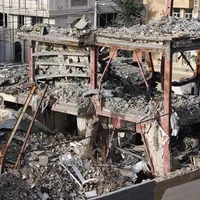
An air defense test in Andimeshk in Iran’s southwestern Khuzestan province caused a projectile to fall in a residential area on Tuesday, injuring four civilians, a provincial security official told state media.
Iran’s state news agency IRNA cited a provincial security official later as saying that an unknown object had fallen in a residential area of Andimeshk, injuring four people.
Valiollah Hayati, Khuzestan’s deputy governor, also said the incident damaged a shop and two vehicles.
Two years after former president Ebrahim Raisi’s helicopter vanished in fog, Iran has lost far more than a president: its succession plan, regional shield, aura of safety and confidence that time was on its side.
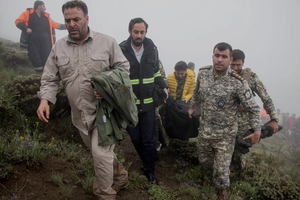
On May 19, 2024, a helicopter carrying Raisi disappeared in the mountains of Iran’s East Azarbaijan province. The final Iranian inquiry blamed bad weather, dense fog and atmospheric conditions, not sabotage.
But the image was too powerful to ignore: a leadership convoy moving through poor visibility, losing sight of itself, then trying to project a state still in control.
That is the better way to read Raisi’s death – as metaphor, not conspiracy.
The crash did not change Iran because Raisi ruled Iran. He did not. Real power sat above him, with Supreme Leader Ali Khamenei, the Revolutionary Guard, the security state and the regional networks Tehran had built over decades.
Raisi mattered because he showed how continuity was supposed to look. He was loyal, hardline, severe and predictable; a figure once widely discussed as a possible successor to Khamenei.
Raisi was not the Islamic Republic’s future. He was its rehearsal for a future that never arrived.
In May 2024, the system still seemed to have a succession plan, a regional shield and the patience to wait out its enemies. Two years later, almost every pillar that made Tehran look untouchable has been tested or broken.
No sanctuary
The countdown had already begun on October 7, 2023.
Hamas’s attack on Israel opened a war that pulled Iran’s wider network into motion: Hezbollah in Lebanon, militias in Iraq and Syria, the Houthis in Yemen. For years, this was Tehran’s doctrine of strategic depth.
After October 7, that depth became a target map.
By April 2024, Iran and Israel had moved from shadow war into direct confrontation. Then, one month later, Raisi’s helicopter fell out of the fog.
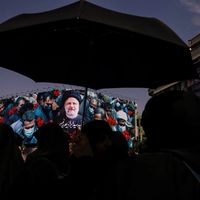
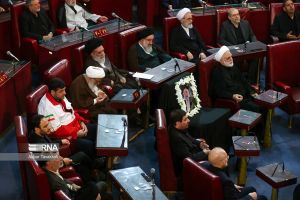
The state answered with the familiar theater of mourning: coffins, black flags, portraits, clerics and commanders. The message was continuity.
But after Raisi, the funerals began to tell another story. One by one, they marked not continuity, but exposure: a system losing the people, places and networks that had made it feel protected.
Former Supreme Leader Ali Khamenei leading the funeral prayer at the coffin of Ebrahim Raisi and other officials killed in the crash
His death forced a snap election. Masoud Pezeshkian, a reformist in tone, won the presidency after a first round marked by record-low turnout. The system gained a softer face, but not a new center of power.
Then came the first great humiliation of the post-Raisi era.
Ismail Haniyeh, Hamas’s political leader, came to Tehran for Pezeshkian’s inauguration. Hours later, he was killed in the Iranian capital.
This was not only the killing of a Hamas leader. It was a message that even the patron’s capital was no sanctuary.
That became the sentence for what followed.
In September 2024, Hezbollah’s pagers and radios exploded across Lebanon and Syria, turning the group’s own communications into weapons against it. Days later, Hassan Nasrallah was killed in Beirut.
A movement built on secrecy and underground command had been pierced from inside and struck from above.
Then Hamas leader in Gaza Yahya Sinwar was killed. Hamas remained, Hezbollah remained, the slogans remained. But the axis was bleeding leaders, territory, routes and confidence.
The deeper break came in Syria.
Bashar al-Assad’s fall in December 2024 was not just the loss of another Islamic Republic's ally. It damaged the geography of Iranian power: the route to Hezbollah, the Mediterranean opening, and the Qasem Soleimani-era claim that weak states could be turned into Iranian depth.
Israel struck Iranian nuclear and military sites during the 12-Day War. The United States then hit the most fortified parts of the nuclear program.
For years, nuclear ambiguity had been Tehran’s shield. In 2025, it became a battlefield.
Outside pressure then met the inside front.
The protests that erupted in late 2025 and early 2026 were driven by economic collapse, repression and the old demand for a different political order. By January 8 and 9, the state answered with mass violence and an internet shutdown.
The Islamic Republic could still shoot, jail and terrify. But it could no longer persuade enough of its own people that it had a future.
Even shocks beyond the Middle East began to feel part of the same weather. The US capture of Venezuelan President Nicolás Maduro in January 2026 mattered less as an Iran story than as an atmosphere: another anti-American ruler, once protected by sovereignty and distance, suddenly exposed.
Then, on February 28, 2026, the war reached the institution at the heart of the Islamic Republic’s power: the supreme leadership.
Ali Khamenei was killed in US-Israeli strikes. For a state built around velayat-e faqih, this was not only the death of a ruler. It was the breaking of an aura.
Mojtaba Khamenei was named Supreme Leader days later. The appointment was meant to project continuity. Instead, it made the Islamic Republic look smaller, more closed and more dynastic.
The revolution born against monarchy had passed its highest office from father to son in wartime.
The funeral that has not happened
And then came the strangest funeral of all: the one that could not settle itself.
Iran postponed Khamenei’s state funeral. Months later, even his burial remained unclear. For a Shiite revolutionary state that has always known how to turn death into power, the delay was astonishing.
The republic of funerals had lost command of its most important ritual.
The old model had four layers. At home, fear contained society. In politics, elections gave the state a civilian mask. In the region, proxies kept enemies away from Iran’s borders. At the strategic level, missiles, nuclear ambiguity and the Strait of Hormuz made the cost of attack seem unknowable.
Since Raisi’s crash, every layer has been damaged.
Fear has produced revolt. Elections have exposed emptiness more than legitimacy. Regional depth has been penetrated. Syria has fallen away. Hezbollah and Hamas have been battered. The supreme leader’s office has lost its aura of untouchability.
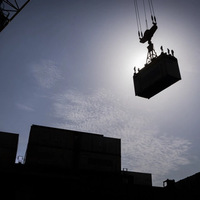
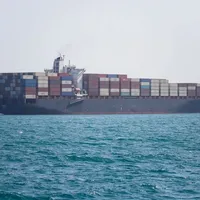
Hormuz remains Iran’s strongest card. But it also shows the trap. The strait gives Tehran leverage over oil, shipping and global markets; it also keeps Iran at the center of a crisis it cannot easily end.
This is not the story of a regime that has already fallen. The Islamic Republic still has prisons, missiles, commanders and a long memory for survival.
But it is also not the story Tehran wants to tell.
Two years ago, Raisi’s death was wrapped in the language of martyrdom and continuity. The state said nothing vital had been lost.
Yet what followed revealed how little room the Islamic Republic had left for error.
The crash did not start the chain. October 7 had already started the clocks. But Raisi’s death gave the years after it their image: fog, poor visibility, a convoy losing contact, and a state insisting the road ahead was clear.
Two years later, Iran is still falling through that fog.
The question is no longer whether the Islamic Republic can survive another crisis. It has survived many.
The question is whether it can survive the loss of the things that made survival possible: distance, fear, succession, sanctuary and the belief that time was on its side.
The sound of an explosion was heard on Iran’s southern Qeshm Island around midday Tuesday, state media reported.
A provincial security official told state media later that several consecutive explosions heard on Qeshm Island were caused by the disposal of unexploded ordnance.
The deputy security governor of Hormozgan province said specialist teams carried out an operation.
He urged the public not to worry and to ignore rumors on social media.
Iran has been treating the period of ceasefire with the US as wartime and using it to strengthen its combat capabilities, the army spokesman said on Tuesday.
“The Islamic Republic’s army has treated the ceasefire period as a time of war and used the opportunity to strengthen its combat power,” Mohammad Akraminia said.
He warned that if Iran was attacked again, the army would open “new fronts” with new tools and methods.
Dental treatment costs in Iran have surged in recent months, with industry officials warning that inflation and rising import costs are pushing basic care beyond the reach of many households.
Prices for some dental implants have nearly doubled over the past few months, according to Farid Hashemnejad, head of the Iranian Dental Technicians Association, who said clinics and laboratories are struggling to absorb mounting costs while maintaining service quality.