Two years after former president Ebrahim Raisi’s helicopter vanished in fog, Iran has lost far more than a president: its succession plan, regional shield, aura of safety and confidence that time was on its side.
On May 19, 2024, a helicopter carrying Raisi disappeared in the mountains of Iran’s East Azarbaijan province. The final Iranian inquiry blamed bad weather, dense fog and atmospheric conditions, not sabotage.
Crash as metaphor
But the image was too powerful to ignore: a leadership convoy moving through poor visibility, losing sight of itself, then trying to project a state still in control.
That is the better way to read Raisi’s death – as metaphor, not conspiracy.
The crash did not change Iran because Raisi ruled Iran. He did not. Real power sat above him, with Supreme Leader Ali Khamenei, the Revolutionary Guard, the security state and the regional networks Tehran had built over decades.
Raisi mattered because he showed how continuity was supposed to look. He was loyal, hardline, severe and predictable; a figure once widely discussed as a possible successor to Khamenei.
Raisi was not the Islamic Republic’s future. He was its rehearsal for a future that never arrived.
In May 2024, the system still seemed to have a succession plan, a regional shield and the patience to wait out its enemies. Two years later, almost every pillar that made Tehran look untouchable has been tested or broken.
No sanctuary
The countdown had already begun on October 7, 2023.
Hamas’s attack on Israel opened a war that pulled Iran’s wider network into motion: Hezbollah in Lebanon, militias in Iraq and Syria, the Houthis in Yemen. For years, this was Tehran’s doctrine of strategic depth.
After October 7, that depth became a target map.
By April 2024, Iran and Israel had moved from shadow war into direct confrontation. Then, one month later, Raisi’s helicopter fell out of the fog.
The state answered with the familiar theater of mourning: coffins, black flags, portraits, clerics and commanders. The message was continuity.
But after Raisi, the funerals began to tell another story. One by one, they marked not continuity, but exposure: a system losing the people, places and networks that had made it feel protected.
Former Supreme Leader Ali Khamenei leading the funeral prayer at the coffin of Ebrahim Raisi and other officials killed in the crash
His death forced a snap election. Masoud Pezeshkian, a reformist in tone, won the presidency after a first round marked by record-low turnout. The system gained a softer face, but not a new center of power.
Then came the first great humiliation of the post-Raisi era.
Ismail Haniyeh, Hamas’s political leader, came to Tehran for Pezeshkian’s inauguration. Hours later, he was killed in the Iranian capital.
This was not only the killing of a Hamas leader. It was a message that even the patron’s capital was no sanctuary.
That became the sentence for what followed.
In September 2024, Hezbollah’s pagers and radios exploded across Lebanon and Syria, turning the group’s own communications into weapons against it. Days later, Hassan Nasrallah was killed in Beirut.
A movement built on secrecy and underground command had been pierced from inside and struck from above.
Then Hamas leader in Gaza Yahya Sinwar was killed. Hamas remained, Hezbollah remained, the slogans remained. But the axis was bleeding leaders, territory, routes and confidence.
The deeper break came in Syria.
Bashar al-Assad’s fall in December 2024 was not just the loss of another Islamic Republic's ally. It damaged the geography of Iranian power: the route to Hezbollah, the Mediterranean opening, and the Qasem Soleimani-era claim that weak states could be turned into Iranian depth.
By June 2025, the war had moved to Iran itself.
Israel struck Iranian nuclear and military sites during the 12-Day War. The United States then hit the most fortified parts of the nuclear program.
For years, nuclear ambiguity had been Tehran’s shield. In 2025, it became a battlefield.
Outside pressure then met the inside front.
The protests that erupted in late 2025 and early 2026 were driven by economic collapse, repression and the old demand for a different political order. By January 8 and 9, the state answered with mass violence and an internet shutdown.
The Islamic Republic could still shoot, jail and terrify. But it could no longer persuade enough of its own people that it had a future.
Even shocks beyond the Middle East began to feel part of the same weather. The US capture of Venezuelan President Nicolás Maduro in January 2026 mattered less as an Iran story than as an atmosphere: another anti-American ruler, once protected by sovereignty and distance, suddenly exposed.
Then, on February 28, 2026, the war reached the institution at the heart of the Islamic Republic’s power: the supreme leadership.
Ali Khamenei was killed in US-Israeli strikes. For a state built around velayat-e faqih, this was not only the death of a ruler. It was the breaking of an aura.
Mojtaba Khamenei was named Supreme Leader days later. The appointment was meant to project continuity. Instead, it made the Islamic Republic look smaller, more closed and more dynastic.
The revolution born against monarchy had passed its highest office from father to son in wartime.
The funeral that has not happened
And then came the strangest funeral of all: the one that could not settle itself.
Iran postponed Khamenei’s state funeral. Months later, even his burial remained unclear. For a Shiite revolutionary state that has always known how to turn death into power, the delay was astonishing.
The republic of funerals had lost command of its most important ritual.
The old model had four layers. At home, fear contained society. In politics, elections gave the state a civilian mask. In the region, proxies kept enemies away from Iran’s borders. At the strategic level, missiles, nuclear ambiguity and the Strait of Hormuz made the cost of attack seem unknowable.
Since Raisi’s crash, every layer has been damaged.
Fear has produced revolt. Elections have exposed emptiness more than legitimacy. Regional depth has been penetrated. Syria has fallen away. Hezbollah and Hamas have been battered. The supreme leader’s office has lost its aura of untouchability.
Hormuz remains Iran’s strongest card. But it also shows the trap. The strait gives Tehran leverage over oil, shipping and global markets; it also keeps Iran at the center of a crisis it cannot easily end.
This is not the story of a regime that has already fallen. The Islamic Republic still has prisons, missiles, commanders and a long memory for survival.
But it is also not the story Tehran wants to tell.
Two years ago, Raisi’s death was wrapped in the language of martyrdom and continuity. The state said nothing vital had been lost.
Yet what followed revealed how little room the Islamic Republic had left for error.
The crash did not start the chain. October 7 had already started the clocks. But Raisi’s death gave the years after it their image: fog, poor visibility, a convoy losing contact, and a state insisting the road ahead was clear.
Two years later, Iran is still falling through that fog.
The question is no longer whether the Islamic Republic can survive another crisis. It has survived many.
The question is whether it can survive the loss of the things that made survival possible: distance, fear, succession, sanctuary and the belief that time was on its side.
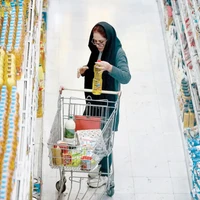
Dental treatment costs in Iran have surged in recent months, with industry officials warning that inflation and rising import costs are pushing basic care beyond the reach of many households.
Prices for some dental implants have nearly doubled over the past few months, according to Farid Hashemnejad, head of the Iranian Dental Technicians Association, who said clinics and laboratories are struggling to absorb mounting costs while maintaining service quality.
“Some implant procedures that previously cost around 300 million rials (around $165) are now almost twice as expensive,” Hashemnejad told Rouydad24 on Monday. “In some areas, raw material prices have risen by up to 100%.”
Dental care in Iran has long received limited support from the social security system, leaving most patients to cover major treatment costs themselves. The latest increases add pressure to households, already grappling with years of inflation and declining purchasing power.
Hashemnejad said imported materials used in dentistry and dental laboratories have become significantly more expensive in recent months, although severe shortages have not yet fully emerged because clinics are still relying on older inventories.
“So far, serious shortages are not being felt because existing stock is still being used,” he said. “But with some items becoming more difficult to obtain, more problems may appear in the coming months.”
Iran, he said, remains heavily dependent on imported dental materials sourced mainly from China, along with Turkey, Japan, South Korea and several European countries.
While domestic production has improved in recent years, Hashemnejad said Iranian-made materials still cannot fully replace imported products across specialized fields.
“We would also prefer to depend less on imports, but the reality is that most of the materials we need are still imported,” he said.
File photo from a dental clinic in Iran, where soaring prices and economic pressure have left many unable to afford routine dental treatment.
According to Hashemnejad, prices for some imported materials used in removable dental treatments and laminate procedures have risen between 80% and 90%, while resin and acrylic materials used in prosthetic work have also recorded sharp increases.
Patients shift toward lower-cost care
The rise in prices is also changing treatment choices, with many patients abandoning implant-based procedures or internationally recognized brands in favor of cheaper alternatives.
“Naturally, when costs increase, the number of patients also declines,” Hashemnejad said. “This directly affects clinics and dental laboratories.”
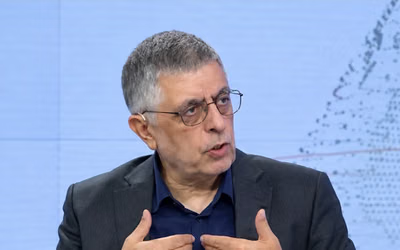
He warned that continued price increases could eventually push part of the population out of the dental care market entirely, creating further strain for healthcare providers already facing weaker demand and higher operating costs.
Shahab Dalili, a US permanent resident jailed in Iran for nearly a decade after traveling there for his father’s funeral, has returned to Washington following his release from Tehran’s Evin prison, Hostage Aid Worldwide said on Monday.
“After a long journey from Evin to Yerevan to DC, we joyfully announce that Shahab Dalili is finally home safe with his family after a decade+ of wrongful detention in Iran,” the advocacy group wrote on X, adding that his relatives now hope he can “reintegrate smoothly into normal life.”
Dalili, a former captain with Iran’s state shipping company who later settled in the United States with his wife and two sons, traveled to Tehran in 2016 to attend his father’s funeral. He was arrested before reaching the airport for his return flight to Virginia.
Iranian authorities later sentenced him to 10 years in prison on charges including espionage and cooperation with what Iranian courts described as a hostile government, referring to the United States.
AI-enhanced photo of Shahab Dalili.
Dalili’s case drew attention during a 2023 prisoner exchange between Iran and the United States that secured the release of five detained Americans. His family publicly questioned why he had been excluded from the agreement despite years of appeals to successive US administrations.
His son Darian Dalili said at the time that the family received little information from Washington beyond assurances that officials were monitoring the case. The US government also never formally designated Dalili as “wrongfully detained,” a status that can increase diplomatic pressure for a prisoner’s release.
Hostage Aid Worldwide did not specify the terms of Dalili’s release or whether it was linked to negotiations between Tehran and Washington.
US President Donald Trump said Monday he had halted a strike on Iran planned for Tuesday after Arab states including Tehran’s new foe the UAE urged him to allow more time for talks, even as reports said Tehran’s latest proposal had fallen short of US expectations.
Trump said Qatar’s emir, Saudi Crown Prince Mohammed bin Salman and UAE President Mohammed bin Zayed asked him to delay the attack, which he said had been planned for Tuesday, because they believed a deal could be reached that would be “very acceptable” to the United States, the Middle East and beyond.
“This Deal will include, importantly, NO NUCLEAR WEAPONS FOR IRAN!” Trump said in a post on Truth Social.
He said he instructed Defense Secretary Pete Hegseth, Joint Chiefs of Staff Chairman Gen. Daniel Caine and the US military not to carry out the strike, but warned that the order could be reversed if talks fail.
“I have further instructed them to be prepared to go forward with a full, large scale assault of Iran, on a moment’s notice, in the event that an acceptable Deal is not reached,” Trump said.
The diplomatic push came as details emerged about Tehran’s latest proposal to Washington.
Earlier in the day, Reuters reported, citing a senior Iranian source, that Tehran’s latest proposal calls for a permanent end to the war, sanctions relief, the release of all frozen Iranian funds and the reopening of the Strait of Hormuz, while leaving nuclear talks for later stages.
The source said Washington had so far agreed only to unfreeze 25% of Iran’s funds on a phased timetable, but had shown flexibility over limits on Tehran’s nuclear work.
Reconstruction fund for Iran
Iran's Revolutionary Guards-affiliated Tasnim news agency separately reported, citing a source close to Tehran's negotiating team, that Washington had proposed establishing a reconstruction and development fund and had accepted suspending Iran’s oil sanctions during negotiations through temporary waivers issued by the US Treasury’s Office of Foreign Assets Control.
Tasnim also said major gaps remained between the two sides, particularly over the release of frozen Iranian funds and Tehran’s demand for compensation over the war.
The source said Iran rejected linking an end to the conflict to nuclear commitments and insisted Tehran would “by no means agree to ending the war in exchange for nuclear commitments.”
The claims of sanctions relief were quickly disputed in Washington. CNBC reporter Megan Cassella said a US official denied the report, saying Iranian state media claims that Washington had agreed to lift oil sanctions during talks were false.
Axios also reported, citing a senior US official and a source briefed on the issue, that Iran’s updated proposal was insufficient because it lacked detailed commitments on suspending uranium enrichment or handing over its stockpile of highly enriched uranium.
The US official cited by Axios said no sanctions relief would happen “for free” without reciprocal action by Iran, warning that talks may otherwise continue “through bombs.”
Trump later told the New York Post he was “not open” to concessions to Tehran and suggested Iran understood the risk of further US action.
“I can tell you they want to make a deal more than ever, because they know we’re—what’s going to be happening soon,” Trump said.
Amnesty International said on Monday that executions worldwide rose to their highest recorded level in more than four decades in 2025, with the Islamic Republic responsible for the vast majority of the increase.
At least 2,707 people were executed across 17 countries in 2025, the rights group said in its annual report on the global use of the death penalty, describing the figure as the highest recorded since it began tracking executions in 1981.
Iranian authorities carried out at least 2,159 executions in 2025, more than double the figure recorded the previous year and by far the largest contributor to the global rise, according to the report.
“A shameless minority are weaponizing the death penalty to instill fear, crush dissent and punish marginalized communities,” Amnesty Secretary General Agnès Callamard said.
Drug-related executions drove increase
A resurgence of punitive anti-drug policies, Amnesty said, fueled much of the increase in executions globally.
Nearly half of all known executions in 2025 – 1,257 cases – were linked to drug-related offenses, including in Iran, China, Saudi Arabia, Singapore and Kuwait.
Iran accounted for 998 of those executions, the highest number among countries identified in the report.
Saudi Arabia carried out at least 356 executions in 2025 and made extensive use of capital punishment in drug-related cases, Amnesty said.
The organization also reported increases in executions in several other countries, with Kuwait nearly tripling its total from six to 17 executions. Egypt’s number rose from 13 to 23, Singapore’s from nine to 17 and the United States from 25 to 47.
The report did not include the thousands of executions Amnesty believes continued to take place in China, which it said remained the world’s leading executioner.
Executing states remain minority
Despite the sharp rise in executions, Amnesty said countries carrying out the death penalty remained “an isolated minority.”
China, Egypt, Iran, Iraq, North Korea, Saudi Arabia, Somalia, the United States, Vietnam and Yemen have all carried out executions every year for the past five years, according to the report.
Four countries resumed executions in 2025 – Japan, South Sudan, Taiwan and the United Arab Emirates – bringing the total number of executing states to 17.
“It’s time for executing countries to step into line with the rest of the world and leave this abhorrent practice in the past,” Callamard said.
Amnesty highlights abolition efforts
The global trend toward abolishing the death penalty nevertheless continued, Amnesty said.
When the organization began campaigning against capital punishment in 1977, only 16 countries had abolished it. That number has now risen to 113, according to the report.
Vietnam abolished the death penalty for eight offenses including drug transportation, bribery and embezzlement, while Gambia removed capital punishment for murder, treason and other offenses against the state.
The organization also pointed to legislative efforts in Lebanon and Nigeria aimed at abolishing the death penalty, while Kyrgyzstan’s Constitutional Court ruled attempts to restore executions unconstitutional.
“With human rights under threat around the world, millions of people continue to fight against the death penalty each year in a powerful demonstration of our shared humanity,” Callamard said.
Europol said on Monday that 14,200 posts and links tied to Iran’s Islamic Revolutionary Guards (IRGC) had been targeted in a coordinated operation against online terrorist material.
The operation, led by Europol’s EU Internet Referral Unit, involved 19 countries and focused on content used to spread propaganda, recruit supporters and raise funds.
The material, Europol said, appeared across social media, streaming services, blogs and websites in several languages, including Persian, English, Arabic, French and Spanish.
The content, it said, included AI-generated videos glorifying the IRGC, political messaging, calls for revenge over Iran's Supreme Leader Ali Khamenei and material linked to allied groups including Hezbollah, Houthis, Hamas and Palestinian Islamic Jihad.
Europol said the IRGC’s main X account, which had more than 150,000 followers, was withheld in the EU, while thousands of other links had been removed or were under review.
Investigators also identified cryptocurrency transactions used to support online operations, Europol said.