Ghalibaf may be emerging not as Iran’s Mikhail Gorbachev, but as something closer to Nikita Khrushchev—an establishment figure attempting controlled change not to dismantle the Islamic Republic, but to preserve it.
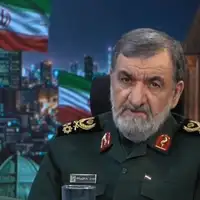
The Majles speaker, a former IRGC commander with deep ties inside the security establishment, has in recent weeks appeared to sit at the center of Tehran’s debate over diplomacy or confrontation.
Supporters of diplomacy see negotiations as a way to stabilize the system and prevent further confrontation with the West. Hardline factions warn that concessions would undermine the ideological foundations of the Islamic Republic.
US President Donald Trump, intentionally or not, has helped fan the flames by publicly portraying Iran’s leadership as divided, echoing the way Washington’s rivalry with the Soviet Union often intensified internal debates in Moscow.
The comparison with Gorbachev has appeared before in Iranian politics. During the reform movement of the late 1990s, President Mohammad Khatami was frequently described as “Iran’s Gorbachev.”
Hardliners used the label to attack him, while parts of the opposition embraced it in the hope that his reforms might accelerate the system’s collapse.
In reality, neither Khatami nor his allies accepted that role. Their reforms were framed as an effort to strengthen the Islamic Republic rather than dismantle it. More importantly, the structure of power at the time made a Gorbachev-style transformation nearly impossible.
Supreme Leader Ali Khamenei held ultimate authority and maintained the balance between rival factions, limiting both reformist ambitions and hardline overreach.
The conditions today are markedly different. Iran has endured direct external military pressure, and the legitimacy of the system has been shaken by recent protests. A younger generation appears deeply alienated from the ideological foundations of the state.
At the same time, the supreme arbiter who once managed factional competition no longer appears able—or willing—to impose the same discipline.
In such circumstances, change may come not from a reformist outsider but from a figure embedded within the system itself. Ghalibaf fits that description. His background in the IRGC, his political experience, and his connections across multiple factions give him a platform few others possess.
Yet any move toward accommodation with Washington provokes resistance from ideological loyalists who view compromise as betrayal, even as warnings grow that without meaningful change the system could buckle under pressure from abroad and deepening discontent at home.
Here the Soviet analogy becomes harder to ignore.
Khrushchev’s reforms were intended to strengthen the Soviet system, not dismantle it. But attempts to modernize rigid structures often produce consequences their architects cannot control.
In 1964, Khrushchev was quietly pushed aside by his colleagues and officially “retired due to old age and ill health.”
If Iran’s leadership ultimately chooses a path of limited reform to preserve the state, Ghalibaf could still emerge in such a role. But if the system rejects even controlled adaptation, he may instead become an early casualty of its resistance to change.