• العربية
  • فارسی
Brand
  • Iran Insight
  • Politics
  • Economy
  • Analysis
  • Special Report
  • Opinion
  • Podcast
  • Iran Insight
  • Politics
  • Economy
  • Analysis
  • Special Report
  • Opinion
  • Podcast
  • Theme
  • Language
    • العربية
    • فارسی
  • Iran Insight
  • Politics
  • Economy
  • Analysis
  • Special Report
  • Opinion
  • Podcast
All rights reserved for Volant Media UK Limited
volant media logo
INSIGHT

Unity or fracture? Tehran battles Trump’s narrative of disarray

Maryam Sinaiee
Maryam Sinaiee

Iran International

Apr 26, 2026, 21:57 GMT+1
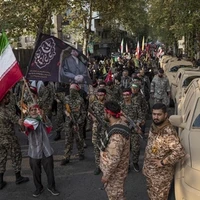
A demonstrator waves a large green flag during a state-sponsored rally in Tehran, Iran, April 2026

Assertions by US President Donald Trump that Iran’s leadership is divided, and Tehran’s increasingly coordinated effort to deny it, have thrust the issue of unity to the center of the standoff between the two countries.

Trump has repeatedly cast Iran’s leadership as fractured and disorganized. In one post, he wrote: “Iran is having a very hard time figuring out who their leader is! They just don’t know!” describing “infighting” between “‘Hardliners,’ who have been losing BADLY on the battlefield, and the ‘Moderates,’ who are not very moderate at all.”

In a separate interview, he said: “They’re all messed up. They have no idea who their leader is… we took out, really, three levels of leaders.”

As speculation spread, President Masoud Masoud Pezeshkian sought to set the tone in a social media post declaring: “In Iran there are no ‘hardliners’ or ‘moderates.’ We are all Iranians and revolutionaries.”

The message was reposted verbatim by senior officials across the political and military establishment, including judiciary chief Gholam-Hossein Mohseni-Ejei, Vice President Mohammad-Reza Aref, senior advisers, and the Supreme National Security Council, underscoring the coordinated nature of the response.

Mohseni-Ejei went further in a separate post, directly attacking Trump and calling the labels “hardliner” and “moderate” “fabricated and hollow terms” borrowed from Western political literature.

The messaging blitz from Tehran followed the collapse of negotiations in Islamabad and reports that parliamentary speaker Mohammad Bagher Mohammad Bagher Ghalibaf—who led Tehran’s delegation there—may have stepped down from the negotiating team, fueling speculation over internal disagreements about talks with Washington.

Reports first circulated by Israel’s Channel 12 claimed Ghalibaf resigned following interference by the Islamic Revolutionary Guard Corps. Other reports suggested he was reprimanded for trying to include Iran’s nuclear program in discussions with the United States.

Hardline lawmaker Mahmoud Nabavian appeared to confirm tensions in a leaked audio recording, saying the team had discussed the nuclear issue “against the Supreme Leader’s position” and calling it a “strategic error.”

Saeed Saeed Jalili, widely rumored to be a possible replacement for Ghalibaf, struck a similar note while avoiding the exact phrasing, emphasizing “the unity of all segments of the nation” under the Supreme Leader.

The Supreme Leader’s official account also weighed in, warning that enemy “media operations” were aimed at undermining national unity and security.

Some analysts see Trump’s comments as deliberate pressure. Reformist journalist Ahmad Zeidabadi argued Trump was trying to “create division and conflict within the structure of the government” to present any eventual deal as “his complete victory.”

Ali Afshari, a US-based political analyst, described the remarks as “psychological warfare aimed at disrupting the cohesion of the opposing side.”

Yet even as officials insist on unity, conflicting signals from Tehran have deepened public uncertainty over negotiations and the future of the war.

Hardline lawmaker Ali Khezrian said the resumption of war was “inevitable” and claimed Iran had halted all communication with Washington.

Despite publicly dismissing reports of Ghalibaf’s resignation, parliament communications chief Iman Shamsaei said no new round of negotiations had been scheduled.

Journalist Saeed Agenji, meanwhile, insisted Ghalibaf still held “the helm of negotiations and domestic management of the country.”

Zeidabadi warned that mixed messaging over negotiations, ceasefire, agreement and even the ultimate goals of the war had left ordinary Iranians confused, risking reinforcing exactly the perception of disarray Tehran is trying to deny.

Most Viewed

Iran executes protester over January uprising
1

Iran executes protester over January uprising

2
PODCAST

US should use Iran talks leverage to help Iranian people, veteran journalist says

3

Iranian national charged in US over migrant smuggling scheme

4

Three Baha’i women jailed in southeast Iran, one of them pregnant

5

UK releases man jailed for spying on Iran International in 2023 terror plot

Banner
Banner

Spotlight

  • The hidden target in US war on Iran may be China
    PODCAST

    The hidden target in US war on Iran may be China

  • Unity or fracture? Tehran battles Trump’s narrative of disarray
    INSIGHT

    Unity or fracture? Tehran battles Trump’s narrative of disarray

  • Iran’s economy after the March war: how bad can it get?
    ANALYSIS

    Iran’s economy after the March war: how bad can it get?

  • Behind Tehran’s unity show: The secret letter to the shadow king
    INSIGHT

    Behind Tehran’s unity show: The secret letter to the shadow king

  • Tehran stocks head for reopening, but it risks triggering a new crisis
    ANALYSIS

    Tehran stocks head for reopening, but it risks triggering a new crisis

  • Power vacuum in Tehran emboldens hardliners
    INSIGHT

    Power vacuum in Tehran emboldens hardliners

•
•
•

More Stories

US should use Iran talks leverage to help Iranian people, veteran journalist says

Apr 25, 2026, 17:52 GMT+1
•
Negar Mojtahedi

With US-Iran talks in Pakistan in doubt after Iran's foreign minister left Islamabad and President Trump canceled the planned trip by US negotiators, veteran journalist Eli Lake says Washington should use its leverage not only on the nuclear file, but to help the people of Iran.

Iranian Foreign Minister Abbas Araghchi was in Islamabad on Saturday, where he met Pakistani Prime Minister Shehbaz Sharif and army chief Asim Munir as Pakistan continued efforts to mediate between Tehran and Washington.

A Pakistani source involved in the talks told Reuters that Araghchi conveyed Tehran’s demands and concerns about US positions during the visit. Iranian state media also said he delivered Iran’s response to proposals in a meeting with Munir before leaving Islamabad for Oman and Russia.

Iranian officials had earlier said Araghchi had no plan to meet US officials in Pakistan.

Lake, a journalist at The Free Press and host of the Breaking History podcast, told Eye for Iran that the Islamic Republic is seeking negotiations as a lifeline after major military, economic and political setbacks.

“Their backs are against the wall and these negotiations they hope are going to be a lifeline,” Lake said.

But he argued that any renewed diplomatic track should begin with pressure on Tehran over the Iranian people.

“If I was Vice President Vance, I would say… the first thing I’d say is, you need to turn back on the internet if you’re going to get these financial lifelines. You need to release political prisoners,” Lake said.

He added that Washington should also demand an end to executions.

The remarks come as Iran’s internet blackout has entered its 57th day, according to NetBlocks, with international connectivity still largely severed amid worsening conditions inside the country.

  • Internet Pro or Censor Pro? Iran rolls out a new service

    Internet Pro or Censor Pro? Iran rolls out a new service

Lake said the US should recognize that “our best allies are the Iranian people on the ground,” and warned against strikes on civilian infrastructure such as power plants, saying they would hurt ordinary Iranians more than the Islamic Republic.

The diplomatic maneuvering has also unfolded amid signs of deepening disagreement inside Tehran. Mohammad Bagher Ghalibaf, the parliament speaker, has stepped down as head of Iran’s negotiating team amid internal disputes, with Saeed Jalili floated as a possible replacement and Araghchi seeking greater control of the talks.

Lake said he believes the fractures inside the Islamic Republic are genuine.

“At the end of the day, with enough pressure, they’re probably going to start turning on each other,” he said.

He argued that the Islamic Republic has lost legitimacy and that Iran’s future will ultimately be decided by Iranians themselves.

“You cannot keep these people down,” Lake said..

Behind Tehran’s unity show: The secret letter to the shadow king

Apr 24, 2026, 16:24 GMT+1

The real story behind Tehran’s sudden “unity” campaign did not begin with Donald Trump’s accusations of disarray within Iran’s leadership. It began with a secret letter to Mojtaba Khamenei.

In recent days, word has circulated in Iranian political circles about a highly confidential letter reportedly written by a group of senior officials to Mojtaba Khamenei.

According to those familiar with the matter, the letter warned that Iran’s economic situation is grave, that the country cannot continue on its current path, and that the leadership has no practical choice but to negotiate seriously with the United States over the nuclear file.

The historical echo is hard to miss. In the final days of the Iran-Iraq War in 1988, senior Iranian officials and commanders warned Ruhollah Khomeini that the war could no longer be sustained.

Continue reading

100%

Behind Tehran’s unity show: The secret letter to the shadow king

Apr 24, 2026, 15:32 GMT+1
•
Mehdi Parpanchi

The real story behind Tehran’s sudden “unity” campaign did not begin with Donald Trump’s accusations of disarray within Iran’s leadership. It began with a secret letter to Mojtaba Khamenei.

In recent days, word has circulated in Iranian political circles about a highly confidential letter reportedly written by a group of senior officials to Mojtaba Khamenei.

According to those familiar with the matter, the letter warned that Iran’s economic situation is grave, that the country cannot continue on its current path, and that the leadership has no practical choice but to negotiate seriously with the United States over the nuclear file.

The historical echo is hard to miss. In the final days of the Iran-Iraq War in 1988, senior Iranian officials and commanders warned Ruhollah Khomeini that the war could no longer be sustained.

Only days earlier, Khomeini had still been insisting on continuing the war. But under the weight of those warnings, he accepted UN Security Council Resolution 598 and ended the conflict, a decision he famously likened to drinking from a poisoned chalice.

That is why the current letter matters: it suggests that some senior figures now see the nuclear standoff as another moment when ideological insistence is colliding with the limits of the state.

The reported signatories included senior figures such as Mohammad Bagher Ghalibaf, Masoud Pezeshkian, Abbas Araghchi, Mostafa Pourmohammadi, and others. Some officials apparently refused to sign it. One name now circulating is Ali Bagheri Kani, Iran’s former chief nuclear negotiator under Ebrahim Raisi.

The letter was supposed to remain top secret. It was addressed to Mojtaba Khamenei, not to the public, Parliament, or the ordinary political class. But according to accounts now circulating, Bagheri Kani showed the letter to other hardliners outside the high-level circle and emphasized that he had not signed it. From there, the matter leaked into political circles in Tehran.

Two public reactions suggest how sensitive the leak has become. The first came from Jalil Mohebbi, a figure close to Ghalibaf and a former secretary of the headquarters for Enjoining the Good and Forbidding the Evil.

In a pointed legal warning, he wrote that if a confidential letter is given to a member of a meeting, and that person shows it to outsiders while saying, “I did not sign this letter,” then under Article 3 of the law on publishing and disclosing confidential and secret government documents, that person can face up to ten years in prison.

Mohebbi added: “This offense is unforgivable.”

The second came from a Telegram channel that referred to an “important confidential letter” written by some senior officials and left unsigned by others.

The post asked why, at such a sensitive moment after the war, some officials had begun writing letters to “senior figures of the system,” and why others were so angry about its disclosure. In Iranian political language, that phrase is often used to refer to the Supreme Leader without naming him directly.

100%

Trump’s claim meets Tehran’s denial

This was the atmosphere in which Trump’s claim landed. He said Iranian officials were “fighting like cats and dogs” because they could not agree about negotiations with the United States. Tehran immediately claimed otherwise. On Thursday, senior officials moved in near-unison to insist there was no split.

Ghalibaf, the speaker of parliament, wrote: “In Iran there are no hardliners or moderates. We are all Iranian and revolutionary.” He added that with the “iron unity of the nation and the state” and full obedience to the Supreme Leader, Iran would make the “criminal aggressor” regret its actions.

President Pezeshkian posted almost the same message: “In Iran, there are no ‘hardliners’ or ‘moderates.’ We are all Iranians and revolutionaries.” He too invoked unity between nation and state, obedience to the Leader, and victory for Iran.

Mohseni Ejei, the head of the Judiciary, went further. He said the “foolish president of America” should know that “hardliner” and “moderate” are absurd and baseless terms from Western political literature. In Islamic Iran, he said, all groups and factions ultimately stand united under the orders of the Supreme Leader.

Mojtaba’s red line

Before the first round of negotiations, Mojtaba Khamenei had reportedly drawn a red line: Iranian officials were not to discuss the nuclear issue with the United States. But the Iranian delegation had to talk about the nuclear file, because any serious negotiation with Washington necessarily revolves around it. So they did.

That decision triggered the hardline backlash.

Mahmoud Nabavian, deputy chairman of Parliament’s National Security Commission, was present in the Pakistan negotiations. He has since said that the outcome of those talks was not satisfactory and that the negotiating team made a “strategic mistake.” His accusation was specific: the team acted “contrary to the explicit red line of the Leader of the Revolution” by discussing the nuclear issue with America.

Nabavian also said the delegation should have discussed the ten points set out by the Supreme Leader, not the nuclear file. He criticized the idea that the “Resistance Front” could be reduced only to Lebanon, saying Gaza, Yemen, and Iraq are also part of it.

Most importantly, he said that based on new information he had received, from now on, “even if the naval blockade is lifted, any negotiation with America is forbidden.”

Amir Hossein Sabeti, a hardline MP, made the same charge more directly. “I am saying this for the first time, and I stand by what I say,” he said. “If what I say is false, the officials should take action against me.” He added that one of the Leader’s red lines was that “in the negotiations, the nuclear issue must absolutely not be discussed.”

Then he challenged Ghalibaf and Araghchi by name: if they did not negotiate over the nuclear issue, they should explicitly deny it. If it becomes clear that they did, he warned, “we will frankly speak out to the people of Iran in a different way.”

The backlash moves into the open

This helps explain why the Iranian delegation did not travel to Pakistan for the second round. The dispute was no longer merely about diplomatic tactics. It had become a fight over whether senior officials had crossed a red line set by Mojtaba Khamenei.

The backlash then moved into the media. Nour News, affiliated with Iran’s Supreme National Security Council, published a video warning that a “dangerous current” was trying to portray Ghalibaf and Araghchi as figures who, instead of following the line of resistance, were seeking “surrender and compromise.” Nour News said this current was trying to place them against the Leader and other senior pillars of the system.

That formulation is revealing. Ghalibaf and Araghchi were not only answering Trump. They were under pressure from within the regime, where hardliners accused them of abandoning the resistance, pushing compromise, and trying to pressure the Leader.

The secret letter appears to be the center of this crisis. One camp believes Iran’s economic situation has become so severe that the country must negotiate over the nuclear issue and try to reach a deal. Another camp believes that even discussing the nuclear file with America violates Mojtaba Khamenei’s order and amounts to surrender.

From left to right: Masoud Pezeshkian, Mohammad-Bagher Ghalibaf, Gholamhossein Mohseni Ejei, Ali Bagheri Kani
100%
From left to right: Masoud Pezeshkian, Mohammad-Bagher Ghalibaf, Gholamhossein Mohseni Ejei, Ali Bagheri Kani

The unity tweets as damage control

That is why Thursday’s tweets sounded so coordinated. They were not just patriotic slogans. They were loyalty statements. Ghalibaf, Pezeshkian, Mohseni Ejei, and others were signaling that they stood with the Leader, not against him, and that the leaked letter should not be read as an act of rebellion.

So when Tehran says there is no division, the evidence points the other way.

There was a secret letter to the leader. Some officials signed it; others refused. The letter leaked. A figure close to Ghalibaf threatened legal consequences for the disclosure. Hardline MPs accused the negotiating team of violating the Leader’s red line. Nour News warned that Ghalibaf and Araghchi were being portrayed as men of “surrender and compromise.” Then, suddenly, senior officials issued synchronized tweets declaring unity and obedience.

Trump said Iranian officials were “fighting like cats and dogs” over negotiations with the United States. Tehran rejected the claim, but the sequence of events points to a real internal fight. The dispute is not cosmetic. It goes to the core of the regime’s strategy: whether Iran can survive its economic crisis without a nuclear deal, and whether pursuing such a deal now means defying Mojtaba Khamenei.

The unity tweets were not proof that Tehran is united. They were the public cover for a split that had already become visible.

Rapid deterioration of Iran-UAE ties threatens a critical trade lifeline

Apr 24, 2026, 03:01 GMT+1
•
Maryam Sinaiee

Iran-UAE ties have unraveled over the past two months, beginning with Iranian airstrikes on Emirati targets during the US-led war and escalating into a crisis that now threatens one of Tehran’s most vital trade and financial channels.

During the conflict, Iran struck civilian buildings, oil facilities, and sensitive infrastructure, including a data center linked to Oracle. In response, the UAE recalled its ambassador from Tehran, signaling a swift escalation in diplomatic tensions.

The diplomatic fallout deepened further this week when UAE state security authorities said they had arrested members of what they described as a “terrorist group linked to Iran’s ruling system” in Sharjah. The suspects were accused of planning attacks, undermining national security, and facilitating illicit financial transfers.

At the same time, Tehran has formally demanded compensation from several regional states, including the UAE, for allowing their airspace and bases to be used by the United States and Israel in strikes against Iran.

These developments have intensified a crisis that threatens to disrupt one of Iran’s most vital economic lifelines.

A deeply rooted economic partnership

Despite long-standing disputes, including disagreements over the islands of Abu Musa and the Greater and Lesser Tunbs, Iran and the UAE have built extensive and resilient economic ties over the past several decades.

Geographical proximity, advanced port infrastructure, and liberal trade regulations have transformed the UAE into a hub for Iranian commerce since the end of the Iran-Iraq War. Thousands of Iranian companies have established operations there, and a large share of Iran’s imports has flowed through re-export channels based in Dubai. Over time, the UAE became not just a trading partner but a critical gateway to global markets for heavily-sanctioned Iran.

For much of the past two decades, the UAE has ranked either first or second among Iran’s trading partners, often competing closely with China. Today, it remains one of the largest suppliers of goods to Iran, accounting for a significant share of its imports.

Roughly one-third of goods entering Iran—from mobile phones and electronics to auto parts, cosmetics, and clothing—have passed through the UAE, representing trade worth billions of dollars annually. The disruption of this flow is already being felt. In some sectors, such as mobile phones, prices have reportedly surged by 40 to 50 percent following the halt in imports.

With limited alternatives offering the same combination of proximity, infrastructure, and financial connectivity, any prolonged rupture could deepen Iran’s economic isolation and accelerate a costly realignment of its trade networks.

Trade imbalance and export structure

Iran’s exports to the UAE have largely consisted of oil products, petrochemicals such as fertilizers and industrial feedstocks, metals and minerals, agricultural goods including fresh produce and nuts, and construction materials like stone. However, much of this trade has been indirect, with the UAE serving as a re-export hub for Iranian goods destined for third markets.

At the same time, exports from the UAE to Iran have consistently exceeded Iran’s exports in the opposite direction, creating a significant trade imbalance. The UAE’s role as an intermediary—rather than a final destination—has been central to this asymmetry.

Sanctions and the UAE’s pivotal role

The importance of the UAE grew dramatically after the tightening of US and European sanctions on Iran, particularly following Washington’s withdrawal from the 2015 nuclear deal (JCPOA) in 2018. As direct trade routes narrowed, the UAE became the primary conduit for goods, capital, and financial flows into Iran.

Emirati exports to Iran rose from around $5.2 billion in 2018 to more than $20 billion in recent years. Dubai also became a financial hub for Iranian exchange houses, many of which played a key role in facilitating currency transfers and circumventing sanctions. Exchange rates set in Dubai’s markets often influenced the value of the Iranian rial domestically.

However, this system is now under pressure. UAE authorities have reportedly targeted Iranian exchange houses and so-called “trust companies,” freezing accounts, shutting offices, and detaining some operators. These actions could severely constrain Iran’s access to international financial channels.

Power vacuum in Tehran emboldens hardliners

Apr 23, 2026, 17:40 GMT+1
•
Behrouz Turani

As debate over a ceasefire and renewed talks with the United States intensifies, the absence of a clear supreme arbiter in Tehran appears to be giving Iran’s hardliners more room to shape the narrative and to hinder any eventual agreement.

Under former Supreme Leader Ali Khamenei, ultraconservative factions were often allowed to rage in public, attack moderates and mobilize supporters in the streets. But when necessary, he could impose discipline.

Even on the 2015 nuclear deal, which he later criticized publicly, the system moved quickly once it was understood he had given at least tacit approval.

Then-speaker Ali Larijani famously pushed the JCPOA through parliament in a matter of minutes, effectively silencing opposition by invoking the Supreme Leader’s authority.

Today, who truly leads Iran—whether one man or a shifting collective—is anyone’s guess. What is clearer is that the political vacuum appears to be rewarding the loudest and most uncompromising voices.

Iranian hardliners’ arguments for continuing the war with the United States have come to dominate state television, media reports and billboards across major squares in Tehran.

Many frame negotiations as a betrayal of “red lines,” accusing “accomplices of America and Israel,” “liberals” and those intimidated by Washington of undermining the country.

Those so-called red lines are often justified through selective interpretations of new leader Mojtaba Khamenei’s April 9 message, former Supreme Leader Ali Khamenei’s past speeches rejecting negotiations and claims by individual hardliners citing unnamed “reliable sources.”

One prominent example is ultraconservative MP Amir Hossein Sabeti of the Paydari Party, who has repeatedly warned that negotiators may be crossing the Supreme Leader’s red lines.

In a post on X, he claimed to have “the most definite information” that negotiating with the United States on the nuclear issue was prohibited and demanded that Speaker Mohammad Bagher Qalibaf and Foreign Minister Abbas Araghchi publicly deny reports of talks on suspending enrichment or diluting uranium.

He implied consequences if they did not.

State television has amplified such voices while giving nightly exposure to rallies calling for the war to continue until “final victory.”

The constant need to fill airtime has also elevated more extreme or theatrical voices, including members of the public eager for their moment on air.

Meanwhile, moderate voices arguing for negotiations appear to have lost even the limited channels they once had to plead their case to the country’s highest authority.

Iranian academic Sadeq Zibakalam, speaking to the reform-leaning Fararu website, questioned why some factions remain so insistent on continuing the war despite the economic devastation already inflicted.

“Do these gentlemen know what forty days of war has done to our economy, how many production units have run into trouble, and how many have laid off their workers?” he asked.

He said it was striking that hardline revolutionaries inside Iran, opposition groups seeking regime change and Israeli officials all appeared to share an interest in prolonging the conflict.

Views such as Zibakalam’s were once represented within inner circles of power by figures like former president Hassan Rouhani, who had direct access to Ali Khamenei, even if he rarely got his way.

President Masoud Pezeshkian has no such standing as the veteran Rouhani. And whatever limited influence he might have enjoyed under Khamenei Sr. appears to have diminished further under Khamenei Jr., who—even if in good health—remains almost certainly beyond the reach of civilian leaders.

In the absence of a clear authority to impose discipline or bless compromise, political competition in Tehran increasingly appears to favor the fiercest factions.