Iran negotiating team head Ghalibaf quits

Mohammad Bagher Ghalibaf, head of Iran’s negotiating team with the United States, has stepped down amid internal disagreements, sources familiar with the matter told Iran International.

Mohammad Bagher Ghalibaf, head of Iran’s negotiating team with the United States, has stepped down amid internal disagreements, sources familiar with the matter told Iran International.
Ghalibaf was reprimanded for attempting to include the nuclear issue in talks with Washington and was forced to resign, according to the sources.
A possible shake-up has been floated, with hardline politician Saeed Jalili potentially replacing Ghalibaf as head of the negotiating team.
Foreign Minister Abbas Araghchi is also seeking to take over the negotiations, sources said.



Divisions within Iran’s leadership prevented a negotiating team from traveling to Islamabad for talks with the US, Iran International has learned.
Tensions between allies of President Masoud Pezeshkian and figures close to Supreme Leader Mojtaba Khamenei’s office derailed the trip at the last minute.
According to the sources familiar with the matter, the delegation was ready to leave when a message from Khamenei’s inner circle ruled out discussing nuclear issues and reprimanded the foreign ministry team over earlier negotiations.
Foreign Minister Abbas Araghchi warned that under such constraints, attending talks would serve no purpose and would effectively doom any chance of progress.
The report comes after earlier indications that a US delegation led by Vice President JD Vance could travel to Islamabad for talks, while President Donald Trump has since extended the ceasefire to allow time for a potential Iranian proposal.
Divisions within Iran’s leadership prevented a negotiating team from traveling to Islamabad for talks with the US, Iran International has learned.
Tensions between allies of President Masoud Pezeshkian and figures close to Supreme Leader Mojtaba Khamenei’s office derailed the trip at the last minute.
According to the sources familiar with the matter, the delegation was ready to leave when a message from Khamenei’s inner circle ruled out discussing nuclear issues and reprimanded the foreign ministry team over earlier negotiations.
Babak Kharbo, a 33-year-old protester jailed in Isfahan, is facing charges that could carry the death penalty, a source close to his family told Iran International.
Kharbo was arrested in February in the town of Dizicheh and is currently held in Dastgerd prison without access to a lawyer. The source said he was subjected to interrogation and torture after his arrest, and that his family had been warned not to pursue efforts for his release.
Link to protest killings
He is the uncle of Alireza Kharbo, a 20-year-old protester killed during demonstrations in January. According to sources close to their family, Alireza was shot by Basij forces and later died in custody, with his body returned to the family bearing multiple gunshot wounds.
At least three other protesters were also killed during the same unrest.
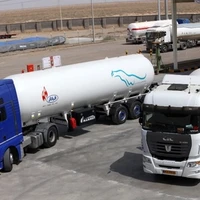
Iran is facing severe shortages of key petrochemical products after recent strikes on its main production hubs, according to two informed sources inside the country.
Earlier this month, Israel targeted facilities in Mahshahr and Asaluyeh, Iran’s two principal petrochemical centers, which together account for roughly three-quarters of the country’s output.
According to commercial sources who spoke on condition of anonymity, several petrochemical products have become acutely scarce, particularly polymer grades used in food packaging, plastics and basic manufacturing.
The shortages have forced authorities to explore emergency import options, even as logistical and geopolitical constraints complicate procurement.
The scale of disruption is still being assessed, but industry sources say the impact on domestic supply chains has been immediate.
Najmeh Jamshidi, editor-in-chief of Energy Press, previously reported, citing senior executives at petrochemical complexes, that restoring damaged units and associated infrastructure could take anywhere from six months to two years, depending on the extent of damage.
One source said Russia declined Iran’s request to supply certain polymers, citing a sharp rise in global petrochemical prices linked to disruptions in the Strait of Hormuz. According to the source, Moscow is prioritizing domestic supply to prevent further inflationary pressure in its own market.
Ilham Shaban, head of the Caspian Oil Studies Center, said Russia itself is facing constraints, as some of its petrochemical facilities have been damaged in Ukrainian attacks. This has further limited the country’s ability to meet external demand, particularly for higher-value polymer products.
Before the recent disruptions, Iran exported about 30 million tons of petrochemical products worth roughly $15 billion annually, with polymers accounting for around 12 percent of that volume.
In response to the supply shock, Iranian authorities have moved to ban exports of several petrochemical goods in an effort to stabilize the domestic market.
Another commercial source said Iran has approached Azerbaijan as a potential supplier of polymers, but the country’s limited production capacity makes it unable to significantly offset Iran’s shortfall.
Azerbaijan is also expected to prioritize maintaining its established export markets in Europe and Turkey.
Some of Iran’s Arab neighbours have the scale to potentially offset part of the supply gap. Saudi Arabia alone has about 19 million tons of annual polymer production capacity, while the United Arab Emirates and Qatar are also major exporters.
However, given Iran’s recent attacks on these countries during the conflict, they are unlikely to assist in covering Iran’s shortages.
At the same time, disruptions affecting shipping routes through the Strait of Hormuz over the past two months have pushed global polymer prices up by about 50 percent.
The combination of domestic supply disruptions and tightening international markets has deepened shortages, raising concerns about broader impacts on downstream industries and the availability of consumer goods.
A 14-year-old student disappeared during protests near Tehran on January 8, only for his family to receive his body 60 days later with a gunshot wound to the temple, Iran International has learned.
Amir-Mohammad Shahkarami, an eighth-grade student, vanished as security forces suppressed demonstrations in Shahre Qods, located west of Tehran. For two months, his family faced a series of conflicting reports from Iranian authorities regarding his safety.
On January 10, two days after he went missing, the boy's mobile phone was turned on. Government agents used the device to contact the family and tell them he was alive. Officials at the local judiciary later supported this account, telling the parents that the teenager was in custody and that a court had already issued a sentence against him.
The family also tried to find information through the Department of Education, but officials there labeled his file as "confidential" and refused to speak.
A 'finish-off' shot
After 60 days of silence, forensic officials finally called the family to identify a body. The body of the 14-year-old was delivered to the family.
When the family examined the body, they found a gunshot wound to the temple, a type of injury often described by rights groups as a "finish-off" shot. Large bruises also covered his chest and side.
Patterns of deception
The teenager’s death highlights the uncertainty facing many families of young detainees who disappeared during the January protests. Despite the assurances given to his parents in the weeks following his disappearance, the physical evidence on his body pointed to a violent death.
Rights groups have documented cases where Iranian authorities provide families with false information about the health or legal status of detained relatives to delay public reporting or to manage the fallout of deaths in custody.
The Iranian government has not explained why various state agencies told the family the boy was alive and sentenced while he was either already dead or facing terminal abuse in custody.


