Three more arrested in London Jewish ambulance arson probe

British police arrested three more people on Wednesday in connection with an arson attack on volunteer-run ambulances serving the Jewish community in Golders Green.

British police arrested three more people on Wednesday in connection with an arson attack on volunteer-run ambulances serving the Jewish community in Golders Green.
Counter Terrorism Policing said the suspects, aged 17 to 20, were detained at separate addresses in east London on suspicion of conspiracy to commit arson with intent to endanger life.
The arrests relate to a March 23 incident in which four ambulances operated by Hatzola were set on fire. Two other men arrested earlier have been released on bail.
Police said the case has not been formally declared terrorism but is being handled by counter-terrorism officers due to the circumstances.
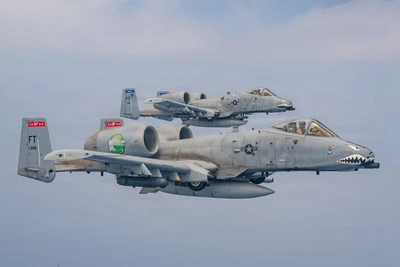





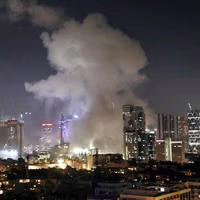

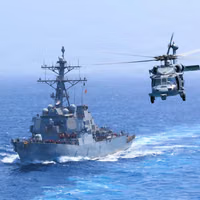
North Koreans are increasingly worried about the possibility of overseas troop deployments as the Iran war intensifies, with rumors of involvement spreading in border regions and among families of military-age men, according to reports from North Korea.
Daily NK reported that residents in northern areas were closely following the war and asking whether it could eventually pull Pyongyang in.
One source said some were alarmed that the fighting had continued despite the killing of Iran’s top leader.
“Some parents with sons about to be conscripted are worried it could lead to overseas deployment,” the source said, while others urged caution, saying, “The war in Russia is not even over – would they really send troops to the Iran war as well?”
The same report said rumors tied to the conflict were spreading in Yanggang and other northern areas, adding to a broader sense of unease already fueled by worsening living conditions.
Residents were said to be more focused on rising prices and food shortages than on military achievements. According to sources cited by the outlet, repeated missile launches have drawn a cold response from the public as inflation and exchange-rate pressure deepen the burden on households.
“Which people would applaud this in such a situation?” one source said. Others complained that “it would be better if they reduced the number of launches and brought in more rice,” reflecting frustration that resources were being directed toward military activity rather than basic needs.
Another source said rhetoric about strengthening defense or expanding strike capabilities was failing to resonate with ordinary people.
“Words like ‘strengthening defense capabilities’ and ‘strike capacity’ do not even register with residents,” the source said, adding that for people struggling to survive day to day, the only welcome news would be lower prices for rice and other essentials.
The reports suggest a widening gap between official propaganda and public sentiment, with concerns about deployment, food costs and daily survival outweighing state messaging about military strength.
North Korean state media, however, has used the Iran war to reinforce its long-held argument for retaining and expanding nuclear weapons.
Leader Kim Jong Un this week accused the United States of carrying out “state terrorism and acts of aggression throughout the world” in comments widely interpreted as referring to the war.
According to KCNA, Kim said North Korea had made the decision to “permanently and irreversibly consolidate the possession of nuclear weapons,” adding that Pyongyang was “prepared to respond” whether its adversaries chose confrontation or peaceful coexistence.
British police arrested two men on Wednesday in connection with the suspected antisemitic arson attack on four Jewish community ambulances in north London earlier this week.
Police said the suspects, aged 47 and 45, were arrested at addresses in northwest and central London and were being held in custody.
The ambulances were set on fire early on Monday in an attack Prime Minister Keir Starmer described as a “deeply shocking antisemitic arson attack.” No injuries were reported.
Police, who had earlier said they were examining a possible Iran link, said the investigation was continuing, with CCTV suggesting at least three people were involved.
An Iran-aligned militant network claimed responsibility for the arson attack early on Monday, the SITE Intelligence monitoring service reported, linking the incident to a string of similar fires across Europe.
A group calling itself the Islamic Movement of the People of the Right Hand carried out the attack near the synagogue in Golders Green, the SITE said, adding that it had also been behind fires in Belgium, Greece and the Netherlands.
Israel’s embassy in Britain has called for decisive action in response to the attack.
“Enough is enough,” the embassy said on Monday. “There must be a thorough investigation and decisive action to put an end to this climate of intimidation before it spirals further.”
Reports that the United States is considering Iran’s parliament speaker as a potential negotiating channel, alongside a proposal for high-level talks, have brought into focus a deeper question: is Washington probing who truly holds power inside Iran?
It suggests that the emergence of Iran Parliament Speaker Mohammad Bagher Ghalibaf’s name is less about his standing among Iranians and more about how Washington is reading power inside the Islamic Republic.
US President Donald Trump on Monday indicated he was in contact with a senior Iranian figure without naming a formal office. “We’re talking to a top person in Iran,” he said, describing the contacts as “very good and productive,” remarks that coincided with his decision to delay strikes on Iran’s energy infrastructure.
Ghalibaf rejected the suggestion outright. “There has been no negotiation with the United States,” he wrote on X, adding that such reports were being circulated “to manipulate financial and oil markets.”

A test channel, not a political endorsement
What places Ghalibaf in this discussion is not legitimacy or popularity, but how he fits a specific operational need.
Washington appears to be searching for a test channel – a figure embedded enough within Iran’s power structure to determine whether pressure has shifted internal calculations, yet visible enough to engage without committing to a formal negotiation track.
Ghalibaf fits that role. As parliament speaker with a background spanning the Islamic Revolutionary Guards Corps, the police, and executive administration, he sits at the intersection of political authority and coercive power. Over time, he has also sought to project a more technocratic and managerial image, particularly during election campaigns.
That combination makes him more legible to Washington than figures whose authority is either opaque or purely symbolic.
Who can deliver in Iran’s system?
The central question for US policymakers is not who represents Iran – but who can act. President Masoud Pezeshkian, despite holding elected office, is widely seen as constrained by unelected centers of power. At the same time, killing of former Supreme Leader Ali Khamenei and uncertainty around leadership structures has made it difficult to identify a single decisive authority.
In that environment, Ghalibaf emerges as a practical option. He connects political, military, and administrative networks and is positioned to transmit signals across factions.

This also aligns with a broader pattern in Trump’s foreign policy. His approach has consistently favored leaders perceived as decisive and capable of enforcing outcomes.
Engagements with figures such as Abdel Fattah el-Sisi, Vladimir Putin, and Kim Jong Un reflect a preference for authority and deliverability over institutional legitimacy.
Ghalibaf fits that pattern as well – not because of what Trump put as being “respectable,” but because of perceived functionality.


Limits of power and the legitimacy gap
Yet the same factors that make Ghalibaf useful to Washington also define his limits. Iran’s strategic decisions are not delegated to individual officials. Authority remains concentrated within tightly controlled security and leadership circles, with networks aligned with the IRGC shaping core policy direction.
Recent statements from these circles have reinforced resistance to negotiations under pressure, with some going further by demanding concessions rather than offering them.
Mohsen Rezaei, a military adviser to the country’s new Supreme Leader Mojtaba Khamenei, warned that escalation would be met with force. “If they make this mistake [hitting Iran power plants], we will paralyze them and sink them in the Persian Gulf,” he said in a televised interview Monday night.
Rezaei added that “the war will not end until sanctions are lifted, compensation is paid, and legal guarantees are provided that aggression against Iran will not be repeated,” ruling out any ceasefire under current conditions.

His remarks feature the broader reality facing any potential channel: even if figures like Ghalibaf are engaged, key security actors continue to set maximalist terms that leave little room for negotiation under pressure.
In that context, even a well-positioned figure like Ghalibaf does not have the authority to shift policy. At most, he can serve as a conduit – not a decision-maker.

Public perception
Ghalibaf’s record includes involvement in past crackdowns, including student protests, as well as longstanding corruption allegations. These factors have shaped his image within Iranian society and limit his credibility beyond state structures.
This creates a structural contradiction. A figure who may be functional within the system is not necessarily acceptable outside it.
This gap becomes more pronounced when viewed against recent unrest. Large-scale protests in January, met with a heavy security response in which Ghalibaf was part of the broader system response, showed the depth of public anger toward figures associated with the state.

Slogans widely heard during those demonstrations – including “This is the final battle, Pahlavi will return” and “Reza Pahlavi is the national slogan” – showed that the opposition is widely rallying around the exiled son of Iran’s last Shah, rejecting any one associated with the Islamic Republic.
In that context, any attempt to elevate a figure such as Ghalibaf – even as a de facto interlocutor or transitional figure – would likely face immediate resistance from a public that has already signaled its rejection of the existing power structure.


What Ghalibaf’s selection really reveals
Therefore, the focus on Ghalibaf is not that much about elevating him – it appears it is about testing the system around him.
For Washington, he represents a point of access into Iran’s power structure at a moment of uncertainty, a figure through whom pressure can be measured rather than resolved.
On the other hand, for Tehran, the episode highlights how tightly controlled that structure remains, with authority dispersed across networks that limit any individual’s room to act.
This makes the channel inherently narrow. It may reveal whether pressure has altered internal thinking, but it does not resolve the deeper constraints that define decision-making in Iran.
In that sense, the question is not whether Ghalibaf can deliver – but whether anyone within the current structure can.
Russia and China expressed concern on Monday over restrictions in the Strait of Hormuz and warned that further escalation could widen the conflict and disrupt global energy supplies.
Russia’s foreign ministry said on Monday it opposed any blockade of the waterway but added that the situation should be viewed within a broader global context, according to Interfax.
China urged all sides to halt military activity and return to negotiations, warning that continued confrontation risks destabilizing the region.
“Should hostilities continue to escalate and the situation deteriorate further, the entire region will be plunged into chaos,” foreign ministry spokesperson Lin Jian said. “The use of force will only lead to a vicious cycle.”
Disruptions shake energy markets
Recent limits on shipping through the strait have disrupted energy flows and driven oil prices higher, highlighting the route’s role as a conduit for roughly one-fifth of global crude and liquefied natural gas.
The disruption follows rising tensions that have curtailed maritime traffic and raised concerns among energy-importing countries over prolonged supply constraints.
US President Donald Trump on Monday said he would postpone planned strikes on Iranian energy infrastructure after what he described as constructive talks with Tehran.
“Based on the tenor and tone of these in-depth, detailed, and constructive conversations, I have instructed the Department of War to postpone any and all military strikes against Iranian power plants and energy infrastructure for a five-day period,” Trump wrote on Truth Social.
The remark follows his earlier 48-hour ultimatum warning Iran to reopen the strait or face military action targeting its energy sector.
This comes weeks after large-scale US and Israeli strikes on Iran began on February 28, killing Supreme Leader Ali Khamenei, senior commanders and destroying military infrastructure.
Iran sets terms for access
Iran’s Defense Council said on Monday that passage through the strait would depend on coordination with Tehran for countries it described as non-belligerent.
“The only way to pass through the Strait of Hormuz for non-belligerent states is by coordinating passage with Iran,” the council said.
The statement warned that any attack on Iran’s energy infrastructure would draw a strong response and raised the possibility of mining maritime routes if Iranian territory were targeted.
Diplomatic push to keep waterway open
NATO Secretary General Mark Rutte said 22 countries were working together to ensure the strait remains open, reflecting growing international concern.
Earlier this month, China held discussions with Iran aimed at securing safe passage for oil and liquefied natural gas tankers through the Strait of Hormuz as the conflict intensified, according to three diplomatic sources talking to Reuters.
An Iran-aligned militant network has claimed responsibility for the arson attack on Jewish ambulances in north London early Monday, a monitoring organisation said, linking the incident to a string of similar fires across Europe.
The SITE Intelligence monitoring service said a group calling itself the Islamic Movement of the People of the Right Hand had carried out the attack near a synagogue in Golders Green, adding it had also been behind fires in Belgium, Greece and the Netherlands.
Prime Minister Keir Starmer described the incident as “a deeply shocking antisemitic arson attack,” adding: “My thoughts are with the Jewish community who are waking up this morning to this horrific news. Antisemitism has no place in our society.”
Police said four ambulances operated by the Hatzola volunteer emergency service were set ablaze shortly after 01:30 GMT, triggering explosions from gas cylinders onboard and damaging nearby residential buildings.
No injuries were reported, though dozens of residents were evacuated as a precaution after windows in a nearby apartment block were shattered.
Police search for suspects
The Metropolitan Police said officers were examining CCTV footage and searching for three suspects seen approaching the vehicles before the fire.
Fire crews deployed six engines and around 40 firefighters to contain the blaze, which was brought under control shortly after 03:00 GMT.
Religious leaders and officials condemned the targeting of an emergency medical service run by volunteers.
London mayor Sadiq Khan said police patrols would be increased in the area.
Israel’s embassy in Britain called for decisive action in response to the attack.
“Enough is enough,” the embassy said. “There must be a thorough investigation and decisive action to put an end to this climate of intimidation before it spirals further.”
Rising incidents since 2023
Antisemitic incidents have increased in Britain and globally since the October 2023 Hamas attack on Israel and the war in Gaza that followed.
British officials have recorded a sustained rise in such cases, including a deadly attack on a synagogue in Manchester in 2025.
Starmer said earlier this month the government would work with Jewish and Muslim organisations to strengthen protections at sensitive sites.