• Iran Insight
  • Politics
  • Economy
  • Analysis
  • Special Report
  • Opinion
  • Podcast
All rights reserved for Volant Media UK Limited
volant media logo
  • العربية
  • فارسی
Brand
  • Iran Insight
  • Politics
  • Economy
  • Analysis
  • Special Report
  • Opinion
  • Podcast
  • Iran Insight
  • Politics
  • Economy
  • Analysis
  • Special Report
  • Opinion
  • Podcast
  • Theme
  • Language
    • العربية
    • فارسی
PODCAST

The unseen leader: What Khamenei Jr’s absence reveals about IRGC’s role

Negar Mojtahedi
Negar Mojtahedi

Iran International

Mar 13, 2026, 21:40 GMT
Iranian man holds up photo of Islamic Republic's new Supreme Leader, Mojtaba, the son of the late Ali Khamenei.

The mystery surrounding Iran’s new supreme leader may reveal more about the Islamic Republic’s power structure and the role of the Revolutionary Guards than Mojtaba Khamenei himself, analysts said on the Eye for Iran podcast, as Khamenei Jr remains unseen.

When Mojtaba Khamenei was officially announced as Iran's new supreme leader on March 8, the moment that followed was unusual.

There was no televised address to the nation. No appearance before officials or supporters. Instead, a message attributed to Mojtaba Khamenei was read aloud.

Five days after being declared Iran’s new supreme leader, Khamenei still has not appeared publicly or delivered a video message — an absence that has fueled speculation about his condition and about who is actually exercising power inside the Islamic Republic.

But for some analysts, the mystery surrounding Mojtaba Khamenei is less important than what it reveals about how the Iranian system actually functions.

“I suppose we can say Mojtaba Khamenei has become something like Schrödinger’s cat,” historian Dr. Shahram Kholdi said during a panel discussion on Eye for Iran, suggesting the new leader appears simultaneously present and absent.

The lack of any public appearance has triggered a range of theories — that he may be injured, that he is being kept hidden for security reasons, or that others are effectively running the system in his name.

Yet regardless of which theory proves correct, analysts say the moment highlights a deeper shift: power inside Iran increasingly appears to rest with the security apparatus.

“This is a textbook case of the tail wagging the dog,” Kholdi said. “The IRGC used to be the tail. Now it’s the one wagging the dog.”

For decades the Islamic Republic has functioned through overlapping networks of clerical authority, political institutions and security forces. But Iranian political analyst Shayan Samii says the balance within that system has steadily shifted toward the Revolutionary Guards.

“In reality, the IRGC is running the show,” Samii said. “These figures who appear in front of the cameras are often the face presented to the public, but the real decisions are made within the security apparatus.”

Samii argues that Mojtaba Khamenei himself has long been closely tied to that structure, acting as a conduit between the office of the supreme leader and the Revolutionary Guards. His sudden elevation to Iran’s highest position — combined with his continued absence from public view — has only made that power dynamic more visible.

“If you are elevated to the highest position in the land, normally you would appear on television,” Samii said. “You would address the nation. The fact that we have not seen that raises serious questions.”

At the same time, developments on the ground may be testing the very institutions that sustain the regime.

Phase Two of the war

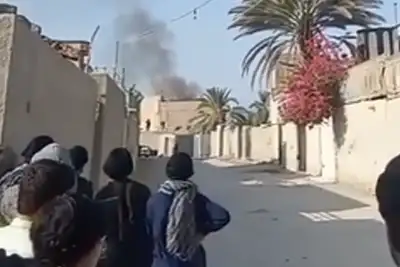
Israeli strikes have targeted security checkpoints in Tehran linked to the Basij militia — the paramilitary force responsible for suppressing protests and maintaining internal control.

For former US national security official John Hannah, that shift could prove significant.

“The question is whether this begins to catalyze fractures within the security services,” Hannah said in an interview on Eye for Iran. “Will Basij members begin not showing up to their posts? Will the regime manage to maintain cohesion?”

For authoritarian systems, he noted, the loyalty of the security forces is often decisive.

“One of the crucial elements in bringing down a regime like this is fractures among the people who hold the guns,” Hannah said.

Still, Hannah cautioned that predicting the outcome remains difficult. Authoritarian regimes can appear stable for years before suddenly unraveling.

“It happens slowly, slowly — and then suddenly,” he said.

Israeli analyst Avi Melamed argues that what is unfolding inside Iran may ultimately represent a broader restructuring of power rather than an immediate collapse.

“What we are seeing,” he said, “is a reconfiguration of power.”

That reconfiguration, analysts say, could reshape not only Iran’s internal politics but the strategic balance across the Middle East.

For now, however, the central mystery remains unresolved.

Iran’s new supreme leader has yet to appear publicly.

And as pressure mounts on the regime’s security apparatus, the question facing Iran may be less about where Mojtaba Khamenei is — and more about who truly governs behind him.

You can watch Eye for Iran on YouTube or listen on any podcast platform of your choosing.

Most Viewed

Iran keeps oil flowing to China as Hormuz pressure forces reserve release
1
INSIGHT

Iran keeps oil flowing to China as Hormuz pressure forces reserve release

2
EXCLUSIVE

Desertions, shortages and army-IRGC rift strain Iran’s military

3
INSIGHT

Checkpoint attacks open new front in Iran war

4

Iran’s unseen new leader issues first message in writing

5

Trump says regime change in Iran will happen but not ‘immediately’

Banner
Banner

Spotlight

  • Iran raises ‘human shield’ fears by rallying supporters to the streets
    ANALYSIS

    Iran raises ‘human shield’ fears by rallying supporters to the streets

  • Russia gains from Iran war but risks more if it drags on
    OPINION

    Russia gains from Iran war but risks more if it drags on

  • Allies rally, rivals brace after Mojtaba Khamenei’s rise
    INSIGHT

    Allies rally, rivals brace after Mojtaba Khamenei’s rise

  • Checkpoint attacks open new front in Iran war
    INSIGHT

    Checkpoint attacks open new front in Iran war

  • Power vs piety: Khamenei Jr inherits legitimacy dilemma of Iran's theocracy
    ANALYSIS

    Power vs piety: Khamenei Jr inherits legitimacy dilemma of Iran's theocracy

  • Can widening the war save Iran’s rulers?
    ANALYSIS

    Can widening the war save Iran’s rulers?

•
•
•

More Stories

After first message, Iranian media cast Khamenei Jr as wartime leader

Mar 13, 2026, 14:06 GMT
•
Behrouz Turani

As Mojtaba Khamenei’s first public message was delivered Thursday following days of absence, Iranian newspapers and semi-independent websites moved to reinforce his image as a wartime leader.

The statement, read aloud by a state television anchor over a still photograph of the new leader, called for continued military resistance and said the Strait of Hormuz should remain a tool of pressure.

“The demand of the masses of the people is the continuation of effective and regret-inducing defense,” the message said. Khamenei has remained largely absent from public view amid persistent questions about his health and whereabouts and unconfirmed reports he was hospitalized with injuries.

In their Wednesday, March 11 editions, newspapers and websites had already begun shifting their focus from the mechanics of succession to projecting authority during an active conflict. The pivot came despite the information blackout inside Iran and Mojtaba’s continued silence at the time.

In the first two days after Ali Khamenei’s death on February 28, coverage largely emphasized Mojtaba’s religious credentials and lineage. By midweek, however, newspapers and websites had turned toward portraying him primarily as a wartime commander.

Continuity and defiance

Kayhan, closely linked to the former leader’s office, referred to him as “the general of the revolution,” highlighting his long-standing but largely hidden ties to the IRGC.

Conservative outlets and several mainstream websites dropped the respectful title ‘Agha’ (sir/master) traditionally used for the son of an ayatollah. Some instead adopted ‘Imam’ or ‘Ayatollah’, reflecting his rapid elevation to the highest clerical and political rank.

Front pages were dominated by pledges of allegiance from military commanders, clerics, bureaucrats and cultural figures.

The Tehran Times reinforced the continuity narrative with its headline, “Trump is gone, Khamenei remains,” responding to Donald Trump’s earlier remark that the new leader “would not last long.”

Moderate and reformist outlets such as Etemad offered cautious backing, framing the hereditary succession as a stabilizing step that prevented a dangerous power vacuum during wartime.

Mentions of dissent or possible unrest were absent, with coverage unfolding inside a tightly controlled information environment.

Manufactured unity

Hardline outlets such as Kayhan and Tasnim framed the succession as a strategic defeat for the United States and Israel, arguing that Ali Khamenei’s killing was meant to trigger systemic collapse and that Mojtaba’s swift appointment demonstrated the system’s resilience.

Some columnists also sought to recast Mojtaba as a capable executive, describing him as a “silent reformer” suited to confront corruption inside the state.

Official websites and IRGC-affiliated Telegram channels amplified the message with pledges of loyalty from generals, clerics and even former political rivals such as Ali Larijani.

Wartime iconography—including posters merging the faces of Khomeini, Ali Khamenei and Mojtaba—reinforced a narrative of continuity and unity.

State media repeatedly warned that public skepticism at this stage could amount to collaboration with the “Zionist enemy,” underscoring the narrow space for dissent as the new leadership consolidates power.

Israel uses new AI drone swarms to target Iran’s security forces

Mar 12, 2026, 21:27 GMT

The Israeli military is using a new method to launch drone swarms over Iran targeting security forces involved in domestic repression, sources familiar with the matter told Iran International.

In surprise attacks on Wednesday night, Israel carried out precision drone strikes against Basij militia checkpoints that had been set up across Tehran in recent days.

The drone attacks marked the beginning of aerial operations targeting forces involved in repression inside Iran.

Informed sources told Iran International that the Israeli military is carrying out such operations through a new method which uses a flying platform acting as a “mother launcher” to deploy drones equipped with artificial intelligence and a large database of targets.

Israel makes extensive use of artificial intelligence and computer guidance to operate the new weapons system, enabling wide-ranging surveillance, identification and precise strikes.

The system is said to be capable of facial recognition, allowing highly precise strikes based on the identification of individuals.

To enable broader use of the method, Israel, in cooperation with the United States, established air superiority over Iranian skies in the early phase of the military campaign against Iran which began on Feb 28. by suppressing Iranian air defenses, paving the way for the deployment of the system.

Most reconnaissance and surveillance operations in Iran are currently carried out using Israeli Hermes and Heron drones, as well as US MQ-9 Reaper drones.

Features of 'mother ship'

Israel’s offensive drone operations under the “mother ship” or “mother launcher” concept have four main characteristics:

  • The ability to deploy large numbers of attack drones, including micro-drones
  • The ability to conduct network-centric or data-driven attacks supported by artificial intelligence
  • Operations based on an AI-driven target database capable of predictive threat analysis and identifying behavioral patterns of human targets on the ground
  • An element of surprise due to high-altitude flight and the relatively low noise of the aircraft

A notable feature of the current aerial campaign in Iran is Israel’s move toward manned–unmanned teaming (MUM-T).

Under this approach, drones used in offensive operations in Iran are launched from three main platforms.

Transport aircraft such as the C-130 are used as drone carriers capable of releasing large numbers of attack drones at high altitude, allowing them to travel hundreds of kilometers beyond the range they could cover if launched from the ground.

Large UAVs such as the Heron, capable of flying at altitudes of about 45,000 feet, may also serve as airborne carriers capable of deploying micro-drones against repression forces and other military targets.

Israeli fighter jets including the F-15I Ra’am and F-16I Sufa can also carry smaller drones in pods or on wing pylons and release them at high altitude to act as decoys, electronic warfare disruptors or reconnaissance observers.

Iran’s unseen new leader issues first message in writing

Mar 12, 2026, 13:39 GMT

Iran’s new Supreme Leader Mojtaba Khamenei, in the first message attributed to him, called for continued military resistance and said the Strait of Hormuz should remain a tool of pressure, even as questions persist about his health and whereabouts.

The message was not delivered in person. Instead, it was read aloud by a state television anchor while a still photograph of Khamenei was displayed on screen, meaning that nearly two weeks after the conflict began, no video or audio recording of the new leader himself has been released.

Iranian authorities have provided no direct evidence of his condition following reports that he may have been injured during the strikes that killed his father and predecessor, Ali Khamenei.

In the written statement attributed to him, Khamenei addressed the war, domestic unity, regional tensions and retaliation against enemies.

War and military pressure

In the message, Khamenei praised Iran’s armed forces and called for continued military resistance against what he described as aggression by the United States and Israel.

“The demand of the masses of the people is the continuation of effective and regret-inducing defense.”

He also said Iran should continue to use the threat of closing the Strait of Hormuz as leverage in the conflict.

“Certainly the lever of blocking the Strait of Hormuz must continue to be used,” he wrote.

Khamenei added that Iranian officials were studying the possibility of expanding the war into additional fronts where adversaries were vulnerable.

“Studies have been conducted regarding the opening of other fronts in which the enemy has little experience and is highly vulnerable,” he said. “Activating them will take place if the state of war continues and if it serves our interests.”

The statement also praised what Iran calls the “Axis of Resistance,” thanking allied armed groups in the region for supporting Tehran.

“We consider the countries of the resistance front our best friends,” he wrote. “The resistance front is an inseparable part of the values of the Islamic Revolution.”

He specifically referred to Yemen’s Houthis, Lebanon’s Hezbollah and armed groups in Iraq, saying they had stood alongside Iran despite obstacles.

Calls for unity and public participation

Much of the message was directed at Iran’s domestic audience, urging unity and mobilization during wartime.

Khamenei said that during the days immediately following the killing of his father, when Iran had temporarily been without a supreme leader or commander-in-chief, the population itself had shown resilience.

“The insight and intelligence of the great nation of Iran in the recent events and its perseverance, courage and presence astonished friends and enemies alike,” he wrote.

He warned that leadership and government institutions could not function effectively without public support, urging Iranians to maintain active participation in society.

“If your power does not appear on the scene, neither leadership nor any of the institutions whose true role is to serve the people will have the necessary effectiveness,” read the statement.

The new leader also called on citizens to continue participating in political and social activities during the war, including rallies and demonstrations.

“I remind you of the importance of participation in Quds Day ceremonies, where the element of confronting the enemy must be emphasized.”

Threat of retaliation

A major portion of the message focused on retaliation against those responsible for deaths during the war.

Khamenei vowed that the Islamic Republic would continue pursuing revenge for those killed in the conflict. “We will not ignore revenge for the blood of your martyrs,” he wrote.

He said retaliation would not be limited to the killing of his father but would extend to all Iranian casualties.

“The revenge we seek is not only for the martyrdom of the great leader of the revolution,” he wrote. “Every member of the nation who is martyred by the enemy becomes an independent case for revenge.”

Khamenei said some retaliation had already occurred but that further actions would continue.

“A limited amount of this revenge has already taken place in practice. But until it reaches its complete extent, this case will remain open above all others.”

Warning to regional governments

Khamenei also issued a warning to governments in the Middle East whose territories host US military facilities.

He said Iranian forces had struck some of those bases during the war and suggested further attacks could follow.

“In the recent attack some military bases were used,” he wrote. “As we had clearly warned, and without attacking those countries themselves, we targeted only those bases.”

He added that Iran would continue striking such installations if they were used against the country.

“From now on we will be forced to continue doing this,” he wrote.

Khamenei urged regional governments to shut down foreign military bases.

“These countries must determine their position toward those who have attacked our homeland and killed our people,” he wrote. “I recommend they close those bases as soon as possible.”

Iran women’s football team kept under tight security in Kuala Lumpur

Mar 12, 2026, 12:06 GMT
•
Raha Pourbakhsh

Members of Iran’s women’s national football team, after some delegation members sought asylum abroad, are being kept under tight security during a camp in Kuala Lumpur, Malaysia, Iran International has learned.

Players who arrived on Wednesday are being kept at a hotel where journalists and media are not allowed to enter, according to sources familiar with the situation.

Some players had their mobile phones confiscated, while others were allowed to keep them only under the supervision of security personnel from the Iranian football federation.

Sources told Iran International that pressure on the players began in Tehran and has continued during the team’s camp ahead of the 2026 Asian Championship.

Mohammad Rahman Salari, a member of the Iranian Football Federation’s board, played a central role in enforcing the restrictions and repeatedly collected and inspected the phones of players and staff after the team’s first match.

Fatemeh Bodaghi, who is traveling with the delegation as manager of Iran’s women’s national team, was described by sources as acting on behalf of the federation’s security apparatus under the leadership of federation president Mehdi Taj, monitoring players’ social media accounts and reporting their activities to authorities in Tehran.

Sources also said Zeinab Hosseinzadeh, the team’s physiotherapist, was among those involved in exerting pressure on players.

Farideh Shojaei, the women’s vice president of the football federation, is also accompanying the team. She previously said options for the team’s return to Iran amid US-Israeli airstrikes were being examined, including a possible land route through Turkey, after attempts to return via the United Arab Emirates did not succeed.

  • Inside the dramatic escape of Iranian women footballers seeking asylum

    Inside the dramatic escape of Iranian women footballers seeking asylum

  • Australia grants asylum to five players of Iran women’s football team

    Australia grants asylum to five players of Iran women’s football team

Players face pressure after anthem protest

The crisis surrounding the Iranian women’s national football team began on March 2, when the squad refused to sing the Iranian national anthem before their opening match against South Korea at the AFC Women's Asian Cup in Australia.

This silent protest, occurring shortly after the start of the Iran war and the killing of Supreme Leader Ali Khamenei, was immediately labeled an act of "wartime treason" by the state media. As the team progressed through the group stage, they were reportedly kept under strict surveillance by delegation minders, with international human rights groups and political figures warning that the athletes faced severe punishment, including the possibility of the death penalty, if they were forced to return to Tehran.

Six members of the delegation accepted humanitarian visas and remained in Australia to seek asylum, while the rest of the team boarded their flight to Malaysia.

Power vs piety: Khamenei Jr inherits legitimacy dilemma of Iran's theocracy

Mar 11, 2026, 17:54 GMT
•
Shahram Kholdi

Iran’s new supreme leader Mojtaba Khamenei inherits not merely his father’s office but also the constitutional ambiguities and political compromises that accompanied Ali Khamenei’s own controversial elevation nearly four decades earlier.

The death of Khamenei in the February 2026 US–Israeli airstrikes on Tehran has triggered the most consequential constitutional transition in the Islamic Republic since 1989—and revived a question that has long shadowed the system since its founding: whether supreme authority rests primarily on religious legitimacy or political power.

Within days, Iranian state media announced that the Assembly of Experts had selected his son, Mojtaba Khamenei, a figure long powerful behind the scenes but lacking broad clerical standing, as the new Supreme Leader.

The office of Supreme Leader is defined primarily by Articles 5, 107, 109 and 110 of the Constitution of the Islamic Republic of Iran.

Article 5 establishes the principle of velayat-e faqih, entrusting governance during the occultation of the Twelfth Imam to a qualified jurist combining religious authority with political competence. Article 107 assigns the Assembly of Experts the responsibility of selecting the Supreme Leader, while Article 109 sets out the required qualifications, including justice, political insight and administrative ability.

The precedent of 1989

When Khomeini died in June 1989, the Islamic Republic faced an immediate leadership vacuum. No obvious successor possessed comparable clerical stature.

The Assembly of Experts ultimately chose Ali Khamenei, then president, despite his limited standing as a senior jurist; the constitution was soon revised to accommodate the decision, stating that the leader need not possess the full recognition as a grand ayatollah.

The amendment reflected political calculation rather than abstract principle.

The episode established an enduring precedent: constitutional interpretation could adapt to political necessity. In practice, legitimacy rested not only on religious authority but also on institutional alignment and security power.

Mojtaba Khamenei now confronts a similar dilemma. Like his father in 1989, he is not widely recognised within the traditional hierarchy of Shiʿi scholarship as a senior jurist.

Wartime succession

Under Article 107, the Assembly of Experts must deliberate and appoint the Supreme Leader, ordinarily implying a formal session. Yet Mojtaba’s selection occurred amid ongoing war and severe disruption following the airstrikes that killed Ali Khamenei.

Public information about the process remains sparse. It is unclear whether the assembly gathered physically, voted remotely or reached its decision through emergency consultation. Iranian state media confirmed his appointment but provided few procedural details.

Such ambiguity does not necessarily invalidate the decision within the Islamic Republic’s flexible constitutional practice. Still, the opacity surrounding the process has intensified debate over the legitimacy of the succession.

For more than a decade Mojtaba sought to strengthen his clerical credentials. Beginning in 2009, he taught dars-e kharej—advanced jurisprudence seminars traditionally led by senior clerics aspiring to marjaʿ status. Observers widely interpreted the move as preparation for a possible future succession.

Reports from Persian-language sources suggest some senior grand ayatollahs objected to what they saw as a politically engineered effort to manufacture clerical authority. Attempts were reportedly made to obtain written attestations of Mojtaba’s ijtihad, though evidence of broad clerical recognition remains limited.

After roughly thirteen years, Mojtaba suspended the classes in September 2024 as succession speculation intensified.

Power without office

Power in the Islamic Republic has rarely flowed through formal titles alone. It often moves through the networks surrounding the Supreme Leader.

Over two decades Mojtaba emerged as one of the most influential yet least publicly visible figures in the Iranian state. His authority derived not from elected office but from his role inside Beit-e Rahbari, where he functioned as a gatekeeper to his father—managing access, filtering political actors and coordinating with security institutions.

In practice this amounted to a tightly controlled security network of clerical aides, intelligence officials and Revolutionary Guard commanders whose influence depended less on formal office than on proximity to the Leader.

This informal authority allowed Mojtaba to cultivate a patronage base closely tied to the IRGC. The United States Treasury sanctioned him in 2019, stating that he acted on behalf of the Supreme Leader while maintaining close relationships with IRGC elements and the Basij militia.

The Guards connection

The relationship between the Supreme Leader and the Revolutionary Guards deepened decisively during the 2009 post-election unrest.

Following the disputed presidential vote that returned Mahmoud Ahmadinejad to power, mass protests erupted across Iran. The Revolutionary Guards and Basij militia ultimately played the decisive role in suppressing the demonstrations.

The events of 2009 reaffirmed the supremacy of the Supreme Leader while strengthening the alliance between the leadership and the security apparatus. Many analysts argue Mojtaba played a coordinating role inside the Leader’s office during the crisis.

One figure embodied the partnership between the Supreme Leader and the Revolutionary Guards more fully than any other: General Qasem Soleimani, commander of the Quds Force.

Soleimani maintained unusually direct access to Ali Khamenei and operated with a degree of autonomy rare within the Islamic Republic’s formal hierarchy, shaping Tehran’s regional military strategy across Iraq, Syria and beyond.

His killing by a United States drone strike in January 2020 removed a central node in the system that linked the Leader to the Guards’ external operations.

Although the IRGC remained institutionally powerful, no successor fully replicated Soleimani’s combination of battlefield authority, political influence and personal access to the Supreme Leader..

Continuity and uncertainty

Another turning point came with the death of President Ebrahim Raisi in a helicopter crash in 2024.

Long viewed as a plausible successor with stronger clerical credentials, Raisi’s absence narrowed the field and sharpened attention on Mojtaba Khamenei, whose embedded position within Beit-e Rahbari and longstanding ties to the security apparatus left him uniquely placed when wartime succession arrived.

Mojtaba Khamenei’s accession does not resolve the deeper tensions within the Islamic Republic. Like his father in 1989, he assumes power without universally recognised clerical authority. His legitimacy rests instead on political coalition, institutional continuity and the support of the Revolutionary Guards.

At the same time, the war that accompanied his elevation has destabilised the very networks that sustained his rise. The destruction of Beit-e Rahbari and the deaths within the leadership circle have left the inner workings of the system partially obscured.

Mojtaba inherits the same contradiction that shaped his father’s rise: a system that claims religious authority yet repeatedly turns to political necessity in moments of crisis.

In 1989, that necessity elevated Ali Khamenei as the republic emerged from the long shadow of the Iran–Iraq War. In 2026, it has elevated his son amid war once again—leaving the durability of Iran’s constitutional order dependent, as before, less on theology than on power.