Players who arrived on Wednesday are being kept at a hotel where journalists and media are not allowed to enter, according to sources familiar with the situation.
Some players had their mobile phones confiscated, while others were allowed to keep them only under the supervision of security personnel from the Iranian football federation.
Sources told Iran International that pressure on the players began in Tehran and has continued during the team’s camp ahead of the 2026 Asian Championship.
Mohammad Rahman Salari, a member of the Iranian Football Federation’s board, played a central role in enforcing the restrictions and repeatedly collected and inspected the phones of players and staff after the team’s first match.
Fatemeh Bodaghi, who is traveling with the delegation as manager of Iran’s women’s national team, was described by sources as acting on behalf of the federation’s security apparatus under the leadership of federation president Mehdi Taj, monitoring players’ social media accounts and reporting their activities to authorities in Tehran.
Sources also said Zeinab Hosseinzadeh, the team’s physiotherapist, was among those involved in exerting pressure on players.
Farideh Shojaei, the women’s vice president of the football federation, is also accompanying the team. She previously said options for the team’s return to Iran amid US-Israeli airstrikes were being examined, including a possible land route through Turkey, after attempts to return via the United Arab Emirates did not succeed.
Players face pressure after anthem protest
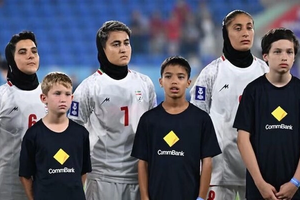
The crisis surrounding the Iranian women’s national football team began on March 2, when the squad refused to sing the Iranian national anthem before their opening match against South Korea at the AFC Women's Asian Cup in Australia.
This silent protest, occurring shortly after the start of the Iran war and the killing of Supreme Leader Ali Khamenei, was immediately labeled an act of "wartime treason" by the state media. As the team progressed through the group stage, they were reportedly kept under strict surveillance by delegation minders, with international human rights groups and political figures warning that the athletes faced severe punishment, including the possibility of the death penalty, if they were forced to return to Tehran.
Six members of the delegation accepted humanitarian visas and remained in Australia to seek asylum, while the rest of the team boarded their flight to Malaysia.