• العربية
  • فارسی
Brand
  • Iran Insight
  • Politics
  • Economy
  • Analysis
  • Special Report
  • Opinion
  • Podcast
  • Iran Insight
  • Politics
  • Economy
  • Analysis
  • Special Report
  • Opinion
  • Podcast
  • Theme
  • Language
    • العربية
    • فارسی
  • Iran Insight
  • Politics
  • Economy
  • Analysis
  • Special Report
  • Opinion
  • Podcast
All rights reserved for Volant Media UK Limited
volant media logo
ANALYSIS

Three layers of mistrust behind US-Iran deadlock

Ata Mohamed Tabriz
Ata Mohamed Tabriz

Iran analyst

Apr 28, 2026, 15:53 GMT+1
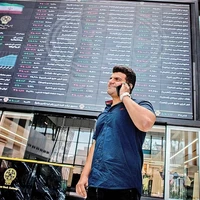
People walk at a busy street with a large billboard depicting Iran's 'control' over the Strait of Hormuz, Tehran, April 27, 2026

Deep-rooted mistrust continues to stand in the way of any meaningful thaw between Iran and the United States despite renewed diplomacy after weeks of war.

After a 40-day war, Iran and the United States returned to the negotiating table in Islamabad for 21 hours of high-level talks that ended without agreement. A day later, US President Donald Trump announced a naval blockade of the Strait of Hormuz and Tehran said it would not negotiate under threat.

What the Islamabad talks made clear is that mistrust is not a single obstacle but a three-layered structure.

The first layer is structural, rooted in conflicting historical narratives and incompatible visions of the future. The second is tactical, visible in disputes over agenda, sequencing and guarantees. The third—and perhaps most acute in current circumstances—is mistrust in the negotiating teams themselves, both across the table and within each country’s political establishment.

Understanding these layers is essential to any realistic assessment of whether negotiations can succeed.

Structural mistrust

Washington often traces the hostility to the 1979 seizure of the US embassy in Tehran and the anti-American ideology that followed, from chants of “Death to America” to attacks by Iran-backed armed groups across the region.

Tehran begins its story in 1953, when the US and Britain backed the coup against Prime Minister Mohammad Mossadegh. Iranian officials portray Washington as a colonial power bent on undermining Iran’s sovereignty and independence.

Successive conflicts have deepened these narratives: the eight-year Iran-Iraq war, last year’s 12-day war, and now a 40-day conflict with the United States.

Iranian Foreign Minister Abbas Araghchi recently summed up the mood when he said hostility would endure “as long as America is America and the Islamic Republic is the Islamic Republic.”

In such an environment, diplomatic gestures are easily interpreted as tactical deception rather than genuine attempts at compromise. Compounding the problem is the absence of any shared vision for a post-war settlement.

Trump speaks of a “big deal” but has not clearly defined what that means in diplomatic or regional security terms. Tehran speaks of ending the war “with victory” without clarifying whether that means restoring the status quo or securing recognition of its regional role.

Negotiation without a shared end state is less a path to resolution than a continuation of war by other means.

This is one reason the 2015 nuclear deal, the Joint Comprehensive Plan of Action, proved fragile: both sides treated it as a temporary management tool, not a new beginning.

Tactical mistrust

Hardline Iranian lawmaker Mahmoud Nabavian, who was reportedly involved in the Islamabad talks, called the inclusion of the nuclear issue a “strategic mistake,” arguing it encouraged US demands such as removing nuclear material from Iran or suspending enrichment for decades.

Yet Washington has repeatedly framed the core issue as preventing Iran from obtaining a nuclear weapon. Trump has at times spoken of dismantling Iran’s nuclear infrastructure entirely.

Even third parties have hinted at confusion. Turkish Foreign Minister Hakan Fidan has suggested both sides have issues to discuss, but no agreed text or framework yet exists.

Tehran reportedly presented a 10-point proposal to end the war. According to Axios, Washington responded with a three-page counterproposal.

What is described publicly as negotiation often looks more like two parallel monologues.

Another unresolved question is sequencing. Iran says it will not negotiate under threat and has demanded an end to the naval blockade as a precondition. Washington expects Iran to reopen the Strait of Hormuz and present a unified proposal.

When Trump extended a ceasefire on April 21, he said it would last only until Iran’s leaders and representatives could produce “a unified proposal.” In Tehran, such language was interpreted less as an invitation to talks than as coercion.

Mistrust in negotiators

Layered on top of these disputes is growing mistrust in the negotiators themselves.

Many in Tehran doubt whether the US side has the authority to deliver. Mohammad-Amin Imanjani, editor of the hardline Iranian newspaper Farhikhtegan, dismissed Trump’s envoys as lacking sufficient understanding of Iran and failing to properly convey Tehran’s demands.

Iranian state media has echoed such doubts, particularly regarding the role and authority of US intermediaries.

For Washington, the issue is both Tehran’s authority to deliver and the belief that it is not negotiating with one voice.

The result was visible in the rhetoric after Islamabad. As he left the city, US Vice President JD Vance reportedly said Washington had presented its “best and final” offer and that walking away would hurt Iran more than America.

Iranian parliament speaker Mohammad Bagher Ghalibaf responded by accusing Washington of failing to earn Tehran’s trust. The two narratives barely intersect.

Is a deal still possible?

Negotiations built on three layers of mistrust are unlikely to produce more than temporary arrangements. To make progress, both sides would first need to restore confidence in the process itself.

But the deeper obstacle may remain unchanged: both sides appear to believe they still have more to gain through pressure than compromise.

Washington may calculate that military and economic pressure has not yet reached breaking point. Tehran may believe it has demonstrated enough resilience to extract concessions from a position of strength.

As long as both see escalation as more rewarding than accommodation, diplomacy will struggle.

The danger is that the conflict may not spiral through one dramatic rupture, but through a series of smaller decisions—each rational in isolation—that move both sides further from any durable agreement.

Most Viewed

The hidden target in US war on Iran may be China
1
PODCAST

The hidden target in US war on Iran may be China

2
INSIGHT

Unity or fracture? Tehran battles Trump’s narrative of disarray

3

Is the US blockade working? It depends who you ask

4
EXCLUSIVE

New intelligence exposes IRGC-linked network targeting Israeli, Western sites

5
INSIGHT

Is Ghalibaf becoming Iran’s Khrushchev?

Banner
Banner

Spotlight

  • Three layers of mistrust behind US-Iran deadlock
    ANALYSIS

    Three layers of mistrust behind US-Iran deadlock

  • Iran’s water crisis: Mafia or destruction by design?
    SPECIAL REPORT

    Iran’s water crisis: Mafia or destruction by design?

  • Iran’s foreign trade suffers wartime collapse
    ANALYSIS

    Iran’s foreign trade suffers wartime collapse

  • Did Araghchi’s tour signal leverage or isolation?
    INSIGHT

    Did Araghchi’s tour signal leverage or isolation?

  • Why a blockade would not halt Iran’s oil overnight
    ANALYSIS

    Why a blockade would not halt Iran’s oil overnight

  • Iran football chief with IRGC past to visit Canada for FIFA event
    EXCLUSIVE

    Iran football chief with IRGC past to visit Canada for FIFA event

•
•
•

More Stories

Iran’s foreign trade suffers wartime collapse

Apr 28, 2026, 04:36 GMT+1
•
Dalga Khatinoglu

Iran’s foreign trade has suffered a sharp contraction in the first month of war with the United States and Israel, newly released customs data show, signaling a severe blow to the country’s already fragile economy.

Figures from Iran’s customs administration show non-oil trade collapsed in the final month of the previous Iranian fiscal year (February 21–March 22), falling to just $6.4 billion—down 30% from the previous month and 50% from a year earlier.

The plunge coincided with military escalation that began on February 28, when US and Israel attacked Iran and Iran retaliated with strikes against Arab neighbours across the Persian Gulf.

The conflict disrupted shipping routes and strained regional trade links.

The fallout has been especially visible in trade with Iran’s main commercial partners. The United Arab Emirates, Iran’s second-largest trading partner, reportedly suspended trade with Tehran in early March.

Chinese customs data also point to a steep decline in bilateral trade. China’s non-oil trade with Iran fell to just $184 million in March, compared with more than $907 million in the same month last year—roughly one-fifth of its level a year earlier.

While Iranian customs data exclude crude oil exports, tanker-tracking data from Kpler indicate Iranian crude deliveries to Chinese ports averaged around 1.53 million barrels per day in March, about 15% lower than in March 2025, suggesting energy exports are also under pressure.

In total, Iran’s non-oil foreign trade during the last fiscal year stood at $109 billion, down 16% from the previous year. Imports accounted for 53% of the total, underscoring the economy’s reliance on foreign supplies at a time of escalating geopolitical disruption.

The outlook may worsen in the months ahead.

Following Israeli strikes on petrochemical facilities, Iran has banned petrochemical exports. On Monday, the Iran Trade Promotion Organization ordered a halt to exports of steel slabs and sheets until May 30 as the country’s steel industry came under pressure following US-Israeli strikes.

The secretary of Iran’s steel producers’ association said work was underway on an urgent plan to import steel slabs and hot-rolled sheets, underscoring the scale of the disruption.

At the same time, steel production facilities in Isfahan and Khuzestan—which account for roughly 70% of Iran’s steel output—have reportedly suffered major damage.

Together, petrochemicals and steel generate an estimated $18 billion to $20 billion in annual exports, accounting for more than one-third of Iran’s non-oil export revenues. Prolonged disruption in those sectors would hit government revenues, industrial output and access to foreign currency.

Additional pressure is also emerging at sea. In response to Iran’s move to block the Strait of Hormuz, the United States has begun enforcing a naval blockade on Iran, a development likely to further restrict both oil and non-oil trade.

With US-Iran diplomacy still deadlocked and sanctions relief appearing distant, the outlook could worsen further in the absence of a deal to ease pressure on trade and energy exports.

Taken together, the data suggest Iran may be facing not a temporary slowdown but the early stages of a historic external shock.

Why a blockade would not halt Iran’s oil overnight

Apr 28, 2026, 03:23 GMT+1

Amid Iran’s closure of the Strait of Hormuz and the ensuing US blockade, an old energy fantasy has resurfaced that cutting off a country’s oil exports works like flipping a switch. But reality is less cinematic and far more uncomfortable.

If Iran faced a serious maritime blockade, its oil system would not collapse overnight. It would absorb the shock, adapt, and only gradually tighten under pressure.

That distinction between sudden failure and slow strain is not just technical. It is the difference between a crisis markets can price instantly and one that unfolds in uneasy stages.

As Washington says its blockade is tightening around Tehran, understanding that distinction matters.

Read the full article here.

Did Araghchi’s tour signal leverage or isolation?

Apr 28, 2026, 03:01 GMT+1
•
Behrouz Turani

In Tehran, Abbas Araghchi’s whirlwind regional tour is being presented as evidence that Iran still has diplomatic options and regional leverage.

But behind the official narrative, even Iranian media and senior officials are beginning to acknowledge a harsher reality: talks with Washington are stalled, allies are limited and the country’s room to maneuver is narrowing.

The reformist daily Shargh wrote on Monday that the visits revealed “clear signs of a deadlock in negotiations with Washington.”

In an interview with ISNA, Araghchi himself acknowledged that “the first round of talks in Islamabad failed to reach its objectives,” blaming what he described as “the United States’ excessive demands.”

Media in Tehran have portrayed Araghchi’s visits to Pakistan, Oman and Russia as part of an effort to break the impasse with Washington through regional diplomacy.

But leaks in US media suggest Tehran’s message remains uncompromising: end the US blockade of the Strait of Hormuz as a precondition for immediate talks on Iran’s nuclear program.

That demand underscores the gap between Tehran’s public message of diplomacy and the harder line it may still be taking behind closed doors.

The idea that Tehran can quickly repair relations with neighboring states also appears optimistic. Regional capitals still vividly remember Iran’s recent strikes on the United Arab Emirates, Qatar, Kuwait, Bahrain and Saudi Arabia.

While Tehran insists diplomatic channels remain open, only a handful of neighbors appear willing—or able—to engage.

Oman, traditionally a trusted mediator, may have less incentive to play that role after Tehran’s recent actions and amid Washington’s hesitation. Russia, meanwhile, is increasingly viewed with suspicion inside Iran, where critics accuse Moscow of exploiting Tehran’s isolation without offering meaningful support.

Yet despite the impasse, signs of a possible diplomatic opening remain.

Pakistan’s active mediation has positioned Islamabad as an important hub for indirect US-Iran communication, suggesting both sides still see value in keeping channels open.

In Washington, President Donald Trump’s recent references to an “agreement in principle,” including possible limits on uranium enrichment in exchange for sanctions relief, suggest discussions may have moved from whether to talk toward what terms might be acceptable.

Economic pressure is also pushing both sides toward pragmatism.

In Iran, the economy is buckling under war, inflation and disruption to oil exports. In the United States, rising gasoline prices are creating domestic political pressure.

The so-called pragmatists in Tehran appear increasingly willing to pursue compromise to preserve stability. Hardliners, especially among a younger generation of officials, increasingly frame the conflict as existential and may see concessions as surrender.

If they conclude Washington’s ultimate goal is regime change rather than policy change, pressure could grow for nuclear escalation rather than restraint.

Washington’s insistence that Iran halt all uranium enrichment and remove previously enriched material remains a central sticking point. The Strait of Hormuz is another.

The United States has reportedly conditioned any pause in military action on the complete and safe reopening of the waterway. Any renewed Iranian interference with shipping could trigger immediate retaliation and collapse diplomacy.

Israeli strikes on Iranian nuclear or leadership targets—or retaliatory actions by Hezbollah or the Houthis—could drag both Tehran and Washington into a cycle neither fully controls.

For now, the immediate question is no longer whether Washington and Tehran are talking. It is whether either side is prepared to soften their demands before events overtake diplomacy.

And in Tehran, where the costs of war are rising by the day, that question is becoming harder to ignore.

Why a blockade would not halt Iran’s oil overnight

Apr 28, 2026, 00:53 GMT+1
•
Umud Shokri

Amid Iran’s closure of the Strait of Hormuz and the ensuing US blockade, an old energy fantasy has resurfaced that cutting off a country’s oil exports works like flipping a switch. But reality is less cinematic and far more uncomfortable.

If Iran faced a serious maritime blockade, its oil system would not collapse overnight. It would absorb the shock, adapt, and only gradually tighten under pressure.

That distinction between sudden failure and slow strain is not just technical. It is the difference between a crisis markets can price instantly and one that unfolds in uneasy stages.

As Washington says its blockade is tightening around Tehran, understanding that distinction matters.

Kharg Island: The pressure point

Nearly all of Iran’s crude exports flow through Kharg Island, which handles about 90 percent of outbound shipments. On a typical day, that means roughly 1.5 to 2 million barrels moving through its loading facilities.

Kharg is more than a transit point. It is also a buffer. With storage capacity estimated at between 20 and 30 million barrels, the island allows Iran to keep producing even when export schedules fluctuate.

Under blockade conditions, that flexibility becomes a liability. If tankers cannot load or leave reliably, crude begins accumulating in storage. At current export levels, even the upper bound of capacity could be filled in a matter of weeks.

The island would not fail immediately. But it would begin operating under a visible constraint: every additional barrel has fewer places to go.

When storage becomes a bottleneck

Oil systems are built with redundancy. Storage tanks, pipelines and floating storage options all provide breathing room. That is why disruption rarely produces instant collapse.

In a blockade scenario, Iran would likely continue exporting in reduced and irregular ways at first. Some cargoes might slip through via evasive shipping practices. Others could be rerouted or delayed. Meanwhile, crude that cannot be exported would accumulate in storage tanks on Kharg and elsewhere.

But storage is finite. As tanks fill, flexibility narrows. The system shifts from optimizing flows to managing congestion.

Operators are no longer asking how to move oil efficiently, but how to avoid hitting physical limits. This is the quiet phase of disruption: no dramatic cutoff, just a steady tightening that forces increasingly constrained choices.

Adaptation under pressure

Iran’s oil sector is no stranger to operating under constraint. Years of sanctions have trained it to improvise.

Cargoes could still move through ship-to-ship transfers and opaque shipping routes designed to obscure origin and destination. Parts of the tanker fleet could be repurposed as floating storage to buy time offshore as onshore tanks fill.

Production would not stop overnight but would likely be trimmed gradually, with operators calibrating output to avoid overwhelming storage while trying to preserve reservoir integrity.

Domestic refiners could absorb some additional crude, and inland storage might be stretched, though both options are limited and cannot fully offset lost export capacity.

These responses would not neutralize the impact of a blockade. But they would slow its effects, allowing the system to continue functioning in a constrained and increasingly inefficient state.

The result is not resilience so much as endurance: the ability to delay more severe disruptions.

The limits beneath the surface

What happens underground imposes its own discipline.

Oil reservoirs are not infinitely flexible. Shutting in production, especially in mature fields, can damage reservoir pressure and reduce long-term recovery.

That means Iran cannot simply halt output the moment storage fills. Production cuts must be sequenced carefully, prioritizing fields that can be shut in safely while protecting long-term capacity.

The system slows, recalibrates and absorbs damage where it must, all while trying to avoid irreversible losses.

Pressure builds, markets adjust

For global markets and policymakers, the difference between a sudden cutoff and a gradual squeeze is critical.

A sharp disruption would trigger immediate price spikes and emergency responses. A slower, adaptive contraction produces a different dynamic. Prices may rise in stages. Other producers have time to respond.

Strategic reserves can be deployed more deliberately. Trade flows can be rerouted.

Yet this slower progression carries its own risks. It creates uncertainty rather than clarity and tempts decision-makers to underestimate the severity of the situation, even as constraints tighten.

No switch, just strain

A blockade of Iran’s oil exports would not look like a sudden shutdown. It would resemble a system under mounting pressure, adapting in real time while steadily losing room to maneuver.

For Iran, the effect is less a collapse than a managed deterioration. Revenues would erode, costs would rise, and each workaround would become harder to sustain.

For global markets, the danger lies in misreading that slow burn as stability.

By the time constraints converge into something more acute, the system may already be far closer to its limits than it appears.

Iran, US clash at UN over Strait of Hormuz closure

Apr 27, 2026, 23:15 GMT+1

Iran and the United States traded accusations at the United Nations on Monday over the Strait of Hormuz, as the archfoes’ weeks-long standoff over the strategic waterway continued to disrupt global energy supplies and world trade.

At a Security Council debate on maritime security, the U.S. envoy accused Tehran of holding the global economy “hostage,” while Iran’s envoy denounced Washington as “pirates and terrorists” for targeting commercial vessels.

“The world’s critical waterways are not bargaining chips that belong to any one country,” U.S. envoy Dorothy Shea told the council.

She said Iran was using the strait “like its own moat and drawbridge” and accused Tehran of laying sea mines, firing on civilian ships and threatening to charge tolls to allow vessels through.

Iran’s ambassador to the UN, Amir Saeid Iravani, rejected the accusations and said the United States was “acting like pirates and terrorists” by targeting commercial vessels through “coercion and intimidation,” terrorizing crews, seizing ships and “taking crew members hostage.”

He said countries condemning Iran over the strait “do not dare” criticize Washington’s actions and insisted Tehran’s measures were “grounded in its rights and obligations under the law of the sea and its national laws.”

The Strait of Hormuz, which links the Persian Gulf to the Gulf of Oman and the Arabian Sea, typically handles around 20% of the world’s daily oil and liquefied natural gas supplies.

Before the U.S.-Israeli war on Iran began on February 28, between 125 and 140 ships passed through the strait each day. In the past 24 hours, only seven vessels have done so, according to ship-tracking data.

Iran closed the strait after the start of U.S. and Israeli military operations against the Islamic Republic and launched attacks on Arab Gulf states, prompting Washington to begin enforcing a naval blockade on Iran-related shipping.

Hundreds of ships and an estimated 20,000 seafarers remain stranded inside the Gulf, according to maritime analysts.

UN Secretary-General António Guterres appealed directly to the parties to restore maritime traffic.

“Open the strait,” he said, “let ships pass, no tolls, no discrimination, let trade resume, let the global economy breathe.”

Arsenio Dominguez, secretary-general of the International Maritime Organization, also weighed in, saying Iran could neither legally close the strait nor impose fees on vessels using it.

“There is no legal basis for any country to introduce payments, tolls, fees or discriminatory conditions on international straits,” he told the council.

Dominguez warned that crews were under “significant risks and considerable psychological strain” and said the longer the crisis continues, “the greater the risk of serious accidents, including environmental accidents.”