• Iran Insight
  • Politics
  • Economy
  • Analysis
  • Special Report
  • Opinion
  • Podcast
All rights reserved for Volant Media UK Limited
volant media logo
  • العربية
  • فارسی
Brand
  • Iran Insight
  • Politics
  • Economy
  • Analysis
  • Special Report
  • Opinion
  • Podcast
  • Iran Insight
  • Politics
  • Economy
  • Analysis
  • Special Report
  • Opinion
  • Podcast
  • Theme
  • Language
    • العربية
    • فارسی

Israel uses new AI drone swarms to target Iran’s security forces

Mar 12, 2026, 21:27 GMT
A screen grab from a video shared by the Israeli military showing a drone strike on a Basij force checkpoint  in Tehran, March 11, 2026.
A screen grab from a video shared by the Israeli military showing a drone strike on a Basij force checkpoint in Tehran, March 11, 2026.

The Israeli military is using a new method to launch drone swarms over Iran targeting security forces involved in domestic repression, sources familiar with the matter told Iran International.

In surprise attacks on Wednesday night, Israel carried out precision drone strikes against Basij militia checkpoints that had been set up across Tehran in recent days.

The drone attacks marked the beginning of aerial operations targeting forces involved in repression inside Iran.

Informed sources told Iran International that the Israeli military is carrying out such operations through a new method which uses a flying platform acting as a “mother launcher” to deploy drones equipped with artificial intelligence and a large database of targets.

Israel makes extensive use of artificial intelligence and computer guidance to operate the new weapons system, enabling wide-ranging surveillance, identification and precise strikes.

The system is said to be capable of facial recognition, allowing highly precise strikes based on the identification of individuals.

To enable broader use of the method, Israel, in cooperation with the United States, established air superiority over Iranian skies in the early phase of the military campaign against Iran which began on Feb 28. by suppressing Iranian air defenses, paving the way for the deployment of the system.

Most reconnaissance and surveillance operations in Iran are currently carried out using Israeli Hermes and Heron drones, as well as US MQ-9 Reaper drones.

Features of 'mother ship'

Israel’s offensive drone operations under the “mother ship” or “mother launcher” concept have four main characteristics:

  • The ability to deploy large numbers of attack drones, including micro-drones
  • The ability to conduct network-centric or data-driven attacks supported by artificial intelligence
  • Operations based on an AI-driven target database capable of predictive threat analysis and identifying behavioral patterns of human targets on the ground
  • An element of surprise due to high-altitude flight and the relatively low noise of the aircraft

A notable feature of the current aerial campaign in Iran is Israel’s move toward manned–unmanned teaming (MUM-T).

Under this approach, drones used in offensive operations in Iran are launched from three main platforms.

Transport aircraft such as the C-130 are used as drone carriers capable of releasing large numbers of attack drones at high altitude, allowing them to travel hundreds of kilometers beyond the range they could cover if launched from the ground.

Large UAVs such as the Heron, capable of flying at altitudes of about 45,000 feet, may also serve as airborne carriers capable of deploying micro-drones against repression forces and other military targets.

Israeli fighter jets including the F-15I Ra’am and F-16I Sufa can also carry smaller drones in pods or on wing pylons and release them at high altitude to act as decoys, electronic warfare disruptors or reconnaissance observers.

Most Viewed

Can widening the war save Iran’s rulers?
1
ANALYSIS

Can widening the war save Iran’s rulers?

2

Britain bans London Quds Day march run by pro-Islamic Republic group

3

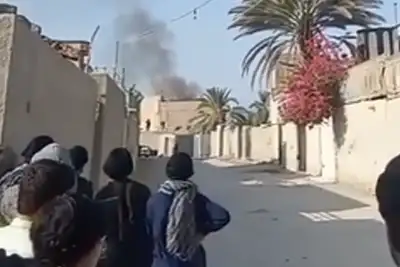
Tehran checkpoints hit in reported drone attacks

4

US Senators urge probe of strike that killed scores of children in Iran

5
ANALYSIS

Power vs piety: Khamenei Jr inherits legitimacy dilemma of Iran's theocracy

Banner
Banner

Spotlight

  • Allies rally, rivals brace after Mojtaba Khamenei’s rise
    INSIGHT

    Allies rally, rivals brace after Mojtaba Khamenei’s rise

  • Checkpoint attacks open new front in Iran war
    INSIGHT

    Checkpoint attacks open new front in Iran war

  • Power vs piety: Khamenei Jr inherits legitimacy dilemma of Iran's theocracy
    ANALYSIS

    Power vs piety: Khamenei Jr inherits legitimacy dilemma of Iran's theocracy

  • Can widening the war save Iran’s rulers?
    ANALYSIS

    Can widening the war save Iran’s rulers?

  • Hormuz disruption tests limits of global energy markets
    ANALYSIS

    Hormuz disruption tests limits of global energy markets

  • Inside the dramatic escape of Iranian women footballers seeking asylum
    INSIGHT

    Inside the dramatic escape of Iranian women footballers seeking asylum

•
•
•

More Stories

Checkpoint attacks open new front in Iran war

Mar 12, 2026, 13:16 GMT
•
Arash Sohrabi

The Iran war appears to be entering a new phase as attacks increasingly target checkpoints and street-level security units, while witness reports sent to Iran International suggest many of those positions are being moved or dismantled after their locations are exposed.

For days the conflict had focused largely on military bases, missile sites and command facilities, particularly in southern Iran, as part of the wider US-Israeli campaign that has struck thousands of targets across the country since the war began on February 28.

But since Wednesday evening, reported drone strikes on checkpoints in Tehran have pointed to a parallel line of pressure: the local security posts, patrol units and temporary deployments used to enforce control on the streets.

Iranian state-linked media said several checkpoints in Tehran were hit, killing members of the security forces and Basij militia. The reported locations included positions in multiple districts across the capital.

The development suggests the conflict is increasingly intersecting with the structures the state relies on to control neighborhoods rather than only its larger military infrastructure.

  • Tehran checkpoints hit in reported drone attacks

    Tehran checkpoints hit in reported drone attacks

  • Desertions, shortages and army-IRGC rift strain Iran’s military

    Desertions, shortages and army-IRGC rift strain Iran’s military

From fixed bases to moving checkpoints

Since the start of the war, residents across Iran say checkpoints and patrols have multiplied in major cities as authorities attempt to prevent unrest and maintain control.

At the same time, Iran International has received a steady stream of messages from viewers describing the locations of checkpoints, security deployments and temporary bases.

Some reports describe armed units inspecting vehicles at major highway entrances or intersections. Others mention security forces using schools, sports halls and religious institutions as temporary accommodation or staging points.

Messages received in recent days pointed to deployments in locations ranging from major Tehran highways to entrances to cities such as Karaj, Shiraz, Mashhad and Qazvin. Residents also described units stationed beneath highway bridges, near parks or inside parking areas where buses and motorcycles were parked overnight.

In several cases, viewers reported that checkpoints they had previously seen disappeared within hours or days, while others appeared to move to nearby streets or disperse into smaller patrol groups.

Some messages described security forces sleeping inside buses or personal vehicles and conducting mobile patrols rather than remaining in fixed positions.

Others said checkpoints that had been inspecting vehicles were suddenly dismantled, leaving only a few officers nearby.

Such reports cannot be independently verified in each case. But taken together they suggest that many deployments are becoming more fluid, with positions shifting frequently rather than remaining in one place.

The Imam Reza security unit after sustaining damage, part of the IRGC’s Mohammad Rasulullah Corps in Greater Tehran.

A war over control of the neighborhood

The shift reflects a deeper pressure on the state’s local enforcement network.

For years the Islamic Republic has relied on a dense web of Basij, police and Revolutionary Guards positions to control neighborhoods and quickly suppress unrest.

During the recent nationwide protests earlier this year, these same networks formed the backbone of the crackdown that sealed off districts and quashed the demonstrations.

In wartime, those local security units appear to be playing an even more central role.

As larger bases and installations come under pressure from airstrikes, authorities appear to be relying more heavily on mobile checkpoints and temporary deployments to maintain control on the ground.

Now those fallback positions are also being drawn into the conflict.

The result is a battlefield that increasingly overlaps with everyday urban space. Instead of remaining confined to distant military facilities, the war is beginning to touch the street corners, highway entrances and neighborhood patrol routes where the state exerts day-to-day authority.

Iran women’s football team kept under tight security in Kuala Lumpur

Mar 12, 2026, 12:06 GMT

Members of Iran’s women’s national football team, after some delegation members sought asylum abroad, are being kept under tight security during a camp in Kuala Lumpur, Malaysia, Iran International has learned.

Players who arrived on Wednesday are being kept at a hotel where journalists and media are not allowed to enter, according to sources familiar with the situation.

Some players had their mobile phones confiscated, while others were allowed to keep them only under the supervision of security personnel from the Iranian football federation.

Sources told Iran International that pressure on the players began in Tehran and has continued during the team’s camp ahead of the 2026 Asian Championship.

Mohammad Rahman Salari, a member of the Iranian Football Federation’s board, played a central role in enforcing the restrictions and repeatedly collected and inspected the phones of players and staff after the team’s first match.

Fatemeh Bodaghi, who is traveling with the delegation as manager of Iran’s women’s national team, was described by sources as acting on behalf of the federation’s security apparatus under the leadership of federation president Mehdi Taj, monitoring players’ social media accounts and reporting their activities to authorities in Tehran.

Sources also said Zeinab Hosseinzadeh, the team’s physiotherapist, was among those involved in exerting pressure on players.

Farideh Shojaei, the women’s vice president of the football federation, is also accompanying the team. She previously said options for the team’s return to Iran amid US-Israeli airstrikes were being examined, including a possible land route through Turkey, after attempts to return via the United Arab Emirates did not succeed.

  • Inside the dramatic escape of Iranian women footballers seeking asylum

    Inside the dramatic escape of Iranian women footballers seeking asylum

  • Australia grants asylum to five players of Iran women’s football team

    Australia grants asylum to five players of Iran women’s football team

Players face pressure after anthem protest

The crisis surrounding the Iranian women’s national football team began on March 2, when the squad refused to sing the Iranian national anthem before their opening match against South Korea at the AFC Women's Asian Cup in Australia.

This silent protest, occurring shortly after the start of the Iran war and the killing of Supreme Leader Ali Khamenei, was immediately labeled an act of "wartime treason" by the state media. As the team progressed through the group stage, they were reportedly kept under strict surveillance by delegation minders, with international human rights groups and political figures warning that the athletes faced severe punishment, including the possibility of the death penalty, if they were forced to return to Tehran.

Six members of the delegation accepted humanitarian visas and remained in Australia to seek asylum, while the rest of the team boarded their flight to Malaysia.

Desertions, shortages and army-IRGC rift strain Iran’s military

Mar 12, 2026, 09:55 GMT

Iran’s armed forces are facing acute supply shortages, rising desertions and deepening friction between the regular army (Artesh) and the Revolutionary Guards, according to informed sources who described a military system under growing strain as the war intensifies.

Among the most serious allegations are reports that wounded army personnel have been denied assistance by the Islamic Revolutionary Guard Corps (IRGC), that some frontline units are operating with minimal ammunition, food and drinking water, and that attempts to mobilize reserve forces have faltered.

Tensions between army and Revolutionary Guards

One of the sharpest points of friction appears to involve medical support for wounded soldiers.

Sources said that regular army units are suffering significant casualties but that IRGC personnel have refused to transport injured army soldiers to hospitals despite having access to medical facilities.

According to the sources, Revolutionary Guards officials rejected repeated army requests for assistance, citing shortages of ambulances and blood supplies.

The refusals have deepened anger and resentment between personnel from the two forces, adding to long-standing institutional tensions between the regular army (Artesh) and the IRGC.

Frontline shortages

The reported tensions come alongside severe shortages affecting some frontline and field units of the Iranian army.

Sources described worsening logistical conditions that have left troops struggling with limited ammunition and inadequate basic supplies.

In one example cited by the sources, some units were issued only 20 bullets for every two Artesh soldiers, leaving troops with little capacity to respond to potential attacks.

Field units in several areas are also said to be operating without reliable access to drinking water or sufficient food supplies.

The harsh conditions and what some soldiers perceive as neglect by commanders have contributed to what sources described as group desertions, with soldiers leaving bases and seeking refuge in nearby towns.

Strain extends to IRGC units

The strain is not limited to the regular army, according to the sources.

Even within IRGC missile units – traditionally among the best resourced parts of Iran’s military – there have been reports of communications equipment failures and shortages of food and other basic supplies.

Despite these problems, the sources said the command structure appears to be prioritizing the delivery of technical components needed to keep missile systems operational, rather than sending additional food rations or individual equipment to personnel.

The accounts suggest commanders are focusing on maintaining strategic weapons capabilities while troops face deteriorating living conditions.

Reserve mobilization falters

Efforts to widen the manpower pool appear to have run into resistance as well.

Sources said attempts by the Revolutionary Guards to mobilize reserve forces earlier this week produced limited results.

Many of those summoned for service reportedly did not report to military centers. Instead, some individuals used the situation to leave their areas and assist family members in moving toward border regions in hopes of leaving the country.

Iran says it will not play in 2026 World Cup after US strikes

Mar 11, 2026, 15:53 GMT

Iran will not participate in the 2026 World Cup after co-host the United States launched airstrikes alongside Israel that killed Iran’s Supreme Leader Ali Khamenei and triggered a wider regional conflict, the country’s sports minister said on Wednesday.

“Considering that this corrupt regime has assassinated our leader, under no circumstances can we participate in the World Cup,” Sports Minister Ahmad Donyamali said on state television.

“Our children are not safe and, fundamentally, such conditions for participation do not exist,” the minister said.

“Given the malicious actions they have carried out against Iran, they have forced two wars on us over eight or nine months and have killed and martyred thousands of our people,” he added.

The expanded 48-team 2026 FIFA World Cup is scheduled to be held in the United States, Mexico and Canada from June 11 to July 19.

Iran’s UN ambassador, Amir Saeid Iravani, said more than 1,300 Iranian civilians have been killed since US and Israeli airstrikes began on February 28.

Iran were drawn in Group G alongside Belgium, Egypt and New Zealand, with all three of their group matches scheduled to take place in the United States, two in Los Angeles and one in Seattle.

FIFA regulations say any team that withdraws from the tournament “no later than 30 days before the first match” will be fined at least 250,000 Swiss francs ($320,800).

The rules add that disciplinary sanctions may include expelling the member association from future FIFA competitions or replacing it with another association, with a decision to be taken by the FIFA Council or a relevant committee.

Iran had selected Tucson’s Kino Sports Complex as its base camp for the tournament, and preparations stretching back 18 months now face uncertainty, with potential economic consequences in Arizona.

Earlier, FIFA President Gianni Infantino said he had met US President Donald Trump, who told him the Iranian team would be welcome to compete in the tournament.

Trump had previously said "I really don't care" if Iran participated or not.

Can widening the war save Iran’s rulers?

Mar 11, 2026, 07:33 GMT
•
Reza Haji Hosseini

Tehran’s decision to widen the war is an attempt to project strength but may better be understood as a survival strategy—one rooted in deliberate escalation and shaped by a logic akin to mutually assured destruction.

Following US and Israeli attacks on the killing of Supreme Leader Ali Khamenei, Iran’s leadership followed through with a long-standing threat: expanding the conflict beyond its borders and drawing neighboring states into the confrontation.

One notable example came on February 1, roughly a month before Khamenei was killed in a joint US–Israeli missile strike on February 28, when he said that if the United States attacked Iran militarily, the conflict would become “regional.”

Today, the armed forces of the Islamic Republic—led by the Islamic Revolutionary Guard Corps—appear to be implementing that doctrine by expanding hostilities beyond Iran’s borders.

The logic is to link the fate of the Islamic Republic to the stability of the wider region: as the state faces mounting internal and external pressures, it seeks to entangle neighboring countries in the crisis, raising the costs of continued confrontation.

This approach resembles elements of Nixon’s “madman theory” and Israel’s “Samson option,” reflecting a strategic logic akin to mutually assured destruction. Whether such a strategy can deter adversaries—or instead isolate Tehran further—remains uncertain.

Several neighboring countries have now been drawn into the conflict. States along the Persian Gulf have been targeted, and missile and drone strikes have also been directed toward Azerbaijan and Turkey.

In some cases, countries that previously maintained relatively cooperative relations with Tehran, including Qatar, have found themselves on the receiving end of these attacks.

The responses of neighboring governments suggest that widening the conflict could ultimately produce stronger regional opposition rather than easing pressure on Tehran. From their perspective, the concern is precedent: if such attacks occur once, what guarantees exist that they will not happen again?

This concern increases the likelihood of coordinated responses designed to prevent further escalation.

The strategy also reflects long-running domestic pressures on the system. Over the course of its existence, the Islamic Republic occasionally managed to regain some degree of public support at critical moments—including the elections of Mohammad Khatami in 1997 and 2001, the high participation in the 2009 election, and the victories of Hassan Rouhani in 2013 and 2017.

But the broader trajectory has been one of declining engagement and growing disillusionment. By the time of the 2024 presidential election—officially won by Masoud Pezeshkian—turnout had fallen sharply, reflecting wider frustration shaped by years of repression and repeated cycles of protest.

Demonstrations in 1999, 2009, 2019 and 2022 were met with force, while the downing of the Ukrainian passenger plane and the large-scale crackdown in January 2026 further deepened mistrust between the state and society.

At the same time, nearly five decades of governance have left Iran confronting multiple structural crises, including environmental degradation, water scarcity, energy shortages, mounting economic pressure on households, systemic corruption and widening inequality.

Together, these pressures have steadily eroded confidence in the system and narrowed expectations for reform from within.

Against this backdrop, widening the conflict may appear to the leadership less a choice than a calculation: that survival at home increasingly depends on raising the stakes abroad. Yet this logic carries obvious risks.

Attempts to regionalize the confrontation could deepen Iran’s isolation and accelerate pressures already bearing down on the system.

Taking into account both long-term domestic trends and the current military situation—including damage to Iran’s military capabilities and the widening of hostilities—the future of the Islamic Republic remains uncertain.

International politics rarely unfolds along a single predictable path, and multiple outcomes remain conceivable. Still, history suggests that political systems under sustained internal strain and external pressure often appear stable until they do not.

As Iran confronts war with the United States and Israel abroad while continuing to face mistrust and periodic unrest at home, the strategy of widening the conflict may prove less a path to survival than a reflection of the system’s mounting vulnerability.