The real story behind Tehran’s sudden “unity” campaign did not begin with Donald Trump’s accusations of disarray within Iran’s leadership. It began with a secret letter to Mojtaba Khamenei.
In recent days, word has circulated in Iranian political circles about a highly confidential letter reportedly written by a group of senior officials to Mojtaba Khamenei.
According to those familiar with the matter, the letter warned that Iran’s economic situation is grave, that the country cannot continue on its current path, and that the leadership has no practical choice but to negotiate seriously with the United States over the nuclear file.
The historical echo is hard to miss. In the final days of the Iran-Iraq War in 1988, senior Iranian officials and commanders warned Ruhollah Khomeini that the war could no longer be sustained.
Only days earlier, Khomeini had still been insisting on continuing the war. But under the weight of those warnings, he accepted UN Security Council Resolution 598 and ended the conflict, a decision he famously likened to drinking from a poisoned chalice.
That is why the current letter matters: it suggests that some senior figures now see the nuclear standoff as another moment when ideological insistence is colliding with the limits of the state.
The reported signatories included senior figures such as Mohammad Bagher Ghalibaf, Masoud Pezeshkian, Abbas Araghchi, Mostafa Pourmohammadi, and others. Some officials apparently refused to sign it. One name now circulating is Ali Bagheri Kani, Iran’s former chief nuclear negotiator under Ebrahim Raisi.
The letter was supposed to remain top secret. It was addressed to Mojtaba Khamenei, not to the public, Parliament, or the ordinary political class. But according to accounts now circulating, Bagheri Kani showed the letter to other hardliners outside the high-level circle and emphasized that he had not signed it. From there, the matter leaked into political circles in Tehran.
Two public reactions suggest how sensitive the leak has become. The first came from Jalil Mohebbi, a figure close to Ghalibaf and a former secretary of the headquarters for Enjoining the Good and Forbidding the Evil.
In a pointed legal warning, he wrote that if a confidential letter is given to a member of a meeting, and that person shows it to outsiders while saying, “I did not sign this letter,” then under Article 3 of the law on publishing and disclosing confidential and secret government documents, that person can face up to ten years in prison.
Mohebbi added: “This offense is unforgivable.”
The second came from a Telegram channel that referred to an “important confidential letter” written by some senior officials and left unsigned by others.
The post asked why, at such a sensitive moment after the war, some officials had begun writing letters to “senior figures of the system,” and why others were so angry about its disclosure. In Iranian political language, that phrase is often used to refer to the Supreme Leader without naming him directly.
Trump’s claim meets Tehran’s denial
This was the atmosphere in which Trump’s claim landed. He said Iranian officials were “fighting like cats and dogs” because they could not agree about negotiations with the United States. Tehran immediately claimed otherwise. On Thursday, senior officials moved in near-unison to insist there was no split.
Ghalibaf, the speaker of parliament, wrote: “In Iran there are no hardliners or moderates. We are all Iranian and revolutionary.” He added that with the “iron unity of the nation and the state” and full obedience to the Supreme Leader, Iran would make the “criminal aggressor” regret its actions.
President Pezeshkian posted almost the same message: “In Iran, there are no ‘hardliners’ or ‘moderates.’ We are all Iranians and revolutionaries.” He too invoked unity between nation and state, obedience to the Leader, and victory for Iran.
Mohseni Ejei, the head of the Judiciary, went further. He said the “foolish president of America” should know that “hardliner” and “moderate” are absurd and baseless terms from Western political literature. In Islamic Iran, he said, all groups and factions ultimately stand united under the orders of the Supreme Leader.
Mojtaba’s red line
Before the first round of negotiations, Mojtaba Khamenei had reportedly drawn a red line: Iranian officials were not to discuss the nuclear issue with the United States. But the Iranian delegation had to talk about the nuclear file, because any serious negotiation with Washington necessarily revolves around it. So they did.
That decision triggered the hardline backlash.
Mahmoud Nabavian, deputy chairman of Parliament’s National Security Commission, was present in the Pakistan negotiations. He has since said that the outcome of those talks was not satisfactory and that the negotiating team made a “strategic mistake.” His accusation was specific: the team acted “contrary to the explicit red line of the Leader of the Revolution” by discussing the nuclear issue with America.
Nabavian also said the delegation should have discussed the ten points set out by the Supreme Leader, not the nuclear file. He criticized the idea that the “Resistance Front” could be reduced only to Lebanon, saying Gaza, Yemen, and Iraq are also part of it.
Most importantly, he said that based on new information he had received, from now on, “even if the naval blockade is lifted, any negotiation with America is forbidden.”
Amir Hossein Sabeti, a hardline MP, made the same charge more directly. “I am saying this for the first time, and I stand by what I say,” he said. “If what I say is false, the officials should take action against me.” He added that one of the Leader’s red lines was that “in the negotiations, the nuclear issue must absolutely not be discussed.”
Then he challenged Ghalibaf and Araghchi by name: if they did not negotiate over the nuclear issue, they should explicitly deny it. If it becomes clear that they did, he warned, “we will frankly speak out to the people of Iran in a different way.”
The backlash moves into the open
This helps explain why the Iranian delegation did not travel to Pakistan for the second round. The dispute was no longer merely about diplomatic tactics. It had become a fight over whether senior officials had crossed a red line set by Mojtaba Khamenei.
The backlash then moved into the media. Nour News, affiliated with Iran’s Supreme National Security Council, published a video warning that a “dangerous current” was trying to portray Ghalibaf and Araghchi as figures who, instead of following the line of resistance, were seeking “surrender and compromise.” Nour News said this current was trying to place them against the Leader and other senior pillars of the system.
That formulation is revealing. Ghalibaf and Araghchi were not only answering Trump. They were under pressure from within the regime, where hardliners accused them of abandoning the resistance, pushing compromise, and trying to pressure the Leader.
The secret letter appears to be the center of this crisis. One camp believes Iran’s economic situation has become so severe that the country must negotiate over the nuclear issue and try to reach a deal. Another camp believes that even discussing the nuclear file with America violates Mojtaba Khamenei’s order and amounts to surrender.
From left to right: Masoud Pezeshkian, Mohammad-Bagher Ghalibaf, Gholamhossein Mohseni Ejei, Ali Bagheri Kani
The unity tweets as damage control
That is why Thursday’s tweets sounded so coordinated. They were not just patriotic slogans. They were loyalty statements. Ghalibaf, Pezeshkian, Mohseni Ejei, and others were signaling that they stood with the Leader, not against him, and that the leaked letter should not be read as an act of rebellion.
So when Tehran says there is no division, the evidence points the other way.
There was a secret letter to the leader. Some officials signed it; others refused. The letter leaked. A figure close to Ghalibaf threatened legal consequences for the disclosure. Hardline MPs accused the negotiating team of violating the Leader’s red line. Nour News warned that Ghalibaf and Araghchi were being portrayed as men of “surrender and compromise.” Then, suddenly, senior officials issued synchronized tweets declaring unity and obedience.
Trump said Iranian officials were “fighting like cats and dogs” over negotiations with the United States. Tehran rejected the claim, but the sequence of events points to a real internal fight. The dispute is not cosmetic. It goes to the core of the regime’s strategy: whether Iran can survive its economic crisis without a nuclear deal, and whether pursuing such a deal now means defying Mojtaba Khamenei.
The unity tweets were not proof that Tehran is united. They were the public cover for a split that had already become visible.
As debate over a ceasefire and renewed talks with the United States intensifies, the absence of a clear supreme arbiter in Tehran appears to be giving Iran’s hardliners more room to shape the narrative and to hinder any eventual agreement.
Under former Supreme Leader Ali Khamenei, ultraconservative factions were often allowed to rage in public, attack moderates and mobilize supporters in the streets. But when necessary, he could impose discipline.
Even on the 2015 nuclear deal, which he later criticized publicly, the system moved quickly once it was understood he had given at least tacit approval.
Then-speaker Ali Larijani famously pushed the JCPOA through parliament in a matter of minutes, effectively silencing opposition by invoking the Supreme Leader’s authority.
Today, who truly leads Iran—whether one man or a shifting collective—is anyone’s guess. What is clearer is that the political vacuum appears to be rewarding the loudest and most uncompromising voices.
Iranian hardliners’ arguments for continuing the war with the United States have come to dominate state television, media reports and billboards across major squares in Tehran.
Many frame negotiations as a betrayal of “red lines,” accusing “accomplices of America and Israel,” “liberals” and those intimidated by Washington of undermining the country.
Those so-called red lines are often justified through selective interpretations of new leader Mojtaba Khamenei’s April 9 message, former Supreme Leader Ali Khamenei’s past speeches rejecting negotiations and claims by individual hardliners citing unnamed “reliable sources.”
One prominent example is ultraconservative MP Amir Hossein Sabeti of the Paydari Party, who has repeatedly warned that negotiators may be crossing the Supreme Leader’s red lines.
In a post on X, he claimed to have “the most definite information” that negotiating with the United States on the nuclear issue was prohibited and demanded that Speaker Mohammad Bagher Qalibaf and Foreign Minister Abbas Araghchi publicly deny reports of talks on suspending enrichment or diluting uranium.
He implied consequences if they did not.
State television has amplified such voices while giving nightly exposure to rallies calling for the war to continue until “final victory.”
The constant need to fill airtime has also elevated more extreme or theatrical voices, including members of the public eager for their moment on air.
Meanwhile, moderate voices arguing for negotiations appear to have lost even the limited channels they once had to plead their case to the country’s highest authority.
Iranian academic Sadeq Zibakalam, speaking to the reform-leaning Fararu website, questioned why some factions remain so insistent on continuing the war despite the economic devastation already inflicted.
“Do these gentlemen know what forty days of war has done to our economy, how many production units have run into trouble, and how many have laid off their workers?” he asked.
He said it was striking that hardline revolutionaries inside Iran, opposition groups seeking regime change and Israeli officials all appeared to share an interest in prolonging the conflict.
Views such as Zibakalam’s were once represented within inner circles of power by figures like former president Hassan Rouhani, who had direct access to Ali Khamenei, even if he rarely got his way.
President Masoud Pezeshkian has no such standing as the veteran Rouhani. And whatever limited influence he might have enjoyed under Khamenei Sr. appears to have diminished further under Khamenei Jr., who—even if in good health—remains almost certainly beyond the reach of civilian leaders.
In the absence of a clear authority to impose discipline or bless compromise, political competition in Tehran increasingly appears to favor the fiercest factions.
Iran’s state broadcaster has sparked ridicule after claiming that 87% of Iranians support continuing the war with the United States, in a curious turn from early in the conflict where pro-war sentiments of an alienated populace was branded treachery.
The controversy began following a Monday broadcast on the state television, where hardline commentator Mostafa Khoshcheshm asserted that the Iranian people overwhelmingly favor military confrontation over diplomatic efforts to end the war.
“According to polls conducted by academic centers regarding the war, 87% of the people said that once and for all, this decayed tooth should be pulled out,” he said, arguing that reopening the Strait of Hormuz could leave Iran unable to close it again if needed.
No details about such a survey—its methodology, sample size or sponsoring institution—have been published, making the claim impossible to independently verify.
Yet the figure is notable less for its credibility than for what it reveals about a shifting narrative inside Iran.
Early in the conflict, some hardline factions and state-aligned voices attacked members of the Iranian diaspora and others who openly welcomed military pressure on the Islamic Republic or argued that war might weaken the system.
At some rallies and in media commentary, those seen as supporting foreign intervention were portrayed as traitors or collaborators.
Now, some of those same domestic factions are the ones most vehemently opposing negotiations with the United States and calling for the continuation of the war.
The contradiction reflects a more complicated reality.
Many Iranians may initially have supported military escalation—not out of loyalty to the Islamic Republic, but in the belief that war could weaken or even topple the regime.
That is not the kind of support state television appears to be claiming.
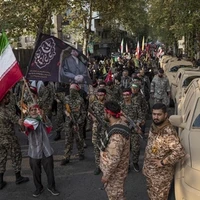
Instead, hardliners and state media have pointed to crowds at nightly rallies as evidence of a “majority” favoring war, though critics argue these gatherings represent a narrow and possibly organized segment of society.
At some of these rallies, participants have described the conflict with the United States as “existential” and argued it must continue until the “victory of good over evil.”
Online, many reacted with ridicule.
“When was the last time the opinion of the people of Iran—not the presenters of IRIB—was important and influential in the country’s major decisions?” one reader wrote on the Khabar Online website.
Another user sarcastically noted: “I don't know, maybe your ‘people’ are different from our ‘people.’ Who are these 87%? 87% of government supporters? … Do you even count us as part of the statistics?”
Public skepticism has been further fueled by allegations of digital manipulation by organized “commenting forces,” often referred to as the “Cyber Army.”
Readers have pointed out that while pro-negotiation comments often initially receive the vast majority of “likes,” those numbers are sometimes reversed within hours.
One user wrote: “Unfortunately, within a few hours, the ‘Zombies’ of the cyber army change the scores.”
Whether or not 87% of Iranians support continuing the war, the backlash to the claim suggests the battle over public opinion—and over who gets to define patriotism—may be intensifying alongside the conflict itself.
As uncertainty clouds the next round of Iran-US talks, the economic pain of the war is mounting inside Iran and beyond, increasing pressure on both sides to find a way out.
On Wednesday, US President Donald Trump suggested renewed talks with Tehran could take place as soon as Friday, though Iranian officials and state media quickly pushed back, saying no official position had yet been announced.
For ordinary Iranians, the diplomatic uncertainty comes atop an economy already battered before the March war.
Domestic news agencies, including the Labor News Agency ILNA, report that more than one million jobs have been lost since the start of the war, while the government is reportedly struggling to meet pension obligations.
ILNA said in recent weeks between three and four million workers, including insured employees as well as informal and uninsured laborers, may have lost their jobs. That would leave 12 to 15 million people with no source of income.
ILNA said the government’s only support for many of those affected by wartime job losses has been a monthly cash subsidy and a food voucher that “barely covers the cost of a single 10-kilogram bag of rice.”
The agency’s Wednesday front page painted a bleak picture: widespread business closures, workers protesting inadequate wages, thousands displaced by US-Israeli strikes still living in hotels, and even a 40% increase in funeral costs.
For many Iranians, economic hardship now feels more immediate than diplomacy.
On Tuesday, Trump claimed on Truth Social that Iran was “collapsing financially” and losing $500 million a day because of the closure of the Strait of Hormuz.
US Treasury Secretary Scott Bessent said this month Washington would not renew temporary sanctions waivers that had allowed some Iranian and Russian oil already at sea to reach global markets, tightening pressure on energy supplies.
Oil prices rose on Wednesday despite Trump’s ceasefire extension, reflecting market doubts over whether the truce would hold and whether shipping through the Strait would fully resume.
Iranian politicians and media outlets have increasingly highlighted the global economic repercussions of the conflict, a narrative some analysts see as an attempt to increase pressure on Washington.
The reform-leaning Asr Iran wrote this week that although the second round of negotiations remains uncertain, “geopolitical necessities and crushing economic pressures may push both sides toward accepting an emergency agreement.”
On Tuesday night, after Trump announced a continued ceasefire without a formal deal, many Iranians on social media and in messages to Persian-language outlets abroad accused him of abandoning them to hardline commanders in Tehran.
Others argued that economic strain and internal political divisions may ultimately force Iran’s leadership back to the table.
What remains unclear is whether Tehran’s leaders know what they want from the talks—or whether some are still prepared to risk a prolonged war of attrition.
For ordinary Iranians, any notion of “victory” may increasingly depend less on geopolitics than on whether they can endure the economic collapse unfolding around them.
Iran’s economy is likely to buckle faster than the United States or the global economy under the combined pressure of war, sanctions, a US blockade and Tehran’s disruption of the Strait of Hormuz, experts said at Iran International’s townhall in Washington DC.
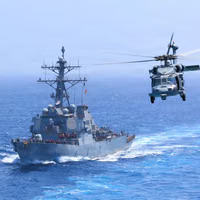
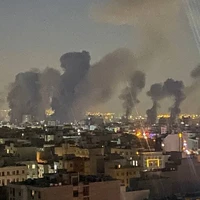
The war launched by the United States and Israel against Iran began on February 28 and continued until April 7, when a two-week ceasefire was announced. The ceasefire was extended on April 21, but a US blockade of Iranian ports remained in place.
Miad Maleki, a senior fellow at the Foundation for Defense of Democracies and a former senior sanctions strategist at the US Treasury, said Iran had spent decades threatening to close the Strait of Hormuz but had never prepared its own economy for the consequences including the naval blockade.
“If we’re at the point that we have to close the Strait of Hormuz, can our own economy handle $455 million a day in trade that we have to rely on going through the Strait of Hormuz?” Maleki said, referring to his earlier estimate of Iran's daily loss during the US blockade which has been in place since April 13.
Miad Maleki
He said the answer was becoming clearer as the war, blockade, currency crisis and damage to key export sectors placed Iran under pressure faster than its adversaries.
While Hormuz disruption has created serious risks for global energy markets, Maleki argued that Iran’s own economic exposure to the waterway made Tehran more vulnerable than the countries it was trying to pressure.
Jason Brodsky, policy director at United Against Nuclear Iran, said Trump appeared willing to test that weakness through a strategy of coercive diplomacy backed by military force.
“He lays out the military option, prepares the theatre for US Central Command,” Brodsky said. “He then offers a diplomatic off-ramp for the Iranian regime. He lays out US terms and gives a deadline. And if the Iranian regime doesn’t play ball, he strikes.”
Who blinks first?
The discussion repeatedly returned to the question of who would break first: Iran, the United States, or the global economy. The blockade, imposed on April 13, has added to the pressure on Iranian trade, while Tehran’s disruption of Hormuz has turned the confrontation into a test of economic endurance for Iran, Washington and major Asian energy consumers.
Bozorgmehr Sharafedin, head of digital at Iran International and moderator of the townhall, said Iran’s disruption of Hormuz amounted to Tehran “putting sanctions on the world,” while the US blockade showed Washington using military power to enforce sanctions.
Bozorgmehr Sharafedin
Maleki said Asian economies would be the first major external victims of a prolonged Hormuz crisis because of their heavy dependence on energy flows through the strait. But he said the global impact did not change the basic balance of vulnerability.
“Asia is the first,” Maleki said, referring to economies dependent on energy flows through Hormuz. “North Korea, Japan, China and India, 89, 90 percent of their petroleum, 75 percent of their natural gas comes through the Strait of Hormuz. We’re not here in the US the main target of the economic ramifications of the Strait of Hormuz, but what’s happening in those countries will affect our economy.”
Still, he said, Iran had far less time to absorb the shock.
“The clock is much faster on Iran’s economy side than it is on our own side,” Maleki said. “But we know historically that the Iranian regime doesn’t really care to the extent that Iranians are starved or dealing with major economic issues.”
Brodsky said Trump was also likely willing to sustain pressure longer than many expected because he was in his second term and focused on legacy.
He argued that Washington had achieved through force what diplomacy alone had failed to achieve, including pushing Tehran to reportedly consider a one-year suspension of uranium enrichment.
Jason Brodsky
“President Trump is willing to go at this for longer than most people expect,” Brodsky said. “He is willing to take that risk because he is in legacy-building mode at the moment.”
Iran’s postwar economy
Mohammad Machine-Chian, a senior economic analyst at Iran International and former editor-in-chief at EcoIran, said Iran’s stock market had been closed for eight weeks, an unprecedented development in the history of the Tehran Stock Exchange.
He said the closure allowed policymakers to pretend prices had remained normal, while in reality the war had changed the value of companies, assets and investor expectations. The market, he said, was already in crisis before the war, even though nominal gains had masked the impact of inflation above 70 percent.
Mohammad Machine-Chian
Machine-Chian said banking was “in shambles,” the auto industry was deep in trouble, and the market had been relying heavily on export-oriented sectors such as petrochemicals, steel, oil and gas-related companies. Many of those sectors, he said, had been damaged or disrupted by the war.
“Even if they reopen the market, there’s no petrochemical, there’s no steel,” Machine-Chian said. “They have to rely on the banks, car manufacturers and other industries that rely on basically petrochemicals to begin with in the supply chain.”
He said a crash was likely if trading resumed, even with official limits preventing shares from falling by more than five percent a day.
“It doesn’t make any sense,” Machine-Chian said of those limits. “Nonetheless, that’s the way they’re managing it, but even in that scenario, I don’t think they can afford to open the markets.”
Machine-Chian said the economic crisis had reached a point where inflation should be discussed monthly rather than annually. In a best-case scenario involving a comprehensive agreement, he estimated inflation could still average at least five percent a month for the rest of 2026.
“I’m talking about inflation in months, no longer in years, and that is the reality we’re dealing with,” he said.
He said that in a “no war, no peace” scenario, prices could triple over the year. In the event of another conflict, he warned monthly inflation could exceed 20 percent, pushing annual price increases toward 500 percent.
Sanctions relief would not be quick
Maleki said even a diplomatic agreement would not quickly revive Iran’s economy because the sanctions regime is complex and private banks and companies remain deeply reluctant to handle Iran-related business.
He said the experience of the 2015 nuclear deal showed the limits of formal sanctions relief. Even when the US government tried to facilitate limited access to funds, he said, banks refused to touch Iranian money.
“They couldn’t find one single bank,” Maleki said. “Not just US banks, but little, tiny banks without any corresponding relationship with US banks to actually touch the money. At the end of the day they had to put the funds on a pallet and send them in cash.”
Maleki said Iran’s sanctions architecture was more layered than Syria’s and could take months or years to unwind. He added that even regime change would not automatically solve the immediate fiscal crisis.
“If we have a democratic government today, a transitional government established in Iran today, and the Islamic Republic is gone, that transitional government probably is not going to be able to pay government salaries for more than a week or two,” he said.
The warning underscored one of the main themes of the townhall: Iran’s economy is not merely under wartime pressure, but faces deeper structural damage that may outlast the fighting and any short-term diplomatic arrangement.
No access to cash
In the Q&A section, an audience member asked whether cash or access to frozen funds could allow the Islamic Republic to recover and rebuild its capabilities after the war.
Brodsky said that would be the worst possible move, arguing that Tehran would use any financial relief to rebuild the same military and security structures targeted during the conflict.
“The worst thing that we could do right now is to flush the regime with cash,” Brodsky said. “It’s going to use that to rebuild its missile program, its nuclear program, its drone program, and all of its repression architecture.”
Maleki said direct cash transfers were unlikely because of legal restrictions, but access to restricted funds or sanctions relief for metals and petrochemicals could still provide Tehran with a lifeline.
He said those details would determine whether Iran’s weakened economy remains under pressure or gains enough room to recover.
Mounting opposition to negotiations with Washington in Tehran is casting doubt over whether Iran will proceed with a new round of talks with the United States in Islamabad as the ceasefire deadline approaches.
Iranian officials and state media have increasingly emphasized a lack of interest in continuing negotiations. State television has claimed that a majority of Iranians oppose further talks, a narrative reinforced by coverage from Islamic Revolutionary Guard Corps (IRGC)-affiliated outlets including Fars News Agency and Tasnim News Agency.
Mohammad-Bagher Ghalibaf, who led Iran’s delegation in the first round of talks, struck a defiant tone earlier this week, saying Tehran would not accept negotiations “under the shadow of threats” and had spent the past two weeks preparing “to reveal new cards on the battlefield.”
Ali Abdollahi, commander of Iran's Khatam al-Anbia Central Headquarters, warned that Iranian forces are prepared to deliver an “immediate and decisive response” to any violation of agreements or commitments.
Abdollah Haji-Sadeghi, the Supreme Leader’s representative to the IRGC, said “there are no negotiations for now,” adding: “We will negotiate whenever the enemy accepts our conditions.”
On the US side, rhetoric has also hardened. President Donald Trump told CNBC on Tuesday that he does not intend to extend the ceasefire and that Washington is prepared for a military approach.
According to the Washington Post, Vice President J. D. Vance’s planned trip to Islamabad has been postponed.
Political activist Ali Gholhaki, considered close to Ghalibaf, argued that negotiations in Islamabad should only occur if the United States ends its naval blockade and moderates its nuclear demands.
Hardline commentator Foad Izadi was even more explicit, saying in an interview that entering negotiations now would be a mistake.
“We must raise the cost of this war to a significant level,” he said. “Wars ultimately end with negotiations, but they have not yet paid the expected price.”
Opposition to talks has also surfaced within Iran’s parliament. Vahid Ahmadi reaffirmed Iran’s right to uranium enrichment under the Nuclear Non-Proliferation Treaty, stating that enriched materials would “under no circumstances” be removed from the country.
State television also aired footage of a pro-government rally where participants chanted “Death to compromisers.” A television host claimed that 87% of Iranians believe the war should continue—an assertion critics say cannot be independently verified.
Despite the hardline chorus, some voices have warned against abandoning diplomacy.
Prominent Sunni cleric Molavi Abdolhamid warned of dire consequences, writing: “The country’s skies are under enemy control, infrastructure is at risk of destruction, and the armed forces lack adequate air defense tools. In this deadlock, the only path to salvation is a ‘fair agreement.’”
He asked what hardliners would say before God and the nation if their actions lead to “the nation’s ruin.”
Prominent journalist Ahmad Zeidabadi also criticized state media claims about public opinion, arguing that they encourage parts of society to oppose negotiations.
“Iranians seek sustainable peace and security and the lifting of sanctions,” he wrote. “Any trade-off that guarantees these is justified for the overwhelming majority.”
Ali-Asghar Shafieian, media adviser to President Masoud Pezeshkian, similarly challenged claims of unanimous anti-negotiation sentiment, noting that participants in public rallies do not represent all citizens.
“Those of us attending nightly gatherings are not the entirety of the people,” he said.