• Iran Insight
  • Politics
  • Economy
  • Analysis
  • Special Report
  • Opinion
  • Podcast
All rights reserved for Volant Media UK Limited
volant media logo
  • العربية
  • فارسی
Brand
  • Iran Insight
  • Politics
  • Economy
  • Analysis
  • Special Report
  • Opinion
  • Podcast
  • Iran Insight
  • Politics
  • Economy
  • Analysis
  • Special Report
  • Opinion
  • Podcast
  • Theme
  • Language
    • العربية
    • فارسی
EXCLUSIVE

Desertions, shortages and army-IRGC rift strain Iran’s military

Mar 12, 2026, 09:55 GMT
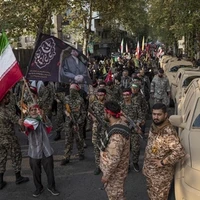
Iranian soldiers from the country’s regular army (Artesh) take part in a military drill near the Strait of Hormuz.

Iran’s armed forces are facing acute supply shortages, rising desertions and deepening friction between the regular army (Artesh) and the Revolutionary Guards, according to informed sources who described a military system under growing strain as the war intensifies.


Among the most serious allegations are reports that wounded army personnel have been denied assistance by the Islamic Revolutionary Guard Corps (IRGC), that some frontline units are operating with minimal ammunition, food and drinking water, and that attempts to mobilize reserve forces have faltered.

Tensions between army and Revolutionary Guards

One of the sharpest points of friction appears to involve medical support for wounded soldiers.

Sources said that regular army units are suffering significant casualties but that IRGC personnel have refused to transport injured army soldiers to hospitals despite having access to medical facilities.

According to the sources, Revolutionary Guards officials rejected repeated army requests for assistance, citing shortages of ambulances and blood supplies.

The refusals have deepened anger and resentment between personnel from the two forces, adding to long-standing institutional tensions between the regular army (Artesh) and the IRGC.

Frontline shortages

The reported tensions come alongside severe shortages affecting some frontline and field units of the Iranian army.

Sources described worsening logistical conditions that have left troops struggling with limited ammunition and inadequate basic supplies.

In one example cited by the sources, some units were issued only 20 bullets for every two Artesh soldiers, leaving troops with little capacity to respond to potential attacks.

Field units in several areas are also said to be operating without reliable access to drinking water or sufficient food supplies.

The harsh conditions and what some soldiers perceive as neglect by commanders have contributed to what sources described as group desertions, with soldiers leaving bases and seeking refuge in nearby towns.

Strain extends to IRGC units

The strain is not limited to the regular army, according to the sources.

Even within IRGC missile units – traditionally among the best resourced parts of Iran’s military – there have been reports of communications equipment failures and shortages of food and other basic supplies.

Despite these problems, the sources said the command structure appears to be prioritizing the delivery of technical components needed to keep missile systems operational, rather than sending additional food rations or individual equipment to personnel.

The accounts suggest commanders are focusing on maintaining strategic weapons capabilities while troops face deteriorating living conditions.

Reserve mobilization falters

Efforts to widen the manpower pool appear to have run into resistance as well.

Sources said attempts by the Revolutionary Guards to mobilize reserve forces earlier this week produced limited results.

Many of those summoned for service reportedly did not report to military centers. Instead, some individuals used the situation to leave their areas and assist family members in moving toward border regions in hopes of leaving the country.

Most Viewed

A leader no one has seen: The unusual debut of Mojtaba Khamenei
1
ANALYSIS

A leader no one has seen: The unusual debut of Mojtaba Khamenei

2
ANALYSIS

Can widening the war save Iran’s rulers?

3

Britain bans London Quds Day march run by pro-Islamic Republic group

4

Tehran checkpoints hit in reported drone attacks

5

UNESCO warns of rising risks to Iran’s historic sites

Banner
Banner

Spotlight

  • Power vs piety: Khamenei Jr inherits legitimacy dilemma of Iran's theocracy
    ANALYSIS

    Power vs piety: Khamenei Jr inherits legitimacy dilemma of Iran's theocracy

  • System over leader: Tehran broadcasts stability in wartime
    INSIGHT

    System over leader: Tehran broadcasts stability in wartime

  • Can widening the war save Iran’s rulers?
    ANALYSIS

    Can widening the war save Iran’s rulers?

  • Hormuz disruption tests limits of global energy markets
    ANALYSIS

    Hormuz disruption tests limits of global energy markets

  • Inside the dramatic escape of Iranian women footballers seeking asylum
    INSIGHT

    Inside the dramatic escape of Iranian women footballers seeking asylum

  • A leader no one has seen: The unusual debut of Mojtaba Khamenei
    ANALYSIS

    A leader no one has seen: The unusual debut of Mojtaba Khamenei

•
•
•

More Stories

US Senators urge probe of strike that killed scores of children in Iran

Mar 11, 2026, 20:29 GMT

Nearly every Senate Democrat urged Defense Secretary Pete Hegseth to open a swift investigation into a deadly strike on a girls’ school in Iran that killed scores of children, as new reporting raised questions about whether outdated US targeting data contributed to the attack.

In a letter signed by 46 senators, the lawmakers called the results of the Feb. 28 strike “horrific,” noting that most of those killed were girls between the ages of 7 and 12.

The senators also asked for a broader review of any US military actions that may have caused civilian harm during the opening phase of the conflict.

Reuters reported Wednesday that two people familiar with the matter said the strike—one of the deadliest incidents involving civilians in decades of US conflicts—may have resulted from the use of outdated intelligence in the targeting process.

The news agency had earlier reported that an internal US military review found American forces were likely responsible for the attack on the school in the southern city of Minab.

Video circulated online that experts say appears to show a US Tomahawk missile striking the area, though the exact sequence of events remains unclear.

The Pentagon has declined to comment on the specifics of the case, saying only that the incident remains under investigation.

According to archived copies of the school’s website reviewed by Reuters, the campus was located next to a compound operated by Iran’s Islamic Revolutionary Guard Corps (IRGC).

Iran’s ambassador to the United Nations in Geneva, Ali Bahreini, has said the strike killed 150 students, a figure that has not been independently verified.

The senators asked the Defense Department to clarify whether US forces carried out the strike, what steps had been taken to mitigate civilian harm and what role artificial intelligence tools may have played in the targeting process.

The letter was signed by every member of the Senate Democratic caucus except Senator John Fetterman of Pennsylvania.

Tehran checkpoints hit in reported drone attacks

Mar 11, 2026, 19:13 GMT

Checkpoints in Tehran came under attack Wednesday evening, according to Iranian state media, which said Israeli drones killed several security personnel and Basij members in the capital.

Revolutionary Guards-affiliated Fars News reported at least 10 people were killed in what it described as “terrorist” attacks. Witness accounts sent to Iran International also suggested checkpoints had come under attack and that air defenses were engaged against Israeli drones over parts of the city.

According to Fars, the checkpoints targeted were in District 14 near the Mahallati Highway, District 15 opposite the Hashemabad gas station, District 16 on Fadaiyan-e Islam Street and District 1 at the end of Artesh Boulevard. Residents reported explosions and exchanges of fire in several areas, the outlet said.

An unnamed official cited by Fars said the operation was carried out jointly by Israel’s Mossad intelligence agency and monarchist groups, alleging the aim was to infiltrate operatives and carry out sabotage inside Iran. No evidence was provided for the claim.

The reported attacks come amid tightened security across Tehran, where residents say checkpoints have multiplied and nighttime patrols intensified as the conflict escalates.

Some witnesses say Basij units accompanying patrols have chanted slogans warning against unrest and challenging people to protest.

Since the strikes began, leaders in the United States and Israel have urged Iranians to rise against the authorities, framing the conflict as an opportunity for change, while the exiled prince Reza Pahlavi has told supporters to remain ready to mobilize when the time is right.

A spokesman for the Israeli military said Wednesday that Israel was prepared to continue the war with Iran for as long as necessary.

Separately, Fars reported that an overnight strike early Tuesday hit a residential area in the central city of Arak, killing five civilians from the family of Gen. Ismail Dehghan.

Power vs piety: Khamenei Jr inherits legitimacy dilemma of Iran's theocracy

Mar 11, 2026, 17:54 GMT
•
Shahram Kholdi

Iran’s new supreme leader Mojtaba Khamenei inherits not merely his father’s office but also the constitutional ambiguities and political compromises that accompanied Ali Khamenei’s own controversial elevation nearly four decades earlier.

The death of Khamenei in the February 2026 US–Israeli airstrikes on Tehran has triggered the most consequential constitutional transition in the Islamic Republic since 1989—and revived a question that has long shadowed the system since its founding: whether supreme authority rests primarily on religious legitimacy or political power.

Within days, Iranian state media announced that the Assembly of Experts had selected his son, Mojtaba Khamenei, a figure long powerful behind the scenes but lacking broad clerical standing, as the new Supreme Leader.

The office of Supreme Leader is defined primarily by Articles 5, 107, 109 and 110 of the Constitution of the Islamic Republic of Iran.

Article 5 establishes the principle of velayat-e faqih, entrusting governance during the occultation of the Twelfth Imam to a qualified jurist combining religious authority with political competence. Article 107 assigns the Assembly of Experts the responsibility of selecting the Supreme Leader, while Article 109 sets out the required qualifications, including justice, political insight and administrative ability.

The precedent of 1989

When Khomeini died in June 1989, the Islamic Republic faced an immediate leadership vacuum. No obvious successor possessed comparable clerical stature.

The Assembly of Experts ultimately chose Ali Khamenei, then president, despite his limited standing as a senior jurist; the constitution was soon revised to accommodate the decision, stating that the leader need not possess the full recognition as a grand ayatollah.

The amendment reflected political calculation rather than abstract principle.

The episode established an enduring precedent: constitutional interpretation could adapt to political necessity. In practice, legitimacy rested not only on religious authority but also on institutional alignment and security power.

Mojtaba Khamenei now confronts a similar dilemma. Like his father in 1989, he is not widely recognised within the traditional hierarchy of Shiʿi scholarship as a senior jurist.

Wartime succession

Under Article 107, the Assembly of Experts must deliberate and appoint the Supreme Leader, ordinarily implying a formal session. Yet Mojtaba’s selection occurred amid ongoing war and severe disruption following the airstrikes that killed Ali Khamenei.

Public information about the process remains sparse. It is unclear whether the assembly gathered physically, voted remotely or reached its decision through emergency consultation. Iranian state media confirmed his appointment but provided few procedural details.

Such ambiguity does not necessarily invalidate the decision within the Islamic Republic’s flexible constitutional practice. Still, the opacity surrounding the process has intensified debate over the legitimacy of the succession.

For more than a decade Mojtaba sought to strengthen his clerical credentials. Beginning in 2009, he taught dars-e kharej—advanced jurisprudence seminars traditionally led by senior clerics aspiring to marjaʿ status. Observers widely interpreted the move as preparation for a possible future succession.

Reports from Persian-language sources suggest some senior grand ayatollahs objected to what they saw as a politically engineered effort to manufacture clerical authority. Attempts were reportedly made to obtain written attestations of Mojtaba’s ijtihad, though evidence of broad clerical recognition remains limited.

After roughly thirteen years, Mojtaba suspended the classes in September 2024 as succession speculation intensified.

Power without office

Power in the Islamic Republic has rarely flowed through formal titles alone. It often moves through the networks surrounding the Supreme Leader.

Over two decades Mojtaba emerged as one of the most influential yet least publicly visible figures in the Iranian state. His authority derived not from elected office but from his role inside Beit-e Rahbari, where he functioned as a gatekeeper to his father—managing access, filtering political actors and coordinating with security institutions.

In practice this amounted to a tightly controlled security network of clerical aides, intelligence officials and Revolutionary Guard commanders whose influence depended less on formal office than on proximity to the Leader.

This informal authority allowed Mojtaba to cultivate a patronage base closely tied to the IRGC. The United States Treasury sanctioned him in 2019, stating that he acted on behalf of the Supreme Leader while maintaining close relationships with IRGC elements and the Basij militia.

The Guards connection

The relationship between the Supreme Leader and the Revolutionary Guards deepened decisively during the 2009 post-election unrest.

Following the disputed presidential vote that returned Mahmoud Ahmadinejad to power, mass protests erupted across Iran. The Revolutionary Guards and Basij militia ultimately played the decisive role in suppressing the demonstrations.

The events of 2009 reaffirmed the supremacy of the Supreme Leader while strengthening the alliance between the leadership and the security apparatus. Many analysts argue Mojtaba played a coordinating role inside the Leader’s office during the crisis.

One figure embodied the partnership between the Supreme Leader and the Revolutionary Guards more fully than any other: General Qasem Soleimani, commander of the Quds Force.

Soleimani maintained unusually direct access to Ali Khamenei and operated with a degree of autonomy rare within the Islamic Republic’s formal hierarchy, shaping Tehran’s regional military strategy across Iraq, Syria and beyond.

His killing by a United States drone strike in January 2020 removed a central node in the system that linked the Leader to the Guards’ external operations.

Although the IRGC remained institutionally powerful, no successor fully replicated Soleimani’s combination of battlefield authority, political influence and personal access to the Supreme Leader..

Continuity and uncertainty

Another turning point came with the death of President Ebrahim Raisi in a helicopter crash in 2024.

Long viewed as a plausible successor with stronger clerical credentials, Raisi’s absence narrowed the field and sharpened attention on Mojtaba Khamenei, whose embedded position within Beit-e Rahbari and longstanding ties to the security apparatus left him uniquely placed when wartime succession arrived.

Mojtaba Khamenei’s accession does not resolve the deeper tensions within the Islamic Republic. Like his father in 1989, he assumes power without universally recognised clerical authority. His legitimacy rests instead on political coalition, institutional continuity and the support of the Revolutionary Guards.

At the same time, the war that accompanied his elevation has destabilised the very networks that sustained his rise. The destruction of Beit-e Rahbari and the deaths within the leadership circle have left the inner workings of the system partially obscured.

Mojtaba inherits the same contradiction that shaped his father’s rise: a system that claims religious authority yet repeatedly turns to political necessity in moments of crisis.

In 1989, that necessity elevated Ali Khamenei as the republic emerged from the long shadow of the Iran–Iraq War. In 2026, it has elevated his son amid war once again—leaving the durability of Iran’s constitutional order dependent, as before, less on theology than on power.

UNESCO warns of rising risks to Iran’s historic sites

Mar 11, 2026, 15:56 GMT

UNESCO has warned that intensifying hostilities are already damaging cultural landmarks in Iran and the broader region, saying it has communicated with all parties to the conflict to coordinate protections for heritage sites.

“We are deeply concerned by the first impact that the hostilities are already having in the many World Heritage sites, for instance in Iran, where already four World Heritage sites have suffered from the consequence of the hostilities,” Lazare Eloundou Assomo, director of the agency’s World Heritage Centre, said in an interview.

The organization said it was continuing to assess damage and urged restraint as fighting escalates.

President Donald Trump wrote on social media this week that the United States would “take out easily destroyable targets that will make it virtually impossible for Iran to ever be built back, as a Nation, again.”

The comments were widely interpreted as a threat against infrastructure and other soft targets.

Iran is home to 29 UNESCO World Heritage sites. Assomo said early assessments confirmed damage to four of them, though the full extent remains unclear.

“We don’t know the extent for the moment because we need to continue to check and verify,” he said. “But clearly, with the images that we have been able to receive, we can confirm the damage.”

Golestan Palace: 'Iranian Versailles'

Among the affected sites is Tehran’s Golestan Palace, which Assomo described as “a very important and outstanding palace” reflecting “the grandeur of Iran’s civilization in the 19th century.”

He noted its elaborate decorative features, including mirrored glasswork, and said it is sometimes compared with the Palace of Versailles in France.

The palace served as the Qajar dynasty’s royal residence and seat of power and illustrates the introduction of European styles into Persian arts. Mohammad Reza Pahlavi, Iran’s last monarch, held his coronation ceremony there in 1969.

Video images circulating online appear to show damage inside the palace, with piles of shattered glass, broken woodwork and debris scattered across its interior.

Elsewhere in Iran, Isfahan—once one of Central Asia’s most important cities and a major Silk Road hub—is home to the Masjed-e Jame, a mosque more than 1,000 years old that reflects the evolution of Islamic architecture across 12 centuries.

Assomo said UNESCO was also concerned about broader risks to cultural heritage across the region.

“Everything that tells the history of all the civilization of the 18 countries in the region—we’re talking about Iran but there are many, many others even in the Gulf countries—and we are calling for the protection of all of the sites and their importance,” he said.

Britain bans London Quds Day march run by pro-Islamic Republic group

Mar 11, 2026, 08:25 GMT

Britain banned London’s al-Quds march on Sunday, saying the annual event organized by a pro-Islamic Republic group could trigger serious disorder as tensions over Iran and planned counter-protests intensify.

Home Secretary Shabana Mahmood approved a Metropolitan Police request to prohibit the march and any associated counter-marches for one month from 1600 GMT on Wednesday, while allowing only a static protest under strict conditions.

Police said it was the first time such powers had been used since 2012 and said ordinary protest conditions would not be enough given the scale of the event, expected counter-protests and heightened tensions linked to the Middle East conflict and Tehran’s threats to British allies and bases overseas.

The Met said the London march was “uniquely contentious” because it originated in Iran and is organized by the Islamic Human Rights Commission, which police described as supportive of the Iranian regime.

Officers also pointed to security service warnings about Iranian state-backed threats in Britain, saying MI5 and counterterrorism police had foiled more than 20 such plots over the past year.

Previous Quds marches in London have led to arrests for support for proscribed groups and antisemitic hate crimes, police said, though they stressed this year’s ban was based on a specific risk assessment rather than politics.

The IHRC condemned the ban as politically motivated and said a static protest would still go ahead. Its spokesman Faisal Bodi told British media the march had taken place peacefully for decades, but he also openly praised Iran’s former supreme leader Ali Khamenei and said he would “happily” hold his picture.

Britain is not the first European country to move against such rallies. Berlin banned its annual Quds march in 2021 after years of controversy over Hezbollah-linked symbols and antisemitic messaging, although German courts and local authorities have continued to wrestle with similar cases since then.