Iran ready to expand ties with Belarus 'without limits,' vice president says
Iran’s First Vice President Mohammad Reza Aref shakes hands with Belarusian Industry Minister Andrei Kuznetsov during talks in Tehran on expanding bilateral cooperation.
Iran is ready to expand cooperation with Belarus “without any restrictions,” First Vice President Mohammad Reza Aref said on Wednesday in Tehran, following the conclusion of the 18th Iran–Belarus Joint Economic Committee.
“Tehran and Minsk have complementary economies and can meet each other’s needs,” Aref said, stressing that political goodwill between the two nations provides “a strong basis for broadening ties in trade, industry, and technology.”
The two-day meeting, co-chaired by Iran’s Industry Minister Mohammad Atabak and Belarusian Industry Minister Andrei Kuznetsov, brought together senior officials, business representatives, and experts from both countries to outline a new phase of economic, scientific, and industrial cooperation.
Officials from Iran and Belarus meet in Tehran during the 18th session of their Joint Economic Committee to discuss expanding trade and industrial cooperation.
Atabak announced that Tehran and Minsk had agreed to establish joint industrial plants in Sistan-Baluchestan Province in southeastern Iran, focusing on the production of heavy machinery, agricultural equipment, and mining technology as part of efforts to expand bilateral industrial cooperation. He called the initiative “a turning point” in bilateral industrial relations and part of efforts to implement the Iran–Eurasian Economic Union (EAEU) free trade agreement.
Atabak added that the two governments aim to remove banking and customs obstacles, enhance trade facilitation, and allow Belarusian firms to use Iran’s southern ports as gateways to markets in India, Africa, and Southeast Asia.
Officials also discussed joint ventures in pharmaceuticals, medical technology, and higher education, including university partnerships and mutual recognition of degrees. Aref said these initiatives could “turn scientific and technological cooperation into one of the pillars” of Iran–Belarus relations.
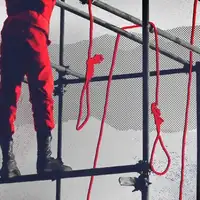
In November alone Iran executed at least 260 people, the highest monthly total in more than two decades, while officially announcing only two, the United States Department of State said in a Persian-language post on X on Tuesday.
“This year, more than 1,500 people have been killed in Iran, many without fair trial or due process,” the post said. “The Islamic Republic uses the death penalty to instill fear and silence every dissenting voice.”
The same account earlier denounced what it called the suspicious death of Iranian human rights lawyer Khosrow Alikordi, saying his case highlights the severe risks faced by those defending basic freedoms in the Islamic theocracy.
Alikordi, a 46-year-old prominent lawyer for jailed protesters and a former political prisoner, was found dead under unclear circumstances on Friday night, prompting some attorneys and activists to suggest possible Islamic Republic involvement.
“The world cannot turn a blind eye,” the post said. “The United States stands with the people of Iran and will continue to condemn these horrific violations.”
Iranian authorities executed at least 24 people across the country on Saturday and Sunday, underscoring what monitors describe as a rapid escalation in the use of capital punishment, human rights groups reported.
The figures indicate an average of 12 executions per day — roughly one every two hours.
The executions took place in prisons in different cities across Iran, reports from the US-based Human Rights Activists News Agency (HRANA) and the Oslo-based Iran Human Rights (IHR) said. Iranian state media acknowledged only one case.
Authorities in Iran have blocked the Instagram pages of two female singers as part of an intensifying crackdown on women’s public performances and online presence.
Iran’s cyber police, known as FATA (Iran’s internet crime enforcement agency), blocked the account of Niousha Mofidi, a young woman who performed solo at a concert by Iranian pop singer Hamid Hami.
All posts on her Instagram account, which had nearly 12,000 followers, were deleted. Security officials said the page was closed for “producing criminal content.”
A video shared on social media showed Mofidi singing along from the audience while Hami told others, “Let her sing,” then remained silent so her voice could be heard alone. Mofidi had previously posted videos of her singing on Instagram.
Evi Instagram page
The Instagram account of Iranian rapper Evi, which had nearly 26,000 followers, was also taken offline on Monday. She had previously said security agencies contacted her, demanding she delete her page within 24 hours—a demand she refused.
“I will stand with my people for the rest of my life and will not accept anything that contradicts living freely, even if it is presented in the name of religious law,” she said in a post.
Niousha Mofidi blocked Instagram page
Since the 1979 Islamic Revolution, women in Iran have been banned from singing in the presence of men, based on religious interpretations. The policy ended the official careers of female singers active before the revolution and pushed their work to the margins.
More than 160 artists, civil activists, and organizations, including 19 based inside Iran in April condemned the government’s increasing crackdown on female singers, describing it as part of a systematic effort to suppress women and reinforce a gender-discriminatory system.
At least five thousand contract workers at the South Pars energy hub in Asaluyeh staged one of the largest labor protests in Iran in years on Tuesday, defying heavy security pressure and warnings from authorities.
Workers from 12 South Pars refineries refused to report for duty and instead marched toward the Asaluyeh governor’s office in a rare mass demonstration over wages and job security, sources told Iran International.
Despite roadblocks, security deployments, and threats issued in the days prior, the protest drew unprecedented numbers from across the gas complex.
The Council for Organizing Protests of Informal Oil Workers described the march as “a magnificent procession,” while the Free Union of Iranian Workers called it “one of the biggest protest gatherings in Iran’s oil industry in nearly five decades.”
State-linked outlets sought to downplay the scale, describing it only as “a protest of a group of workers” without mentioning turnout numbers.
Labor organizations said authorities had issued direct warnings to workers, including text messages from the South Pars Gas Complex and threats from refinery security units.
Security and police forces had tightened control over all access routes to Asaluyeh, stopping vehicles carrying workers from reaching the rally.
Asaluyeh is a port city and industrial hub located in southern Iran on the Persian Gulf coast, in Bushehr Province. It is best known as the center of Iran’s South Pars/North Dome Gas Field, the world’s largest natural gas field shared between Iran and Qatar.
Labor union support
The Syndicate of Workers of the Tehran and Suburbs Bus Company issued a statement backing the South Pars workers, calling their demands “legitimate, humane, and long overdue.”
"The awareness, solidarity, and resolve of Iran’s working class, while independent organizing and collective resistance remain the only paths to securing workers’ rights," the statement said.
In a related development, a three-day simultaneous strike took place at nine onshore rigs and two offshore rigs of the North Drilling Company, Telegram channel Afkar-e Naft reported on Tuesday.
Iran wartime cyber operations were wide enough to potentially reach every single Israeli citizen during the 12-day war in June, the head of Israel’s National Cyber Directorate Yossi Karadi said at a university forum on Tuesday.
Karadi told the Cyber Week 2025 conference at Tel Aviv University that Tehran launched 1,200 separate information campaigns including text messages and social media posts during the conflict, each targeting thousands of Israelis simultaneously.
“Iran tried to reach every citizen in Israel – and not just once,” Karadi said. “They had hacked into parking and other road cameras to track the movements of Israeli VIPs, with the aim of building operations to target and harm them.”
The extent of the cyber war between Iran and Israel during the June conflict has not been fully detailed by the Mideast arch-foes, which both claimed vast successes in the cyber arena.
“When the Weizmann Institute was hit by a missile, the attack did not start there. A short time before, the attacker sent threatening emails to faculty members. At the same time, they took control of a street camera overseeing the building that had just been bombed,” Karadi said.
The Weizmann Institute of Science, located in Rehovot, is one of Israel’s most prominent research institutions and is known for its pioneering work in physics, chemistry, biology, mathematics and computer science.
“In addition, they published leaked data to deepen fear. This is another example showing that enemies today do not differentiate between physical attacks and cyberattacks,” he added.
An outlet tied to Iran’s Revolutionary Guards disclosed in September that a Ministry of Intelligence documentary used archival images from the internet, despite presenting them as exclusive material obtained from Israel.
Intelligence Minister Esmail Khatib appeared in the program, calling the operation “a major infiltration” that yielded “a treasure of top-secret intelligence.” He described the outcome as the result of “months of complex planning and multiple successful operational phases inside the enemy’s structure.”
“On the last Yom Kippur, the attack on Shamir Medical Center was halted. At first it looked like classic ransomware. The Chilean ransomware group claimed they had stolen sensitive data. But after a short time, the ransom demand vanished because it became clear the real actor was Iran, using them as a front and trading on their tools,” Karadi continued. “It is a clear example of how some nation-states hide behind ransomware groups.”
Karadi said Israeli defenses prevented widespread damage, though he declined to give details or the full extent of the breaches.
A US cyber-security official attending the conference named Iran as among the most serious cyber threats to the United States.
“Russia, Iran, and North Korea are also major cyber threats, but China is the greatest,” Nick Andersen, executive assistant director for the Cybersecurity Division of the US Cybersecurity and Infrastructure Security Agency (CISA), said.
“China is trying to use cyber weapons to pre-position the United States and the West for societal havoc and chaos in civilian infrastructure in the event of a conflict,” he added.
A dramatic cultural opening is sweeping across Iran, not as a government reform but as a bottom-up movement driven by a young generation that is less willing to be intimidated by the state, Iran analyst Omid Memarian told Eye for Iran.
Street concerts, outdoor festivals, late-night parties and music events have become increasingly visible in Tehran and beyond. Young people, many without the headscarves which are required for women, have filled pop and jazz concerts while street bands draw large crowds on central boulevards.
“This has nothing to do with the government,” Memarian said. “It is a very massive force underneath the society, and they are opening pathways that my generation was not able to even touch.”
Images and reports from across the country show men and women running together in a desert marathon in Kerman, while on Kish Island in the Persian Gulf the organizers of a separate marathon were arrested after women ran without hijabs.
Local media said more than 5,000 people took part in the Kish race, and photographs of female runners posing with medals and uncovered hair circulated widely online. Judicial officials accused organizers of “violating public decency” and said warnings about the dress code had been ignored.
The apparent cultural opening has been tolerated by authorities in its bid to shore up popular support in the wake of the punishing conflict with Israel and the United States, even as they have stepped up arrests and executions.
Memarian said the opening is not sudden. For years, multiple demographics “have been pushing inch by inch,” and many have paid a price. But two events accelerated it: the death of Mahsa Amini in morality police custody in 2022, which triggered nationwide protests and the twelve-day war between Iran and Israel earlier this year.
In June, Israel launched a surprise military campaign on Iranian nuclear facilities, missile production sites, killing nuclear scientists along with hundreds of military personnel and civilians.
Iran retaliated with waves of drones and ballistic missiles, prompting a week of exchanges. The United States then intervened directly, striking three Iranian nuclear sites at Fordow, Isfahan and Natanz with bunker-busting bombs.
Many Iranians spent nights sheltering in parking garages and stairwells. The government urged calm and vowed that its defenses had “full control,” yet many ordinary people said they felt unprotected.
“People were left alone. They saw the regime could not protect them. That created a huge vacuum and emboldened many Iranians,” Memarian said.
He emphasized that the changes are not limited to affluent parts of Tehran.
“It is a very widespread movement. From Tehran to small cities and villages, people are voicing their demands, imposing their lifestyle on the system.” Social media has erased the geographic divide, he added, allowing young people in remote areas to follow the same trends as their peers in urban centers.
“We have a massive explosion of expectations inside the country,” he said. “They are not going to let the government write their destiny. There’s no going back.”
Despite ongoing arrests and a rise in executions, officials have responded cautiously. The judiciary chief recently said the current relaxed approach to hijab enforcement “cannot continue,” and conservative voices have warned that “the Islamic revolution will soon disappear” if the trend continues.
Memarian said the state’s enforcement network sees the social shift as existential. “Those who favor repression are part of a massive, expensive machine,” he said. “Their identity, paycheck and power come from it. If they lose this, it’s over.” Some insiders, he added, now believe they cannot win. “They fear this is the beginning of the end. The domino has started to fall.”
Iran’s economy remains under strain, with sanctions, inflation, water shortages and energy problems. Yet Memarian said young Iranians remain focused on building their future ... one where the "Islamic Republic is something from the past.”